On This Day: September 28, 1991 — Miles Davis Dies at 65
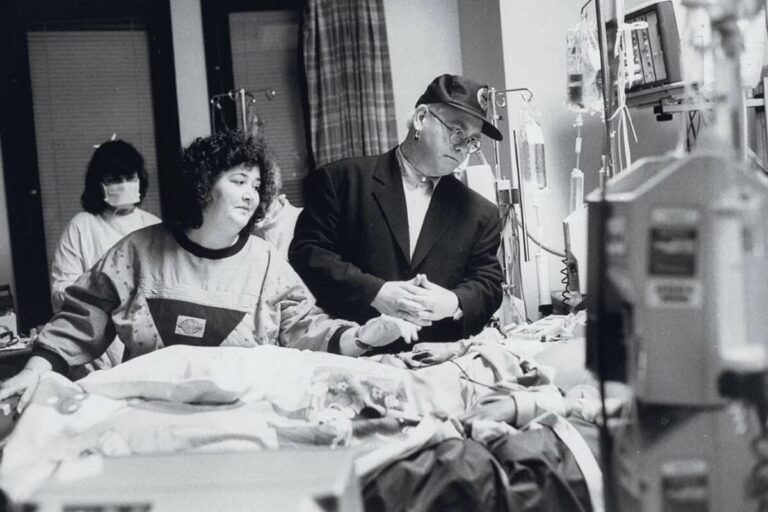
He went purple with rage first. That’s the detail biographer Ian Carr got from people in the room at St. John’s Hospital that week in September 1991: doctors told Miles Davis he needed a tracheotomy to manage his breathing, and the fury of his refusal set off the stroke that killed him. He’d survived heroin in the 1950s, a broken pelvis from a hit-and-run in 1972, and enough pneumonia scares in his final decade to fill a chart. A conversation about a breathing tube is what finally got him.
A Trumpet Player Who Kept Quitting While He Was Ahead
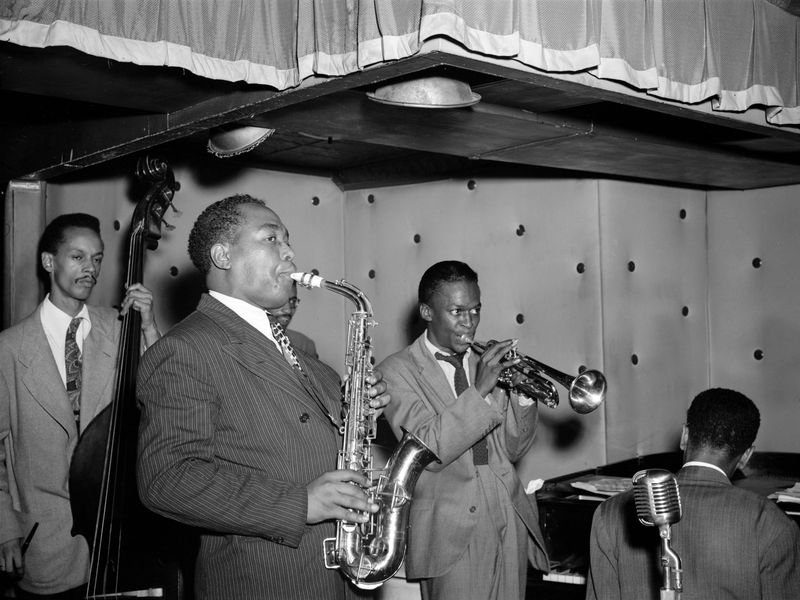
Davis arrived in New York in 1944 at eighteen, ostensibly to study at Juilliard, actually to find Charlie Parker. He found him within weeks and was playing alongside Bird and Dizzy Gillespie on 52nd Street before he’d finished his first semester. By 1945 he’d dropped out of school entirely and was recording with Parker’s quintet — the group captured in the Gottlieb photograph below, Davis barely into his twenties and already the youngest name on the bandstand next to the two men who’d invented bebop. He was, by his own later account, terrified half the time and copying Parker’s phrasing note for note the other half, a green kid from a middle-class dental family in East St. Louis who’d talked his way onto the same stage as the men who were rewriting jazz in real time.
The Retro Almanac
A monthly roundup of "on this day" highlights from that month, decades back — plus first dibs on new retro merch drops. No spam, just the good stuff.
That pattern repeated for the next four decades: Davis would master a style, ride it to acclaim, then abandon it before it went stale. He walked away from bebop for the cooler, orchestrated sound of 1949’s Birth of the Cool. He walked away from that for hard bop. In 1959 he cut Kind of Blue with John Coltrane, Cannonball Adderley, and Bill Evans — a modal jazz record built on scales instead of chord changes, recorded in two afternoons at Columbia’s 30th Street studio with almost no rehearsal. It remains the best-selling jazz album ever made, and Davis was already bored with the formula by the time it hit shelves.
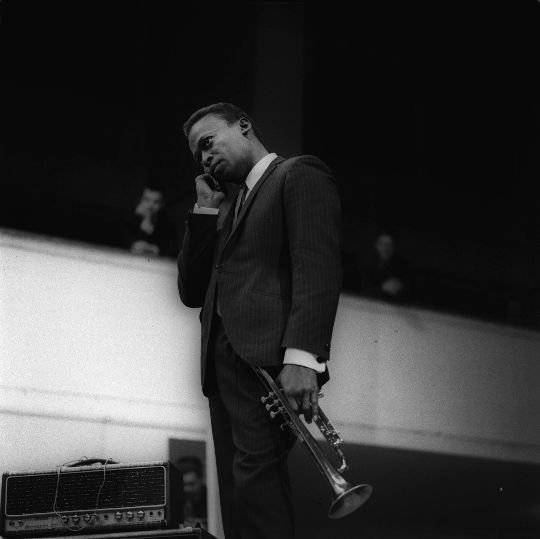
He reloaded again in 1964, assembling what critics now call his second great quintet: saxophonist Wayne Shorter, pianist Herbie Hancock, bassist Ron Carter, and a seventeen-year-old drummer named Tony Williams who played like he was trying to dismantle the beat rather than keep it. The group toured Europe that October, filling halls like Helsinki’s Messuhalli with a sound built on loose, almost telepathic interplay instead of fixed arrangements — the same instinct for controlled chaos that would define Bitches Brew five years later. Albums like E.S.P. and Miles Smiles pushed jazz toward the edges of atonality without ever losing the groove, and the four musicians Davis assembled in that quintet went on to reshape jazz piano, bass, and drums for the next generation on their own records.
Plugging In When Jazz Purists Wanted Him to Stay Acoustic
The reinvention that cost him the most fans came in 1969. Davis had been watching Jimi Hendrix and listening to Sly Stone, and he decided jazz needed electric guitars, wah-wah pedals on his own trumpet, and rock rhythm sections. In a Silent Way and Bitches Brew split the jazz press down the middle — some critics called it a sellout, others called it the birth of fusion — but the records sold to a rock audience jazz had never reached before. Davis didn’t care which side won the argument. “I have to change,” he told an interviewer around that time. “It’s like a curse.”
He vanished from music almost entirely between 1975 and 1980, holed up in his Manhattan brownstone with a cocaine habit and a body breaking down from arthritis, diabetes, and the lingering damage of that 1972 car accident. Friends and biographers who described those years painted a man who barely left his bedroom, uninterested in touching a trumpet, living on takeout and old James Brown records. Cicely Tyson — the actress he’d known since the 1960s — is widely credited with pulling him out of it, moving into his life during the worst of the addiction and pushing him back toward a practice routine and a healthier diet. The two married in 1981, the same year he returned to a recording studio for the first time in six years.
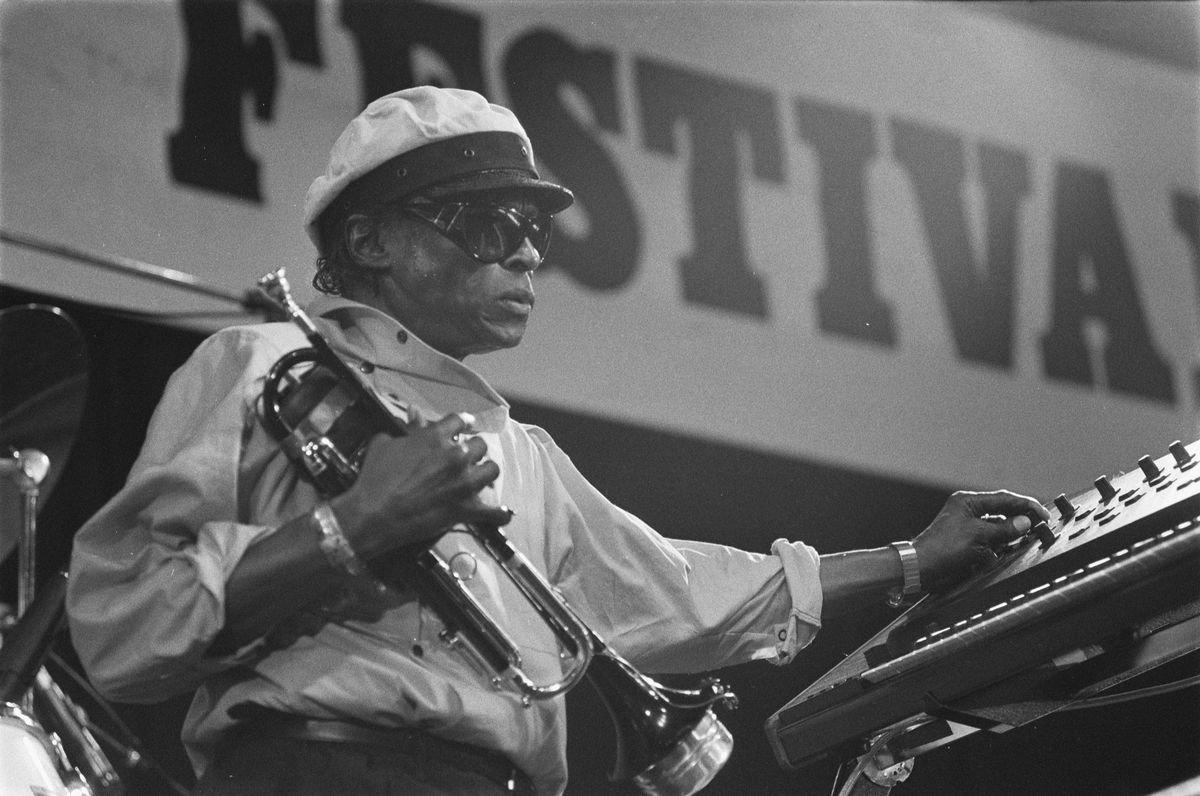
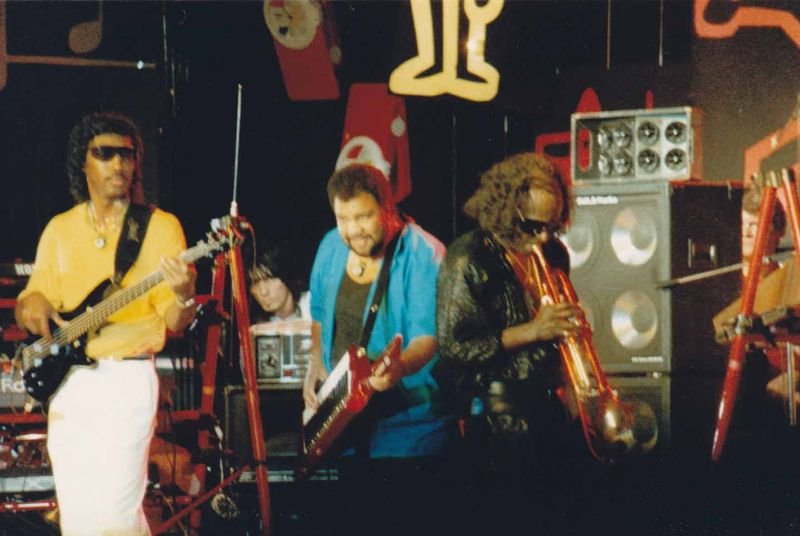
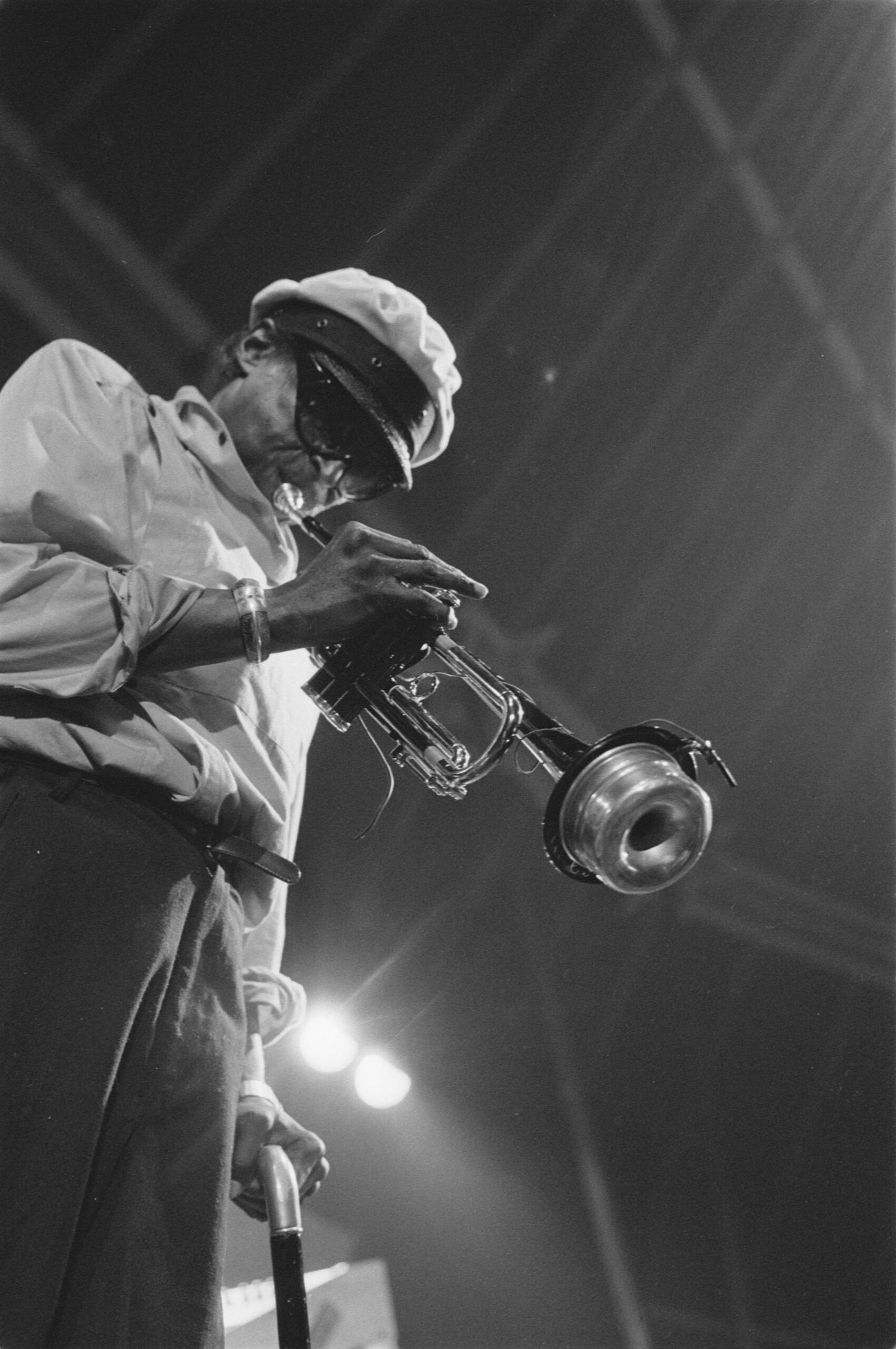
The comeback that followed surprised almost everyone who’d written him off. Davis signed with Columbia again, released The Man with the Horn in 1981, and by July 1984 he was headlining the North Sea Jazz Festival in The Hague — leaner, hunched over a wah-wah-treated horn, backed by a band half his age, a long way from the acoustic bebop he’d played alongside Bird in 1947. Along the way he became as well known for how he looked as how he sounded: GQ and Rolling Stone both put him on best-dressed lists in the 1980s, and the tour photographs from this stretch — fur coats, oversized sunglasses, tailored leather — did as much for his public image as the records did. The 1982 live album from that tour, We Want Miles, won him a Grammy for Best Jazz Instrumental Performance — his first Grammy in over a decade. Then, improbably, he kept reinventing again: leaner records, synthesizers, a Cyndi Lauper cover on 1985’s You’re Under Arrest. He was still touring arenas in 1991, months from his death, playing material that sounded nothing like the trumpet player who’d backed Charlie Parker forty-six years earlier.
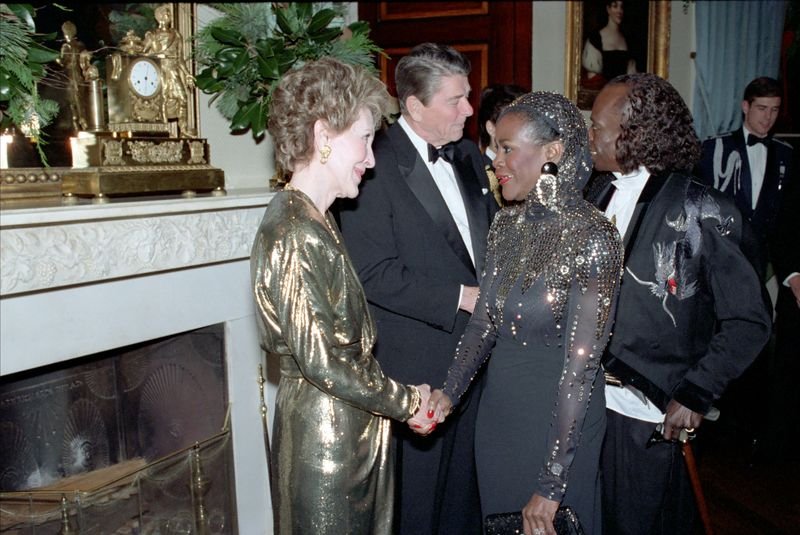
The Reagans Shook His Hand a Few Years Before the End
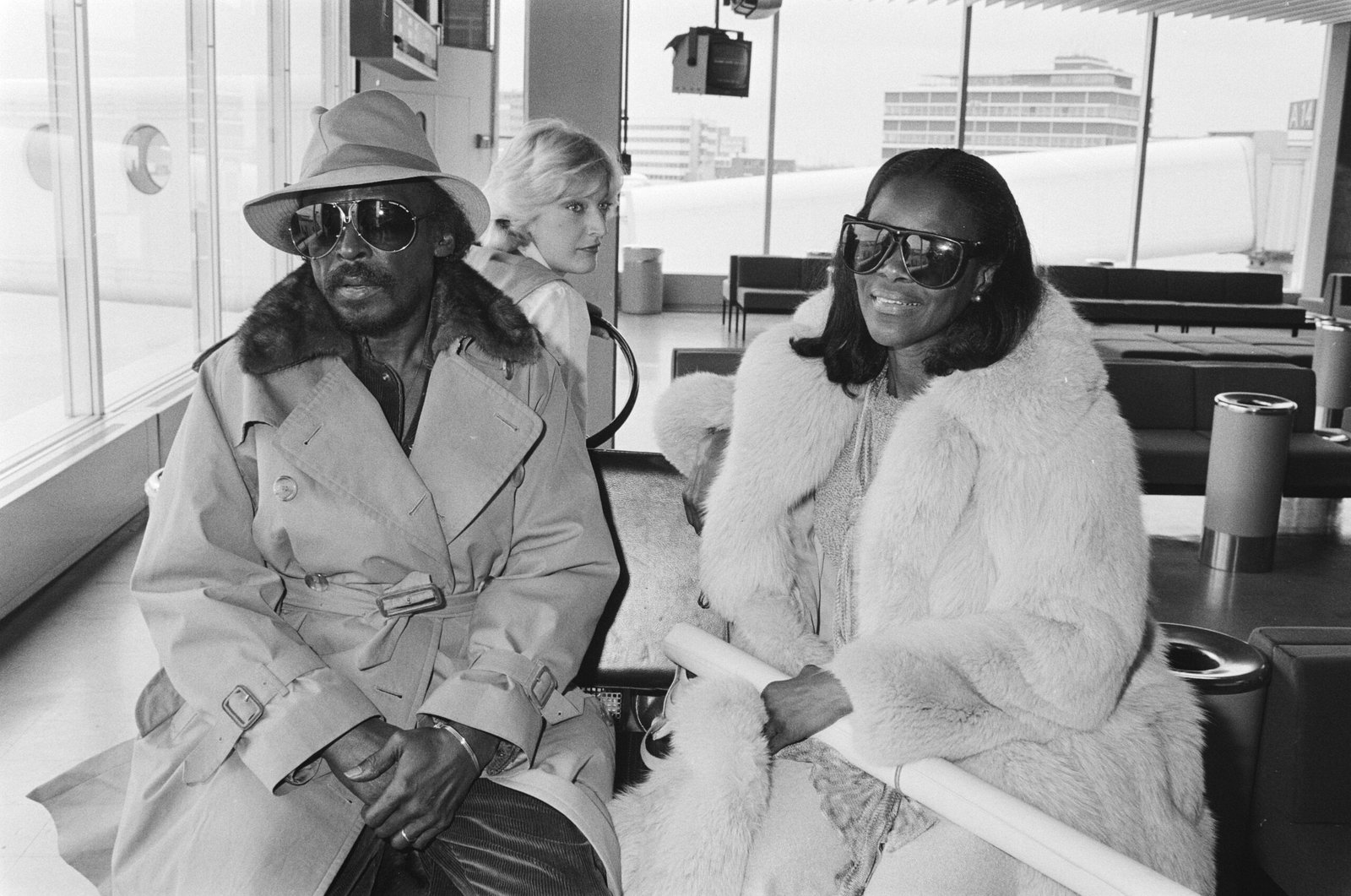
By the mid-1980s Davis had gone from jazz outsider to national institution, however uneasily he wore the label. In December 1986 he and Cicely Tyson were guests at a White House reception tied to that year’s Kennedy Center Honors, shaking hands with Ronald and Nancy Reagan — a photograph that captures how far the establishment’s opinion of him had traveled since critics were calling his electric records a betrayal two decades earlier. The trumpet player who’d once been arrested outside Birdland for standing on a New York sidewalk was, by his late fifties, a fixture at state functions.
His last performance came a month before he died, at the Hollywood Bowl in August 1991, playing arrangements from Sketches of Spain with an orchestra — a nod back to Gil Evans, the arranger who’d shaped some of his most celebrated 1950s and ’60s work. He was frail by then, playing shorter sets than he had even two years earlier, but he finished the tour rather than canceling it.
A Funeral Where the Mourners Included Half of Jazz
Davis’s memorial was held at St. Peter’s Church at 54th and Lexington in Manhattan, the same sanctuary where Reverend John Gensel had presided over services for John Coltrane and Thelonious Monk. Thousands showed up; not everyone who wanted a seat got one. He’s buried at Woodlawn Cemetery in the Bronx, a few rows from Duke Ellington, in a section of the cemetery that reads like a jazz hall of fame.
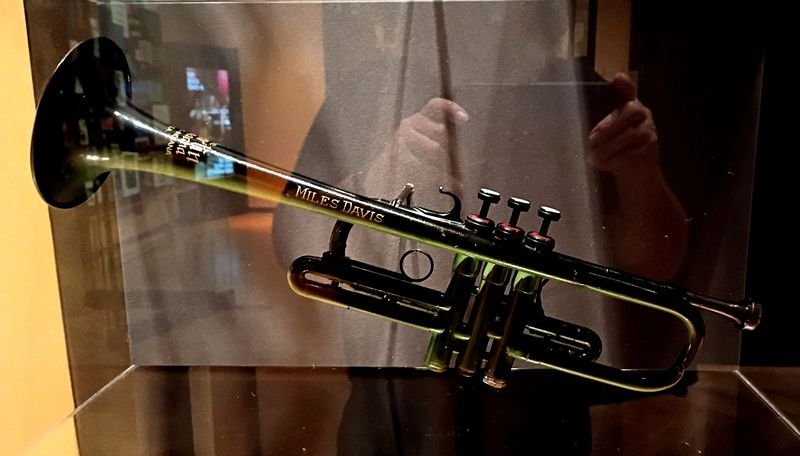
What gets lost when people summarize Davis as “the Kind of Blue guy” is how little he resembled that record by the time he died. He spent his career refusing to be any one thing for longer than a few years, which made him equally beloved and infuriating to people who wanted him to stay put. Thirty-five years on, his trumpet and stage jackets sit behind museum glass now, but the five or six different versions of Miles Davis still argue with each other on record — and none of them sound like they’re trying to please the others.
Davis never lived to hear how the story ended. He’d been in the studio that final summer of 1991 with Brooklyn hip-hop producer Easy Mo Bee, laying trumpet over sampled breakbeats for what became Doo-Bop — released after his death in 1992 and awarded a Grammy for Best R&B Instrumental Performance the following year. It was a strange, fitting coda: the same restlessness that pushed him from bebop to modal jazz to fusion pushed him, in his final sessions, toward the genre that would go on to sample him for the next three decades.
For more music history from the era, see our coverage of John Bonham of Led Zeppelin’s death and the day hip-hop lost Tupac Shakur.
Love the retro era? Browse our shop for vintage finds, retro clothing, and 80s/90s nostalgia gear.
Sources
- The Washington Post — Jazz Great Miles Davis Dies at 65 — Original 1991 obituary coverage
- Wikipedia — Miles Davis — Career timeline and biographical detail
- Wikipedia — Kind of Blue — Recording history of the 1959 album
- Wikipedia — Miles Davis Quintet (Second Great Quintet) — 1964–68 lineup and recordings
- David Liebman — On Miles Davis’ Passing On — Firsthand account of the 1991 funeral at St. Peter’s Church
The Retro Almanac
A monthly roundup of "on this day" highlights from that month, decades back — plus first dibs on new retro merch drops. No spam, just the good stuff.