Higher Learning 1995: 7 Bold Truths
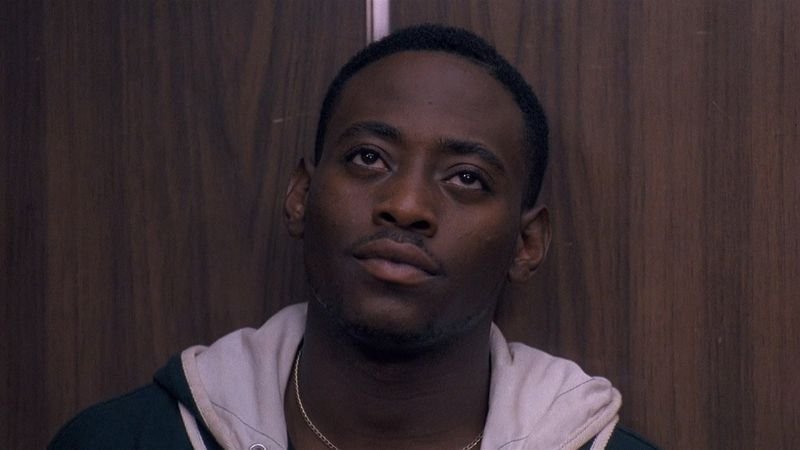
Ice Cube plays “Fudge” White, a professional student who enrolled at Columbus University sometime during the Reagan years and has no intention of ever leaving. He’s the campus’s unofficial minister of Black consciousness, handing out Malcolm X quotes from a porch chair to whichever freshman needs them, and in the opening act that freshman is Malik Williams, a scholarship track athlete played by Omar Epps who’s about to learn that a full ride doesn’t erase a target on his back. Higher Learning was Singleton’s third feature, and it swings harder than anything he’d made before it — a movie that tries to hold campus racism, sexual assault, and homegrown terrorism inside one 127-minute frame without flinching from any of it.
A Freshman Class Built to Collide
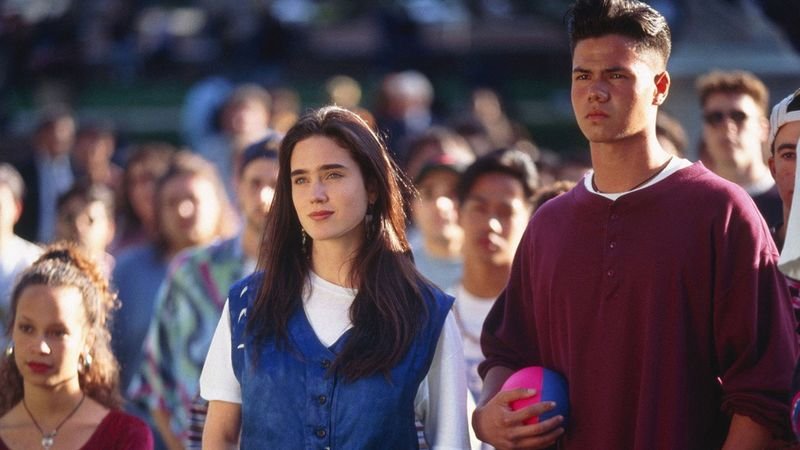
Singleton splits his attention across three students who never would have crossed paths anywhere but a dorm hallway. Malik struggles academically under a professor, Maurice Phipps (Laurence Fishburne), who refuses to let him coast on athletic talent alone. Kristen Connor (Kristy Swanson), an Orange County transplant with no read on the politics around her, gets pulled toward campus feminism after a frat party ends in an assault by Billy McDonald, a smug legacy kid who treats “date rape” like a punchline. And Remy (Michael Rapaport) drifts in from the opposite direction — awkward, friendless, mocked at ROTC drills — until a pair of recruiters from a neo-Nazi skinhead crew offer him the belonging that Columbus University never did. Jennifer Connelly plays Taryn, the activist who becomes Kristen’s way into a wider political consciousness, and Tyra Banks, in her film debut, plays Deja, Malik’s girlfriend and the emotional center of the film’s final act.
The Retro Almanac
A monthly roundup of "on this day" highlights from that month, decades back — plus first dibs on new retro merch drops. No spam, just the good stuff.
Singleton’s Follow-Up to Boyz n the Hood
Higher Learning arrived four years after Boyz n the Hood made Singleton the youngest person and first Black director ever nominated for a Best Director Oscar, and the pressure of that follow-up shows in how much the script tries to carry. Boyz n the Hood was contained — a South Central neighborhood, a handful of families, a tragedy that felt inevitable from the first act. Higher Learning widens the lens to an entire institution and asks whether a university, built on the promise of enlightenment, can actually process the hatred its students bring in with them. Singleton shot the exteriors at UCLA, and there’s a deliberate irony in setting a story about racial fracture on one of the most diverse campuses in the country. The film’s marketing leaned hard on the cast’s star power, but Singleton’s real subject was structural: how an institution says the right things in orientation week and then does almost nothing when a student starts building a following around hate.
A Cast Stacked Almost Unfairly
Look at the credits and it barely seems like a single movie could hold all of it. Ice Cube. Laurence Fishburne. Jennifer Connelly, fresh off a run of prestige indies. Kristy Swanson, still known from Buffy the Vampire Slayer. Michael Rapaport, who’d go on to make a career out of playing exactly this kind of coiled, resentful outsider. Busta Rhymes shows up as one of Fudge’s crew. Regina King plays Monet, Malik’s ex. Cole Hauser, a decade before he became a household name on Yellowstone, plays one of Remy’s recruiters. Fishburne, in particular, walked away with the film’s only major award nod — a 1996 NAACP Image Award for Outstanding Supporting Actor — and Ice Cube picked up a nomination in the same category. It’s a genuinely stacked ensemble, and Singleton uses almost none of them the way a studio marketing department would want. Ice Cube, top-billed and most famous at the time, spends most of his screen time as a supporting conscience rather than a lead.


The Remy Subplot Nobody Forgets
Michael Rapaport’s Remy is the character people bring up decades later, and for good reason. Singleton doesn’t play his radicalization as a twist; he shows the recruitment happening in plain sight, one small humiliation at a time, until Remy is shaving his head and mouthing slogans he barely understands. The film’s climax puts a rifle in his hands at a campus peace rally, and that choice split critics right down the middle in 1995. Some argued that ending on a mass shooting flattened everything the movie had spent two hours building — that pinning national racial tension on a couple of skinheads let the institution itself off easy. I’d push back on that reading a little: the rally scene isn’t Singleton’s argument that racism reduces to a few bad actors, it’s his argument that an institution which treats hatred as a fringe problem will eventually get blindsided by it. Theaters took the ending seriously enough that some screenings had police stationed at the doors, which tells you something about how raw the material still felt a few years after actual campus shootings had started making national news.
The Ending That Gives the Film Its Weight
What makes the rally sequence land isn’t the shooting itself so much as who’s standing in the crowd when it happens. Deja, Tyra Banks’ character and Malik’s girlfriend, is killed in the chaos — a death that has nothing to do with her own story and everything to do with being in the wrong place while someone else’s radicalization plays out. That’s a deliberately cruel structural choice on Singleton’s part. Deja spends the film as one of the more grounded, forward-looking characters on campus, and her death isn’t framed as a twist or a gut-punch reveal; it’s framed as senseless, because that’s the point. Banks, in her feature debut, holds her own against a cast full of far more experienced actors, and it’s easy to forget watching Higher Learning now that this was still years before she became a household name through modeling and television. The film doesn’t give her character a redemptive final scene or a eulogy that ties things up. It just moves on, the way a campus does after a tragedy, which is arguably a more honest ending than a tidier movie would have allowed itself.
What Critics Said Then — and What They Say Now
Higher Learning opened to a mixed reception that’s held up remarkably well as a snapshot of a film ahead of its own critical vocabulary. Roger Ebert gave it three out of four stars, writing that Singleton “sees with a clear eye and a strong will, and is not persuaded by fashionable ideologies,” and praising how the director “uses familiar kinds of characters and then asks hard questions about them.” Janet Maslin at The New York Times took the opposite position, arguing the film risked exemplifying “the same small-mindedness it deplores” in its rush to cover so many issues at once. Rotten Tomatoes currently has it sitting at 46% from contemporary reviews, with Metacritic a touch higher at 54 — numbers that reflect a movie critics respected for its ambition more than they enjoyed for its execution. Commercially, it did solid business: $38.3 million domestic against a January release date that studios usually reserve for films with modest expectations, landing as the 44th highest grosser of 1995 overall and 17th among that year’s R-rated titles.

Where It Sits in Singleton’s Hood-Film Lineage
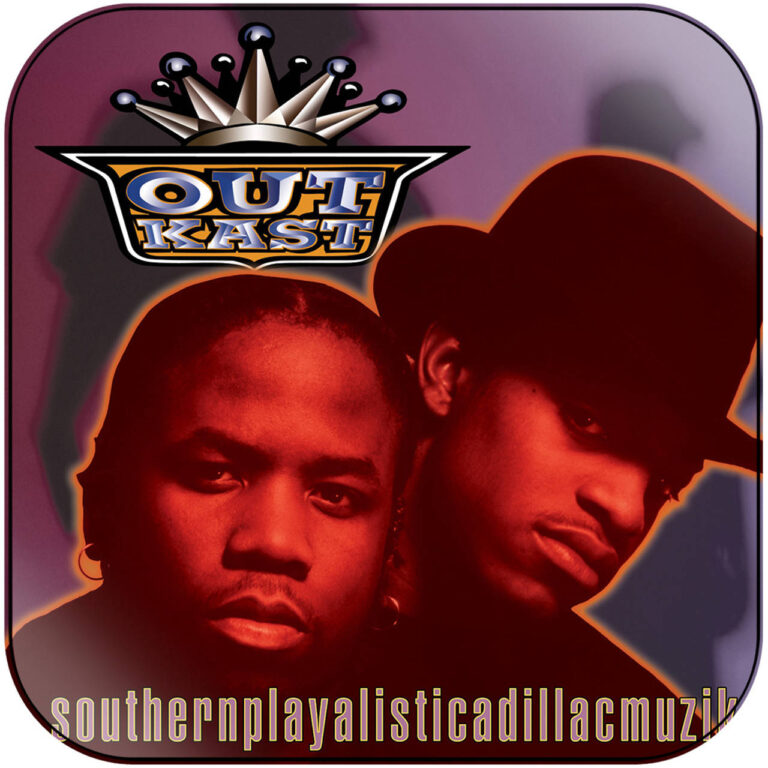
Higher Learning doesn’t get talked about in the same breath as Menace II Society or Boyz n the Hood as often as it should, maybe because a college campus reads as a gentler setting than South Central even when the film itself is arguing the opposite. It shares more DNA with those movies than its collegiate setting suggests: the same interest in how environment shapes violence, the same refusal to give any character a clean moral exit. It even shares a loose connective thread with Friday, which hit theaters the same year and gave Ice Cube a completely different kind of role — proof that 1995 was the year Cube proved he could anchor a serious drama and a stoner comedy in the same twelve months without either one suffering for it. The soundtrack leaned into that same crossover instinct, mixing OutKast, Rage Against the Machine, Liz Phair, and Tori Amos alongside Ice Cube’s own title track “Higher,” and it charted at #39 on the Billboard 200 largely on the strength of that range.

Watch the Trailer
The theatrical trailer sells Higher Learning as a message movie with movie-star faces attached to it, which is honest advertising — that’s more or less exactly what it is.

Why It’s Worth Revisiting Now
Singleton later admitted the film was “chock full” of issues, almost to a fault, and he wasn’t wrong. Higher Learning tries to be a movie about racism, sexual assault, extremism, athletics, and academic pressure all at once, and there are stretches where the seams show. But watch it now, against a backdrop of actual campus radicalization stories that have played out in the years since, and the Remy arc stops feeling like the film’s weak link and starts feeling like its most prescient thread. Singleton was tracking how isolation turns into ideology a full two decades before that became a mainstream news story, and he did it without turning Remy into a cartoon villain — just a kid nobody bothered to notice was drowning.
Malik’s arc, by contrast, is the one that ages into something closer to hope: a kid who nearly flunks out because nobody expected more from him ends the film having found exactly what a university is supposed to offer. That contrast is the whole movie in miniature, and it’s why Higher Learning deserves a rewatch instead of a footnote in Singleton’s filmography.
Sources
- Higher Learning — Wikipedia — cast, production, box office, and reception details.
- Higher Learning movie review — RogerEbert.com — Roger Ebert’s original three-star review.
- Higher Learning (1995) — IMDb — full cast, crew, and release information.
The Retro Almanac
A monthly roundup of "on this day" highlights from that month, decades back — plus first dibs on new retro merch drops. No spam, just the good stuff.