How Native Tongues Turned Hip-Hop Into a Family Reunion
Somewhere between the leather Africa medallions and the daisy-covered album covers, a different kind of hip-hop crew was taking shape in the late 1980s. It wasn’t built around a label boss or a turf war. It was built around a couch, a rec room, and a shared belief that rap could be weird, warm, and Black and proud all at the same time. They called themselves Native Tongues, and for a few glorious years in the run-up to and through the Golden Age, they made hip-hop feel less like a battlefield and more like somebody’s living room on a Sunday afternoon.
No contracts were signed. No official membership card existed. Native Tongues was closer to a family reunion than a record label, and that looseness is exactly why it worked. If you were a kid flipping through your older cousin’s tape collection in 1990, you probably didn’t clock that De La Soul, A Tribe Called Quest, the Jungle Brothers, and Queen Latifah were all, in some sense, the same crew. You just knew their records sounded like nothing else on the radio.
It Started With Two Crews From Queens and Long Island
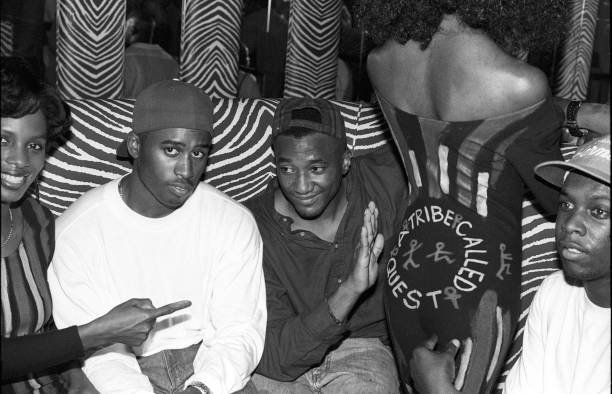
The origin story traces back to Afrika Baby Bam and Mike Gee of the Jungle Brothers, a group out of Harlem who’d already dropped the boundary-pushing house-and-rap hybrid “I’ll House You” in 1988. Around the same time, a trio of Long Island teenagers calling themselves De La Soul — Posdnuos, Trugoy the Dove, and Maseo — were making beats that sampled everything from Steely Dan to Hall & Oates, guided by a young producer named Prince Paul. A few towns over, another Long Island crew, A Tribe Called Quest, led by Q-Tip and Phife Dawg, was chasing a jazzier, bass-heavy version of the same idea.
The Retro Almanac
A monthly roundup of "on this day" highlights from that month, decades back — plus first dibs on new retro merch drops. No spam, just the good stuff.
These weren’t strangers. Q-Tip and Jungle Brother Afrika Baby Bam had known each other since childhood. De La Soul and Tribe crossed paths through the same Long Island scene. What started as friends showing up at each other’s studio sessions turned into something more deliberate once they realized they were all reaching for the same thing: a rap sound that had room for jazz chords, cartoon voices, Afrocentric politics, and jokes about washing your hands, all in the same sixteen bars.
De La Soul Is Dead Serious About Not Being Serious
When De La Soul’s debut album 3 Feet High and Rising landed in 1989, it didn’t sound like it belonged to the same genre as the tougher, grittier records dominating the charts. There were skits about a game show called “Potholes in My Lawn.” There was a song about magic buses. There was a psychedelic, Day-Glo daisy on the cover instead of gold chains and scowls. Critics didn’t know what to call it, so they landed on “D.A.I.S.Y. Age” — Da Inner Sound, Y’all — a phrase the group itself coined half-jokingly and then spent years trying to shake.
That’s the thing about Native Tongues that gets flattened in retrospect: it wasn’t a hippie movement, even though the flower-power aesthetic made it easy to mock. De La Soul pushed back hard against the “peace, love, and hip-hop” label almost immediately, and by their 1991 follow-up De La Soul Is Dead — cover art featuring a smashed flower pot — they were actively torching the image the press had built for them. The group wanted to be seen as musicians with range, not mascots for a movement.
A Tribe Called Quest Brought the Jazz
If Native Tongues had a house band, it was A Tribe Called Quest. Their 1990 debut People’s Instinctive Travels and the Paths of Rhythm leaned into upright bass lines and jazz samples in a way that felt genuinely new, and by the time The Low End Theory arrived in 1991, Q-Tip and Phife Dawg had figured out how to make a rap record that jazz musicians themselves respected — bassist Ron Carter actually played on the album.

Phife Dawg, who spent his early career mostly as a hype man before stepping fully into the spotlight on The Low End Theory, brought a conversational, sports-loving energy that balanced Q-Tip’s more abstract, philosophical bars. Together they built a template — smooth, dense, deceptively simple — that would echo through the Soulquarians, Pharrell, and Kanye West’s entire early catalog. Tribe wasn’t just a Native Tongues member. By the early 90s, they’d become the sound other producers were trying to reverse-engineer.
Queen Latifah Made Room for Women in the Room
Native Tongues also gave a platform to voices that rap radio wasn’t exactly rushing to program. Queen Latifah, who’d already established herself as a commanding presence with 1989’s All Hail the Queen, ran in the same circles as De La Soul and the Jungle Brothers and brought an explicitly feminist edge to the collective’s Afrocentric politics. Her 1993 single “U.N.I.T.Y.” — a direct rebuke of the disrespect she saw aimed at women in hip-hop — became one of the era’s most quoted lines, and it won her a Grammy the following year.

Monie Love, the British-born MC who’d trade verses with Latifah on “Ladies First,” was another key presence orbiting the crew, proof that Native Tongues was never a strictly American, strictly male club. The loose, rotating cast — cousins showing up to the cookout whenever they felt like it — was part of the whole point.
The Family Tree Kept Growing
By the early 90s, Native Tongues had sprouted new branches. Black Sheep, the duo behind “The Choice Is Yours,” ran with the crew. Chi-Ali, a teenage rapper mentored within the collective, released his own debut. Even Leaders of the New School — the Uniondale group that launched Busta Rhymes — moved in adjacent circles and shared stages with the Native Tongues acts throughout the early 90s.
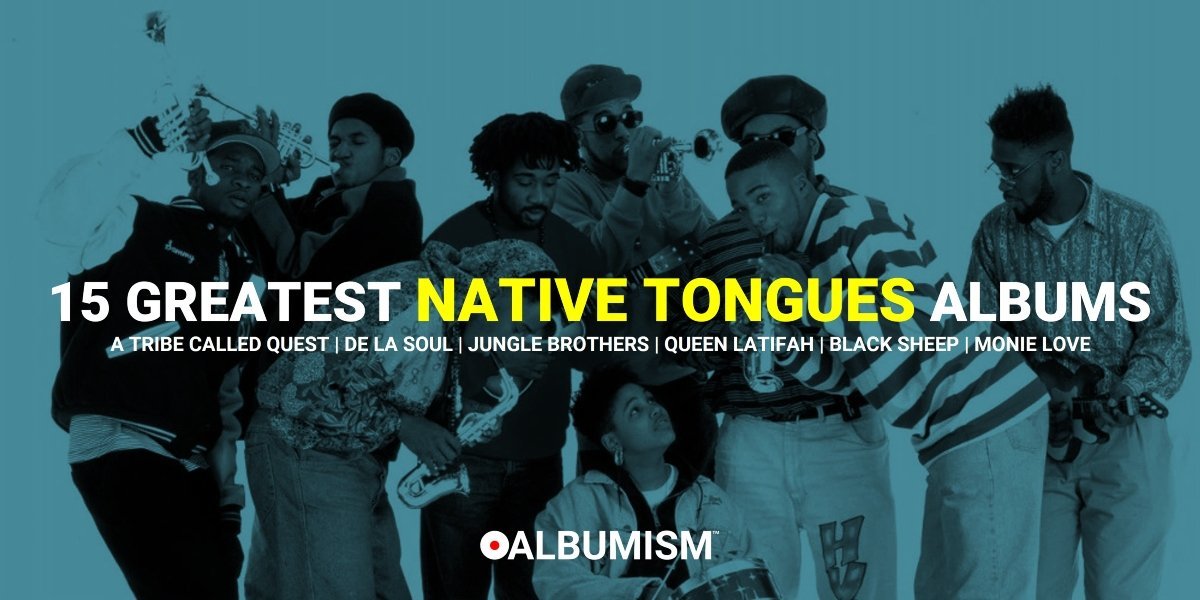
The clearest proof of the crew’s collective spirit landed on record in 1991, when nearly the whole family assembled for “Buddy (Native Tongue Decision),” a posse cut remix off De La Soul’s second album that stacked verses from Q-Tip, Phife Dawg, Queen Latifah, Monie Love, and both Jungle Brothers over one beat. It wasn’t a single built for radio dominance. It was closer to a group photo — everybody showing up, everybody getting their moment, nobody trying to outshine the family.
Why the Family Reunion Eventually Ended
Loose collectives don’t usually die dramatically — they just drift. As the 90s wore on, each act’s sound and career trajectory pulled in its own direction. Tribe kept refining their sound through Midnight Marauders and Beats, Rhymes and Life, eventually splintering under internal tension between Q-Tip and Phife Dawg that had been building for years. De La Soul spent the mid-90s stretching further from the D.A.I.S.Y. Age tag than anyone expected, working with everyone from Zhigge to Japanese producer Towa Tei. The industry itself was shifting too, as the mid-90s East Coast–West Coast dynamic and the rise of a harder, more commercially aggressive sound pulled attention away from jazz-rap’s gentler corners.
None of the Native Tongues acts ever formally announced a breakup, because there was never a formal group to break up in the first place. What faded wasn’t a business relationship — it was a scene, the kind that’s nearly impossible to sustain once everyone involved becomes a star with their own label meetings and solo obligations.

The Echo Never Really Stopped
You can hear Native Tongues DNA in almost every jazz-inflected, sample-heavy rap record that came after it. The Roots, Common, Mos Def, Talib Kweli, and the entire Soulquarians orbit around Erykah Badu and D’Angelo owe an obvious debt to the sonic and lyrical space De La Soul and Tribe carved out. Kanye West has cited both groups as direct influences on his own production style, and Pharrell Williams has said outright that Tribe’s catalog shaped how he thinks about rhythm.
What’s easy to miss, looking back at Golden Age hip-hop through the lens of its biggest commercial explosions, is how much of the era’s creative daring came from a group of friends who simply refused to make records that sounded like everybody else’s. Native Tongues never needed a record deal with each other to prove they were a crew. They just kept showing up in each other’s booths, on each other’s tracks, and at each other’s shows — because that’s what family does.
Sources
The Retro Almanac
A monthly roundup of "on this day" highlights from that month, decades back — plus first dibs on new retro merch drops. No spam, just the good stuff.