April 11, 1984: NASA Saved Solar Max in Orbit
On April 11, 1984, NASA pulled off something that still sounds like science fiction: astronauts flew up to a broken satellite, grabbed it in orbit, fixed it, and sent it back to work. Long before every kid had a smartphone in their pocket, the crew of Challenger turned space repair into a real thing, and for one glorious day the shuttle era felt like the future we were promised.
If you grew up on a steady diet of shuttle launches, lunchbox astronauts, and network TV telling you that tomorrow would be bigger, shinier, and more amazing than today, the Solar Max rescue was catnip. It had the whole package: a damaged machine drifting high above Earth, a cool jetpack called the Manned Maneuvering Unit, a crew with nerves of steel, and the kind of problem-solving swagger that made the 1980s feel like a high-tech adventure serial with a NASA logo on it.
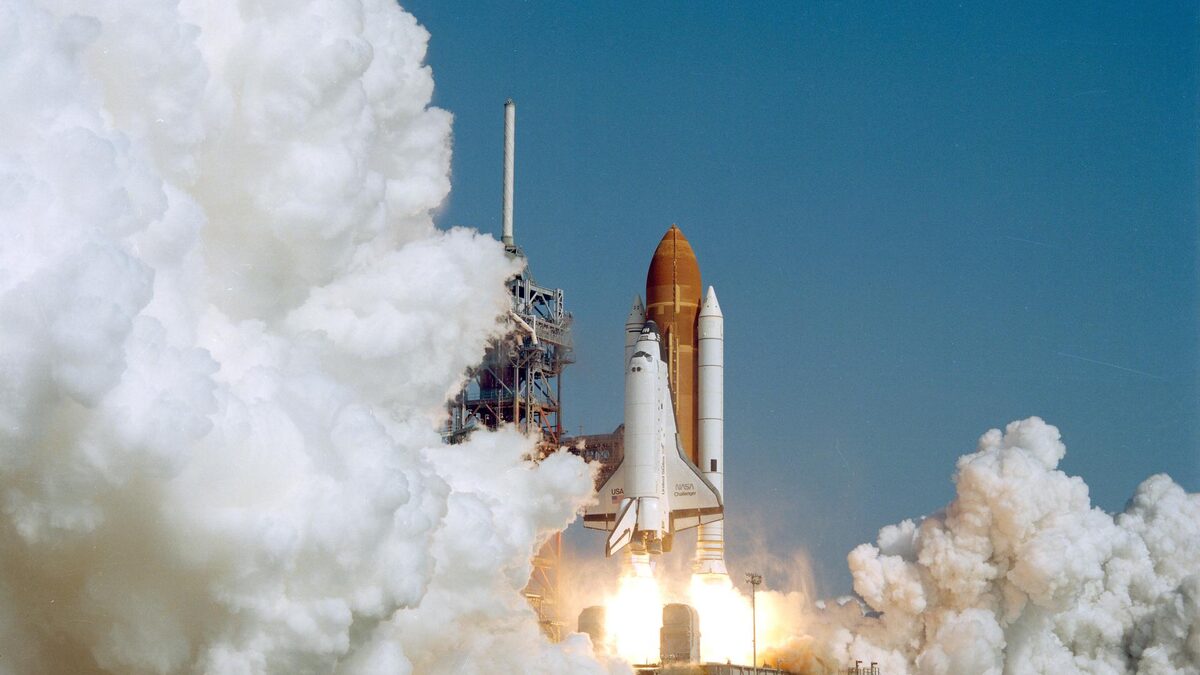
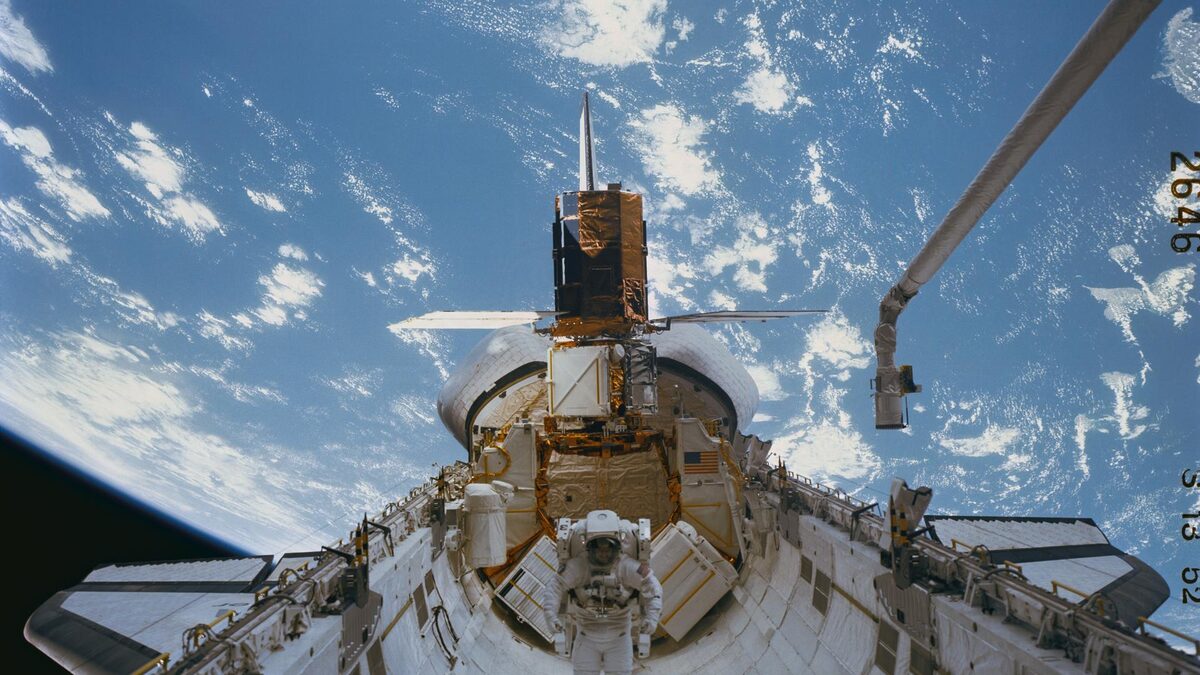
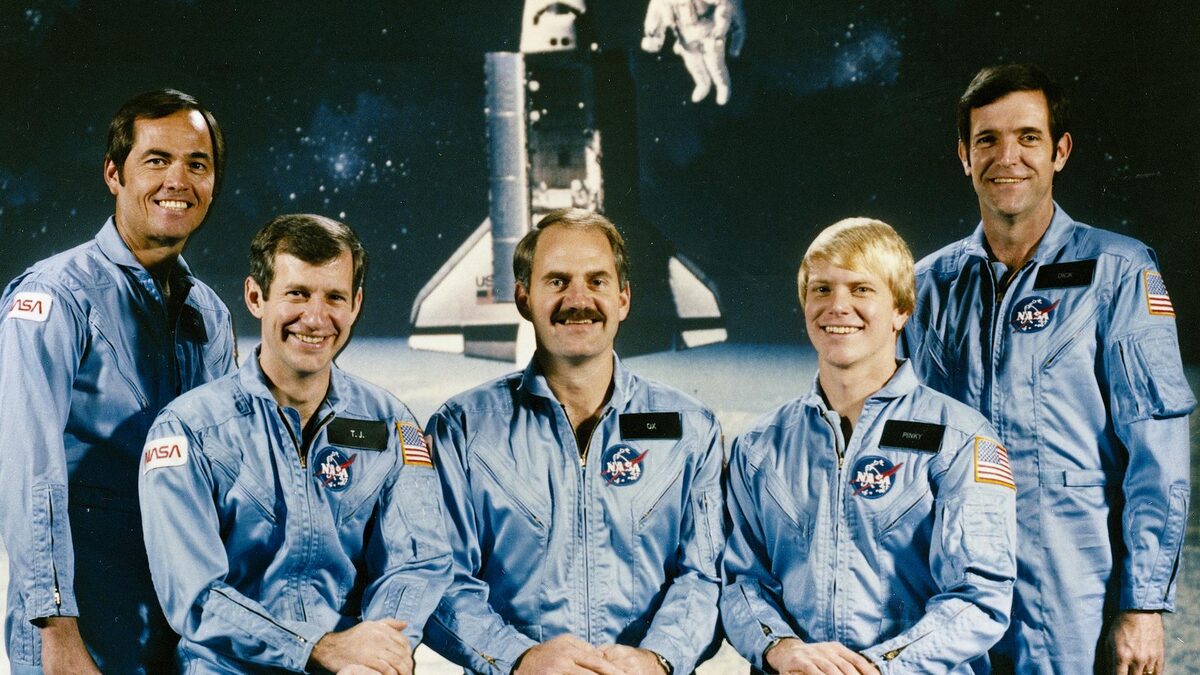
The event happened during STS-41C, the eleventh space shuttle mission and the fifth flight of Challenger. The shuttle had already launched on April 6, but April 11 was the day the mission found its place in history. That was when astronauts George Nelson and James van Hoften went outside and completed the first successful on-orbit repair of a satellite, the Solar Maximum Mission, also known as Solar Max.
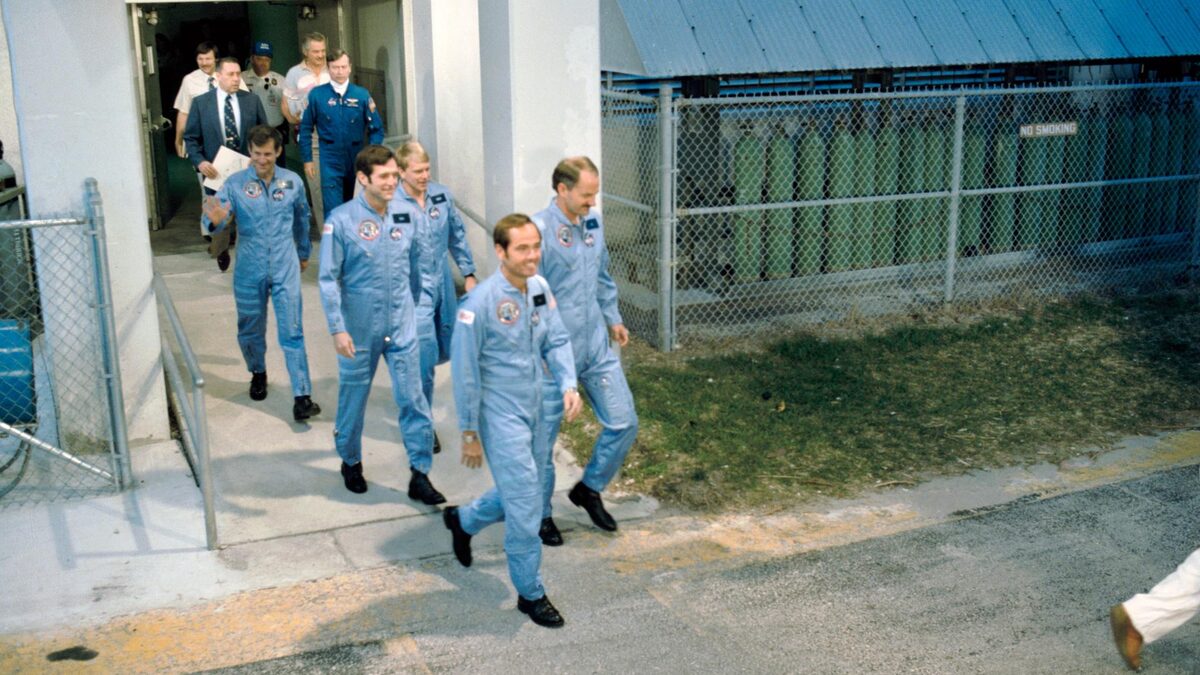
For Retro Radical readers, this is peak analog-future energy. It sits right beside the era of arcade cabinets, VCR blinking clocks, and the earliest personal tech revolutions, but aimed way higher. If the Star Wars speech of 1983 sold America on a futuristic imagination, STS-41C showed what hands-on space-age competence actually looked like. And if the first Mir crew launch in 1986 represented the long-haul future of living in orbit, Solar Max was the moment shuttle crews proved they could work there like orbital mechanics with very expensive tools.
Table of Contents
- What was Solar Max?
- Why the satellite mattered so much
- The first repair attempt went sideways
- What happened on April 11, 1984
- Why this hit so hard in the 1980s
- The legacy of the rescue
What was Solar Max?
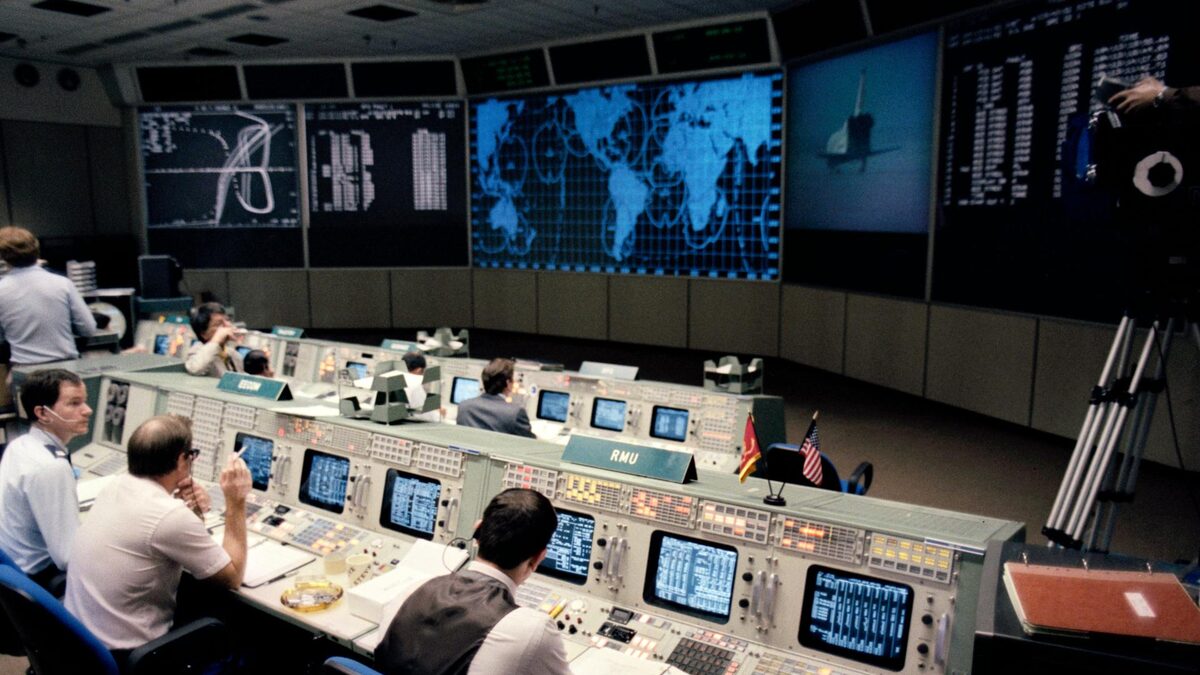
Solar Max was not some random gadget floating around up there. NASA had launched the Solar Maximum Mission in 1980 to study the Sun, especially solar flares and other violent bursts of activity that could affect communications, satellites, and life back on Earth. The whole point was to keep watch during an especially active part of the solar cycle. In plain English, Solar Max was there to stare straight at the Sun while the rest of us were down here using corded phones and trying not to tape over our favorite shows.
Then it started having problems. By late 1980, failures in its attitude control system meant the satellite could no longer point itself properly. That was a disaster for a mission built around precise observation. Instead of giving up on it, NASA decided to try something audacious. The shuttle program had sold itself as reusable, flexible, and almost truck-like in orbit. Fine, then. Here was the test. If the shuttle was really a space utility vehicle, it should be able to service a spacecraft already in orbit.
That idea sounds almost routine now because decades of science fiction and real engineering have blurred together in our heads. In 1984, it was anything but routine. This was still the young shuttle era. Every flight carried a certain electricity. The vehicles looked futuristic. The crews seemed half pilot, half action hero. And when NASA announced that astronauts would try to repair a satellite in space, it landed with the same kind of wow factor people got from seeing a new game console, a new sports car, or a new effects-heavy blockbuster trailer.
Why the satellite mattered so much
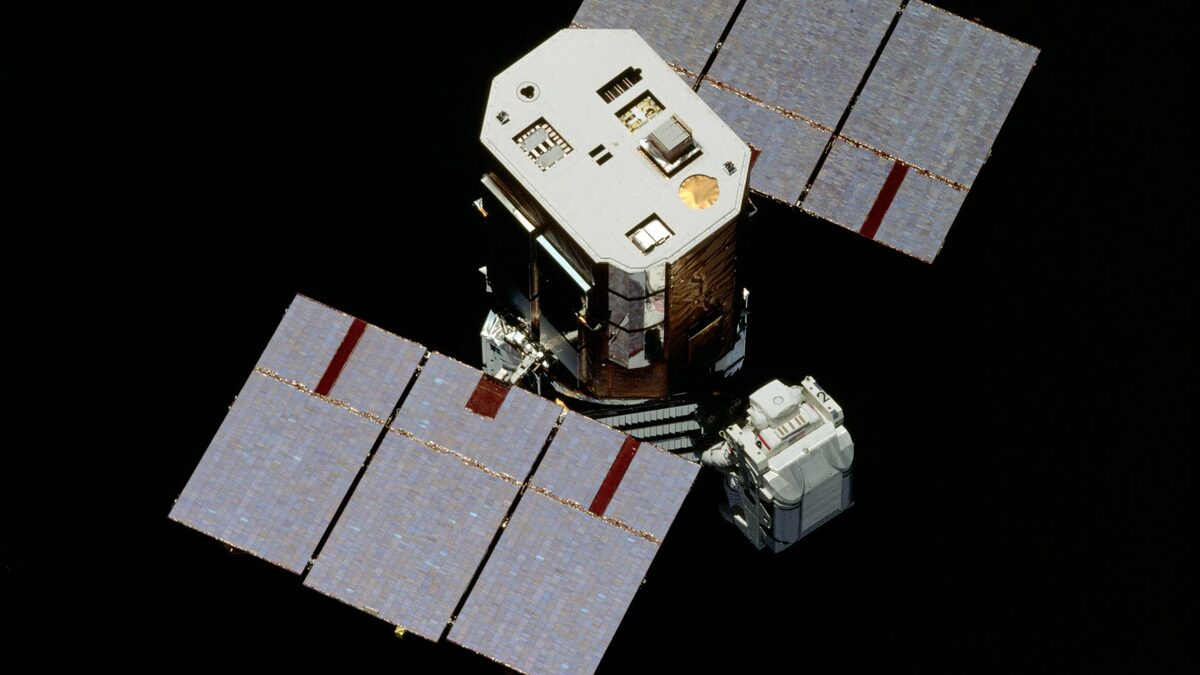
The Solar Maximum Mission mattered because it was expensive, scientifically valuable, and still potentially useful if somebody could get the thing back under control. This was before the disposable-tech mentality got fully baked into modern life. In the 1980s, there was still a powerful cultural romance around fixing things instead of tossing them. You repaired the VCR. You replaced the belts in the Walkman. You cleaned cartridge contacts and blew into them even when you were definitely not supposed to. Solar Max fit that same spirit, just at orbital scale.
NASA’s plan depended on the shuttle crew reaching the satellite, stabilizing it, and replacing failed components. The mission also had another major job, deploying the Long Duration Exposure Facility, so it was not a one-note stunt. But the rescue was the headline grabber. It was the part that made regular people stop and pay attention, because it translated complicated aerospace engineering into a simple human story: broken thing, brave crew, impossible repair.
The first attempt did not go cleanly. That is part of why the April 11 success matters so much. Space history gets flattened in memory, like everything worked because it was destined to work. In reality, it nearly became one of those “great idea, terrifying execution” stories that the 1980s were full of.
The first repair attempt went sideways
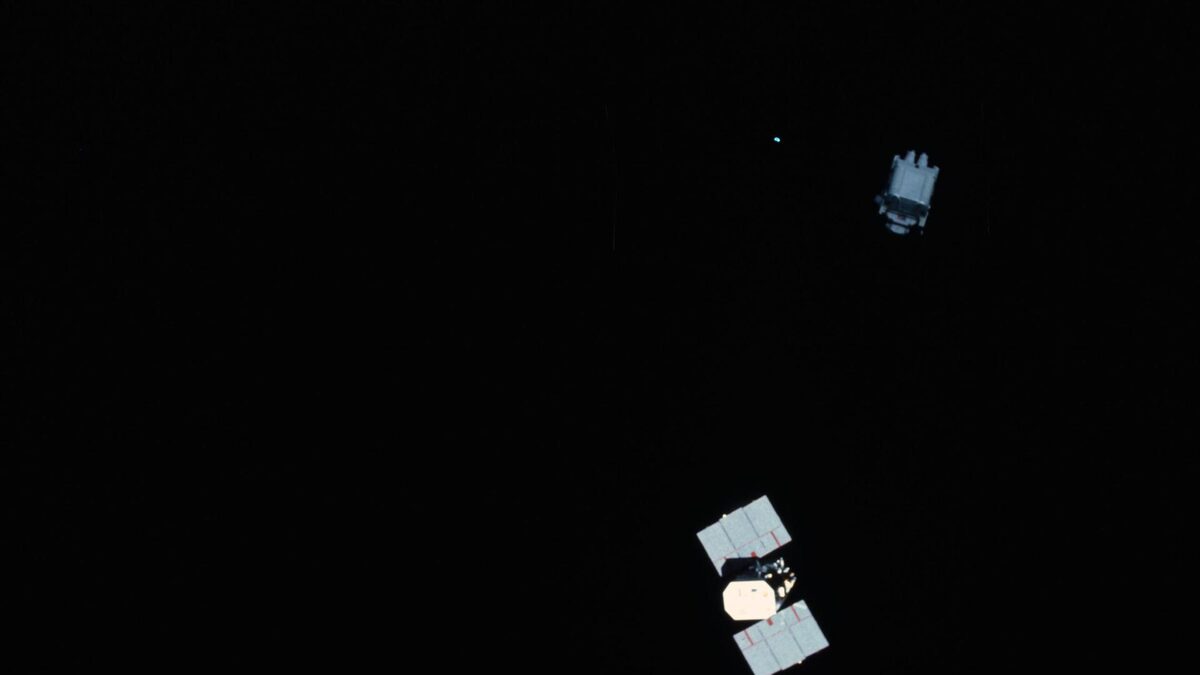
Earlier in the mission, George Nelson flew out toward Solar Max using the Manned Maneuvering Unit, the backpack-like jet system that made astronauts look like they had stepped out of the coolest toy commercial never made. The plan was to attach a capture device to the satellite and secure it for repair. Instead, the first effort failed. The device would not latch correctly, and Solar Max started tumbling.
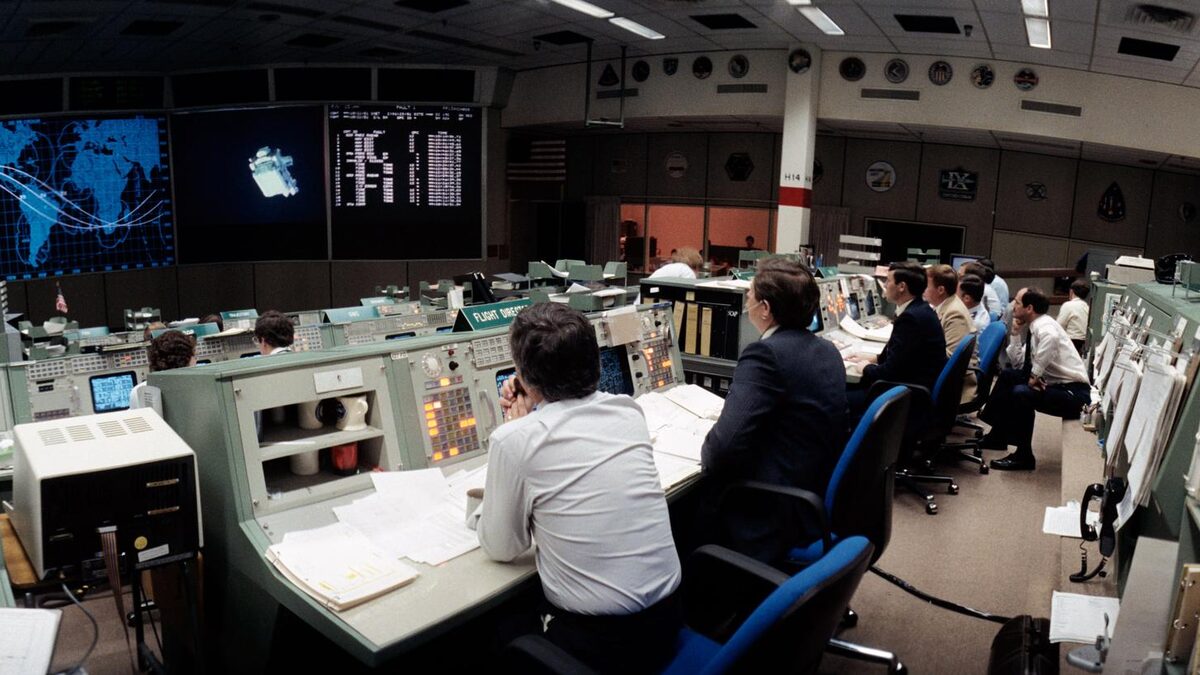
That is the detail that gives this whole story its pulse. The satellite was not politely waiting like a prop in a museum display. It became a drifting problem, and the shuttle crew had to improvise while avoiding the kind of cascading chaos that spaceflight absolutely loves to punish. Challenger’s commander Robert Crippen had to maneuver the orbiter carefully while controllers on the ground worked with every scrap of telemetry they had.
There is something wonderfully 1980s about this stage of the story. Not polished, not frictionless, not automatic. Just smart people pushing machines to the edge and figuring it out in real time. This was the same decade that gave us heroic hacker movies, montage-driven sports comebacks, and the cultural belief that human skill could still beat the system if you were cool enough under pressure.
Ground teams eventually regained control of Solar Max and stabilized it. That set the table for the real payoff on April 11. The second attempt would be longer, more deliberate, and much more important. NASA had to prove the concept now. If the satellite could not be repaired, the whole mission would risk becoming a cautionary tale instead of a milestone.
What happened on April 11, 1984
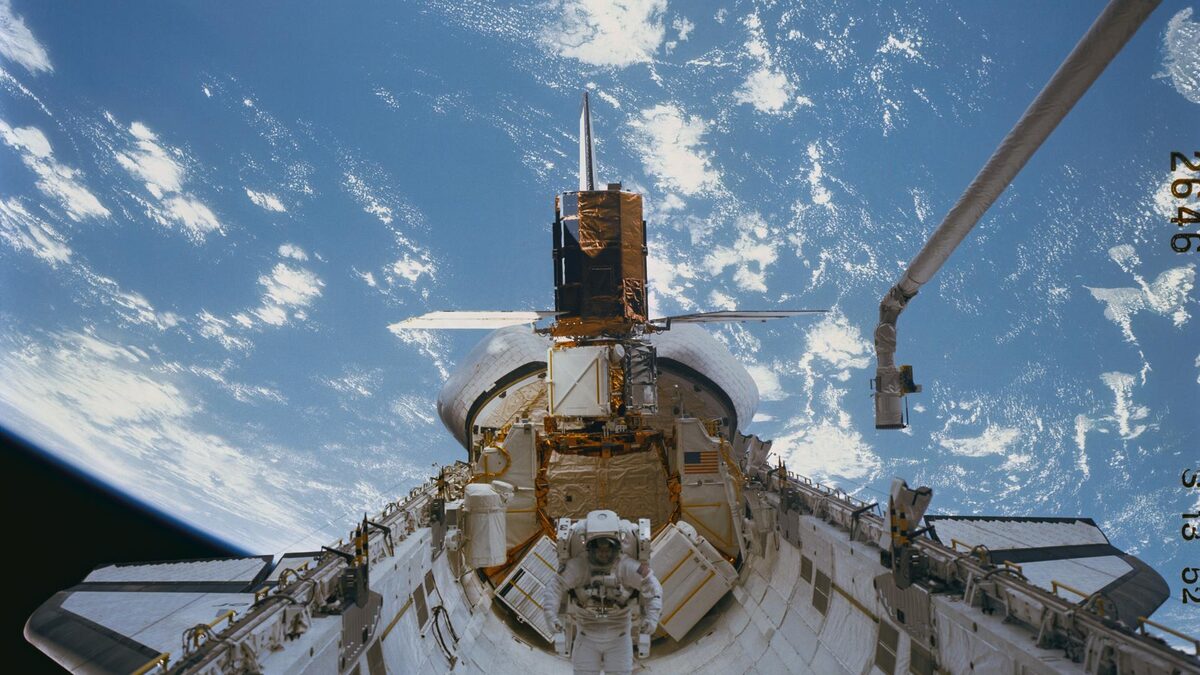
On April 11, Nelson and van Hoften headed back outside for a second spacewalk that lasted more than seven hours. This time, the operation came together. Rather than relying on a free-flying snatch-and-grab alone, the astronauts and the crew used the shuttle’s robotic arm and a more controlled approach to secure Solar Max in the payload bay. Once the satellite was safely positioned, the mission specialists replaced key hardware, including the attitude control system and electronics package that had crippled the observatory.
That sentence sounds almost tidy. It was not tidy. It was orbital surgery. Bulky gloves, complicated tools, unforgiving timelines, and zero margin for sloppy work. Every move had to be deliberate. Every component mattered. There is a reason this moment still shows up in NASA histories and spaceflight retrospectives. It was one of the first times the shuttle program delivered on its most seductive promise, the idea that astronauts would not just visit space but operate in it.
And then the best part: Solar Max went back to doing science. The repair was not symbolic. It was functional. The satellite resumed observations, which meant the mission did more than produce great photos and a killer story for evening news viewers. It extended the life of a working observatory and proved that orbital maintenance could be real, practical, and worth the risk.
That matters to the whole emotional feel of the era. The 1980s loved spectacle, sure, but they also loved competence. We remember the look of the shuttle tiles, the soaring launch footage, the giant helmets and the iconic NASA worm logo. But what gave those images weight was the sense that humans could still build things, fix things, and do hard things with skill. Solar Max was competence as culture. Not cynical, not ironic, just capable.
If you were watching from Earth, the visual language of the mission was unforgettable. White shuttle in black space. Astronauts floating like action figures come to life. A satellite rescued instead of abandoned. It was a whole Saturday-morning-future vibe, except it was happening for real. The shuttle era produced a lot of indelible imagery, but the STS-41C repair sits near the top because it looked exactly like the future kids in 1984 wanted adults to be building.
Why this hit so hard in the 1980s
Part of the reason the Solar Max repair still feels so retro-cool is that it belongs to a very specific moment in the culture. By 1984, the future had become a lifestyle aesthetic. The movies were full of sleek machines and digital dreams. Department stores sold chrome-heavy electronics with buttons that clicked like they meant business. Cars were getting more angular. Synths were everywhere. Even the fears of the era were high-tech. So when NASA rolled out a mission that literally involved astronauts fixing a machine in orbit, it matched the mood perfectly.
But it also had sincerity, which is why it ages better than a lot of 1980s futurism. It was not branding fluff. It was not a fake demo. It was not a concept car that never reached the road. It was a real mission carried out by real people, and it worked. That makes it more satisfying than a lot of retro-future promises that curdled over time.
There is also a bittersweet edge when we look back now. This was Challenger, still a living symbol of possibility, two years before disaster changed how the shuttle program was seen forever. In April 1984, the vehicle still represented confidence. Watching STS-41C today, you can feel that older emotional register. It is bright, ambitious, and almost startlingly earnest. NASA believed the shuttle could be a workhorse in space, and for this mission, that belief looked justified.
That is a big reason the story belongs on Retro Radical. It is not just a space mission. It is an artifact of a mindset. The repair of Solar Max captured the can-do energy that ran through so much of late twentieth-century culture. It had the tactile charm of an era before everything became hidden behind touchscreens and sealed devices. In 1984, fixing the future still involved tools, bolts, mission checklists, and a human being literally reaching out to grab the problem.
The legacy of the rescue
The April 11, 1984 Solar Max repair helped validate the idea of in-space servicing, a concept that would echo through later shuttle missions, Hubble repairs, and the broader evolution of orbital maintenance. Hubble usually gets the louder cultural memory, and fair enough, but Solar Max was an important early proof of concept. It showed that a spacecraft in trouble did not automatically become space junk. With the right crew, the right vehicle, and a lot of nerve, it could get a second life.
That makes this story feel modern in a sneaky way. We live in a time when repairability is once again part of the conversation, whether people are talking about electronics, sustainability, or the cost of replacing complex machines. Solar Max reminds us that one of the coolest ideas of the shuttle era was not just launching stuff. It was maintaining a human presence capable of solving problems after launch.
And honestly, it still rocks on a pure image level. The Manned Maneuvering Unit remains one of the most gloriously eighties pieces of real hardware ever flown. It looks like something you would have seen on a toy shelf next to model kits, laser-tag gear, and the kind of box art that promised impossible adventures. Seeing it used in a mission that actually changed the fate of a scientific satellite is even better.
So yes, April 11, 1984 deserves a spot in the Retro Radical calendar. It was the day the shuttle era backed up its coolest sales pitch. NASA did not just send astronauts into orbit. It sent them up there to fix something broken, and they pulled it off. That is the kind of retro future story that never really gets old.
If you miss the version of tomorrow that felt bold, mechanical, and just a little bit dangerous, Solar Max is your kind of memory. It is a reminder that the future once looked like a repair job in space, handled by a crew calm enough to make the impossible seem normal.
Sources
- NASA, STS-41C Mission Facts and Highlights — official mission summary, crew list, and repair overview.
- NASA+, STS-41C Mission Highlights — post-flight presentation describing the mission and repair.
- Wikipedia, STS-41-C — mission timeline and repair sequence overview.
- Encyclopaedia Britannica, Solar Maximum Mission — concise background on the observatory.