Back to the Beach 1987: 9 Wild Facts About Frankie & Annette
The Back to the Beach movie opened on August 7, 1987, twenty-two years after Frankie Avalon and Annette Funicello shared their last sandy kiss in How to Stuff a Wild Bikini. Paramount sank more money into this one parody than American International Pictures spent on all six of the original 1960s beach films combined, and the gamble landed Siskel and Ebert’s two thumbs up plus a $13 million domestic run. It’s the rare 80s sequel that respects its source while ripping it apart for laughs, with Pee-wee Herman covering The Trashmen and Stevie Ray Vaughan trading licks with Dick Dale on the soundtrack. Here are nine wild facts every Gen X viewer should know about the reunion that nobody asked for and everybody secretly loved.
The Back to the Beach Movie Pulled Off a 22-Year Reunion
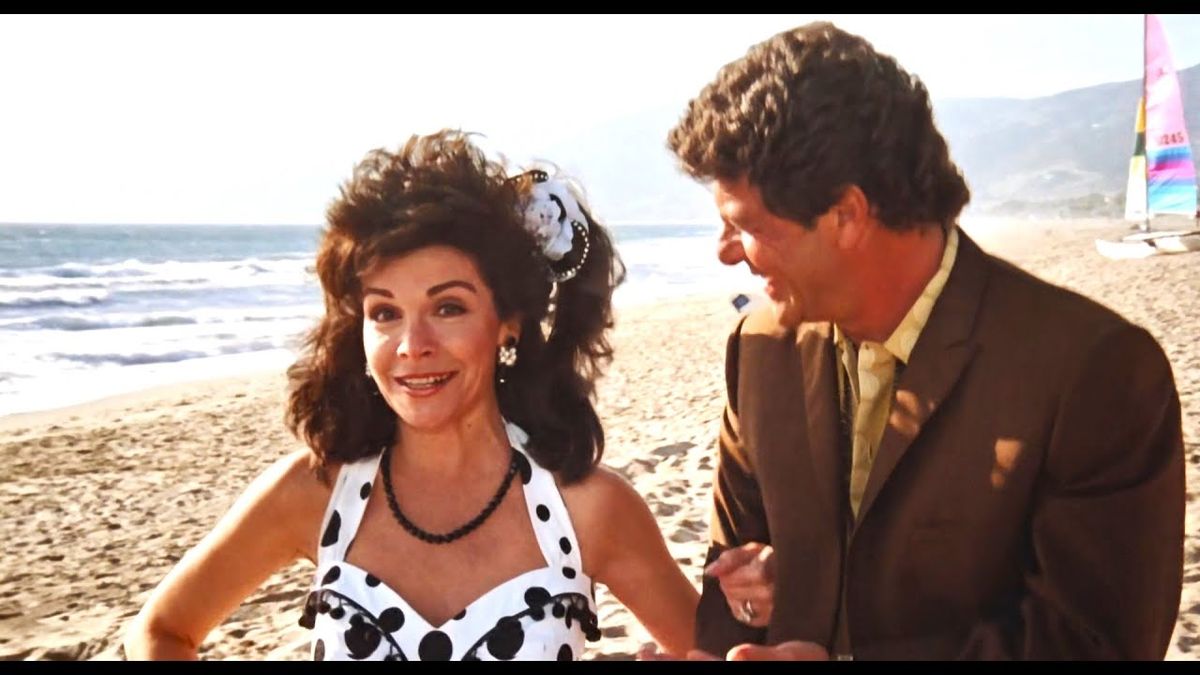
Frankie and Annette had not appeared together on screen since 1965’s How to Stuff a Wild Bikini, the final entry in American International Pictures’ original Beach Party run. By 1987 they were both in their mid-forties, Annette had a thriving Skippy Peanut Butter endorsement that the movie openly mocks, and the surf-rock teen world they helped define had been buried twice — first by the British Invasion, then by punk and new wave. Reuniting them was either a brilliant idea or a deeply nostalgic one. Paramount decided it was both.
The Retro Almanac
A monthly roundup of "on this day" highlights from that month, decades back — plus first dibs on new retro merch drops. No spam, just the good stuff.
The film leans into the gap. Frankie’s character is a buttoned-down Ohio used-car salesman in a sharkskin suit, riding a fake surfboard in his own commercials. Annette serves endless peanut butter sandwiches in a spotless suburban kitchen. The whole opening sells the joke that these two grew up, sold out, and forgot the Pacific exists. Then their daughter, played by a pre-Full House Lori Loughlin, drags them back to Malibu and the movie finally lets the Big Kahuna remember who he used to be.
“Frankie” Couldn’t Legally Be Called Frankie
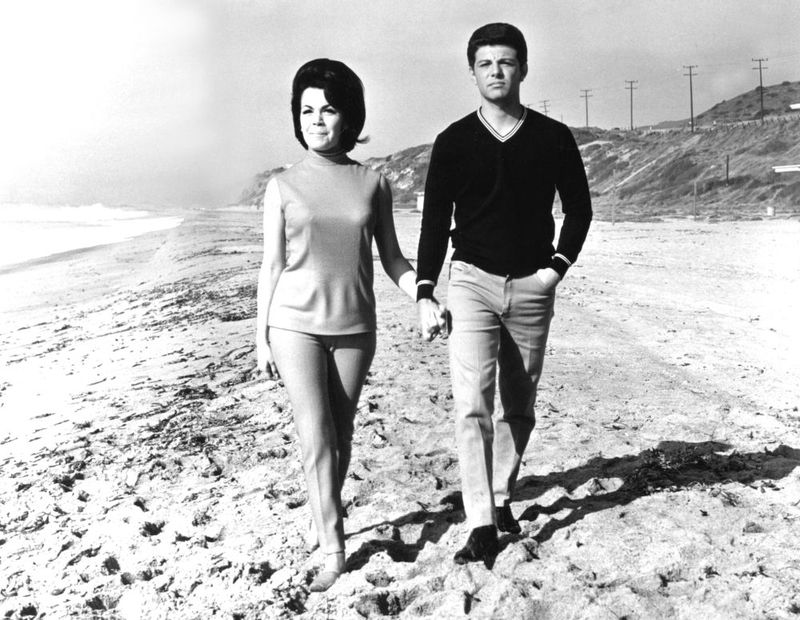
This is the deep-cut trivia that most casual fans miss. Avalon’s beach character in the 1960s films — Frankie — was owned by American International Pictures and tangled in a thicket of producer rights when Paramount tried to revive the franchise. The compromise: across the entire Back to the Beach run-time, his character is never once called by a first name. He’s “The Big Kahuna,” “Dad,” “Honey,” anything but Frankie. Watch for it on a rewatch and you’ll start hearing the dodge in every scene.
Annette had no such problem — her on-screen first name had always been Annette, which doubled as her real name, which dodged the rights issue entirely. It’s the kind of small legal weirdness that explains why Hollywood reboots so often feel slightly off. The names you remember belong to someone else.
It Cost More Than All Six Original Beach Party Movies Combined
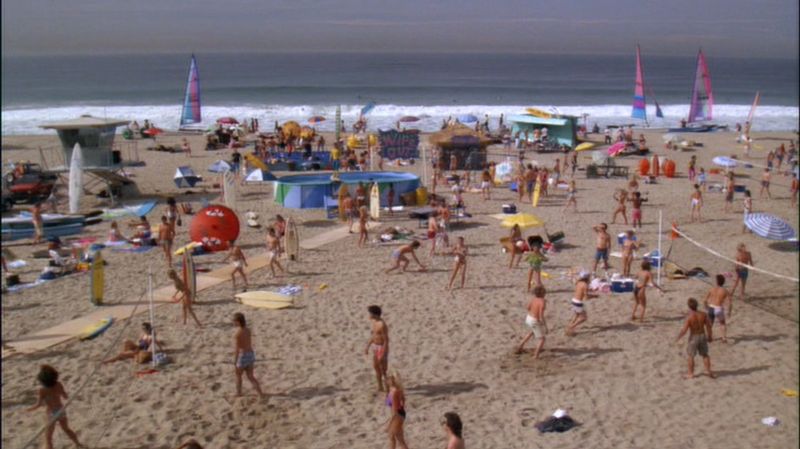
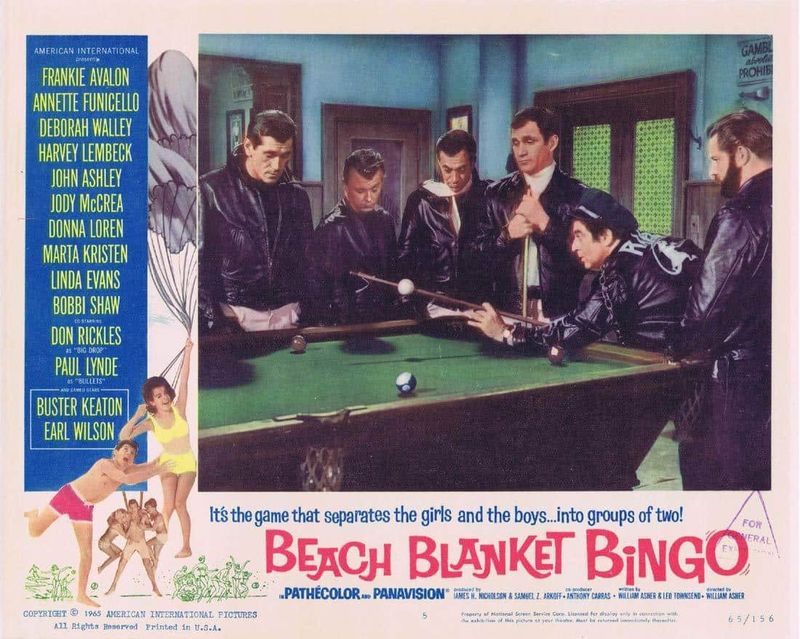
American International Pictures churned out the original cycle — Beach Party, Muscle Beach Party, Bikini Beach, Pajama Party, Beach Blanket Bingo, and How to Stuff a Wild Bikini — between 1963 and 1965 on shoestring drive-in budgets. Each was made for around $350,000. Paramount’s reunion outspent the entire historical franchise on a single film, hiring cameo talent at union scale, building elaborate musical numbers, and shooting on real Malibu locations rather than backlot sand piles.
The investment shows. The crowd scenes are genuinely huge, the cinematography is widescreen and properly lit, and the choreography on the production numbers has the polish of a music video. AIP’s originals always felt rushed because they were. Back to the Beach looks like what those movies always wanted to be.
Pee-wee Herman Stole the Movie With Surfin’ Bird
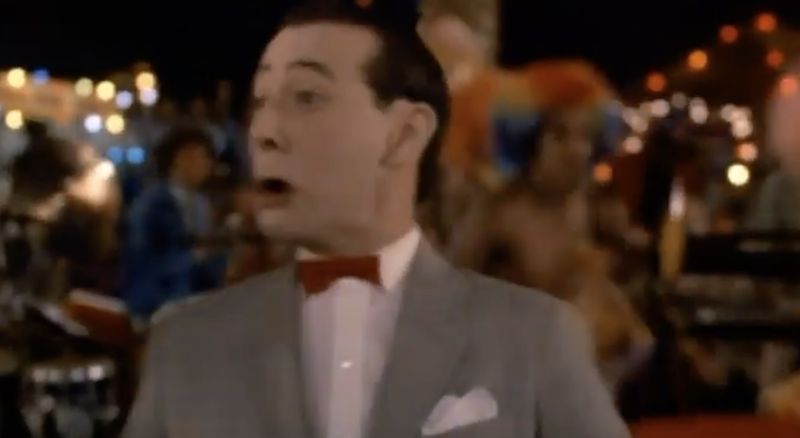
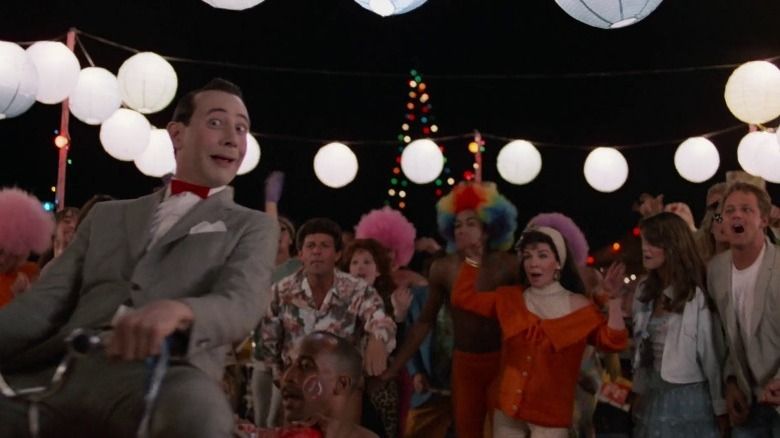
Paul Reubens shows up in the middle of the film in character as Pee-wee Herman, walks onto a nightclub stage in his trademark grey suit and red bow tie, and absolutely demolishes The Trashmen’s 1963 garage-rock classic “Surfin’ Bird.” He’s lip-syncing, mostly, but the physical performance — the bug-eyed shouting, the spasmodic dance moves, the way he bullies the camera — is the single most-quoted moment in the whole picture. The scene was filmed during Reubens’ peak Pee-wee’s Playhouse run on CBS Saturday mornings, when his cultural stock had never been higher.
The bit works because everyone else in the movie is winking at the audience. Pee-wee just commits. He doesn’t acknowledge the parody. He performs “Surfin’ Bird” like it’s the greatest song ever recorded and he was put on earth to sing it. The crowd reaction shots aren’t entirely acting — most of those extras were watching him do this for the first take.

Stevie Ray Vaughan and Dick Dale Made the Best Cover of Pipeline Ever Recorded
The soundtrack is where this movie quietly earned its long shelf life. Dick Dale — the actual King of the Surf Guitar, the man who electrified “Misirlou” in 1962 — re-recorded “Pipeline” for the film as a duel with Stevie Ray Vaughan. It’s three minutes of two guitar legends in different eras attacking the same song from opposite sides. Vaughan brings Texas blues fire; Dale brings wet reverb and pickslide thunder. The cut earned a Grammy nomination for Best Pop Instrumental Performance.
The rest of the soundtrack is just as strange. Aimee Mann sings the title track. Private Domain covers Wipe Out. Annette herself does an updated “Jamaica Ska” that sounds genuinely great. Avalon revisits “California Sun.” For a parody movie, somebody on the music supervision team took the assignment unusually seriously.
The Cameo List Reads Like a TV Land Hall of Fame
If you grew up watching syndicated reruns after school, the cameo casting in Back to the Beach hits like a roll call. The director and producers raided 60s television wholesale.
- Bob Denver and Alan Hale Jr. reunite as Gilligan and the Skipper, behind a bar instead of on a deserted island.
- Jerry Mathers, Tony Dow, and Barbara Billingsley appear together as a trio that reads exactly as if the Beaver family stepped off the boat for a vacation.
- Don Adams plays a Get Smart-style spy character, complete with shoe phone callback gags.
- Edd “Kookie” Byrnes from 77 Sunset Strip shows up with the same hair he had in 1958.
- O.J. Simpson has a brief role years before his Naked Gun comedy turn and the rest of the story.
- Fishbone — the actual LA ska-punk band — perform live in the climactic beach concert scene.
None of the cameos are throwaways. The film gives each of them a real beat, sometimes a line that calls back to their famous role, sometimes a sight gag built around the actor’s persona. It’s nostalgia bait, but it’s nostalgia bait constructed by people who actually loved the source material.
The Director Was a 30-Year-Old Australian on Her First Feature
Lyndall Hobbs had directed music videos and short films, but Back to the Beach was her debut as a feature director. She was Australian, in her early thirties, and she had to corral a cast that included two 60s screen icons, the hottest sketch comedian in America, multiple sitcom legends, and one of the greatest guitar players alive. Studio politics could have eaten her alive. They didn’t.
Hobbs’s instinct was to push hard into the parody without losing affection for the original films. She lets Frankie and Annette age. She gives the daughter character a punk-leaning boyfriend so the movie has actual generational conflict to play with. The choice to shoot it like a real musical instead of a TV movie comedy gave the project a visual identity that’s held up. Truth is, most films directed by veterans don’t survive their decade this well. This one was steered by a first-timer.
Critics Liked It More Than Anyone Expected
Going into release, the assumption around Hollywood was that Back to the Beach was a vanity reunion that would die on opening weekend. Then Siskel and Ebert gave it two thumbs up on their syndicated show, calling it the best beach party movie of the bunch. Roger Ebert’s written review pointed specifically to Pee-wee’s “Surfin’ Bird” and the Frankie-Annette chemistry as reasons the gimmick worked. Vincent Canby at The New York Times was harsher but still allowed that the film had real moments. The domestic box office landed at $13.1 million, modest but profitable, and the home video and cable afterlife was substantial.
The truth is, most “ironic” 80s remakes of older properties — and there were plenty — feel mean. This one is generous to its stars and its audience. That’s why it kept showing up on Comedy Central late-night blocks throughout the 90s and why it still gets shared in nostalgia circles three decades later.
Annette’s Health Was Already Quietly Declining
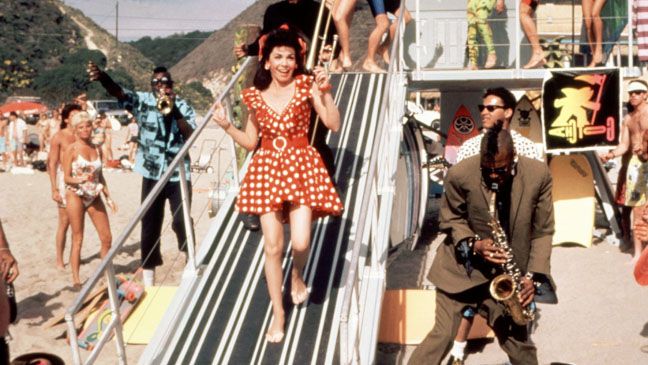
This is the hard part. Annette Funicello had been diagnosed with multiple sclerosis in 1987, the same year Back to the Beach was released. She kept the diagnosis private until 1992, but she was already feeling early symptoms during the shoot. Watch her dance scenes carefully and you can see her steadying herself on furniture or co-stars more than the choreography really requires. She never made another theatrical film. She passed away in April 2013.
Knowing that context changes how the movie plays. The final beach concert sequence, with Annette singing on stage flanked by a full band, becomes a kind of farewell — not from her, but from a generation of fans who’d watched her since the Mouseketeer days. The film honors her without knowing it had to.
Lori Loughlin Was the 22-Year-Old Bridge to a New Generation
Two years before Full House turned her into a sitcom mom, Lori Loughlin was cast as Sandi, Frankie and Annette’s college-age daughter. Her job in the movie is to be the millennial-before-millennials character — pierced, modern, suspicious of her parents’ beach-bunny past, and ultimately the reason they rediscover it. Loughlin had already done The New Kids for Sean S. Cunningham and a run on The Edge of Night, but this was her first big-studio comedy.
She plays the role straight, which is the right call. If she’d tried to compete with Pee-wee or with Frankie and Annette’s built-in nostalgia voltage, she’d have vanished. Instead she anchors the human story while the movie around her swings between musical numbers, sight gags, and surf-rock setpieces. The character is the connective tissue that lets the whole reunion premise work.

Where to Watch It in 2026
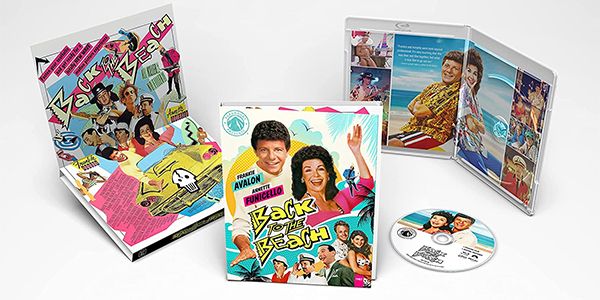
Paramount Home Entertainment finally gave Back to the Beach a proper Blu-ray release in 2022, and the disc is loaded with retrospective interviews, a vintage making-of featurette, and the original theatrical trailer. The streaming situation rotates — it’s been on Netflix, then Paramount+, then drifted off again — so a physical copy is still the most reliable way to watch. Used DVDs run under five dollars; the Blu-ray collector edition is the one worth tracking down.
If you’ve never seen it, go in expecting a 90-minute musical comedy that respects every reference it makes. If you saw it as a kid on HBO in 1988, the rewatch is going to hit harder than you expect — partly because of how affectionately the film treats the originals, and partly because of what came next for everyone in it. Fire up the trailer above for a taste, then find the Blu-ray. The Big Kahuna deserves a clean transfer.
For more lost-and-found 80s gems, the Miami Vice deep dive is the same era done in pastel suits, the Wes Craven Swamp Thing retrospective is the cult-classic cousin, and the Hudson Hawk autopsy covers the other end of the spectrum — a swing-for-the-fences 80s/90s comedy that didn’t land. Three decades on, Back to the Beach is still the one that did.
Sources
- Back to the Beach — Wikipedia — production history, cast, soundtrack details
- Back to the Beach (1987) — IMDb — full credits, trivia, box office
- Roger Ebert — Back to the Beach review — original 1987 critical reception
- Back to the Beach — Rotten Tomatoes — aggregated reviews and audience scores
- Le Cinema Dreams — Back to the Beach retrospective — long-form analysis of the production
Browse retro and vintage-inspired apparel at the RetroRadical shop →
Shop on eBay
Retro Collectibles on eBay →
We may earn a commission when you shop through our eBay links.
The Retro Almanac
A monthly roundup of "on this day" highlights from that month, decades back — plus first dibs on new retro merch drops. No spam, just the good stuff.