The Trade That Changed Baseball: Eckersley to Oakland, April 3, 1987
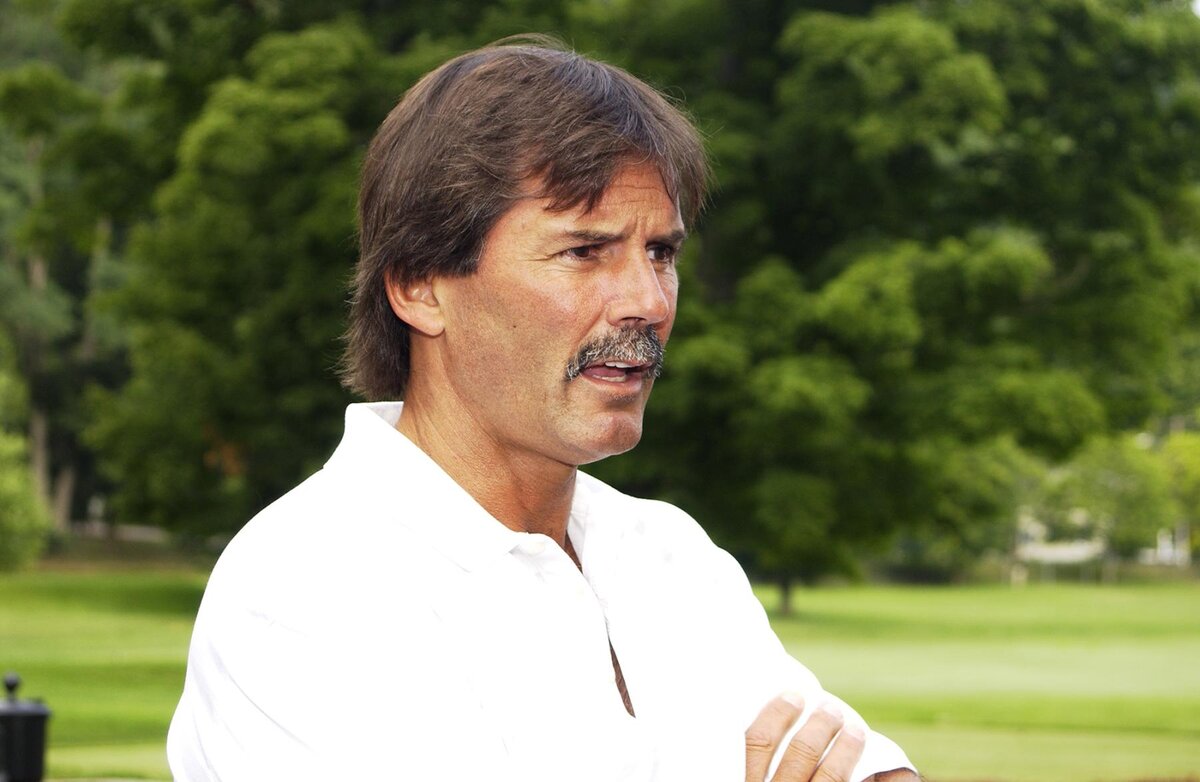
On April 3, 1987, the Chicago Cubs did what teams do with aging, struggling pitchers — they cut their losses. They packaged up 32-year-old Dennis Eckersley, fresh off a dismal 6-11 season with a 4.57 ERA and some very public off-field demons, and shipped him to the Oakland Athletics for three minor leaguers whose names you’ve never heard. Nobody blamed the Cubs. Eckersley looked finished. He was battling alcoholism. His fastball wasn’t what it used to be. He was, by all reasonable accounts, a cautionary tale in cleats.
What happened next was one of the most improbable career reinventions in the history of American professional sports — and it started right here, on this date, with a trade that the Cubs surely convinced themselves was a reasonable transaction.
A Career That Looked Like It Was Over
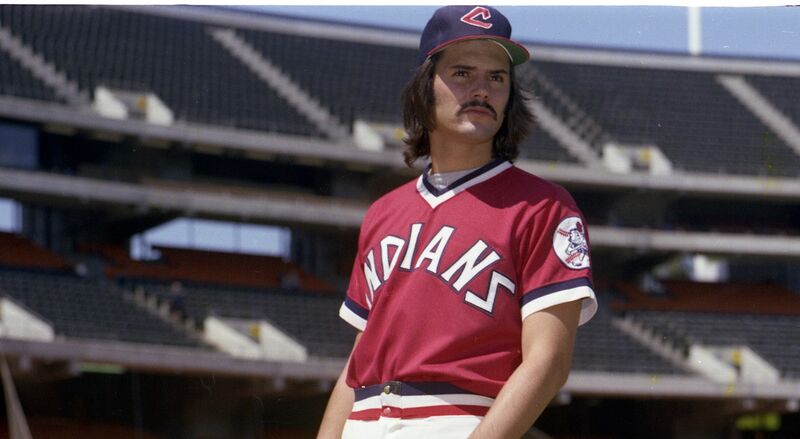
To understand how remarkable the Eckersley story is, you have to understand the depth of where he’d been. Dennis Lee Eckersley grew up in Fremont, California — right there in the Bay Area — rooting for the same Oakland Athletics he’d eventually rescue. He was a legitimate star as a young pitcher. The Cleveland Indians drafted him in the third round of the 1972 amateur draft, and by 1975 he was in the majors, winning The Sporting News Rookie Pitcher of the Year award. He looked like a future ace from day one.
Then came May 30, 1977 — Eckersley threw a no-hitter against the California Angels, striking out 12 in the process. He was 22 years old. The baseball world was talking about a potential Hall of Fame career. The Cleveland Indians traded him to the Boston Red Sox in 1978, and Eck responded with a 20-win season — the kind of campaign that cements legacies. He followed it up with 17 wins in 1979. Boston loved him.
But the 1980s were complicated. His fastball lost some steam. His numbers declined. Personal troubles mounted — his wife left him for a teammate, a gut-punch that precipitated the trade to Boston in the first place. He was traded to the Chicago Cubs midseason in 1984 and helped them reach the postseason for the first time since 1945, but he was drinking heavily and his focus was elsewhere. By 1986, he posted that ugly 6-11 record and checked himself into rehab.
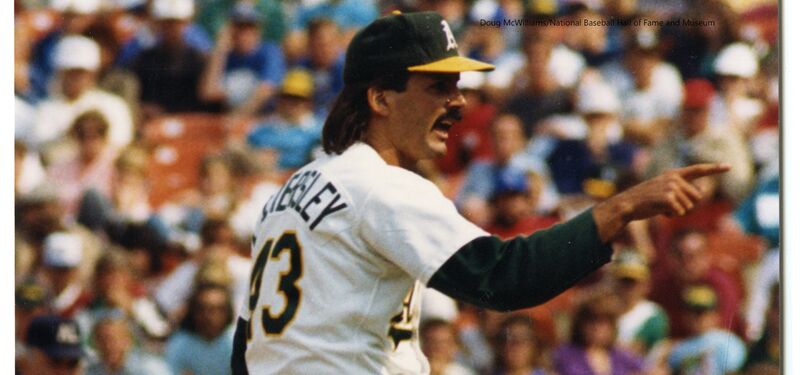
Here’s what the Cubs didn’t fully know when they made that April 3 trade: Eckersley had just gotten sober. He was, in his own words, “spiraling out of control personally.” He’d hit his crossroads. Family members had videotaped him while drunk and played it back for him. He sought treatment on his own. “With the grace of God, I got sober and I saved my life,” he said years later, during his Hall of Fame speech. The Cubs traded a man on the verge of his greatest chapter — they just didn’t know it yet.
The Oakland A’s and the Bullpen Gamble
A’s manager Tony La Russa was not initially planning to make Eckersley a closer. The idea was to use him as a long reliever or setup man. Eckersley, for his part, still wanted to start. He made two starts for Oakland before an injury to then-closer Jay Howell changed everything. La Russa handed the ball to Eckersley in the ninth inning and watched what happened.
What happened was electric.
Eckersley finished 1987 with 16 saves. Not earth-shattering, but enough to convince La Russa and pitching coach Dave Duncan that they had something. The next season, 1988, Eckersley became arguably the most dominant one-inning pitcher the sport had ever seen. He saved 45 games — a league-leading total — while posting a 2.35 ERA. He finished in the top five for both the Cy Young Award and MVP. The Oakland Athletics, powered by the Bash Brothers Jose Canseco and Mark McGwire, rolled through the American League.
Then came the ALCS against Boston — his old team. Eckersley didn’t just beat the Red Sox; he owned them. He recorded saves in all four games as the A’s swept their way to the World Series. His former fans in New England watched helplessly as their guy turned into someone they barely recognized.
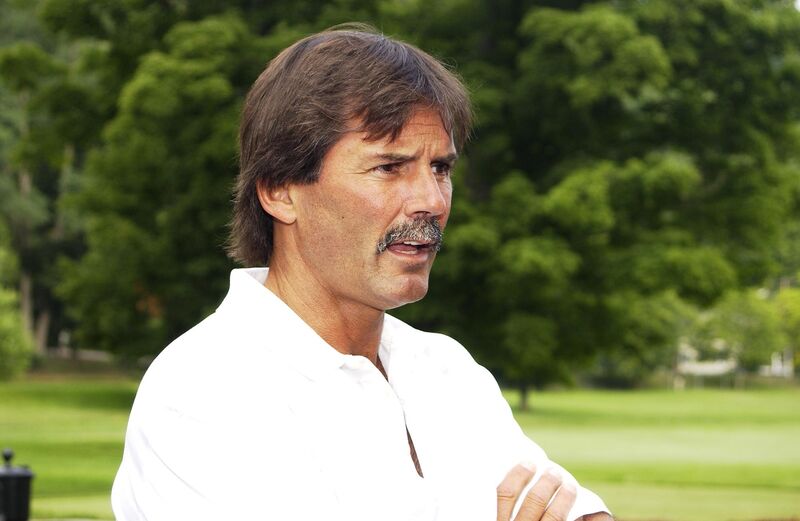
The Kirk Gibson Moment — Baseball’s Most Iconic Gut-Punch
The 1988 World Series brought the Oakland Athletics against the Los Angeles Dodgers, and Game 1 produced one of the most replayed moments in baseball history — and it was not an Eckersley highlight.
It was the bottom of the ninth inning. The A’s led 4-3. Eckersley was untouchable that year — nobody scored on him, nobody beat him when the game was on the line. Dodger manager Tommy Lasorda sent up Kirk Gibson to pinch-hit. Gibson was so injured he could barely walk. He’d been hobbling around on bad legs all series, and nobody expected him to appear at all. But there he was.
What followed was a ten-pitch at-bat for the ages. Gibson fouled pitches off, battled through pain, and on the final delivery — a backdoor slider that Eckersley was famous for — Gibson got just enough of the ball to send it into the right field bleachers. He pumped his fist around the bases, nearly falling over. The Dodgers won 5-4. The stadium erupted. The A’s never fully recovered. Los Angeles won the Series in five games.
Eckersley himself first coined the phrase “walk-off home run” to describe what Gibson did to him. He owned the moment with remarkable grace. But it stung. And the following season, he came back angrier and more precise than ever.
1989: Champions at Last
The 1989 A’s were better. Eckersley posted 33 saves with a 1.56 ERA. He was, by any measure, the most dominant closer in baseball. Oakland swept through the playoffs and faced the San Francisco Giants in the World Series — a cross-Bay rivalry that the entire sports world had circled on their calendars.
Then, before Game 3, the Loma Prieta earthquake struck the San Francisco Bay Area. Measuring 6.9 on the Richter scale, it killed 63 people, injured over 3,000 more, and collapsed sections of the Bay Bridge. The Series was suspended for ten days out of respect and safety concerns. When play resumed, Oakland finished the sweep.
“I’m happy, but I feel guilty for being happy,” Eckersley told reporters afterward. The victory celebration was muted, out of deference to a city still processing catastrophe. Eckersley secured the final out of the Series, but there were no fist pumps. Just quiet satisfaction and a community in grief.
The Numbers That Shouldn’t Be Possible
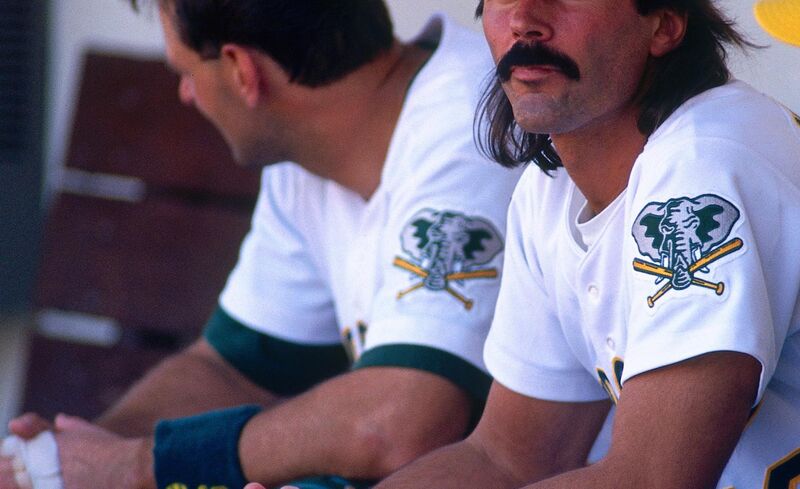
From 1988 through 1992, Eckersley put together a five-year run that statistically has almost no equal in the history of relief pitching. He accumulated 220 saves during that stretch. He never posted an ERA higher than 2.96. In 1990, he gave up just five earned runs all season — finishing with a 0.61 ERA. He didn’t walk his first batter of 1990 until June 12, setting a streak of 185 consecutive batters faced without a walk. He became the first relief pitcher in baseball history to have more saves than baserunners in a single season.
Goose Gossage, himself a Hall of Fame closer, said of Eckersley: “He could hit a gnat in the butt with a pitch if he wanted to.” That wasn’t an exaggeration. Eckersley threw two pitches — a sinker and a backdoor slider — and batters knew exactly what was coming. They just couldn’t hit it.
The peak came in 1992. Eckersley went 7-1 with a 1.91 ERA and a career-high 51 saves. He was named the American League Cy Young Award winner and the American League Most Valuable Player — one of only eleven pitchers in MLB history to win both in the same season, joining legends like Bob Gibson and Sandy Koufax. At that point, there was no debate: Eckersley was the best relief pitcher alive, and arguably the best who’d ever lived.
A Dual Legacy No One Else Has Matched
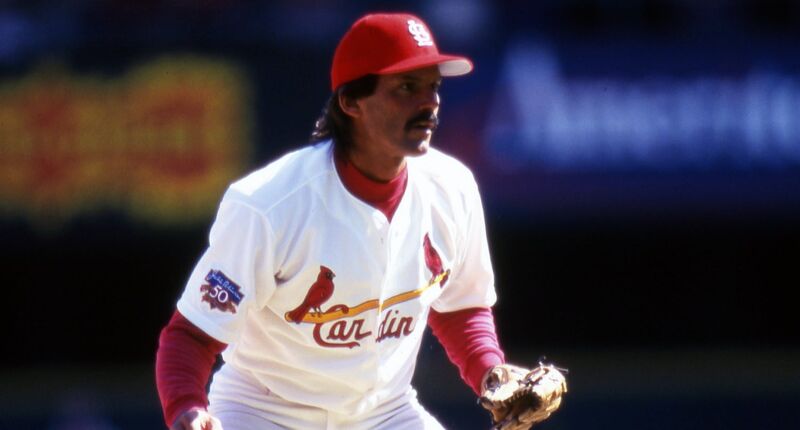
What makes Eckersley unique in the historical record isn’t just the dominance — it’s the two completely separate careers. As a starter, he won 20 games, threw a no-hitter, and compiled double-digit win seasons a full decade before arriving in Oakland. As a closer, he redefined what a relief pitcher could be. He is one of only two pitchers in Major League Baseball history — along with John Smoltz — to have both a 20-win season and a 50-save season in a career. He finished with 100 complete games and 390 career saves — the only pitcher in history to reach both milestones.
The closer role as we know it today — the specialized one-inning shutdown artist who owns the ninth inning — was shaped in large part by what Tony La Russa did with Eckersley starting in 1987. Before Eckersley, closers often pitched multiple innings. After watching what Eckersley could do deployed exclusively in high-leverage ninth-inning situations, the sport changed. Teams everywhere began grooming dedicated closers and protecting them for the final out. The modern bullpen structure traces its lineage directly back to that April 3 trade.
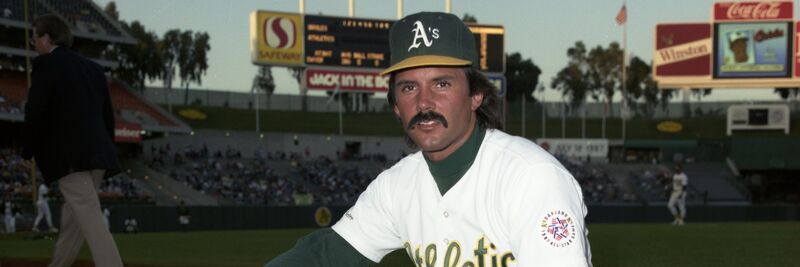
If you were a baseball fan growing up in the late 1980s and early 1990s, you knew exactly what it meant when Eckersley jogged in from the Oakland bullpen. You knew the game was over. The sidearm delivery, the mustache, the intense stare, the fist pump after a strikeout — it was theater. It was intimidation. It was the end. And it started with a trade the Cubs thought was nothing.
For Gen X baseball fans, the A’s dynasty of 1988-1992 was appointment television. This was the era of Michael Jordan pulling off the impossible and sports stars doing things that seemed superhuman. Eckersley fit right in. And if you want to understand the emotional weight of the late ’80s sports world — a time of both triumph and national heartbreak — the Exxon Valdez disaster of 1989 sits right alongside the joy of the A’s championship, reminding you how complicated that era really was. If you want more “On This Day” moments that shaped the decade, the Reagan assassination attempt of 1981 is another unforgettable hinge point in 80s American history.
Hall of Fame and the Legacy of Sobriety
Dennis Eckersley was elected to the Baseball Hall of Fame in 2004, his first year on the ballot, with 83.2% of the vote. During his induction speech in Cooperstown, he was disarmingly honest about the road that brought him there. He talked about the drinking. He talked about the rehab. He talked about the crossroads. He credited God and his sobriety with saving not just his career but his life.
“I was spiraling out of control personally,” he said. “I knew I had come to a crossroads in my life. With the grace of God, I got sober and I saved my life.”
The Oakland Athletics retired his number 43 in 2005. He went on to a long career as a broadcaster — first with the Athletics, then a beloved two-decade run with NESN calling Red Sox games. His commentary style, featuring a rich vocabulary of baseball slang (“walk-off,” “bridge job,” “putting cheese on the table”), became a language unto itself. Red Sox fans even maintained an “Ecktionary” to track his coinages. He retired from broadcasting in 2022, after 50 years in professional baseball.
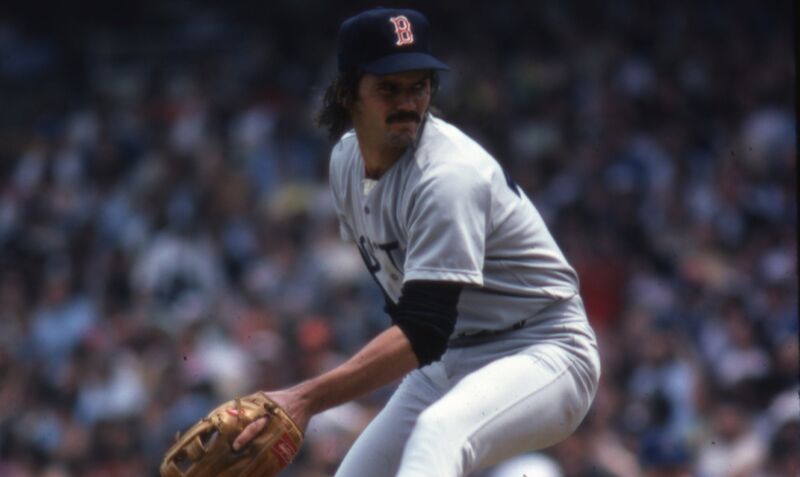
The trade on April 3, 1987, was supposed to be a quiet bookkeeping transaction — a team unloading a broken-down pitcher for a few lottery tickets in the minors. Instead, it was the beginning of one of sport’s great redemption arcs. The Cubs got nothing. Oakland got everything. And baseball got a template for what a closer could be.
None of those three minor leaguers ever made it to the majors.
Dennis Eckersley is in the Hall of Fame.
Sources
- National Baseball Hall of Fame — “Eckersley trade redefined Athletics, bullpen use”
- National Baseball Hall of Fame — Dennis Eckersley official Hall of Fame profile
- Wikipedia — Dennis Eckersley
- National Baseball Hall of Fame — “A’s acquire future Hall of Famer Dennis Eckersley”
- Los Angeles Times — “Cubs Trade Eckersley to Oakland in Transaction Involving 5 Players” (April 4, 1987)