Drinking From the Garden Hose: The Taste of an 80s Childhood Summer
There’s a specific taste that exists only in the memory banks of people who grew up in the ’70s, ’80s, and early ’90s. It’s warm and rubbery with a metallic edge, followed immediately by a rush of cold water that was somehow the most refreshing drink you’d ever had. It came from a green garden hose coiled in the backyard, and you drank it by kinking the hose, putting your mouth over the end, and releasing the kink while trying not to blast water up your nose. If you know this taste, you are one of us. If you don’t, we feel sorry for you.
Drinking from the garden hose wasn’t just hydration — it was a rite of passage. It was the unofficial beverage of every summer spent outside from sunrise to streetlights. It was the taste of freedom, of unsupervised play, of a childhood so different from today’s that it might as well have happened on another planet. And it was completely, gloriously normal.
Why the Garden Hose Was Our Water Bottle
Here’s the thing modern parents don’t understand: water bottles didn’t exist. Not in the way we think of them now. There were no Hydro Flasks, no Nalgenes, no insulated stainless steel vessels with motivational time markers. Evian and Perrier existed, but those were fancy European things that rich people drank on television. The concept of carrying your own water with you — of personal hydration as a thing — simply hadn’t been invented yet.
When you were thirsty playing outside in the summer of 1985, your options were:
- Go inside and get a drink from the kitchen tap (unacceptable — going inside meant risking being given a chore or being told to stay in)
- Find a public water fountain (only available at parks, and those always had warm water and a mysterious white crust around the spout)
- Drink from the garden hose (obvious choice)
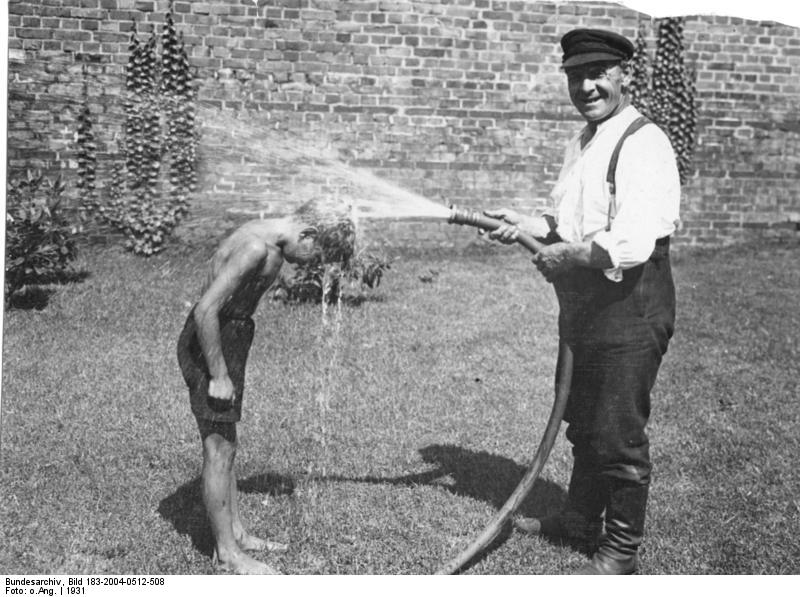
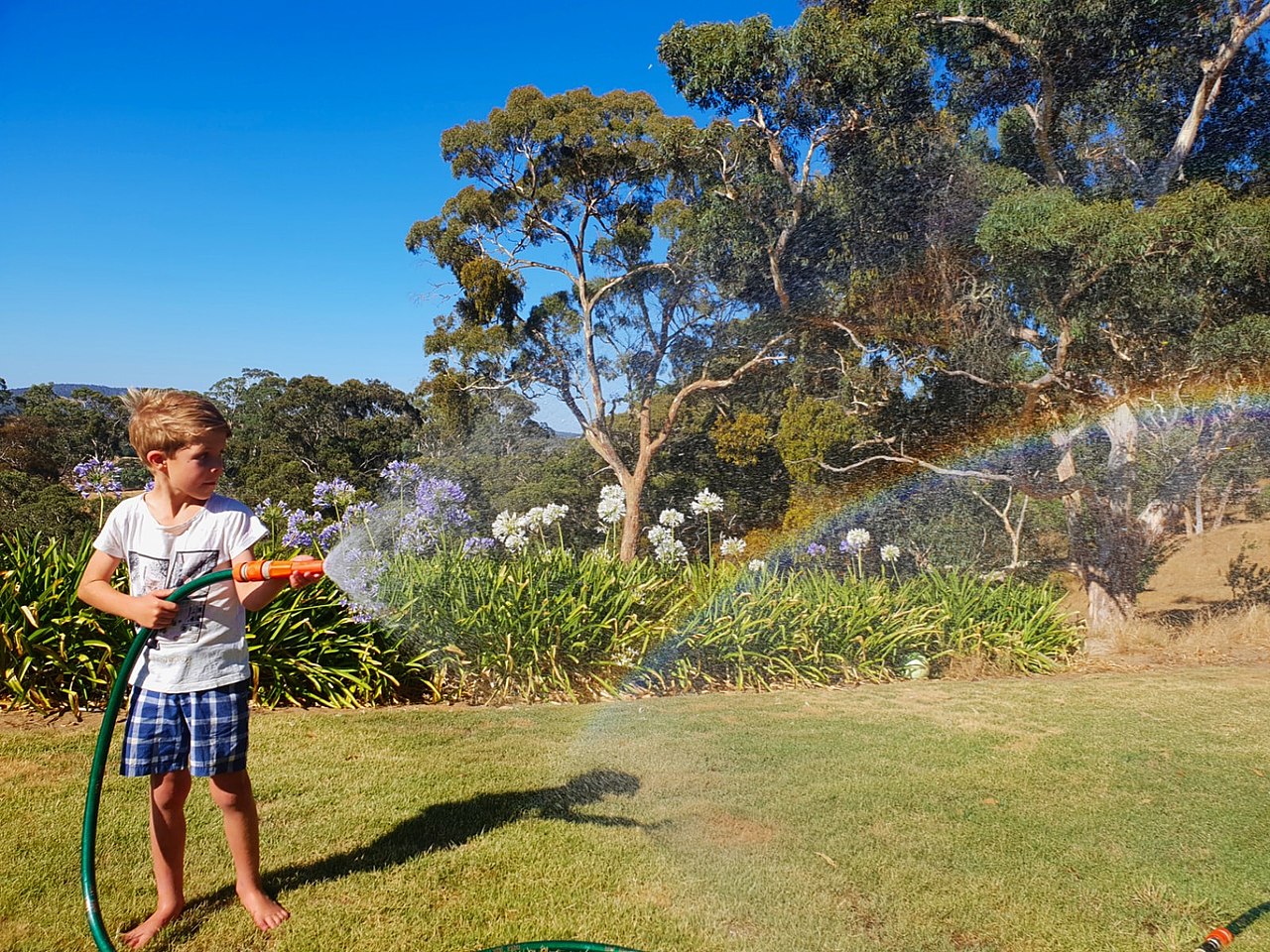
The garden hose was right there. It was always accessible. You didn’t need permission. You didn’t need a cup. You just grabbed the hose, pointed it at your face, and let rip. The first blast was always warm — sun-heated water that had been sitting in the hose — and tasted strongly of rubber and whatever chemicals leached from the vinyl. Then the cold water from the pipes hit, and it was genuinely glorious.
The Technique — There Was Definitely a Technique
Drinking from the garden hose wasn’t as simple as it sounds. There was a whole methodology, passed down through generations of neighborhood kids like oral tradition.
The Kink Method: The most common approach. You bent the hose sharply to stop the flow, put your mouth near the end, and slowly released the kink. This gave you control over the flow rate. Too fast and you’d get a face full of water. Too slow and you’d get a dribble. The sweet spot was a firm, steady stream that you could drink from without drowning.
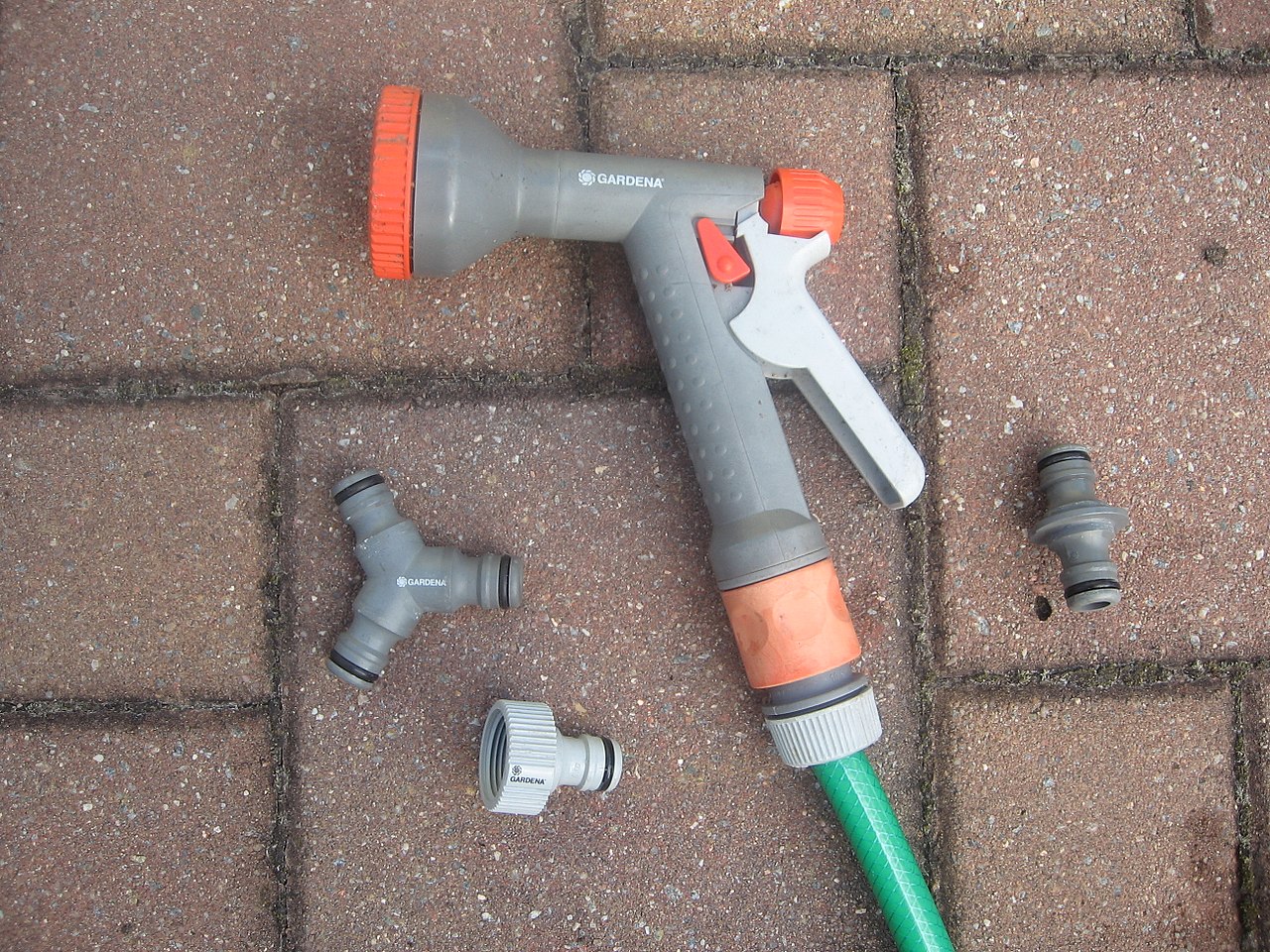
The Thumb Method: For the more advanced drinker. You held the hose end and used your thumb over the opening to create different spray patterns. Full coverage for a drink, partial coverage for a fine mist to cool your face, and no coverage for maximum-pressure water fights. The thumb was the original multi-function nozzle.
The Fountain Method: You pointed the hose straight up to create a drinking fountain effect. This was elegant in theory but chaotic in practice — the water would arc beautifully, then the wind would shift, and you’d get soaked. Still, when it worked, you felt like you were drinking from a magical spring.
Every neighborhood had one kid who was the garden hose master — the one who could drink from full pressure without getting water up their nose, who could create a perfect arc with their thumb, who knew which houses had the coldest water and which hoses tasted the least rubbery. This was a genuine skill set, and it was respected.
The Taste — Warm Rubber and Cold Memories
Let’s address the elephant in the yard: garden hose water tasted weird. It wasn’t good by any rational standard of beverage evaluation. The rubber/vinyl flavor was unmistakable. The first sip was warm and slightly metallic. If the hose had been sitting in the sun all day, the initial water was hot enough to make you spit it out.
But here’s the paradox — it tasted fantastic. Not because the water was objectively good, but because of the context. You were hot, you were thirsty, you were in the middle of something — a kickball game, a bike ride, a dirt clod war, an elaborate game of tag that had been running for three hours. Your body was screaming for hydration, and that rubber-tinged water was the answer to your prayers.
Context makes everything taste better. A gas station hot dog at midnight after a road trip is better than a five-star meal. A cold beer after mowing the lawn is better than the finest wine. And garden hose water after two hours of summer play is better than anything that’s ever come in a bottle. The taste was partly water, partly rubber, and partly the flavor of childhood itself.

Hose Fights — The Original Water Wars
The garden hose wasn’t just for drinking. It was a weapon. Hose fights were the nuclear option of summer warfare, and they escalated faster than any arms race in human history.
It always started innocently. Someone would be drinking from the hose and “accidentally” spray a sibling. The sibling would grab the hose and retaliate. Within thirty seconds, everyone in the yard was soaking wet, alliances were forming and breaking, and someone’s mom was yelling from the kitchen window about the water bill.
The technology of hose fights evolved rapidly. The basic hose was the infantry weapon — effective but unglamorous. Then someone brought out the oscillating sprinkler, which became a defensive perimeter you had to breach. Running through a sprinkler wasn’t just fun — it was a military maneuver. The kid with access to the faucet had ultimate power, because they could shut off the water supply entirely, which was the hose fight equivalent of a ceasefire.

Then Super Soakers arrived in 1990 and changed everything. Lonnie Johnson’s pressurized water gun was the atomic bomb of backyard warfare. Suddenly you had portable, high-pressure water delivery systems that could nail someone from 30 feet away. The garden hose was still the heavy artillery, but the Super Soaker was the mobile infantry. Kids with both were unstoppable.
But there was an unwritten rule about hose fights: they happened outside, with outdoor clothes, during daytime hours. You didn’t hose someone who was dressed for church. You didn’t ambush someone going to a friend’s house. The rules of engagement were clear, and violating them meant social consequences far worse than getting wet.
The Slip ‘N Slide — Hose-Powered Thrill Ride
If the garden hose was the heart of summer, the Slip ‘N Slide was its crown jewel. Wham-O’s legendary yellow plastic sheet, laid out on the lawn and fed by the garden hose, was the closest thing to a water park most kids ever experienced. You’d run, throw yourself on the wet plastic, and slide on your belly across the yard. It was exhilarating, slightly dangerous, and completely irresistible.
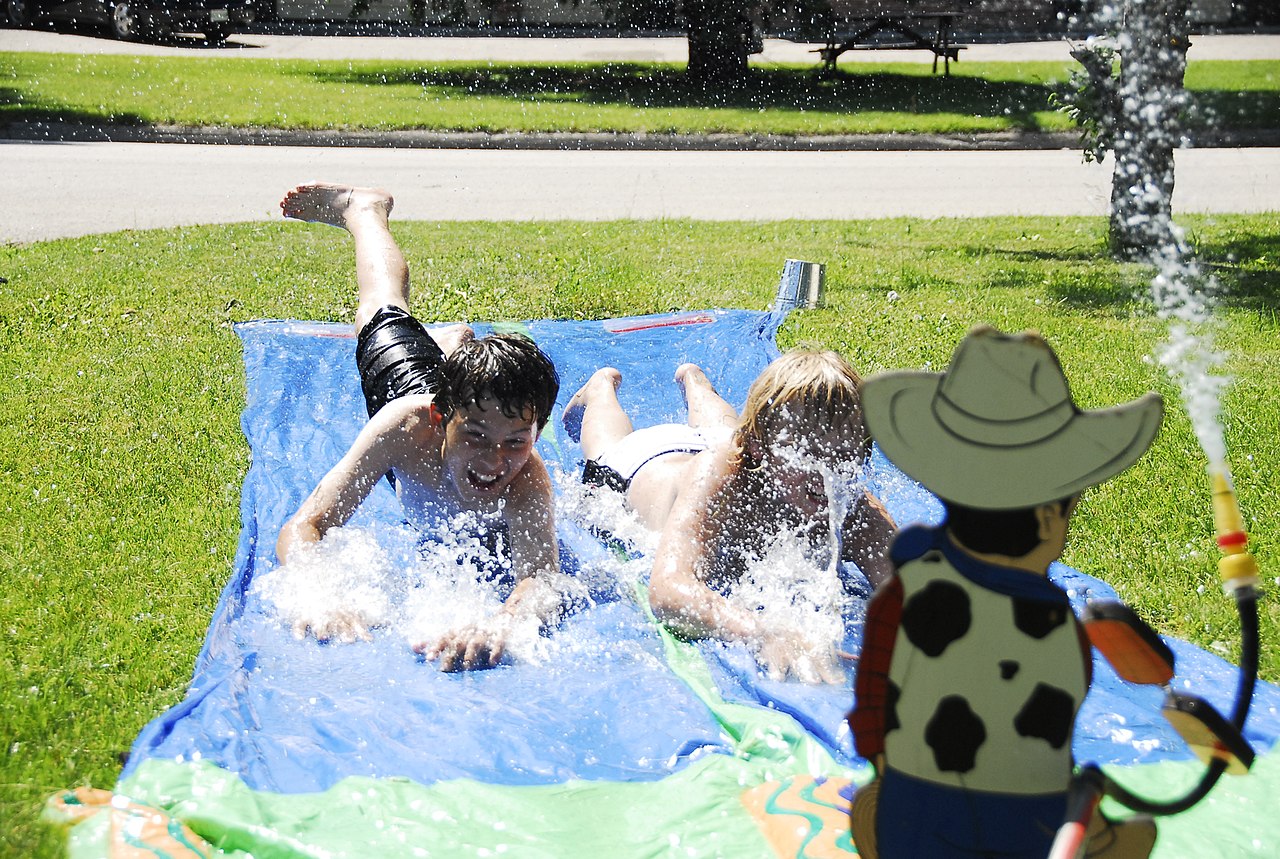
The official product was fine, but the DIY version was universal. A garbage bag cut open. A tarp from the garage. A piece of thick plastic sheeting from a construction site. You’d lay it on the lawn, run the hose over it, maybe add a squirt of dish soap for extra slipperiness, and you had a homemade water ride that provided hours of entertainment at zero cost. The lawn underneath would be dead by the end of the week, which was your dad’s problem, not yours.
The unwritten physics of the Slip ‘N Slide: the first few runs were the fastest because the lawn was still slick. After a while, the grass underneath would wear away, revealing bare dirt that acted like brake pads. Also, there was always one rock or root hiding under the surface that you’d discover with your ribcage at full speed. The Slip ‘N Slide wasn’t just a toy — it was a character-building exercise.
Summer Hydration — No One Worried About It
Here’s what’s truly wild about the garden hose era: nobody talked about hydration. The word “hydration” wasn’t in any kid’s vocabulary. Adults didn’t hand you water bottles before you went outside. There were no reminders to drink water. Your mom’s hydration advice was “there’s a hose in the backyard” and that was the entirety of the health guidance you received before being pushed out the door at 9 AM.
We played in scorching heat for hours. We rode bikes, climbed trees, ran sprints, and played full-contact sports in temperatures that would trigger heat advisories today. Our cooling system was the garden hose and maybe running through the sprinkler. Our rehydration strategy was drinking from that same hose when we got thirsty. And somehow, miraculously, we survived.
This isn’t to say it was safer — kids absolutely got heat exhaustion, and the lack of awareness about hydration was genuinely risky. But the garden hose culture did teach us something valuable: drinking water when you’re thirsty works. You didn’t need an app to tell you to drink. Your body told you, and the hose was always there.
The Safety Question (That Nobody Asked)
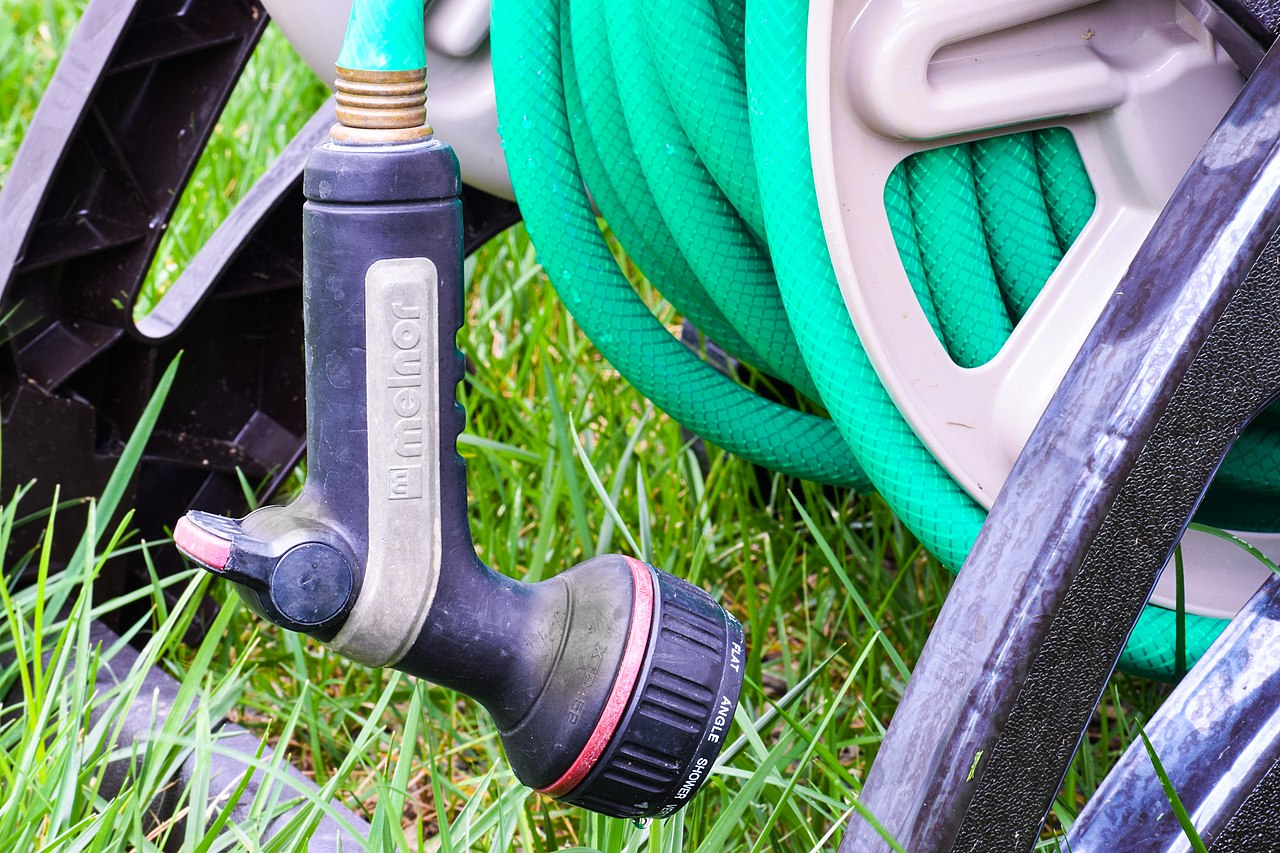
Modern parents reading this are probably having an anxiety attack. Garden hoses weren’t (and aren’t) designed for drinking water. They can contain lead, phthalates, BPA, and other chemicals that leach from the vinyl. Water sitting in a sun-baked hose can reach temperatures that accelerate chemical release. By contemporary health standards, drinking from a garden hose was roughly equivalent to licking a chemical plant’s discharge pipe.
And yet? An entire generation did it every single day of every single summer, and the vast majority turned out fine. This isn’t an argument for drinking hose water today (please don’t), but it does highlight how dramatically parenting culture has shifted. The risk tolerance of the ’80s parent was breathtaking by modern standards. Your kids were outside, they were occupied, and they could find their own water. That was considered good parenting.
Today there are “drinking safe” garden hoses made without lead or BPA. The fact that this product category exists tells you everything about how our relationship with the garden hose has changed. We went from “eh, it’s fine” to “certified potable water hose with NSF-61 compliance.” The hose hasn’t changed. We have.
The Deeper Thing — Playing Outside Until Streetlights
The garden hose is really a proxy for something bigger: the lost art of unsupervised childhood. When you drank from the garden hose, you were deep into a day spent entirely outside, entirely without adult oversight, entirely free. The hose was the refueling station for a lifestyle that barely exists anymore.

You left the house in the morning. Your mom said “be home when the streetlights come on.” That was it. That was the whole parenting plan. Between those two points, you were a free agent. You roamed the neighborhood. You went to friends’ houses. You explored the creek behind the elementary school. You built forts. You had adventures. And when you got thirsty, you found the nearest garden hose.
The hose was always there because every house had one. It didn’t matter whose yard you were in — the social contract of the ’80s neighborhood included an implied right to hose-water access. You could drink from a stranger’s hose without it being weird. Try that today and someone’s calling the cops. But in 1985? The neighbor would wave at you and go back to mowing their lawn.
The Legacy of the Hose
Every generation has its markers — the shared experiences that bind people together and make them nod in recognition. For Gen X and older Millennials, “drinking from the garden hose” is one of those instant identifiers. Say it at a party and watch people’s eyes light up. They’ll immediately start telling their own garden hose stories, their own summer memories, their own versions of the warm-rubber-then-cold-water experience.
It’s not really about the water. It’s about what the water represents: a childhood spent outside, a summer without screens, a world where kids were trusted to figure things out on their own. The garden hose was the thread that connected those long summer days together — the common resource, the gathering point, the refreshment station that kept the adventure going.
We didn’t have water bottles. We didn’t have smartphones to check the weather. We didn’t have parents tracking our location via GPS. We had a green rubber hose, a strong thumb, and the unshakeable belief that summer would last forever. It didn’t, of course. But the taste of that water — warm rubber, cold pipe, pure summer — that lasts. That stays with you. And if you close your eyes on a hot day, you can still taste it.