Mir Space Station First Crew Launch | On This Day, March 13, 1986
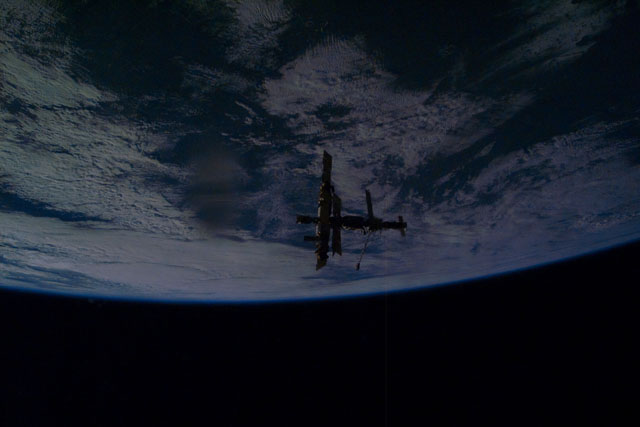
Forty years ago today, two Soviet cosmonauts strapped into a Soyuz T-15 capsule at the Baikonur Cosmodrome in Kazakhstan and blasted off toward something the world had never seen before — a permanently inhabited home in space. On March 13, 1986, Leonid Kizim and Vladimir Solovyev became the first human beings to set foot inside the Mir space station, kicking off what would become 15 years of continuous orbital operations and one of the most ambitious engineering projects of the Cold War era.
The name itself told you everything about Soviet ambitions. “Mir” translates to both “peace” and “world” in Russian — a deliberate double meaning that signaled this wasn’t just another tin can orbiting Earth. This was supposed to be humanity’s first real address in space.
The Space Station That Almost Wasn’t
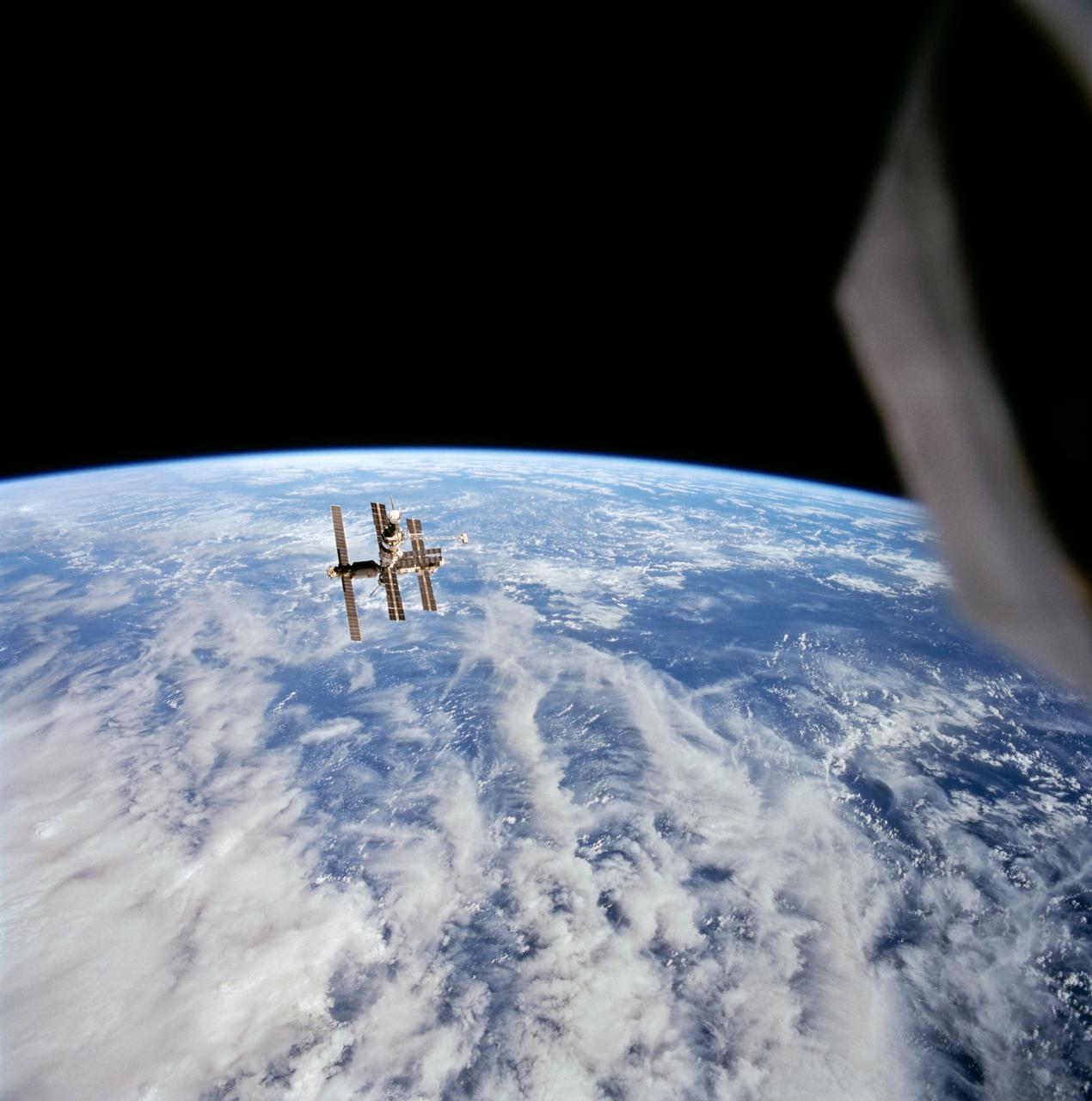
The Soviet government first approved the Mir program back in 1976, building on a decade of experience with the Salyut station series. But getting from blueprint to launch pad took a full ten years of engineering headaches, budget battles, and political maneuvering. The heavy-lift Energia booster that was supposed to haul Mir’s components into orbit wasn’t ready, forcing designers to squeeze the core module down to fit on a Proton rocket — maxing out at roughly 45,000 pounds and 43 feet long.
That constraint meant Mir launched on February 19, 1986, almost completely empty. No scientific equipment. No experiments. Just the bare bones of a habitable module with living quarters, life support systems, and a revolutionary multi-port docking hub at its nose that could eventually accept four additional research modules. The station unfurled its solar arrays, the ground crew ran their checks, and then Mir sat there in orbit — waiting for someone to move in.
Kizim and Solovyev: The Original Space Roommates
The men chosen for this historic first weren’t rookies. Leonid Kizim, born in 1941, was already one of the Soviet Union’s most experienced cosmonauts. He’d logged a grueling seven-month stint aboard the aging Salyut-7 station in 1984, where he and his crewmate had performed six spacewalks to repair the station’s propulsion system — a feat that earned him Hero of the Soviet Union status twice over.
Vladimir Solovyev, five years younger at 40, had been Kizim’s crewmate on that same Salyut-7 mission. The two men had already spent 237 days living in a metal tube together, so Soviet mission planners knew they could handle the psychological pressure of close quarters. This wasn’t just a test flight — it was a housekeeping mission. Someone had to go up there and actually turn the lights on.
Two days after their March 13 launch, the Soyuz T-15 docked with Mir’s forward axial port. Kizim and Solovyev floated through the hatch into a brand-new space station that smelled of fresh paint and industrial solvents. They activated the life support, tested the communications relay through a geosynchronous satellite system — a major upgrade over previous stations — and started making the place livable.
Setting Up House 200 Miles Above Earth
Compared to the cramped Salyut stations, Mir’s core module was downright luxurious. The crew compartment featured two individual sleeping cabins — each with its own chair, desk, sleeping bag, and window. A proper galley included a refrigerator and food warmers, with a folding table where the cosmonauts could sit down for meals instead of eating while floating. There was even a repair shop stocked with zero-gravity tools, a makeshift shower, and exercise equipment tucked under the floor.
The interior designers had paid attention to something previous stations had gotten wrong: psychology. Walls were painted in soft pastel colors. The layout preserved a natural sense of “up” and “down” to prevent spatial disorientation. These details might sound trivial, but when you’re spending months sealed inside a 43-foot cylinder hurtling through the void at 17,500 miles per hour, little touches of normalcy keep you sane.
An unmanned Progress 25 cargo freighter docked at Mir’s aft port on March 21, delivering additional supplies, propellant, food, water, and air. Progress 25 also boosted Mir to a more stable orbit roughly 220 miles above Earth’s surface. A second Progress vehicle arrived a month later to top off the fuel tanks and adjust the orbit for what came next — and what came next was completely unprecedented.
The Station-to-Station Shuttle Run Nobody Expected
After 51 days aboard Mir, Kizim and Solovyev did something no one had ever attempted. On May 5, 1986, they undocked their Soyuz T-15 from the brand-new station and flew it 3,800 miles across orbit to dock with the older Salyut-7 — making history as the only crew to ever transfer between two separate space stations.
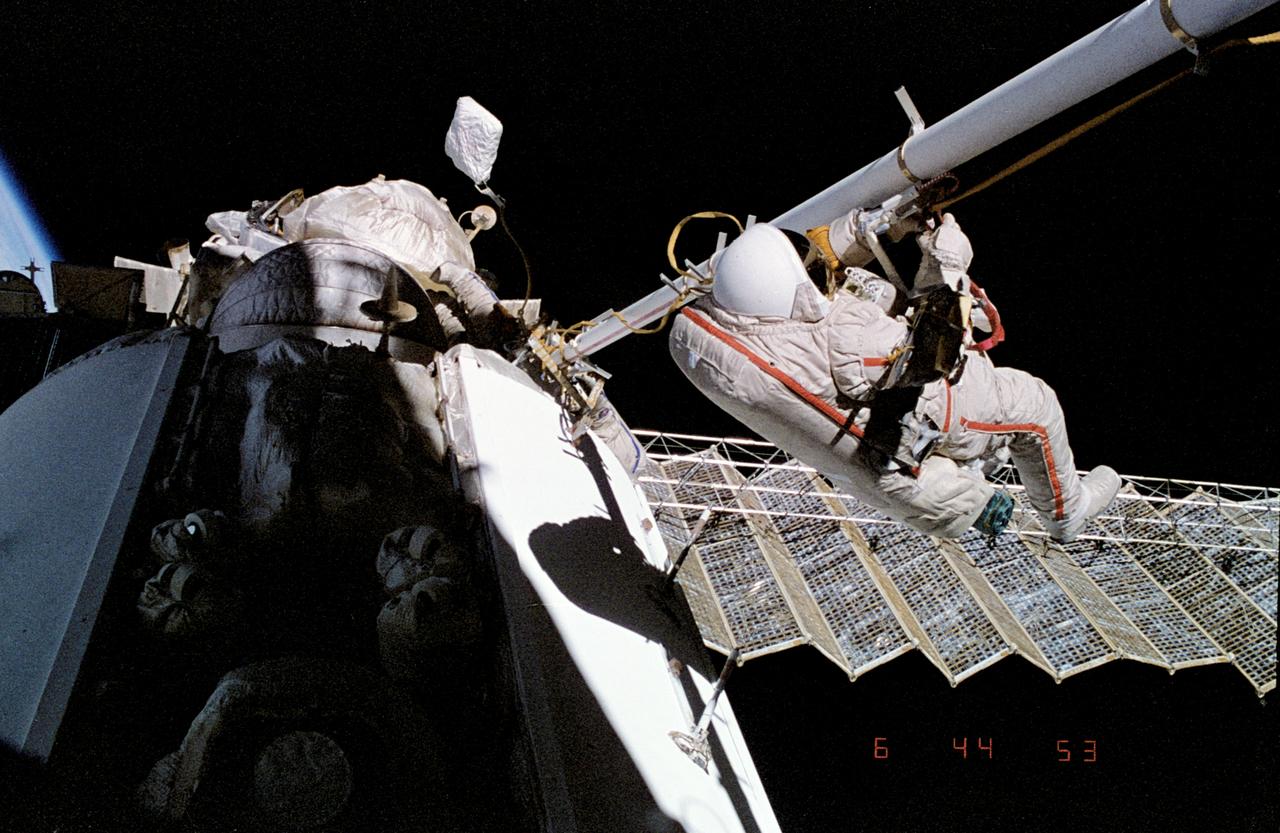
They spent 50 days at Salyut-7, performing two spacewalks and packing up 880 pounds of working scientific equipment to bring back to Mir. Among the cargo? A guitar. Because apparently even cosmonauts need to unwind with some music after a day of orbital housework.
On June 26, they returned to Mir with their haul, unpacked the Salyut-7 equipment, and got back to setting up the new station. On July 16, after 125 days in space spanning two different orbital outposts, Kizim and Solovyev climbed back into their Soyuz capsule and plummeted through the atmosphere to a landing in the Kazakhstan steppe. Their mission was done — but Mir’s story was just beginning.
Why Mir Mattered in 1986 — and Why It Still Matters

The timing of Mir’s first crewed mission is impossible to separate from the Challenger disaster that had happened just six weeks earlier, on January 28, 1986. While NASA was grounded and reeling from the loss of seven astronauts, the Soviet space program was pushing forward with its most ambitious project ever. For the rest of the decade, America had no crewed spaceflight capability at all. Mir, by contrast, would go on to host rotating crews for 13 consecutive years.
The station grew over time as new modules were added — Kvant-1 for astrophysics in 1987, Kvant-2 for additional life support in 1989, Kristall for materials science in 1990. By the time the Soviet Union collapsed in 1991, Mir had already proven that humans could live and work in space for extended periods. The newly formed Russian Federation inherited the station and, remarkably, kept it running through years of economic chaos.
Breaking Records and Building Bridges
Mir became a record-breaking machine. Yuri Romanenko spent 326 consecutive days aboard in 1987. Vladimir Titov and Musa Manarov stayed a full calendar year starting in December 1987 — marking the first time a space station crew was completely exchanged without any gap in habitation, making Mir the first truly permanently occupied outpost in orbit. Then in 1994, physician-cosmonaut Valery Polyakov shattered all records by living aboard Mir for 438 days straight, an endurance mark that still stands today.
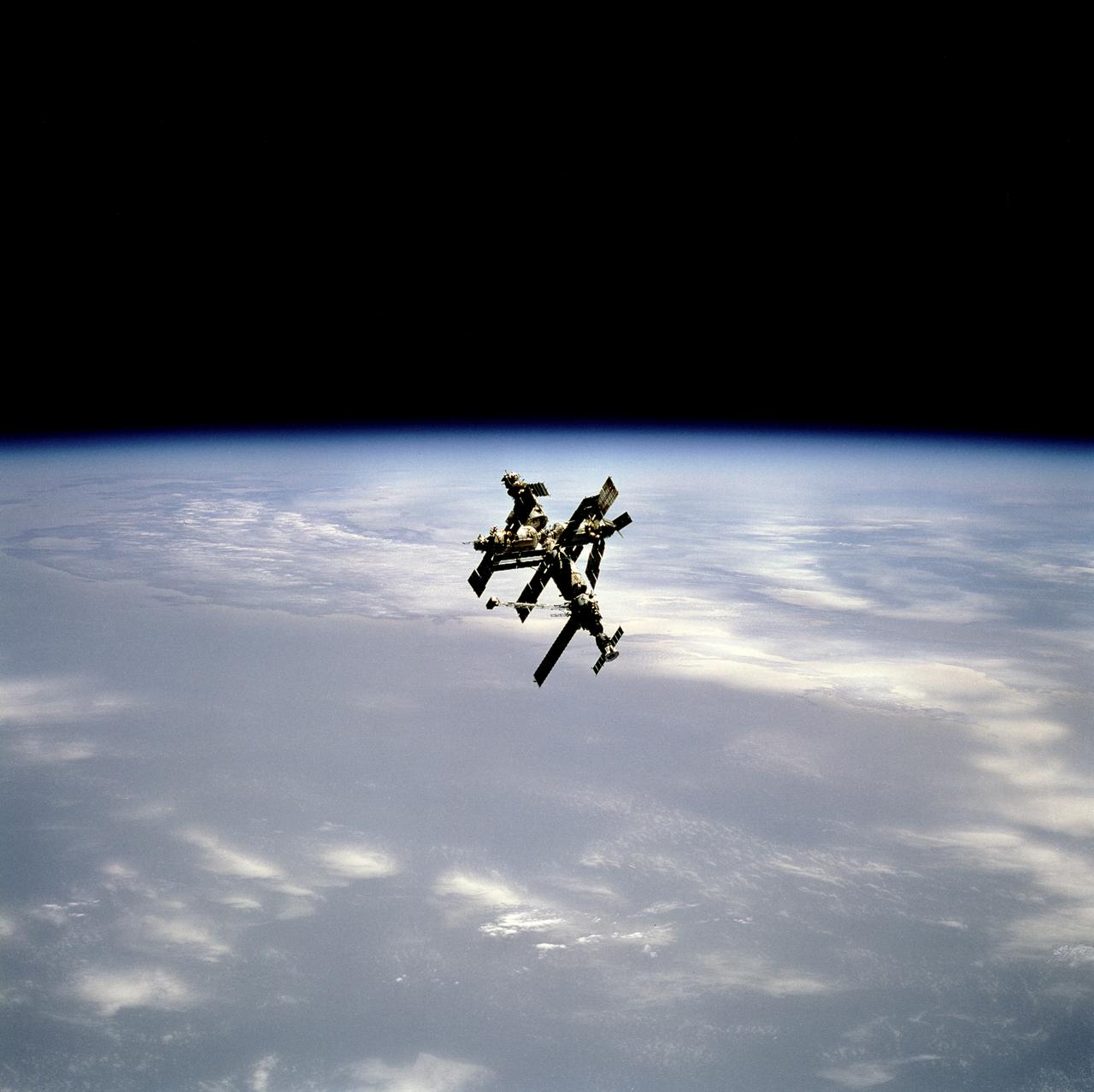
The station’s most geopolitically significant chapter came in the mid-1990s with the Shuttle-Mir program. Seven American astronauts completed long-duration missions aboard the station, and NASA’s space shuttles docked with Mir multiple times. Former Cold War adversaries were sharing a bathroom in space — a development that would have seemed like science fiction when Kizim and Solovyev first launched in 1986.
Helen Sharman of the United Kingdom became the first British citizen to visit Mir in 1991. Over its lifetime, Mir hosted 125 cosmonauts and astronauts from 12 countries. The station that the Soviets built to project Cold War technological supremacy ended up becoming history’s most international apartment building.
The End of an Era
By the late 1990s, Mir was showing its age. Fires, coolant leaks, a collision with an unmanned Progress cargo ship in 1997, and failing equipment made headlines worldwide. But the scrappy old station kept flying, held together by duct tape (sometimes literally), creative engineering, and sheer Russian stubbornness.
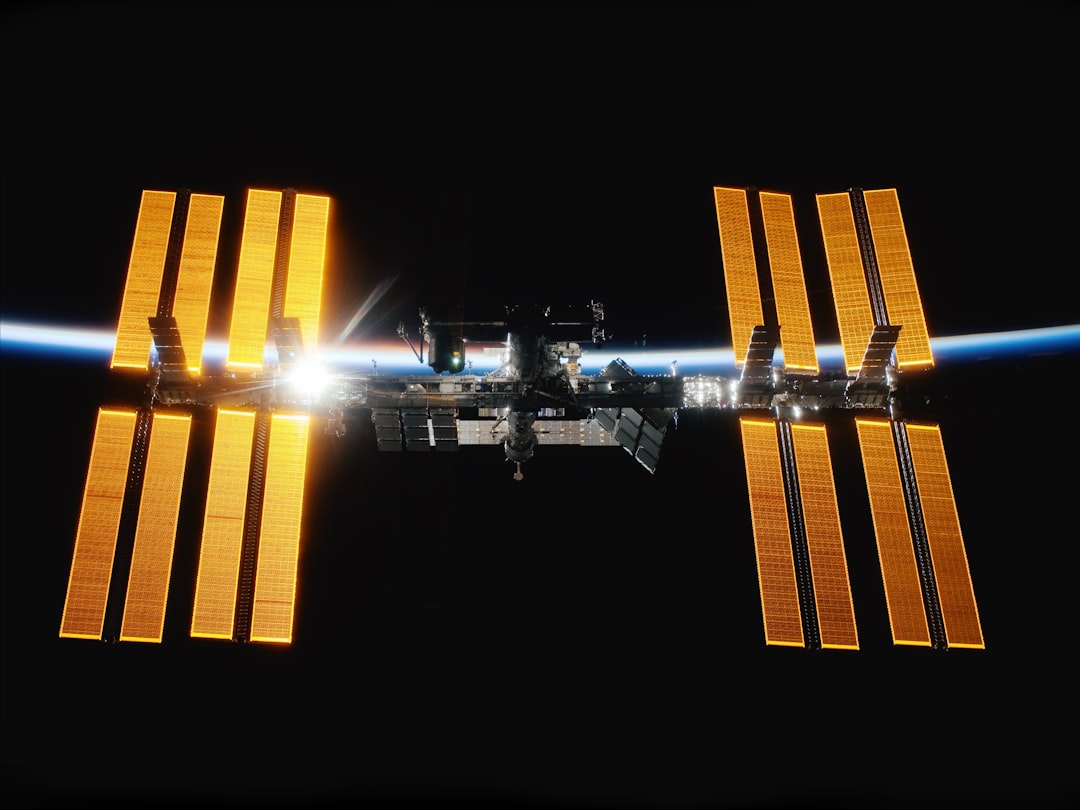
Mir was finally deorbited on March 23, 2001, breaking apart over the South Pacific after 15 years and over 86,000 orbits of Earth. By then, the International Space Station — built directly on lessons learned from Mir — was already operational and hosting its own permanent crews.
Why We Remember
In the landscape of 1986 pop culture — Top Gun in theaters, “West End Girls” on the radio, the NES taking over living rooms — the launch of Mir’s first crew didn’t generate the kind of breathless media coverage that American space missions received. Soviet secrecy kept details sparse. Western audiences barely noticed.
But looking back, March 13, 1986 was the day humans stopped just visiting space and started actually living there. Everything that followed — the ISS, private space stations, Elon Musk’s Mars ambitions — traces a direct line back to two cosmonauts floating through a hatch into an empty station and flicking on the lights for the first time.
Kizim and Solovyev didn’t just move into Mir. They moved humanity into space. And that guitar they hauled back from Salyut-7? It stayed on the station for years, played by cosmonaut after cosmonaut, adding a small human touch to the cold machinery of orbital life. If that’s not the most 80s thing imaginable — smuggling a guitar between space stations — nothing is.