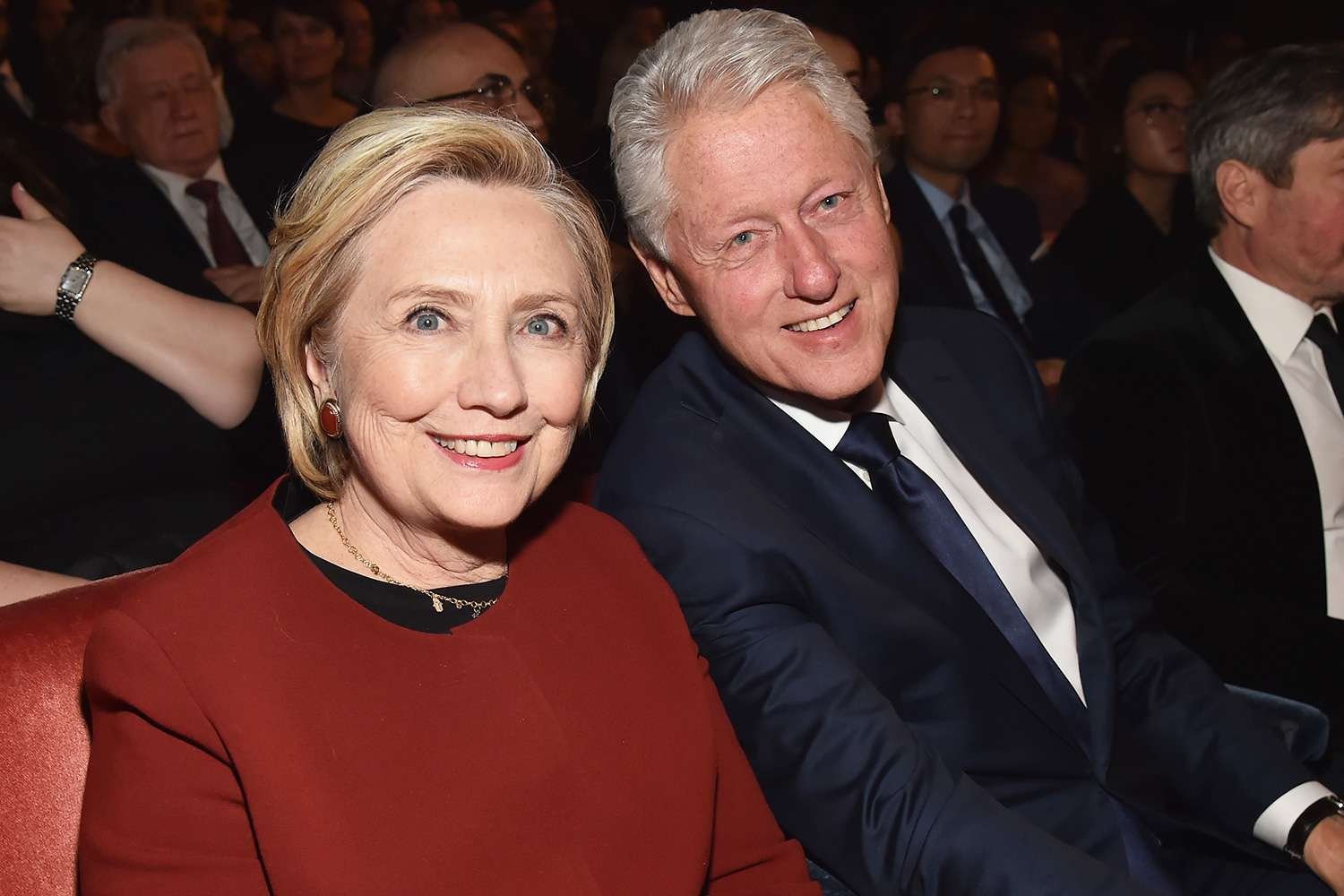
On This Day: August 17, 1998 — The Night Bill Clinton Came Clean
Ten o’clock on a Monday night, August 17, 1998. Every major network cut to the Map Room of the White House. Clinton walked in, sat down, and started reading from a teleprompter. What came out was four minutes and twenty-nine seconds that almost no Gen Xer who was alive and paying attention has ever forgotten.
Six Months of Denial
The story had broken in January. The Washington Post and Newsweek — tipped off by Matt Drudge’s internet gossip site — reported that independent counsel Ken Starr was investigating whether Clinton had lied under oath about a sexual relationship with a 22-year-old White House intern named Monica Lewinsky. Clinton’s response, delivered four days later at a White House press availability, became one of the most famous denials in American political history.
“I want to say one thing to the American people,” he said, wagging his finger at the camera. “I did not have sexual relations with that woman — Miss Lewinsky. I never told anybody to lie. Not a single time. Never. These allegations are false.”
The Retro Almanac
A monthly roundup of "on this day" highlights from that month, decades back — plus first dibs on new retro merch drops. No spam, just the good stuff.
For six months, that denial held. Clinton’s approval ratings, perversely, went up — partly because the public was sick of Ken Starr’s four-year investigation, and partly because it wasn’t yet clear what had actually happened. Clinton’s team worked hard to paint the story as a politically motivated witch hunt. A lot of Americans were willing to believe that, at least provisionally.
Then the evidence caught up. Monica Lewinsky, facing potential perjury charges, negotiated an immunity deal with Starr’s office. She turned over a navy blue dress she had never dry-cleaned — the dress that contained biological evidence. Linda Tripp, a Pentagon employee who had befriended Lewinsky, had secretly recorded their phone conversations. The tapes were damning. By early August 1998, the game was over and everyone in Washington knew it.
August 17, 1998 — Grand Jury Testimony, Then the Nation
On the morning of August 17, Clinton became the first sitting U.S. president to testify before a grand jury investigating his own conduct. The testimony lasted four hours, conducted via closed-circuit video from the Map Room. His lawyers had negotiated the arrangement specifically so he would not have to walk into the federal courthouse — a small dignity preserved in an increasingly undignified situation.
That evening, he addressed the nation. The speech ran 545 words. Here is what he admitted:
- That he had “a relationship with Miss Lewinsky that was not appropriate”
- That it was “a critical lapse in judgment and a personal failure on my part”
- That he had “misled people, including even my wife”
- That his January denial had been “legally accurate” but “misleading”
Here is what he did not do: apologize without qualification. The final two minutes of the speech pivoted sharply — Clinton attacked the Starr investigation as a “politically inspired lawsuit” and said it was “time to move on.” He was angry. It showed. The combination landed badly with the public, with editorial boards, and notably with his own party. Several Democratic senators privately described the speech as a disaster.
The Four-Minute Speech That Changed Nothing and Everything
Read the transcript now and the speech’s internal contradiction jumps out immediately. The first half is a controlled, lawyerly admission — specific enough to be technically true while still limiting the damage. The second half is a political broadside against Ken Starr that probably belonged in a different speech, on a different night. Whoever advised Clinton to combine them in a single address made a significant error in judgment.
“Even presidents have private lives,” Clinton said, invoking a right to personal privacy that most Americans could have accepted — if he hadn’t spent six months publicly insisting the relationship never happened. It was the lie, not the relationship, that most people couldn’t get past. The approval of the cover-up was exactly what the second half of the speech seemed to be asking for.
Immediately after the speech, Clinton flew to Martha’s Vineyard, where his family was vacationing. The photographs from the tarmac — Hillary and Chelsea walking slightly ahead of Bill, a studied distance between them — were among the most discussed images of the year. There was no reconciliation scene for the cameras. There was the president of the United States walking across the South Lawn alone while his family boarded Marine One without him.
The Nation Reacts
CNN’s overnight polling showed the speech had moved opinion in the wrong direction for Clinton. Approval of his honesty dropped. The specific complaints were consistent across the political spectrum: he had admitted just enough, apologized just barely, and spent too much time going after Starr. The New York Times editorial board called it “too legalistic and too angry.” The Chicago Tribune called it “sad.” Several Democrats who had publicly supported him for months went quiet.
The late-night hosts had a field day. Jay Leno opened that night’s monologue with: “The President said he misled us. I think most of us have a different word for it.” David Letterman built an entire Top Ten list around Clinton’s parsing of the word “sexual.” Saturday Night Live’s Darrell Hammond, who had been doing a Clinton impression for two years, suddenly had material that wrote itself. The impression would become one of the most famous in SNL history.
One phrase from Clinton’s grand jury testimony — not the speech, but leaked fragments of it — entered the permanent cultural vocabulary: “It depends on what the meaning of ‘is’ is.” Clinton had made the comment while arguing that a statement denying an ongoing relationship was technically accurate because the relationship had ended by that point. Legally, the argument had some merit. Culturally, it became a punchline that lasted decades. If you were alive and 25-40 in 1998, you’ve probably quoted it at some point without even thinking about it.
What Came Next
Starr’s 445-page report was delivered to Congress on September 9, 1998, and posted online the same day. It was one of the first major political documents published primarily on the internet — and the traffic it generated crashed servers across the country. An estimated 20 million people attempted to download it in the first 24 hours. The report was extraordinarily explicit, detailing eleven possible grounds for impeachment and the sexual encounters between Clinton and Lewinsky in graphic detail that shocked readers who had been following the story for months.
The House voted to impeach Clinton on December 19, 1998, on charges of perjury and obstruction of justice. The Senate trial ran through January and February 1999. On February 12, the Senate voted to acquit on both counts — neither article of impeachment received even a simple majority, let alone the two-thirds required for removal. Clinton remained in office. His approval ratings recovered to the high 60s by the time he left the White House in January 2001.
Why Gen X Can’t Forget This Night
The Clinton-Lewinsky scandal was the first major American political story to live primarily on the internet. The Drudge Report broke it online before print. The Starr Report was published online. Commentary, parody, and opinion spread through email chains and early web forums in ways that had no precedent in American political life. In retrospect, it was a dry run for everything that came after — the speed, the saturation, the endless cycling through new developments before the old ones had been processed.
For Gen X specifically — people who were adults in 1998 — the scandal occupies a strange emotional register. It was politically exhausting and personally embarrassing in ways that are hard to explain to younger generations. Many people who had genuinely liked Clinton, who had voted for him twice, who had defended him through Paula Jones and Gennifer Flowers, felt something close to betrayal when the blue dress confirmed what the denials had insisted couldn’t be true. Not betrayal about the relationship — most people could have gotten past that. Betrayal about the lie, repeated confidently, looking straight into the camera.
August 17, 1998 was the night the lie officially ended. The speech that replaced it was imperfect, defiant, and politically self-destructive in ways that became clear within hours. But it happened. After six months of “I did not have sexual relations with that woman,” the President of the United States sat down in the Map Room and told America it wasn’t true. Whatever else happened in the 90s — the economic boom, the culture wars, the dot-com mania — that night has a kind of permanent timestamp in the memory of anyone who watched it live.
For more 90s political nostalgia and the cultural moments that defined the decade, see our coverage of how the 90s shaped American music and the era’s defining pop culture moments.
Sources
- CNN — Full Transcript of Clinton’s August 17, 1998 Address — Primary source for all direct quotes from the speech
- PBS Frontline — “The Clinton Years” — Documentary timeline of the Lewinsky scandal and impeachment proceedings
- History.com — Clinton Admits Lewinsky Relationship — Summary of the August 17 address and its aftermath
- NPR — 20 Years Later: The Clinton Speech That Went Wrong — Analysis of the speech’s political impact at its 20th anniversary
Image credit: people.com
The Retro Almanac
A monthly roundup of "on this day" highlights from that month, decades back — plus first dibs on new retro merch drops. No spam, just the good stuff.