On This Day: June 23, 1989 — Tim Burton’s Batman Premieres
On June 23, 1989, Tim Burton’s Batman opened on 2,194 screens and tore the roof off the box office, grossing $40.49 million in its opening weekend — the third record-shattering debut of that summer alone. Forty-five million people bought a ticket that first weekend. The Bat-Signal was bigger than the moon.
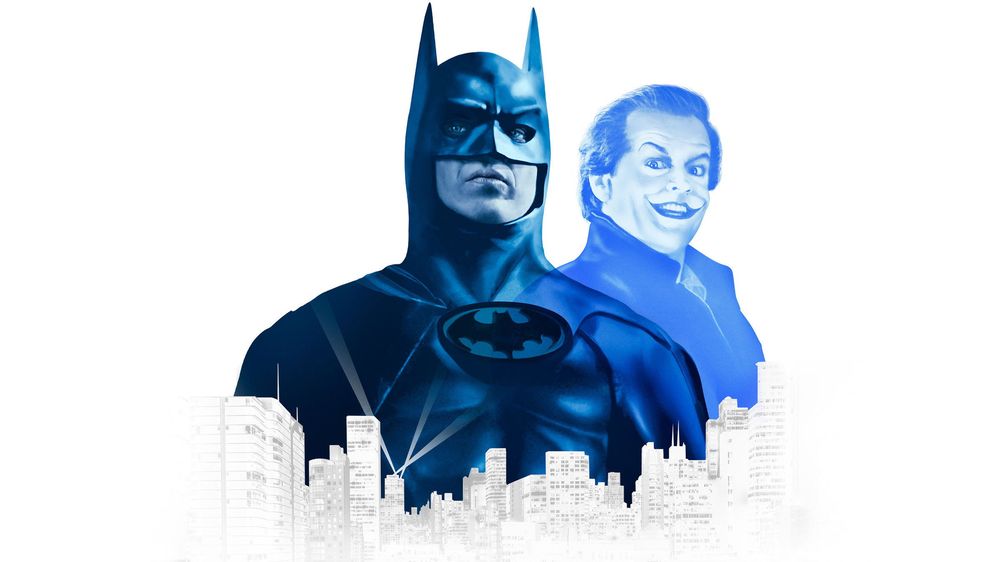
This wasn’t just a movie release. It was the moment the modern blockbuster put on a cape and decided comic book movies could be serious art. The yellow oval was painted on every kid’s t-shirt by July. Prince’s soundtrack was already on the radio. And a 38-year-old Michael Keaton — the guy from Mr. Mom — had somehow convinced 8,000 angry fans who wrote letters to Warner Bros. that he was Bruce Wayne.
The Retro Almanac
A monthly roundup of "on this day" highlights from that month, decades back — plus first dibs on new retro merch drops. No spam, just the good stuff.
The Casting Riot Nobody Remembers Now
Picture the scene in late 1988. Tim Burton, fresh off Beetlejuice, picks Michael Keaton — a comedy actor with no chin and no muscles — to play Batman. Warner Bros. received over 50,000 protest letters. The Wall Street Journal ran a story about angry comic fans threatening boycotts. Bob Kane, Batman’s co-creator, was hauled out to vouch for Keaton in interviews. DC Comics’ stock reportedly dipped.
Then the trailer dropped. That first teaser — just the Bat-Signal, that brooding orchestral cue, a glimpse of the suit — silenced everyone. Theaters sold tickets to people who only wanted to see the two minutes of footage and walked out before the feature. The pre-release marketing campaign sold $750 million in licensed merchandise before the movie even opened. Burger King couldn’t keep glasses on the shelves.
Why June 23, 1989 Was the Perfect Storm
Summer 1989 was a war. Indiana Jones and the Last Crusade opened May 24 with $29.3 million. Ghostbusters II opened June 16 with $29.4 million. Both set opening-weekend records. Then Batman walked in two weeks behind Ghostbusters II and put up $40.49 million, with another $2.2 million in Thursday-night previews on June 22. That single weekend rewrote what a blockbuster could earn.
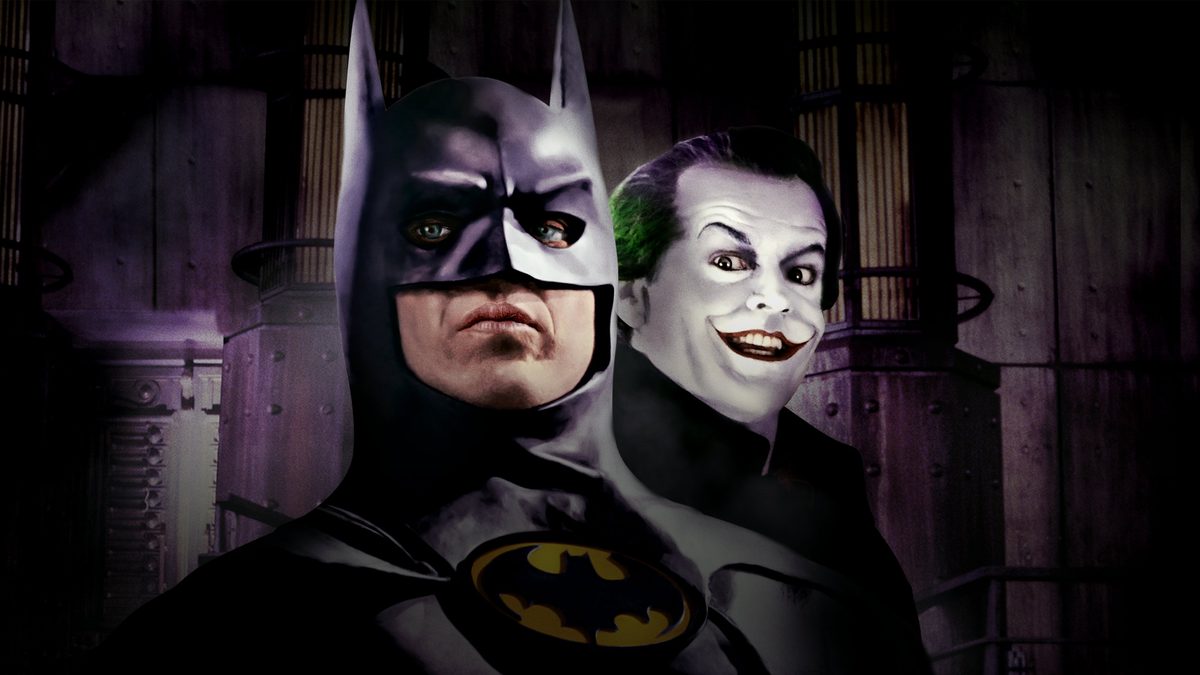
The honest truth is Hollywood didn’t really know what a “comic book movie” was supposed to look like in 1989. The previous gold standard was Richard Donner’s Superman from 1978 — bright, earnest, almost goofy. Burton went the other way entirely. He made Gotham look like New York if hell had punched through the pavement and started building.
Anton Furst and the Gotham That Won an Oscar
Production designer Anton Furst won Best Art Direction at the 62nd Academy Awards for his work on Batman, and one walk down his Gotham streets explains why. Furst mixed clashing architectural styles deliberately — Art Deco towers next to Bauhaus blocks next to gothic cathedrals — to make the city “the ugliest and bleakest metropolis imaginable.” He took inspiration from Andreas Feininger’s New York photography and Japanese architect Shin Takamatsu.
The Pinewood Studios soundstages couldn’t contain him. Furst’s team built 95 separate sets across 18 sound stages, including a full city block of Gotham at over a quarter-mile long. That set ate roughly $5.5 million of the film’s $48 million budget. When you watch the rooftop chase sequences today, every brick, gargoyle, and steam vent is hand-built. No CGI. No green screen. Just sweat and plaster.
The Batmobile Built From a Jaguar and a Pile of Nightmares
Julian Caldow designed the actual vehicle but Anton Furst gets the credit because the studio billed it that way. The brief Burton gave them was wild — pull cues from 1930s salt flat racers and 1950s Stingray hot rods, then add jet aircraft components and war-machine angles. The result rode on a Chevy Impala chassis, came in at 20 feet long, and could hit 60 mph (when it didn’t break, which was often).
Two functional Batmobiles were built. One survives at Warner Bros., the other at the Petersen Automotive Museum in Los Angeles. The car became its own merchandise category — Kenner moved millions of die-cast and remote-control versions before Christmas 1989. Every kid I knew had one. Most of them got chewed by a dog within six months.
Jack Nicholson Got Paid a Reported $60 Million
Here’s the part of the Batman legend that still feels insane. Jack Nicholson took a deal that traded a smaller upfront salary for back-end points on box office and merchandise. His final payday is estimated between $50 and $90 million — the most lucrative single-film deal in Hollywood history at the time. Nicholson basically retired off Joker money.
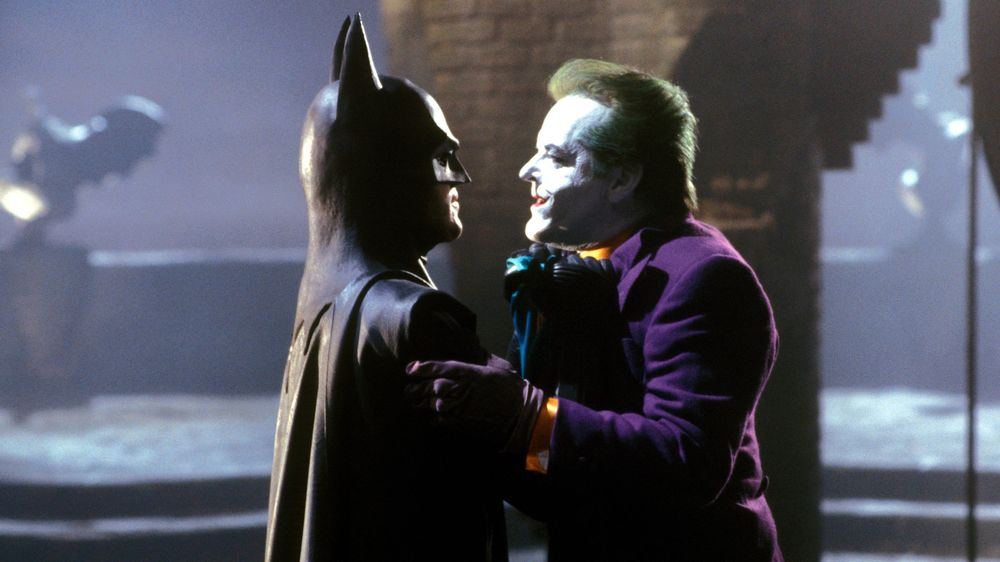
And he earned every cent. Nicholson’s Joker is the performance that anchored the film. He chews scenery so hard the Joker becomes the lead character. Watch the museum sequence where he defaces art to Prince’s “Partyman” — that’s not a villain doing crimes, that’s Jack Nicholson doing Jack Nicholson with green hair. The line “Have you ever danced with the devil in the pale moonlight?” entered the cultural bloodstream the second the credits rolled.
Prince Made a Soundtrack Album Nobody Asked For
Two soundtracks came out for Batman. Danny Elfman composed the score — including that thundering main theme that still plays in your head when you see the Bat logo. The score album sold around 500,000 copies and got nominated for a Grammy. Solid hit.
Then there’s the Prince album. Warner Bros. asked Prince to contribute one or two songs. Prince came back nine days later with a full nine-track album. It debuted at number one on the Billboard 200, sold over 11 million copies worldwide, and produced “Batdance,” a song that has no business being as good as it is. The album appears in the film for maybe six minutes total. Prince still made $4 million off it before the year was out.
Watch the Original 1989 Trailer
The Burton-Keaton Suit Changed Hero Costumes Forever
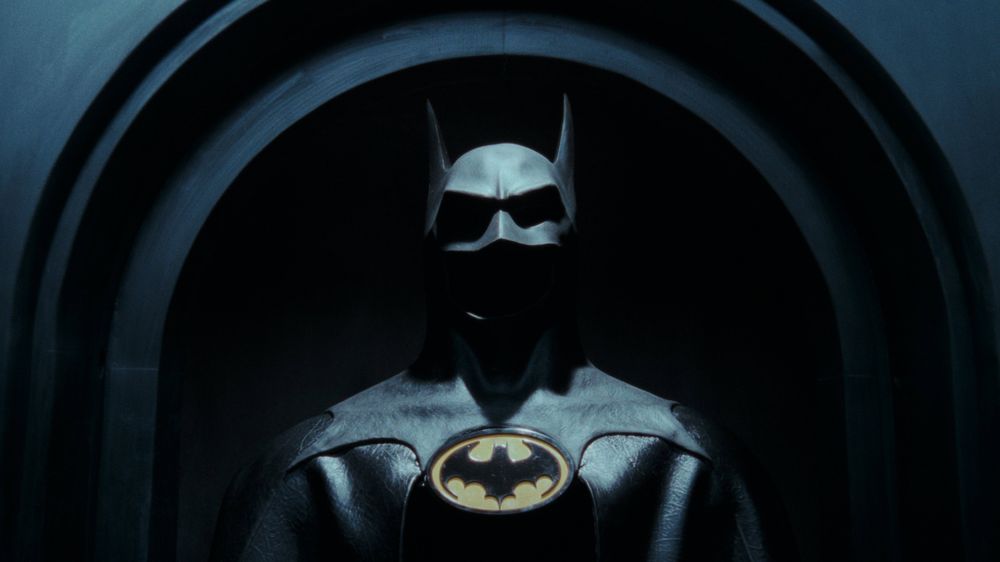
Costume designer Bob Ringwood faced a problem nobody had solved on screen: how do you make a grown man in tights look intimidating, not silly? His answer was to scrap the tights entirely. The 1989 Batsuit was sculpted black foam latex with molded muscles built in. Keaton couldn’t turn his neck — every time Batman wanted to look sideways, the whole body had to pivot. Burton turned that physical limitation into a directing choice. Batman moves like a statue with a grudge.
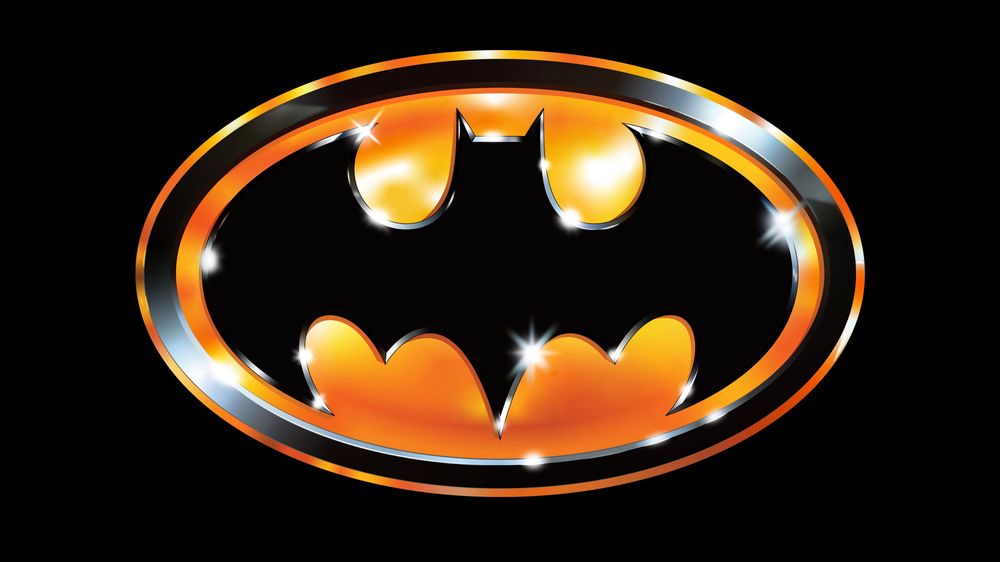
The yellow oval around the bat emblem was a deliberate callback to the 1964 Carmine Infantino comic redesign — it pops on screen, it pops on a t-shirt, it pops on a lunchbox. That single design choice generated an estimated $1 billion in licensed merchandise across the 1989–1992 cycle. Walk into any thrift store in North America and you’ll still find at least one item with that logo on it.
The Cathedral Scene and the Ending Everyone Argues About
The climax inside Gotham Cathedral is Burton at full power. Joker climbs to the bell tower with Vicki Vale (Kim Basinger), Batman follows, they fight on the parapet, and Joker falls. Comic purists hated it — in the books, Batman doesn’t kill. In Burton’s movie, Batman absolutely kills people, including the Joker, with a grappling line tied to a gargoyle. That moral ambiguity put a thumb on the scale of every superhero film that followed.
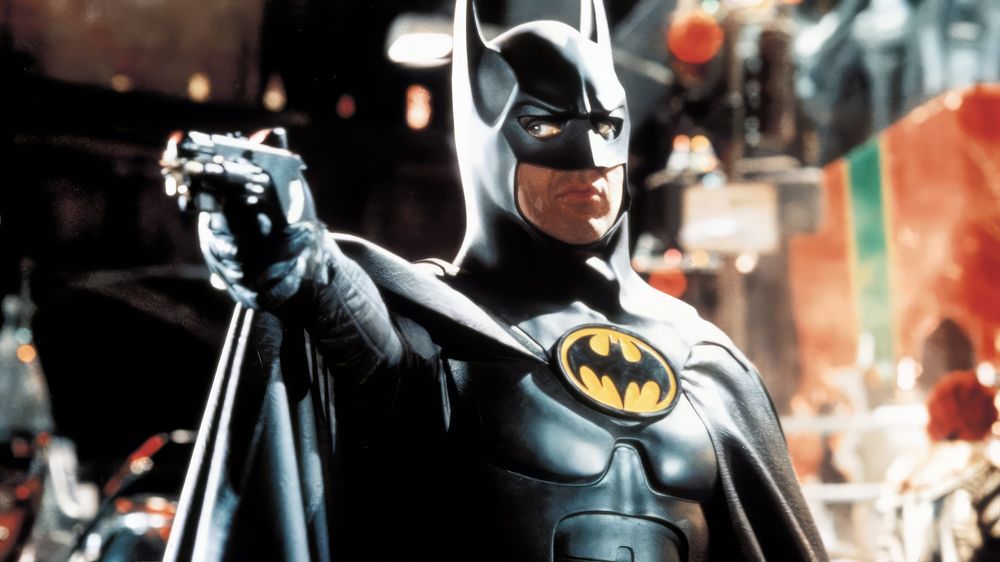
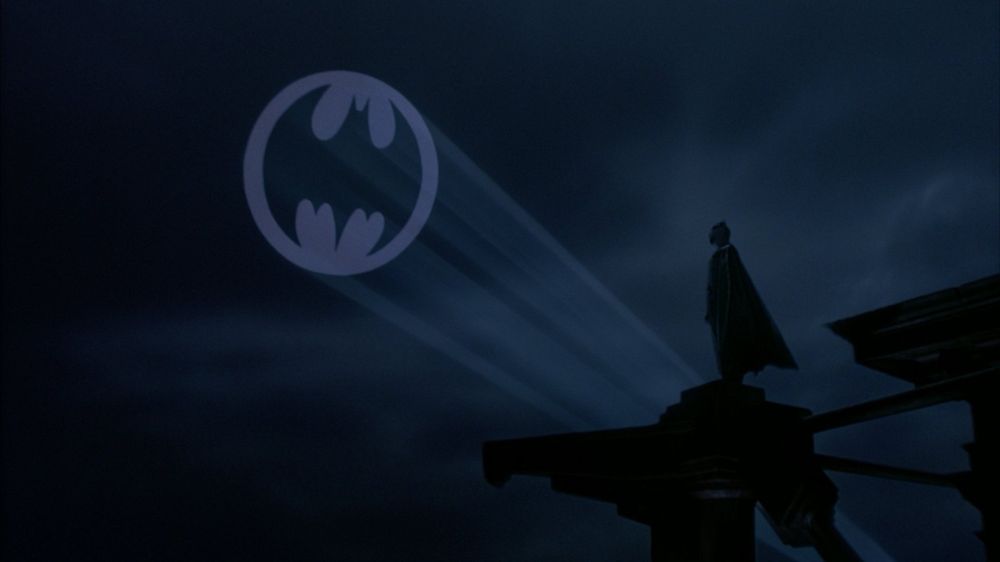
Then the final shot. Commissioner Gordon reading a letter from Batman, the Bat-Signal cutting through the Gotham sky, Batman silhouetted on a gargoyle watching the city. That moment is the entire modern superhero film template in a single freeze frame. If you’ve seen Batman Begins, The Dark Knight, or any post-2005 hero movie, that ending is the genetic ancestor.
Vicki Vale, Kim Basinger, and the Last-Minute Casting
Sean Young was originally cast as Vicki Vale. She fell off a horse during rehearsals two weeks before principal photography, broke her collarbone, and had to drop out. Kim Basinger got the call on a Friday afternoon, flew to London Sunday, was in costume Monday morning. She had four days to prepare for the biggest movie of the summer.
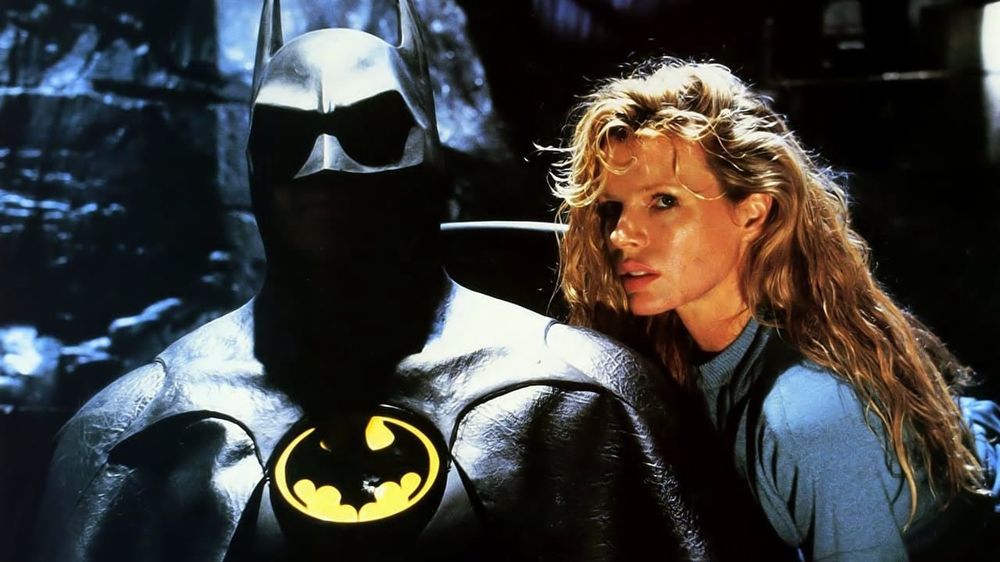
Basinger plays Vicki as a real journalist — curious, brave, a little fed up with men keeping secrets. Her chemistry with Keaton is dry where it could have been melodramatic. The dinner scene at Wayne Manor, where Bruce sits at the far end of an absurdly long table while Vicki shouts to be heard, is a small comedy gem inside the larger gothic spectacle.
Box Office, Awards, and the Sequel Avalanche
Batman ended its theatrical run with $411.6 million worldwide on a $48 million budget. It became the fifth-highest-grossing film of all time at the time of its release, behind only E.T., Star Wars, Return of the Jedi, and The Empire Strikes Back. It won the Oscar for Best Art Direction (Anton Furst and Peter Young) and got nominated for a Saturn Award for nearly every category that existed.
The franchise it kicked off is its own conversation. Batman Returns in 1992. Batman Forever in 1995 with Val Kilmer. Batman & Robin in 1997 with George Clooney and the infamous bat-nipples. Then the Christopher Nolan reboot in 2005, the Affleck DCEU, the Pattinson Batman in 2022 — every single one of them owes its existence to what happened on June 23, 1989.
What Burton’s Batman Got Right That We Keep Forgetting
The truth is most superhero movies since 1989 are still chasing two things Burton nailed: a villain who steals scenes and an aesthetic that actually commits. The MCU has roughly 30 movies and maybe four villains anyone can name. Burton had Nicholson chewing through every line like he was running out of teeth.
The other thing — the look — feels more important every year. Burton’s Gotham is a real place. It has weight. You can see the rain on the cobblestones, hear footsteps in the alleys, smell the steam from the manhole covers. Compare that to any modern superhero blockbuster shot on green-screen volume stages and the contrast is brutal. Batman 1989 was a handmade movie. Most of what we get now is rendered by render farms in Burbank.
The Legacy Forty Years Won’t Dim
Forty-five million Americans bought a ticket on opening weekend. Tens of millions more rented the VHS, watched it on cable, bought the action figures, drew the bat logo on their school notebooks. The film grossed nearly half a billion in 1989 dollars. Anton Furst won an Oscar. Prince got a number-one album. Michael Keaton got an entire second career as a respected actor. Jack Nicholson bought a yacht.
If you want a deeper cut on what came next, our piece on Batman Forever’s 1995 premiere covers the Schumacher era reset. For other summer 1989 milestones, see Dead Poets Society, which opened just three weeks before Batman. And for more 80s blockbuster context, our Karate Kid Part II breakdown covers the franchise sequel template Hollywood was running in the same era.
Sources
- HISTORY: Tim Burton’s Batman released, June 23, 1989 — release date and cultural context
- Box Office Mojo: Batman (1989) — opening weekend and total gross figures
- Wikipedia: Batman (1989 film) — production history, casting, design
- The Numbers: Batman (1989) Box Office — financial breakdown
- Wikipedia: Anton Furst — Academy Award-winning production designer’s work on Gotham
The Retro Almanac
A monthly roundup of "on this day" highlights from that month, decades back — plus first dibs on new retro merch drops. No spam, just the good stuff.