Tremors 1990: The Ultimate Cult Classic Still Worth Watching
If you grew up renting movies from the video store in the early 90s, you probably encountered Tremors 1990 sitting in that slightly dog-eared VHS case somewhere between the horror section and the comedy shelf. It didn’t quite belong in either. That was always the genius of it. Ron Underwood’s monster movie was something the big studios had forgotten how to make — a genuine crowd-pleaser that trusted its audience to enjoy a giant underground worm without needing to explain where it came from or what it meant.
The film came out on January 19, 1990, and flopped at the box office. Made on a budget of roughly $11 million, it pulled in $16.7 million domestically — technically a profit, but not exactly a triumph. Universal wasn’t throwing a parade. But then something happened. Tremors hit home video, cable TV picked it up, and word of mouth did what no marketing campaign could. By the mid-90s, it was the movie everybody had seen even if they couldn’t remember exactly when or where. It became a fixture of lazy Saturday afternoons and late-night cable marathons. That’s how cult classics are actually born.
Tremors 1990: The Setup That Still Holds Up
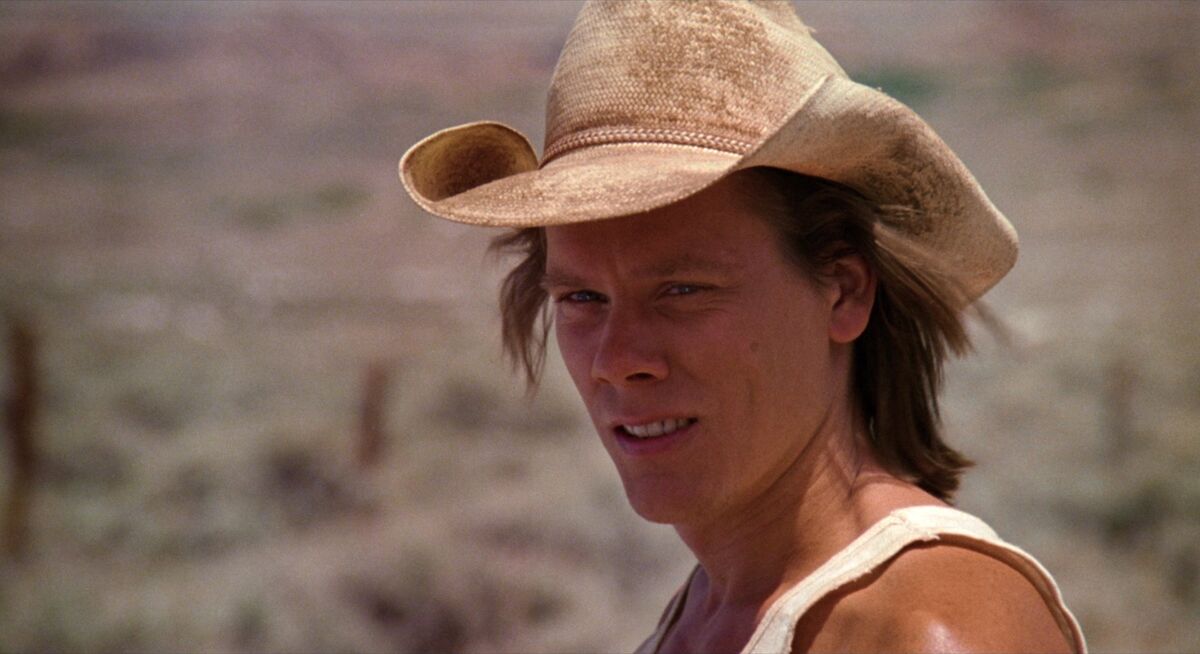
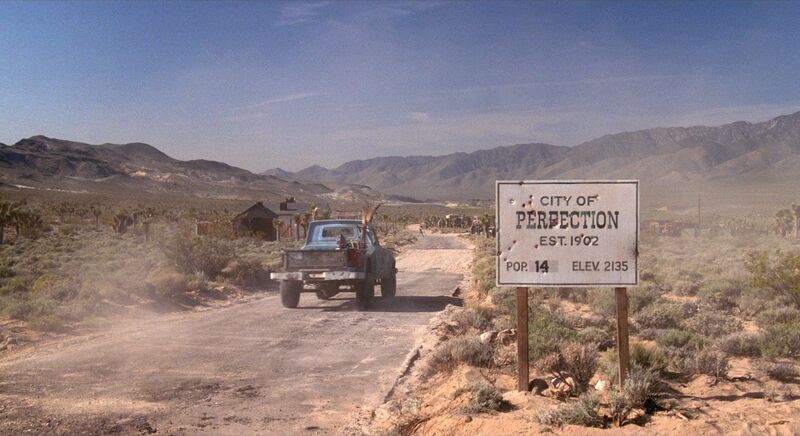
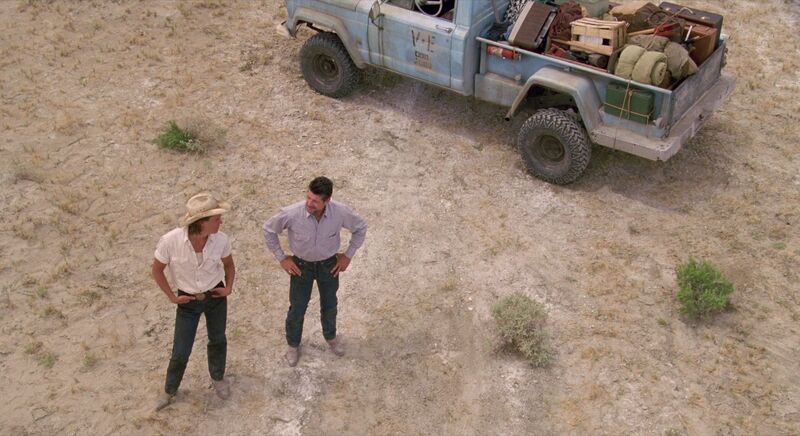
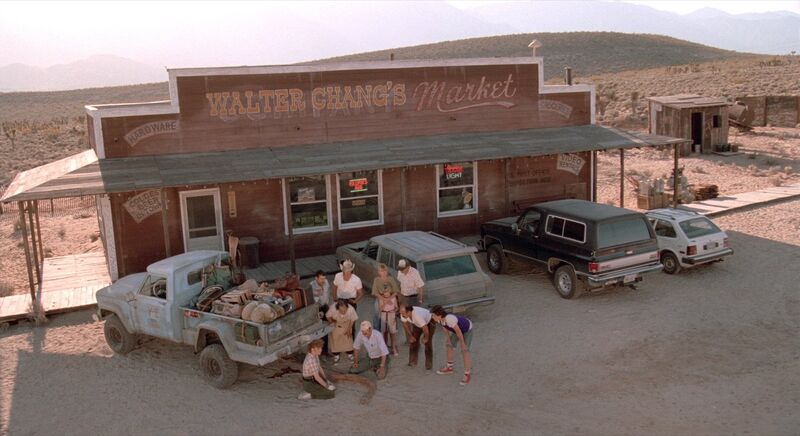
Valentine “Val” McKee (Kevin Bacon) and Earl Bassett (Fred Ward) are two handymen stuck in Perfection, Nevada — a town so isolated and small it barely qualifies as a dot on the map. The population is 14. There’s one road in and one road out. The nearest phone is a payphone at Chang’s Market. When people start dying in increasingly bizarre ways, Val and Earl try to leave. They can’t. Something underground is hunting them.
That something is a Graboid — an enormous subterranean worm creature, roughly 30 feet long, with a beak that opens to reveal three writhing tentacle tongues. It hunts by sound vibration. It moves through the desert soil like it’s swimming. It’s fast, it’s smart enough to learn, and it’s absolutely terrifying in the most B-movie-loving way possible.
The brilliance of the screenplay — by S.S. Wilson and Brent Maddock — is how economically it sets everything up. Within the first 20 minutes you know every character, you understand the geography, and the rules of survival are clear. No cell phones. No escape. The characters have to use their brains. They end up on rooftops, vehicles, and eventually a rock outcropping with nowhere left to go. The film keeps tightening the screws without ever losing its sense of humor.
Kevin Bacon’s Career Moment Nobody Talks About Enough
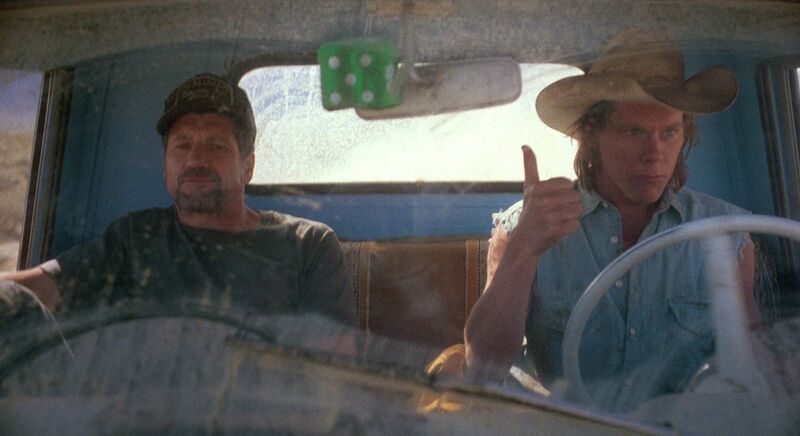
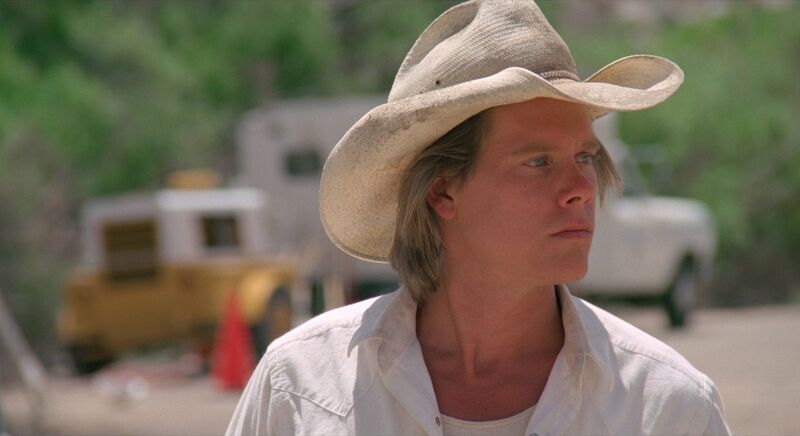
Kevin Bacon came into Tremors off the back of Footloose (1984) and A Few Good Men wasn’t coming until 1992. Tremors sits in the middle of that period where his career was searching for its next gear. What he brings to Val is something rare in monster movies — genuine likability without being stupid. Val makes dumb decisions because he’s impulsive, not because the script needs him to be a horror movie idiot. He’s charming, funny, and when things get serious, he steps up.
Fred Ward as Earl is the other half of one of the best buddy dynamics in 90s cinema. Earl is older, more cautious, perpetually grumpy but secretly competent. The two of them spend the first act trying to leave Perfection, and their banter has the feel of guys who’ve been together too long — they’ve run out of ways to irritate each other and moved on to a grudging affection. It’s comedy writing that understands character.
Reba McEntire and Michael Gross: The MVP Supporting Cast
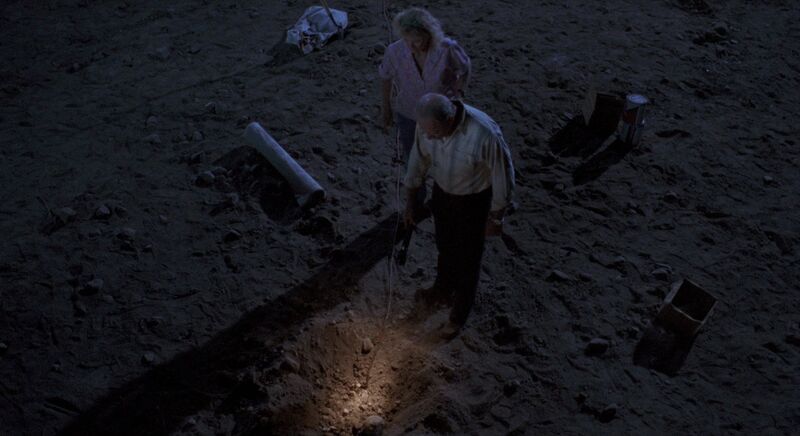
Heather Gummer (Reba McEntire) and Burt Gummer (Michael Gross) are survivalist preppers living in Perfection with an underground bunker packed floor to ceiling with guns and ammunition. In 1990, that character type hadn’t yet been played out in movies. It was funny, a little unnerving, and oddly aspirational given the situation they find themselves in. When the Graboids come for them, the Gummers fight back. The basement scene — where a Graboid smashes through the wall and Burt and Heather unload their entire arsenal into it — is one of the most gleefully satisfying sequences in 90s genre cinema.
McEntire had essentially no acting experience before this role, but she’s completely natural. The scene where she’s standing on the washing machine calmly loading a gun while her husband screams at her to hurry up is a perfect piece of comedic performance. Michael Gross, known mostly from Family Ties by this point, found a character he’d end up playing across six sequels and a TV series. Burt Gummer became one of the most beloved characters in cult movie history.
The Graboids: Practical Effects That Still Hold Up
Here’s where Tremors earns its place in the effects hall of fame. The Graboids were created by Alec Gillis and Tom Woodruff Jr. of Amalgamated Dynamics — no CGI, just practical animatronic work, underground mechanical rigs, and miniature effects. The full-size Graboid head sections were built and shipped to the filming location on flatbed trucks. The tentacle tongues were hand-controlled by operators hidden off camera. The underground “swimming” was achieved through a combination of miniature desert landscapes and perspective tricks.
The result holds up today in a way that early CGI from the same era absolutely does not. When a Graboid crashes through a concrete wall or bursts up from the ground, it feels physical. You believe in the mass of the creature. The animatronic faces — with their triple-tongue configuration and that snapping beak — became immediately iconic. The Graboid design is genuinely original: it doesn’t look like anything else in monster movie history, before or since.
The film also uses misdirection brilliantly. For the first half, you barely see the creatures. Moving dirt trails, tremors in the ground, cars sinking into the earth. The movie builds dread through suggestion before it earns the full reveal, and that reveal — when a Graboid fully emerges from the ground — is earned in a way that modern creature features rarely bother with.
Filming in the California Desert
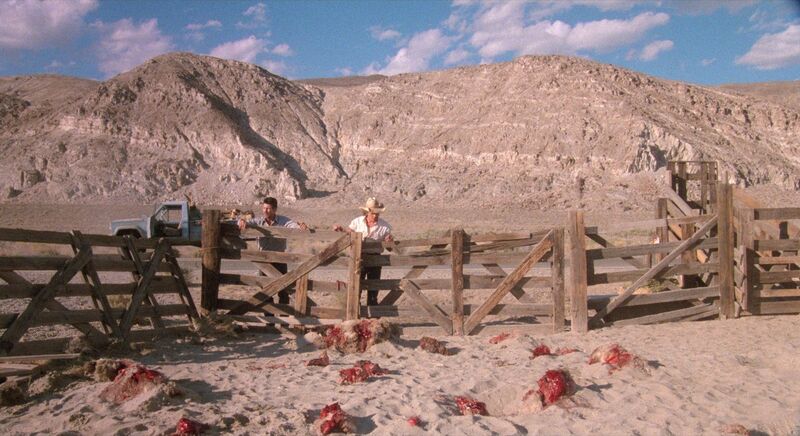
Tremors was shot in Inyo County, California, near the town of Lone Pine — the same general area used for hundreds of classic Westerns. The production built an extensive practical set to represent Perfection, including Chang’s Market, the Gummer house, and the surrounding structures. The wide desert vistas you see in the film are real locations, and they do something crucial for the story: they make the characters’ isolation absolutely believable.
Perfection isn’t just a weird place to live — it looks like a place that forgot to exist. There’s no reason for anyone to be there except stubbornness and inertia, which is exactly what Val and Earl represent before the plot forces them to become heroes. The desert setting also makes the underground threat more visceral; there’s no pavement, no concrete — just miles of open ground that something can move through in any direction, at any speed.
The YouTube Trailer That Still Gets the Blood Pumping
Watch that trailer and try not to grin. There’s a directness to it that modern blockbuster marketing has completely forgotten. It tells you exactly what the movie is, shows you the creatures, shows you the cast, and promises you a good time. No cryptic teasers. No multi-month rollout campaign. Just: here’s a movie about giant underground worms, here’s Kevin Bacon, enjoy.
From Box Office Disappointment to Franchise Giant
The Tremors franchise is one of the most improbable success stories in straight-to-video history. After the original’s theatrical disappointment, Universal put out Tremors 2: Aftershocks in 1996 directly to home video, and it performed well enough to justify more. The franchise eventually ran to seven films and a TV series, introducing new creature forms — the Shriekers (bipedal daylight hunters), and the Ass Blasters (Shriekers that developed wings and could launch themselves by igniting methane) — that kept the mythology growing in gloriously absurd directions.
Michael Gross appeared in every single entry, making Burt Gummer one of the longest-running characters in monster movie history. Kevin Bacon returned for the TV series briefly but wisely kept his distance from the sequels, preserving the original’s pristine reputation. The franchise found a loyal fanbase that appreciated what it was: low-budget creature feature entertainment that knew its limitations and played within them with genuine craft and affection.
If you want a deep dive into another movie that became something bigger than its box office suggested, check out our piece on E.T. the Extra-Terrestrial — another film that owed much of its cultural footprint to home video — and Short Circuit 1986’s Johnny 5, another beloved creature that won audiences over on repeat viewings. For a film that also used its setting as a character, the Matrix movie’s 1999 world-building took a similarly bold approach to putting character before spectacle.
Why Tremors Still Matters
There’s something about Tremors that modern Hollywood keeps trying to recreate and keeps getting wrong. It’s not the monsters — those can be replicated. It’s the tone. Tremors is funny without mocking itself. It has genuine scares without becoming grim. The characters are competent without being superheroes. Nobody has a tragic backstory. Nobody gives a speech about what it all means. Two handymen just decide not to die, and they use everything around them — pickup trucks, dynamite, fence posts, and eventually a very good throw — to make that happen.
That respect for audience intelligence, combined with a commitment to practical craft over digital shortcutting, is what separated Tremors from the pack of late-80s/early-90s creature features that came and went without leaving a mark. It’s why the film is still being watched and written about 35 years after it came out, why Burt Gummer merchandise still sells, and why “they found us” is still a punchline among a certain generation of film lovers.
You could watch Tremors tonight and enjoy it on every level it offers. That’s the test a movie really has to pass. Tremors passes it every single time.
Sources
- Tremors (1990 film) — Wikipedia — Production history, box office data, cast and crew information
- Tremors — Rotten Tomatoes — Critical reception and audience scores
- Subterranean Terror: Tremors — Monster Legacy — Behind-the-scenes practical effects documentation and production photos
- Tremors — IMDb — Full cast, crew, and technical specifications
- Tremors (1990) Stills — Cinematic Freeze — Film stills and cinematography analysis