Falklands War 1982: 8 Defining Moments That Changed Everything
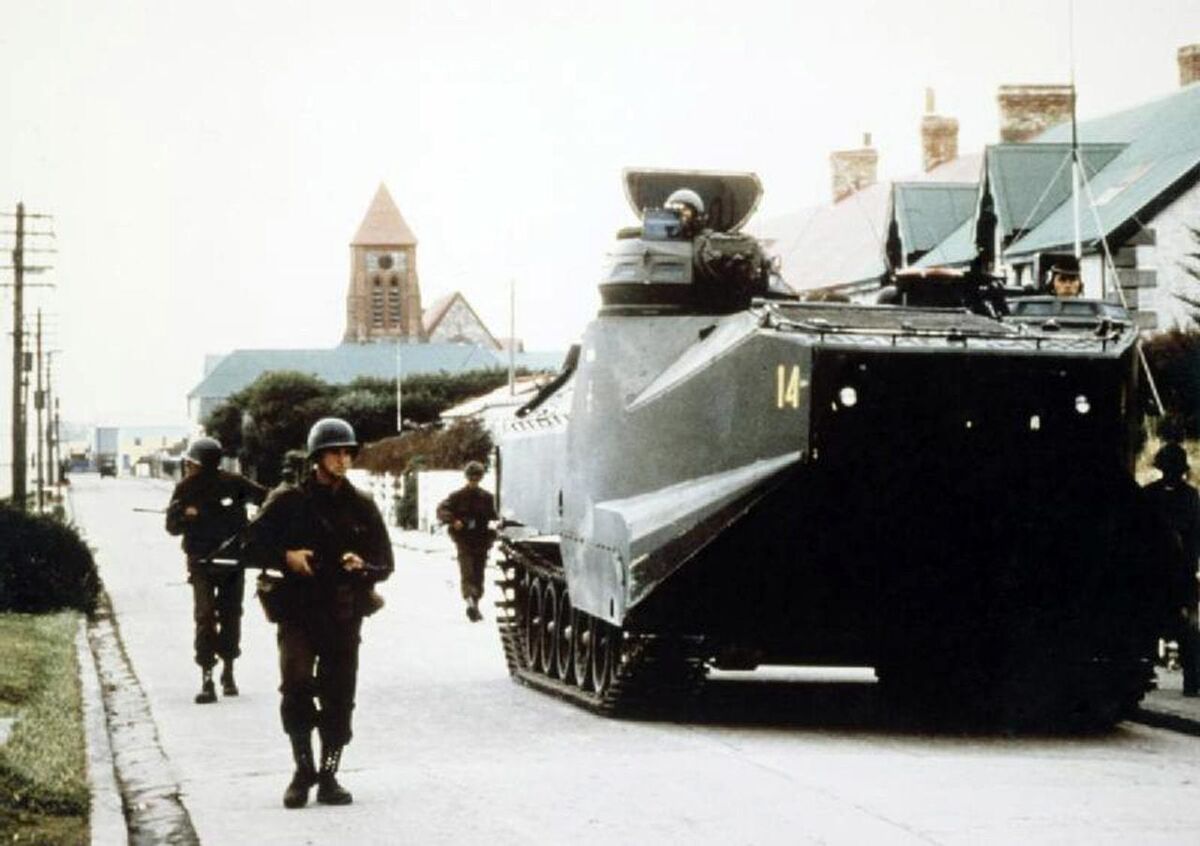
Forty-four years ago today, a column of Argentine amphibious vehicles rolled into the streets of Stanley — a quiet, wind-battered capital that most of the world had never heard of. By nightfall on April 2, 1982, the Falkland Islands were under Argentine military occupation, and the clock was ticking on one of the most unlikely, dramatic, and consequential wars of the twentieth century. Seventy-four days later, it was over — but nothing about Britain, Argentina, or Margaret Thatcher would ever be quite the same.
A Junta’s Desperate Gamble
By early 1982, Argentina’s military government was in serious trouble. General Leopoldo Galtieri had seized power in a coup in December 1981, inheriting an economy in freefall — inflation running at over 100%, mass unemployment, and a population that had spent years living in fear of the junta’s notorious “dirty war,” in which an estimated 10,000 to 30,000 dissidents, activists, and ordinary citizens had been “disappeared.” The streets were growing restless. Galtieri needed a distraction.
The Falkland Islands — Las Islas Malvinas in Spanish — had been disputed territory for a century and a half. Argentina had always maintained that the islands, seized by Britain in 1833, were rightfully Argentine. Sovereignty negotiations between London and Buenos Aires had dragged on through the 1970s without resolution. For the junta, the islands represented something more than real estate: they were a symbol of national humiliation and an opportunity. A quick, bloodless seizure, they calculated, would unite the country, generate a nationalist frenzy, and force Britain — which had been quietly signaling its waning interest in the remote outpost — to negotiate.
The Retro Almanac
A monthly roundup of "on this day" highlights from that month, decades back — plus first dibs on new retro merch drops. No spam, just the good stuff.
The signs that Britain wasn’t paying close attention were real enough. The 1981 Defence Review had earmarked HMS Endurance, the only Royal Navy vessel permanently stationed in the South Atlantic, for the scrap heap. The British Nationality Act of the same year had stripped many Falkland Islanders of full British citizenship. To the junta, these were signals that London didn’t care. They were wrong.



Browse retro and vintage-inspired apparel at the RetroRadical shop →
The Retro Almanac
A monthly roundup of "on this day" highlights from that month, decades back — plus first dibs on new retro merch drops. No spam, just the good stuff.