Twin Peaks Premiere 1990: The Night TV Changed Forever
Thirty-five years ago today, on April 8, 1990, a dead girl washed up on a rocky shore in the Pacific Northwest. She was wrapped in plastic. And nothing on television was ever the same again.
The Twin Peaks pilot episode premiered on ABC as a two-hour Sunday Night Movie, and roughly 34.6 million Americans tuned in to watch it. Most of them had never seen anything like it. Most of them never would again — at least not until the show they’d just watched reshaped the entire medium.
How Twin Peaks Came to Be: David Lynch Meets Mark Frost
The story of Twin Peaks starts with an unlikely partnership. David Lynch, the auteur behind Eraserhead, Blue Velvet, and The Elephant Man, had never done television. He was a filmmaker’s filmmaker — a guy who painted with celluloid and thought in dreams. Mark Frost, meanwhile, was a seasoned TV writer who’d cut his teeth on Hill Street Blues, one of the most acclaimed dramas of the 1980s.
The two met through their mutual agent, Tony Krantz, in 1986. Lynch and Frost hit it off immediately. They kicked around ideas over lunches at a diner called Du-par’s in Studio City — a detail that feels almost too perfect given what came next. Their original concept was a show called “Northwest Passage,” a murder mystery set in a small lumber town somewhere near the Canadian border.
The pitch was deceptively simple: Who killed Laura Palmer?
ABC, in a period of risk-taking under entertainment president Robert Iger (yes, that Robert Iger), greenlit a pilot in 1988. Lynch would direct. Frost would help write. And they’d shoot on location in the Pacific Northwest, where the Douglas firs grew tall enough to hide just about anything.
The Pilot Episode: “She’s Dead, Wrapped in Plastic”
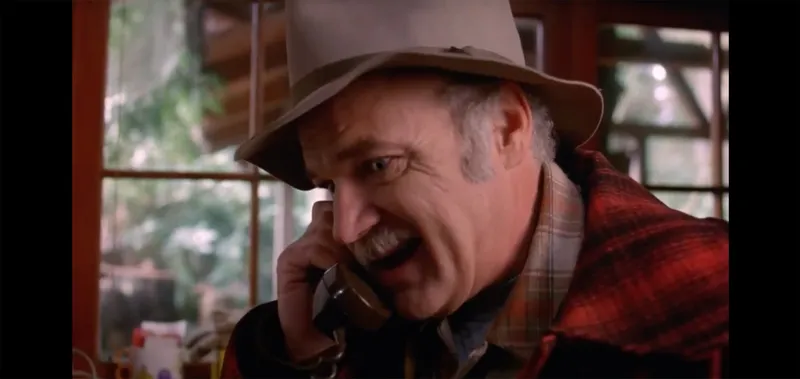
The Twin Peaks pilot opens with one of the most iconic sequences in TV history. Pete Martell (the great Jack Nance, Lynch’s Eraserhead star) strolls down to the lake for his morning fishing trip and discovers a body on the shore — a young woman, blue-lipped, wrapped in clear plastic sheeting. His frantic phone call to the sheriff’s department — “She’s dead, wrapped in plastic” — became one of the most quoted lines of the decade.
The dead girl is Laura Palmer, the homecoming queen of Twin Peaks High School. Beautiful, beloved, seemingly perfect. And very, very dead.
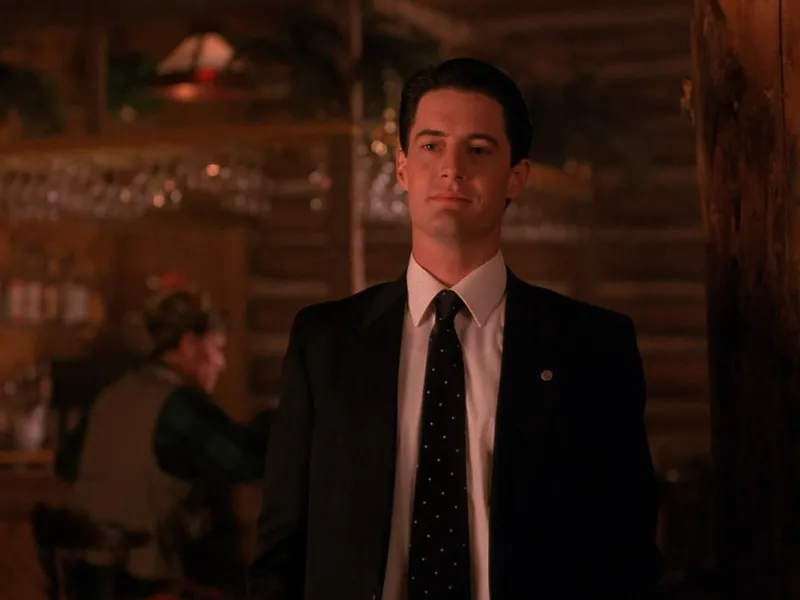
From there, Lynch and Frost unfurl their story with the patience of a spider spinning a web. The sheriff, Harry S. Truman (Michael Ontkean), calls in the FBI. And that’s when Special Agent Dale Cooper rolls into town in his black sedan, dictating notes into a handheld tape recorder for the never-seen “Diane.”
Agent Cooper: The Character Who Defined a Generation
Kyle MacLachlan had already worked with Lynch on Dune and Blue Velvet, but Agent Cooper was something new entirely. Where Jeffrey Beaumont in Blue Velvet was drawn to darkness, Cooper was drawn to light — to the beauty in everyday things. His enthusiasm for “a damn fine cup of coffee” and cherry pie at the local diner wasn’t an act. Cooper genuinely delighted in the small pleasures of existence.
That combination — a man of deep intuition and boyish wonder investigating something profoundly evil — was the beating heart of Twin Peaks. Cooper used dreams, Tibetan rock-throwing methods, and gut feelings alongside standard police work. He was Sherlock Holmes filtered through a 1990 sensibility and a Buddhist meditation practice.
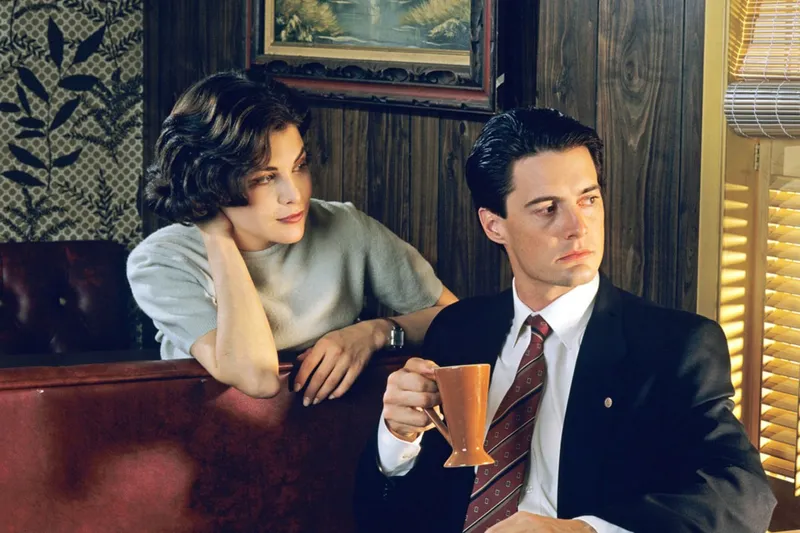
MacLachlan earned a Golden Globe for the role in 1991, and Cooper became one of those rare TV characters who transcended the show itself. People who never watched Twin Peaks knew about the coffee, the thumbs-up, the tape recorder. Cooper was a cultural artifact before the first season even finished airing.
The World of Twin Peaks: Where Soap Opera Met Surrealism
What made Twin Peaks revolutionary wasn’t just the murder mystery — it was the world. Lynch and Frost populated their fictional town with characters who felt simultaneously real and dreamlike. The Log Lady (Catherine Coulson), who carried a log that spoke to her. Nadine Hurley (Wendy Robie), a one-eyed woman obsessed with inventing silent drape runners. Deputy Andy Brennan (Harry Goaz), who cried at crime scenes. Bobby Briggs (Dana Ashbrook), the leather-jacketed bad boy hiding a vulnerable kid underneath.
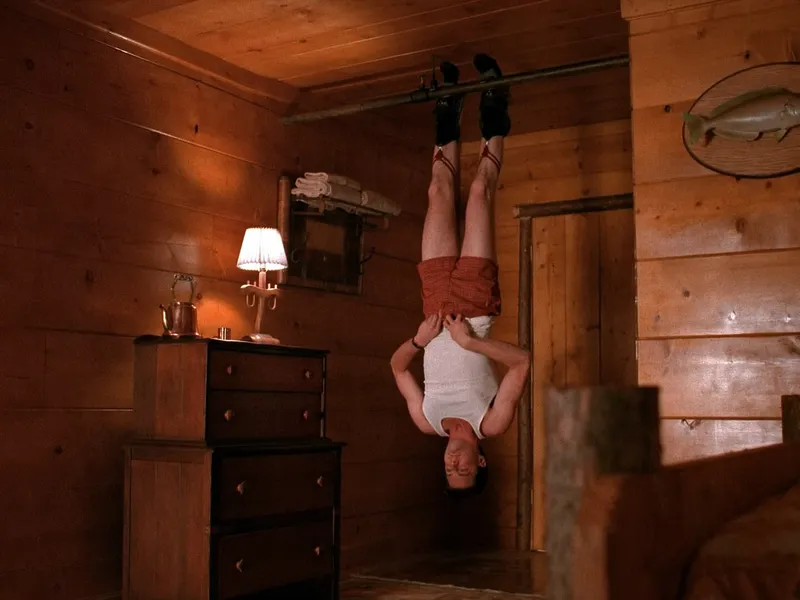
There was Audrey Horne (Sherilyn Fenn), the sultriest teenager on network television, whose dance in the diner to Angelo Badalamenti’s dreamy score became a GIF decades before GIFs existed. There was Big Ed Hurley (Everett McGill) and Norma Jennings (Peggy Lipton), star-crossed lovers separated by Ed’s marriage to Nadine and Norma’s marriage to an abusive husband.
And then there was the town itself. Twin Peaks, Washington — population 51,201 — was a character of its own. The sawmill churning away. The waterfall thundering. The diner pouring bottomless cups of coffee. It was the kind of place where everybody knew your name, and also where everybody had a secret that could destroy them.
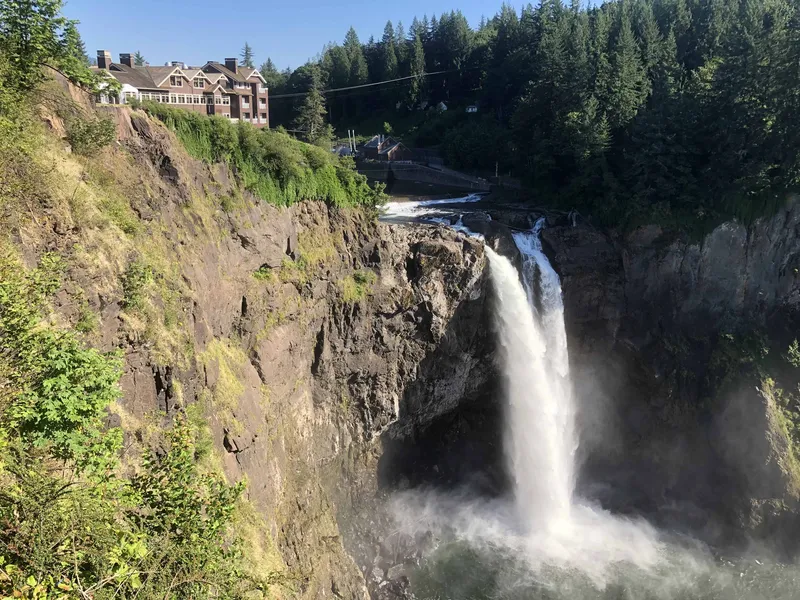
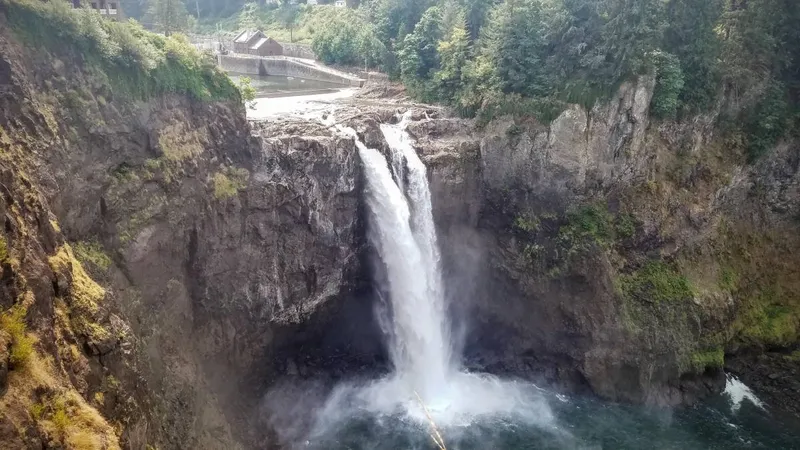
Lynch shot the pilot and much of the series on location in Snoqualmie, North Bend, and Fall City, Washington. The iconic Snoqualmie Falls appeared in the opening credits. Twede’s Cafe in North Bend became the Double R Diner. The Salish Lodge & Spa became the Great Northern Hotel. These weren’t sets — they were real places, and fans still make pilgrimages to them 35 years later.
The Laura Palmer Mystery: Television’s Greatest Whodunit
At the center of everything was the question: Who killed Laura Palmer?
Lynch didn’t actually want to answer it. His original vision was a show that used the mystery as an engine to explore the darkness beneath small-town America, never providing a solution. The mystery was the point — not its resolution. But ABC, pressured by ratings and audience demands, eventually forced Lynch and Frost to reveal the killer midway through Season 2.
The reveal — which we won’t spoil here, even 35 years later, because some things are sacred — was one of the most disturbing and emotionally devastating scenes ever broadcast on network television. Lynch himself directed the episode, and what he created was less a mystery solution than a plunge into genuine horror. Viewers who’d been watching for fun found themselves genuinely shaken.
But Laura Palmer was always more than a corpse driving a plot. Through flashbacks, video diaries, and other characters’ memories, she emerged as a complex, tragic figure — a girl crushed between the person everyone wanted her to be and the darkness that was consuming her. Sheryl Lee, who was originally cast for a single scene as the dead body, was so compelling that Lynch expanded her role dramatically.
The Black Lodge and Twin Peaks’ Mythology
The pilot episode contained the seed of something even stranger than a murder mystery. In a dream sequence — shot for the international version of the pilot and later incorporated into the series — Cooper found himself in a surreal Red Room: red curtains, a black-and-white zigzag floor, and a small man in a red suit speaking backwards.
This was the audience’s first glimpse of the Black Lodge, an extra-dimensional space that would become central to Twin Peaks’ mythology. The Black Lodge was where evil spirits like BOB — the entity responsible for Laura’s death — resided. It operated on dream logic, where time moved differently and the rules of the physical world didn’t apply.
The Black Lodge concept drew from Theosophy, Native American mythology, and Lynch’s own meditation practice. It gave Twin Peaks a metaphysical depth that no other network show had attempted. This wasn’t just a crime drama — it was a show about the nature of evil itself, and the thin membrane separating our world from something much worse.
Ratings, Acclaim, and the Beginning of “Prestige TV”
The pilot’s ratings were enormous. That 34.6 million viewers figure made it the highest-rated TV movie of the season. The first season — just eight episodes, including the pilot — averaged around 20 million viewers per episode. Critics went berserk. Time magazine put it on the cover. Rolling Stone featured the three female leads. It won a Peabody Award and was nominated for 14 Emmys.
Season 2, which expanded to 22 episodes, struggled. After ABC forced the Laura Palmer reveal in episode 9, the show lost its narrative engine. Ratings dropped. Subplots wandered. Lynch, frustrated with network interference, stepped away for much of the middle of the season. By the time he returned to direct the breathtaking two-part finale, the audience had shrunk considerably.
ABC canceled Twin Peaks in June 1991, after just two seasons and 30 episodes. Lynch followed it with the 1992 prequel film Twin Peaks: Fire Walk with Me, which was booed at Cannes but has since been reappraised as one of his finest works.
The Legacy: How Twin Peaks Changed Television Forever
Here’s the thing about Twin Peaks: it failed commercially in the short term and succeeded beyond measure in the long term. Before Twin Peaks, network television dramas were largely self-contained episodes with simple A-and-B storylines. After Twin Peaks, the door was open for serialized, auteur-driven, tonally complex dramas that rewarded obsessive viewing.
Without Twin Peaks, there is no The X-Files. No Lost. No The Sopranos. No Breaking Bad. No True Detective. Chris Carter, Damon Lindelof, David Chase, and Nic Pizzolatto have all cited Twin Peaks as a foundational influence. The show invented the concept of “event television” — the idea that a TV show could be a cultural moment, something you had to watch and talk about the next morning.
Twin Peaks also pioneered the tie-in media ecosystem. Mark Frost wrote The Secret Diary of Laura Palmer (published under Jennifer Lynch’s name), which became a New York Times bestseller. There was The Autobiography of F.B.I. Special Agent Dale Cooper, an audiobook companion series, and merchandise ranging from coffee mugs to Log Lady figurines. In an era before the internet, Twin Peaks fans organized through newsletter fanzines and VHS tape-trading networks.
The Return: 25 Years Later
In the Season 2 finale, Laura Palmer whispered to Cooper in the Red Room: “I’ll see you again in 25 years.” And she meant it. In 2017, Lynch and Frost returned with Twin Peaks: The Return on Showtime — an 18-episode limited series that was less a nostalgic revival than a radical reinvention. It was weirder, darker, and more experimental than anything Lynch had ever done, including an eighth episode that abandoned narrative entirely for a 60-minute tone poem about the birth of evil.
The Return proved that Twin Peaks wasn’t just a product of its time. It was timeless — a story about the fundamental struggle between good and evil, wrapped in Douglas fir and damn fine coffee, that spoke to something deep in the American psyche.
Watch the Original Twin Peaks Opening Credits
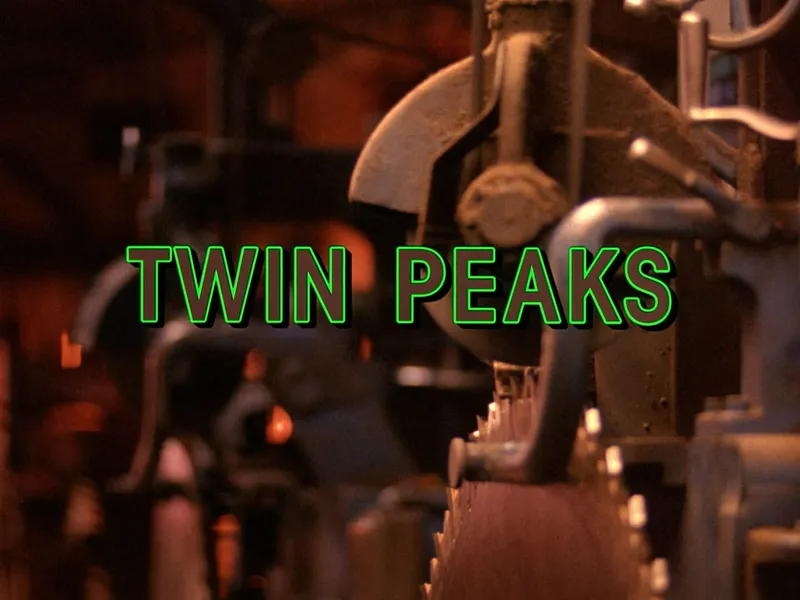
Angelo Badalamenti’s haunting theme music, the misty shots of Snoqualmie Falls, the sawmill — it all comes flooding back. Here’s the original Season 1 opening in 4K:
Why Twin Peaks Still Matters in 2026
Thirty-five years after that pilot aired, Twin Peaks remains one of the most dissected, debated, and beloved shows in television history. New viewers discover it constantly — drawn in by the memes, the coffee references, the Red Room iconography that’s become visual shorthand for “something weird and beautiful is happening here.”
But more than that, Twin Peaks matters because it proved that television could be art. Not art in the sense of being prestigious or important, but art in the truest sense — something that makes you feel something you can’t quite name, that lingers in your subconscious long after the credits roll, that changes the way you see the world.
On April 8, 1990, David Lynch and Mark Frost showed America that a TV show could be a dream and a nightmare at the same time. That you could care deeply about people in a fictional town, laugh at their absurdities, and then feel the floor drop out beneath you when the darkness arrived. That damn fine coffee and ancient evil could exist in the same frame.
The owls are not what they seem. But Twin Peaks? Twin Peaks is exactly what it seems: a masterpiece.