Twin Peaks Premiere 1990: The Night TV Changed Forever
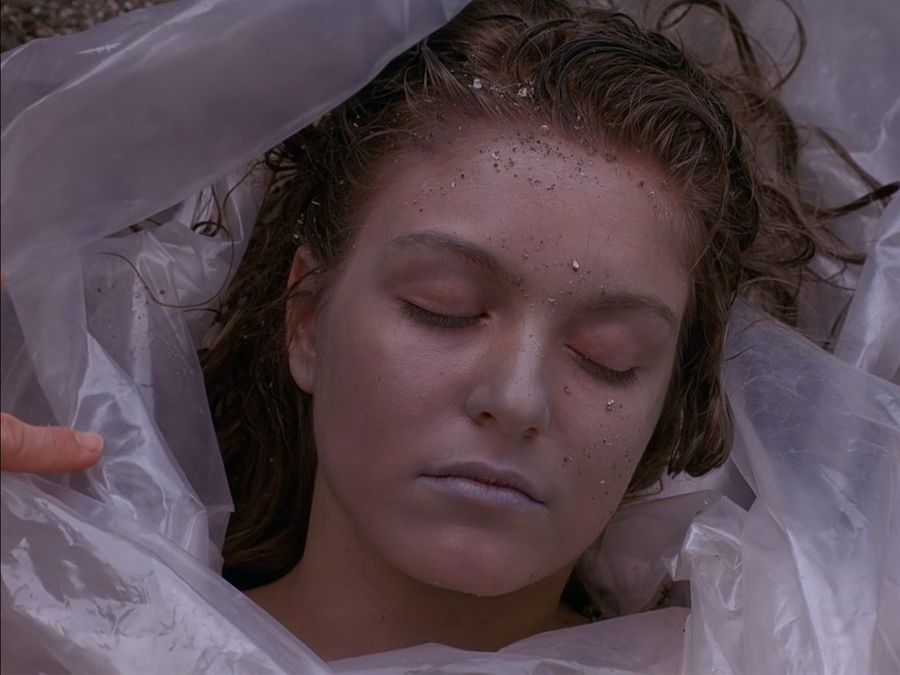
Thirty-six years ago tonight, on April 8, 1990, a dead girl washed up on a rocky shore in the Pacific Northwest. She was wrapped in plastic. Her name was Laura Palmer, she was the prom queen of a town no one had ever heard of, and by the time ABC cut to the closing credits, American television had quietly snapped in half.
The Twin Peaks premiere 1990 aired as a two-hour Sunday Night Movie on ABC, and roughly 34.6 million Americans tuned in. Most of them had never seen anything like it. Most of them never would again — at least not until the show they had just watched reshaped the entire medium and dragged prestige drama out of network safety and into the wet, dark woods.
The Retro Almanac
A monthly roundup of "on this day" highlights from that month, decades back — plus first dibs on new retro merch drops. No spam, just the good stuff.
How an Avant-Garde Filmmaker Ended Up on ABC
The story starts with the unlikeliest creative partnership of the late 80s. David Lynch, the director behind Eraserhead, Blue Velvet, and The Elephant Man, had never made a single hour of television. He was a filmmaker’s filmmaker — a guy who painted with celluloid, dreamed in static, and once spent five years getting a baby to look right on screen. Mark Frost, his co-creator, was the opposite. Frost had cut his teeth on Hill Street Blues, the gritty cop drama that dragged 80s television into something resembling adulthood. He understood network notes, casting calls, and the maddening rhythm of an episode order.
The two had been kicking around a script called Goddess, a Marilyn Monroe biopic that never got made. When that fell apart, their agent suggested they try TV instead. Lynch was skeptical until he pictured a small Pacific Northwest town with a dark secret floating underneath every diner conversation. Frost knew how to build the world around it. They pitched a murder mystery to ABC where the question wasn’t really who killed Laura Palmer. The question was what kind of place could produce a girl like Laura Palmer in the first place. ABC, bewildered, said yes.
The Night 34.6 Million Americans Met Laura Palmer
The premiere aired on Sunday, April 8, 1990. History.com pegs the audience at 34.6 million viewers, an absolutely absurd number for a show that opens with a man weeping on a payphone for five uninterrupted minutes. Pete Martell finds a body on the beach. Sheriff Truman is called. A doctor arrives. A father collapses at his kitchen table. The first hour barely moves, and yet nobody could look away.
What made it land was the way Lynch shot grief. The crying never stopped. Adults on screen wept the way real adults weep — messy, ugly, embarrassing, unedited. Network television in 1990 was Full House and Murder, She Wrote. Nothing had prepared an audience for a sheriff’s deputy openly sobbing into a forearm while his boss tries to keep it together for the camera. That single choice — letting people be wrecked on screen — separated Twin Peaks from every cop show before it.
A Town Where the Owls Aren’t What They Seem
The town itself was the second main character. Lynch and Frost stuffed it with a cast so deep it should have buckled the pilot: Audrey Horne saddle-shoeing through the lobby of the Great Northern, Donna Hayward as Laura’s grieving best friend, Bobby Briggs as the cocky boyfriend who probably knew more than he said, the Log Lady walking in from a fever dream with her piece of firewood. Within twenty minutes of meeting any of them you understood their loneliness, their secrets, and their relationship to the dead girl on the beach.
The Double R Diner sold cherry pie that mattered. The sawmill smoked all day. The high school halls were full of jocks and cheerleaders carrying around the kind of damage that nobody at 90s Nickelodeon’s bright sound stages would have touched with a ten-foot pole. Twin Peaks looked like a normal small town until you watched it for ninety seconds, and then it didn’t look like anywhere at all. It looked like a place you might have dreamed about and forgotten.
Cooper Brought Coffee, Cherry Pie, and the FBI to Prime Time
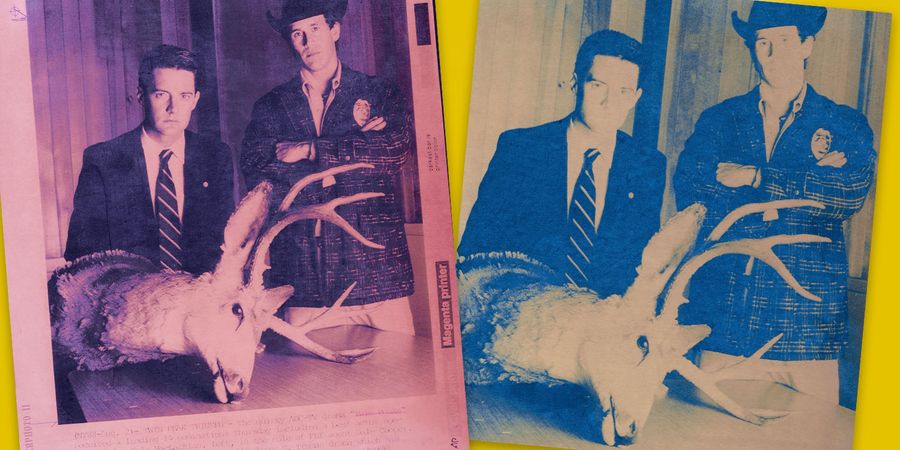
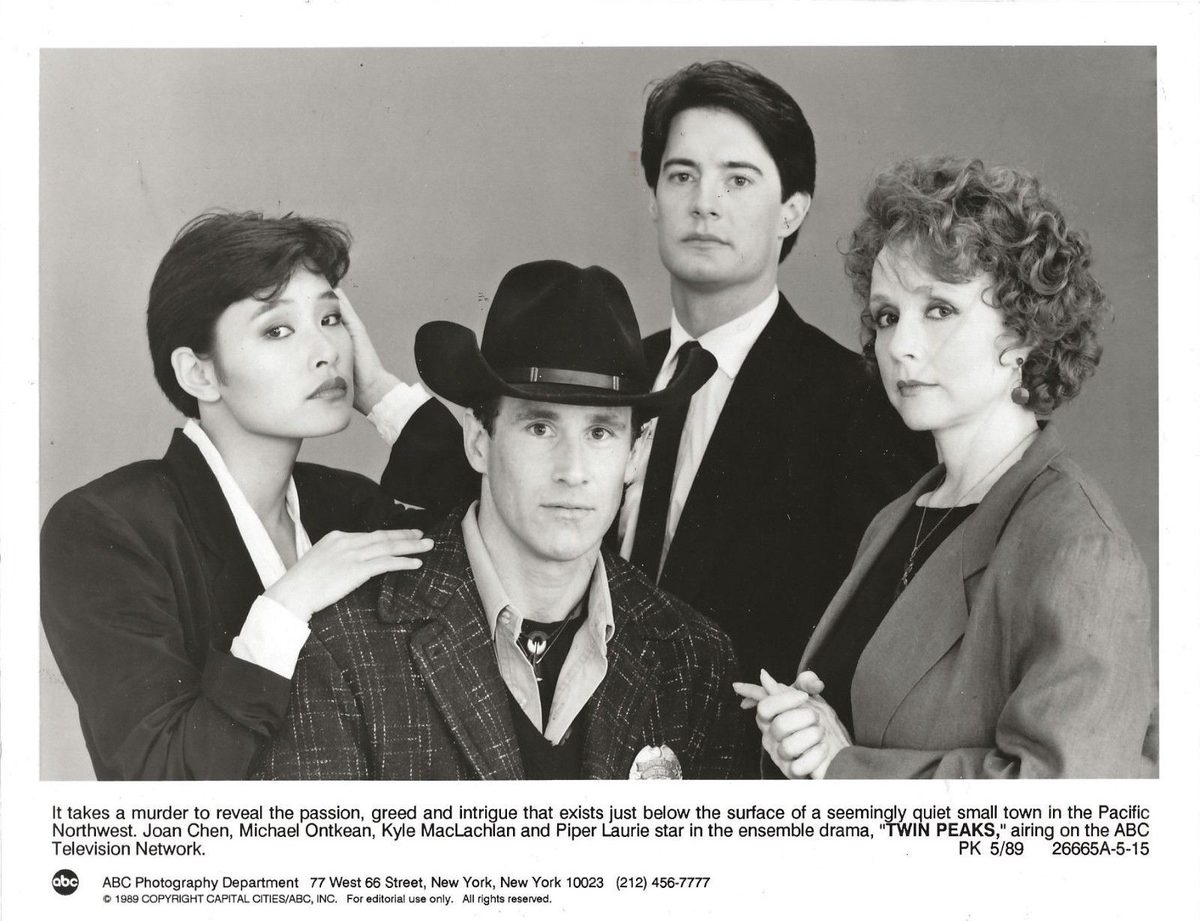
And then there was Dale Cooper. Kyle MacLachlan played the FBI agent the way nobody had played a fed before — sincerely. Cooper drank his coffee black, called it damn fine, recorded earnest tape memos to a woman named Diane, and treated everyone he met like they were the most interesting person he had ever encountered. Cynicism was the default mode of every TV detective in 1990. Cooper refused to do cynicism. He took Tibetan rock-throwing seriously. He took dreams seriously. He took dessert very seriously.
It was a casting miracle. MacLachlan had already worked with Lynch on Blue Velvet, where he played a college kid who finds a severed ear in a field and follows the mystery into someone else’s nightmare. Cooper was a refined evolution of that same wide-eyed protagonist, only this time with a gun and a Bureau ID. The audience loved him. The Golden Globes loved him too — MacLachlan won Best Actor in a TV Drama in 1991 for the role, which was deeply funny given that his character spent half the show interrogating one-armed shoe salesmen and recording dictation about pine trees.
How Snoqualmie Falls Became the Most Famous Skyline on Television
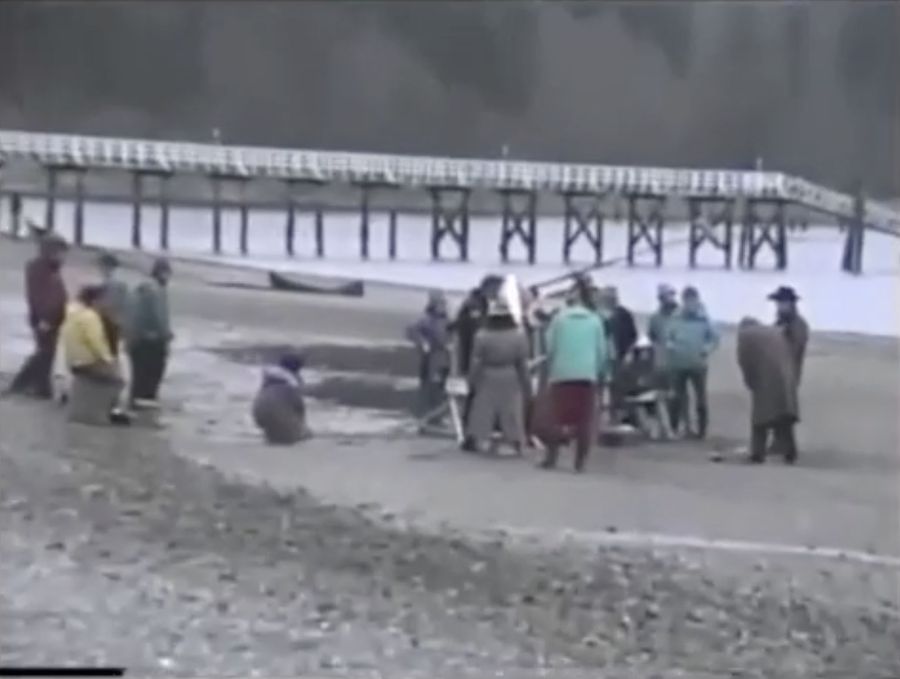
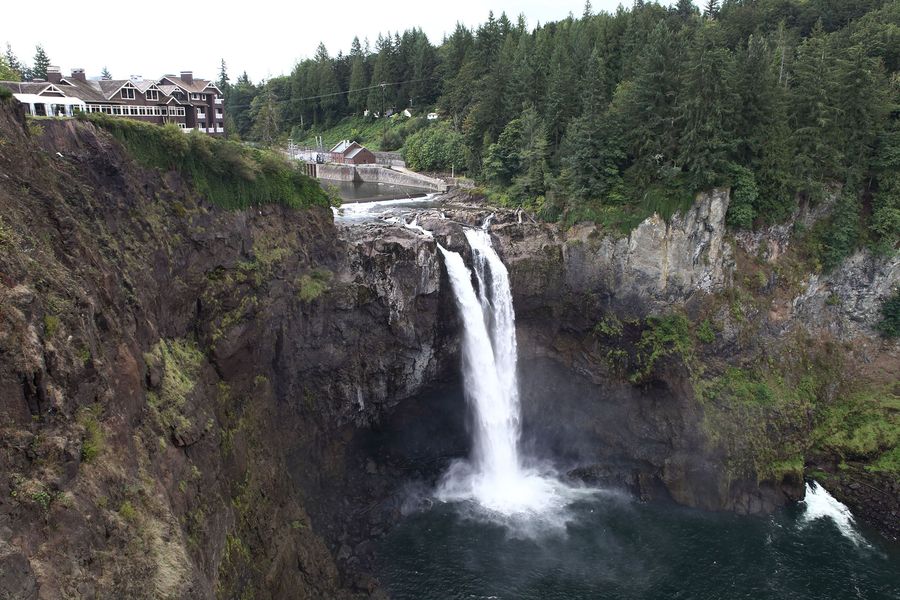
Angelo Badalamenti’s theme drifted in over a sawmill blade, a stoplight blinking against the night, and a wide pan across a waterfall that no one outside Washington State knew existed. Variety reports that Salish Lodge — perched on the cliff above Snoqualmie Falls — served as the exterior of the fictional Great Northern Hotel for every season of the show. Pete Martell’s boat dock was Kiana Lodge in Poulsbo. The Double R Diner was Twede’s Cafe in North Bend. Every shot was the actual Pacific Northwest, photographed during a soggy, gray March 1989.
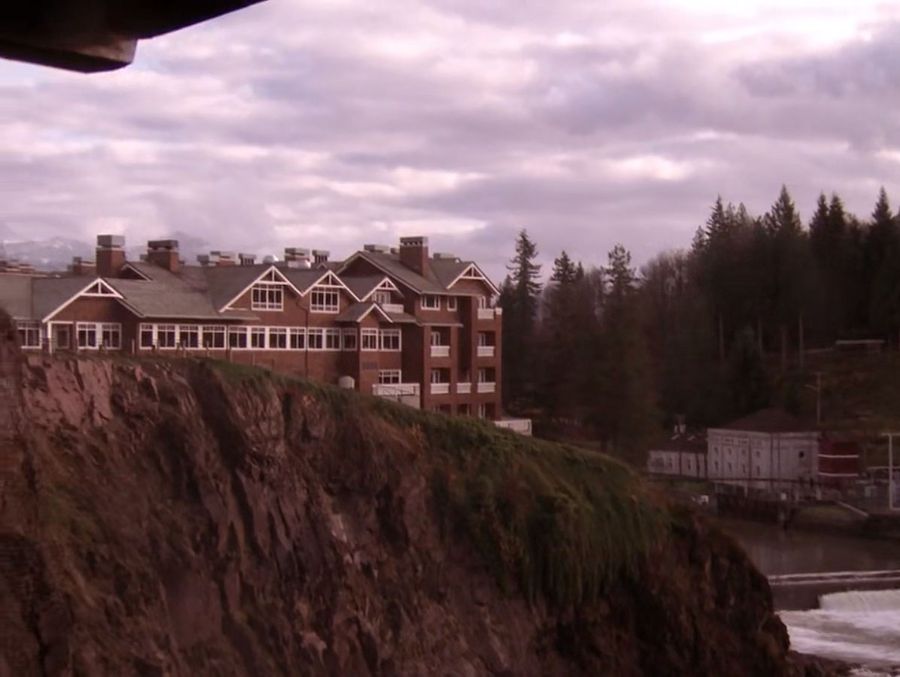
The location did half the storytelling for free. You can’t shoot wet evergreens, fog, and dark water without invoking something ancient and bothered. By 1992, fans were already road-tripping to Snoqualmie just to drink coffee at the Double R stand-in. They still are. The town leaned into it, and you can find tour maps to the Twin Peaks filming locations posted on the city government’s official site to this day. Few television shows have ever turned a real region into a pilgrimage site the way Lynch and Frost turned Snoqualmie into the saddest, dreamiest skyline on the small screen.
The Red Room, Backwards Talking, and the Dream That Broke Everyone
By episode three, Lynch had done something no network drama had ever attempted. He cut to Cooper, twenty-five years older, sitting in a velvet-draped room with red curtains, a black-and-white zigzag floor, and a man in a red suit who could only be described as a dancing dwarf. Laura Palmer was there too, except she wasn’t quite Laura Palmer. The man spoke backwards. The music was reversed and then reversed again. Cooper woke up convinced he knew the killer’s name.
Network suits at ABC apparently watched the dailies for the Red Room sequence and asked Lynch if he was serious. He was. The dream scene aired uncut. America found itself watching the most surreal piece of imagery ever broadcast on prime-time television, and millions of viewers the next morning were quoting the words “the owls are not what they seem” before they had finished their coffee. Sheriff Truman, played with quiet dignity by Michael Ontkean, became the audience surrogate — the steady, decent man who took Cooper at his word and asked the right follow-up questions without ever quite getting answers.
Why the Ratings Crashed and the Show Came Back Anyway
For the first eight episodes, Twin Peaks was the most talked-about show on television. Then ABC, sensing a hit, pushed Lynch and Frost to reveal the killer earlier than they wanted. The reveal came in November 1990. The mystery box snapped shut. The audience, suddenly handed a closed case, started drifting. Season two dragged. Lynch left to make Wild at Heart. The show that had once trapped a country in its lake-fog atmosphere started chasing subplots about beauty pageants and chess metaphors. The same network executives who had asked for the reveal then asked why nobody was watching anymore.
It got cancelled in 1991 after 30 episodes. And yet the legend of the show kept growing in syndication, on VHS bootlegs, in college dorms, and eventually on early DVD box sets. Even institutions like the Australian Centre for the Moving Image have written essays on how “she’s dead, wrapped in plastic” became one of the most quoted, parodied, and analyzed lines in television history. The world that had given up on Twin Peaks in 1991 spent the next twenty-five years re-discovering it. Showtime brought the cast back in 2017 for a third season Lynch directed every episode of, and the original ABC run finally got the closing chapter it deserved.
The show that probably did the most to learn from Twin Peaks was, ironically, a comedy. The same impulse that let Twin Peaks linger on weirdness for its own sake later fed everything from the Seinfeld finale’s refusal to give audiences a tidy goodbye to the slow-burn auteur dramas that followed in the late 90s and early 2000s.

The Twin Peaks Hangover That Reshaped Every Drama That Followed
Take a hard look at any prestige drama produced since 1999 and Twin Peaks DNA is in it. The X-Files built its whole pilot ethos around a quiet FBI agent investigating impossible things in damp rural America. Lost mapped a polar bear, a smoke monster, and a hatch onto a beach mystery that Lynch had already done with a velvet room and a one-armed man. True Detective‘s season one looked like a Louisiana cousin of Twin Peaks — same dread, same partner dynamic, same ritualistic killer. Riverdale, Severance, Yellowjackets, even Stranger Things — all of it is downstream of a 1990 ABC pilot about a sheriff and a fed in a town with very bad weather.
That influence is also why nostalgia for the early 90s hits Gen X in a particular way. The audience that watched the pilot live was the same audience that grew up reading Stephen King in middle school and watching The X-Files in high school. Twin Peaks sits exactly between those two reference points — too weird for prime-time, too earnest for cable. It taught a generation that the strangeness of small-town America was worth taking seriously. That same instinct is what powers the wave of Gen X nostalgia covered in why 80s nostalgia still rules and why audiences keep returning to the golden age of 90s sitcoms the moment someone reboots a coffee shop or a paper company.

Why April 8, 1990 Still Matters
You could pick a hundred dates from the early 90s and find a piece of pop culture that mattered for an afternoon. The Twin Peaks premiere matters in a different way. It is one of the only nights in network television history where you can draw a clean line and say, before this date the medium was one thing, after this date it was another. It is also the closest American TV has ever come to producing a piece of art whose primary subject was atmosphere. Plot was the bait. The town was the meal. And the meal is still being chewed over thirty-six years later.
If you have never seen the original pilot, the version with the alternate “European” ending is the one worth tracking down. If you have seen it ten times, watch it again tonight at 9 PM and try to remember what it felt like the first time. Either way, somewhere in a small Pacific Northwest town, the owls are still not what they seem.
Sources
- History.com — Twin Peaks premieres on ABC, April 8, 1990 — pilot ratings and historical context
- Variety — Hotels on Screen: Relive Twin Peaks at Salish Lodge and Spa — Snoqualmie Falls and the Great Northern Hotel location
- ACMI — Twin Peaks: She’s Dead, Wrapped in Plastic — cultural analysis of the pilot’s opening image
- SlashFilm — The Twin Peaks Crew Put a Lot of Work Into Laura Palmer’s Corpse — Sheryl Lee’s account of filming the body scene
- City of Snoqualmie — Twin Peaks filming location guide — official map of the real-world locations used in the show
- Twin Peaks Blog — Behind the Scenes of Discovering Laura Palmer’s Body — production stills and on-set photos from the 1989 shoot
Browse retro and vintage-inspired apparel at the RetroRadical shop →
The Retro Almanac
A monthly roundup of "on this day" highlights from that month, decades back — plus first dibs on new retro merch drops. No spam, just the good stuff.