
Protect Ya Neck: How Wu-Tang Clan Turned the Golden Age into a Dynasty
Late 1993, and hip-hop was already running in two directions at once. On the West Coast, Death Row Records had just dropped Dr. Dre’s The Chronic, coating everything in lush G-funk production and turning Snoop Dogg into a household name seemingly overnight. It was polished, cinematic, seductive — the sound of Los Angeles with its windows down. The East Coast response did not come from a slick operation with major-label muscle and celebrity infrastructure. It came from nine broke men from the one New York borough nobody was paying attention to, armed with kung fu movie samples, Wu-Tang sword mythology, and a business idea so unconventional that the music industry would spend the rest of the decade trying to figure out what had just happened to them.
That group was Wu-Tang Clan. What they built between 1993 and the end of the decade wasn’t just a run of great records — and it was absolutely a run of great records. It was the closest thing the Golden Age of hip-hop ever produced to a fully realized cultural empire, one that ran on creative discipline, deliberate scarcity, and a collective vision so strong that nine completely different personalities couldn’t pull it apart no matter how hard they tried. Thirty years on, it still holds.
The Forgotten Borough
New York’s hip-hop geography was already drawn by the early 1990s. The Bronx had the origin myth — the block parties, DJ Kool Herc, the birthplace of a culture. Brooklyn was deep in talent. Queens claimed EPMD, LL Cool J, and a lineage stretching back to the beginning. Manhattan sat at the center of the commercial world, from the clubs to the label offices. Staten Island was the fifth borough, the smallest, the most suburban, the only one with no subway connection to the rest of the city. It was largely working-class and politically conservative by New York standards, and completely absent from the hip-hop conversation. You would not have predicted what came next from looking at the map.
The Retro Almanac
A monthly roundup of "on this day" highlights from that month, decades back — plus first dibs on new retro merch drops. No spam, just the good stuff.
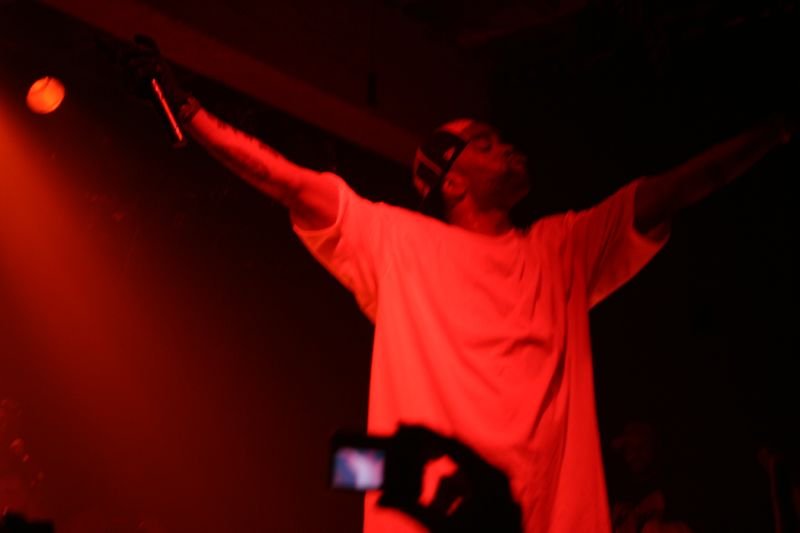
That geographic exclusion shaped everything about what Wu-Tang Clan became. Robert Fitzgerald Diggs — the MC and producer who became RZA — had grown up between Staten Island and Richmond, Virginia, and returned with a clear-eyed understanding of what the music industry did to artists who entered it without leverage. He’d watched talented people get swept up by labels, lose creative control, produce compromised work, and end up with nothing. He was not interested in repeating that experience. He had a plan, and the plan was about power before it was about music.
RZA’s Five-Year Plan
The business arrangement at the core of Wu-Tang Clan’s formation was almost comically ambitious. When the group signed their collective deal with Loud Records in 1993, RZA negotiated a clause that seemed, on the surface, like a concession: Loud got Wu-Tang as a group, but each individual member retained the right to sign solo deals with any label they chose, independently and without restriction. Loud agreed, probably operating on the reasonable assumption that a group of unknown MCs from Staten Island wasn’t going to become the kind of commercial force that made that clause consequential. That calculation turned out to be one of the more expensive mistakes in Golden Age hip-hop history.
Alongside the Loud deal, RZA imposed an internal arrangement on the group: he would have full creative control — over production, sound, sequencing, aesthetic direction — for five years. Nine men. Nine personalities. Nine sets of ambitions, egos, and conflicting visions. All subject to one producer’s judgment for half a decade. That this held together even partially is remarkable. That it held together well enough to produce what it produced is something closer to a miracle of collective discipline. RZA kept the sound unified, kept the vision intact, and worked with a focus that bordered on monastic. The result was 36 Chambers.
Enter the Wu-Tang (36 Chambers)
When Enter the Wu-Tang (36 Chambers) arrived in November 1993, it landed like something from a different planet. Dre’s Chronic had set the commercial template a year earlier — warm, bass-heavy, radio-ready in a way hip-hop hadn’t quite been before. 36 Chambers went the opposite direction with complete intentionality. RZA’s production was deliberately lo-fi: dusty, sparse, operating in the negative spaces between beats rather than filling them up. He sampled kung fu movie dialogue — primarily from the Shaw Brothers catalog, films like Shaolin and Wu Tang — alongside obscure soul records and film scores, building an aesthetic that was simultaneously chaotic and precise. You either locked into it or you didn’t. Passive listening was not an option this record offered.
The single “C.R.E.A.M.” became the album’s defining statement — Cash Rules Everything Around Me, built on a flip of The Charmels’ “As Long as I’ve Got You,” with Method Man and Inspectah Deck trading verses about poverty and survival with a directness that cut through everything. Method Man emerged as the group’s most naturally charismatic frontman — the MC whose solo career would launch first and reach the widest commercial audience. But 36 Chambers was deliberately a collective statement, nine voices trading verses, cutting across each other, building a world too dense and strange to belong to any one person. The album debuted at number 41 on the Billboard 200. By the standards of a debut from a completely unknown independent group, it was a phenomenon.
For Gen X listeners who found it, the experience of that album was disorienting in the best way — like stumbling onto a frequency no one else seemed to be broadcasting on. The kung fu samples were absurd and then, on repeated listens, completely logical. The darkness was real but not nihilistic. There was something almost comic underneath the menace, a collective sense of humor operating right at the edge. Nine men from the forgotten borough, absolutely refusing to make anything that sounded like what was already working.

Nine Labels, One Brand
What happened next is the part that belongs in a business school curriculum, though it mostly doesn’t. With 36 Chambers rising, each member began fielding solo offers — and each signed with a different label. Method Man went to Def Jam. Raekwon signed to Loud. GZA landed at Geffen. Ol’ Dirty Bastard signed to Elektra. Ghostface Killah went to Epic. The Wu-Tang brand was now distributed across the entire music industry landscape simultaneously, with no single label controlling it. Every label that signed a Wu-Tang member had a financial incentive to promote the broader Wu-Tang universe. Every solo album created demand for the next collective release. It was a perpetual commercial engine that no single label could have designed, because designing it required thinking at a level above any individual label’s interest.
The aesthetic discipline that made this work was RZA’s production. Every solo album felt unmistakably like part of the same world — the same dusty drums, the same cinematic samples, the same cold Staten Island energy underneath everything — even when the individual MCs pursued very different creative directions. The Wu-Tang W meant something specific. It meant a particular sonic signature, a philosophical framework drawn from Five-Percent Nation theology and kung fu mythology and urban poverty, all processed through one producer’s particular ear. You could hear a Wu-Tang affiliate album cold, having never heard it previewed or promoted, and know exactly what universe you were entering.
The Albums That Built the Dynasty
Between 1994 and 1997, the Wu-Tang solo catalog assembled one of the most consistently strong bodies of work the Golden Age of hip-hop produced. Method Man’s Tical (1994) arrived first — stoned, elastic, Meth’s melodic delivery floating above RZA’s fog-machine production. It was the most immediately accessible Wu-Tang release and still felt like nothing else on radio. Then came Raekwon’s Only Built 4 Cuban Linx… in 1995, a record so cinematic in its crime narrative and so meticulous in its detail that it essentially created an entire sub-genre of hip-hop storytelling. Ghostface Killah appeared throughout as Tony Starks, the album’s perpetual co-star, and their dynamic felt like two character actors improvising an entire crime film in verse form.
GZA’s Liquid Swords arrived just two months after Cuban Linx and went in the opposite direction: precise, intellectual, every bar stripped down to its essential argument. GZA was the best pure lyricist in the clan and Liquid Swords was the proof — an album that rewarded close reading in a way that felt closer to literary criticism than to pop music consumption. Ghostface Killah’s own debut, Ironman (1996), followed with an emotional rawness that felt almost uncomfortable to be around. And underneath all of it, RZA’s production kept the universe intact. Wu-Tang Forever, the collective’s 1997 double album, debuted at number one on the Billboard 200. The five-year plan had delivered everything it promised.

What Wu-Tang Gave the Golden Age
The Golden Age of hip-hop — roughly 1990 to 1999 — was defined by a creative tension between commerce and art, between the pull toward pop crossover success and the commitment to keeping it raw. The decade also produced Nas’s Illmatic, Biggie’s Ready to Die, Jay-Z’s Reasonable Doubt, Missy Elliott’s Supa Dupa Fly, A Tribe Called Quest’s Midnight Marauders — records so good that most eras would trade everything they had for just one of them. Into that already extraordinary conversation, Wu-Tang inserted a proof of concept: you could be completely uncompromising in your aesthetic and still build commercial scale. You could refuse to meet the mainstream halfway and still end up at number one. The music industry’s logic said those two things couldn’t coexist. Wu-Tang proved that logic wrong repeatedly and systematically over the course of an entire decade.
What the Clan also gave the era was a model for what a collective could be — not a band with a frontman and supporting players, but nine genuinely distinct artists who were stronger as a unit than any one of them could have been alone, precisely because the unit had a coherent identity that none of them could fully claim and none of them could fully abandon. The Wu-Tang logo meant something, and it meant it consistently, across nine different labels, across dozens of solo albums, across the entire back half of a decade. That’s not luck and it’s not marketing. That’s architecture — creative and commercial architecture that RZA designed in a Staten Island basement before anyone was paying attention.

If you were there — if you heard “Protect Ya Neck” crackling out of a car radio in late 1993, or bought Liquid Swords on the day it dropped and played it straight through without stopping — you already know what this means. The Golden Age of hip-hop had no shortage of great artists. Wu-Tang Clan were great artists who were also building something. They didn’t just make music in the Golden Age. They helped define what the gold was worth.
Sources
- Wu-Tang Clan — Wikipedia
- Enter the Wu-Tang (36 Chambers) — Wikipedia
- Golden Age of Hip Hop — Wikipedia
The Retro Almanac
A monthly roundup of "on this day" highlights from that month, decades back — plus first dibs on new retro merch drops. No spam, just the good stuff.