
Beverly Hills Cop: How Eddie Murphy Saved a Stallone Movie and Made History
In December 1984, a Detroit cop named Axel Foley walked into the Beverly Hills Hilton and demanded the Ramona Suite. The desk clerk nearly choked. So did the rest of Hollywood — because Beverly Hills Cop had just outgrossed Ghostbusters, both Indiana Jones films from 1984, and every other movie released that year to become the domestic box-office champion. Not bad for a project that nearly starred Sylvester Stallone and was originally set in Pittsburgh.
Sylvester Stallone Was Cast First — and His Rewrite Became Cobra
The original Beverly Hills Cop script landed at Paramount as a fast-paced action-comedy. Stallone signed on, liked the bones of the story, and immediately began reworking it — stripping out the humor that made the premise work and turning Axel Foley into a near-silent action machine more at home in a Cannon Films release than a Paramount comedy. By the time he was done, the script looked nothing like what producer Jerry Bruckheimer and Don Simpson had bought.
Weeks before principal photography was set to begin in the fall of 1983, Stallone walked. The studio wasn’t interested in paying for a violent $100 million action picture when they’d hired a wisecracking fish-out-of-water comedy. Stallone kept his rewrite. It became Cobra (1986). The original premise went back to Paramount — and back into play.
The Retro Almanac
A monthly roundup of "on this day" highlights from that month, decades back — plus first dibs on new retro merch drops. No spam, just the good stuff.
Murphy Was the Third Choice After Rourke and Pacino Both Passed
Before Stallone came aboard, the studio had been circling other names. Mickey Rourke was approached for the role of Axel Foley and passed. Al Pacino was on the list and also declined. What Paramount wanted was a fast-talking, magnetic, street-smart urban cop who could carry a comedy on pure personality. What they eventually found was the one person who’d been doing exactly that for three years.
Eddie Murphy had stolen 48 Hrs. (1982) from Nick Nolte in every scene they shared and co-starred with Dan Aykroyd in Trading Places (1983). His stand-up concert film Delirious had just come out. He was 22 years old and the hottest young performer in the country. Paramount called. Murphy said yes before they finished the sentence.
He Was 22 on Set — and About a Third of His Best Lines Weren’t in the Script
Principal photography started in October 1983, with Murphy having just turned 22. Director Martin Brest quickly understood what he had: a performer who was funnier going sideways from the script than anything a writer could prepare. Brest kept the cameras rolling after takes specifically to capture Murphy when he went off-page.
The scene where Axel bluffs his way into the hotel by announcing he’s there for an Eddie Murphy interview is almost entirely improvised. So is his rolling monologue at the customs office, spinning an elaborate story about classified government documents. The “banana in the tailpipe” moment — the film’s most quoted exchange — started as an ad-lib that Murphy threw out between takes. Murphy has estimated that around a third of his dialogue on screen wasn’t in any draft of the script.
The “Axel F” Theme Was Written Overnight and Almost Got Pulled
Composer Harold Faltermeyer had a locked picture cut and roughly 16 hours to produce something for the film’s opening sequence. He sat at a synthesizer, started working with a four-note hook, and built the “Axel F” theme in a single overnight session. When he played it for Martin Brest, neither of them was completely convinced it fit — the tone was bouncy and almost playful, more arcade than cop drama.
Test audiences told a different story. The theme landed so hard that Paramount released it as a single. “Axel F” hit #3 on the Billboard Hot 100 in the summer of 1985 and won the Grammy Award for Best Pop Instrumental Performance in 1986. There are four notes in the primary hook. Faltermeyer played them in an afternoon in 1983. They are still recognizable to anyone who was alive in the 1980s.

A Beverly Hills Sidewalk Accidentally Captured 1984 at Its Peak
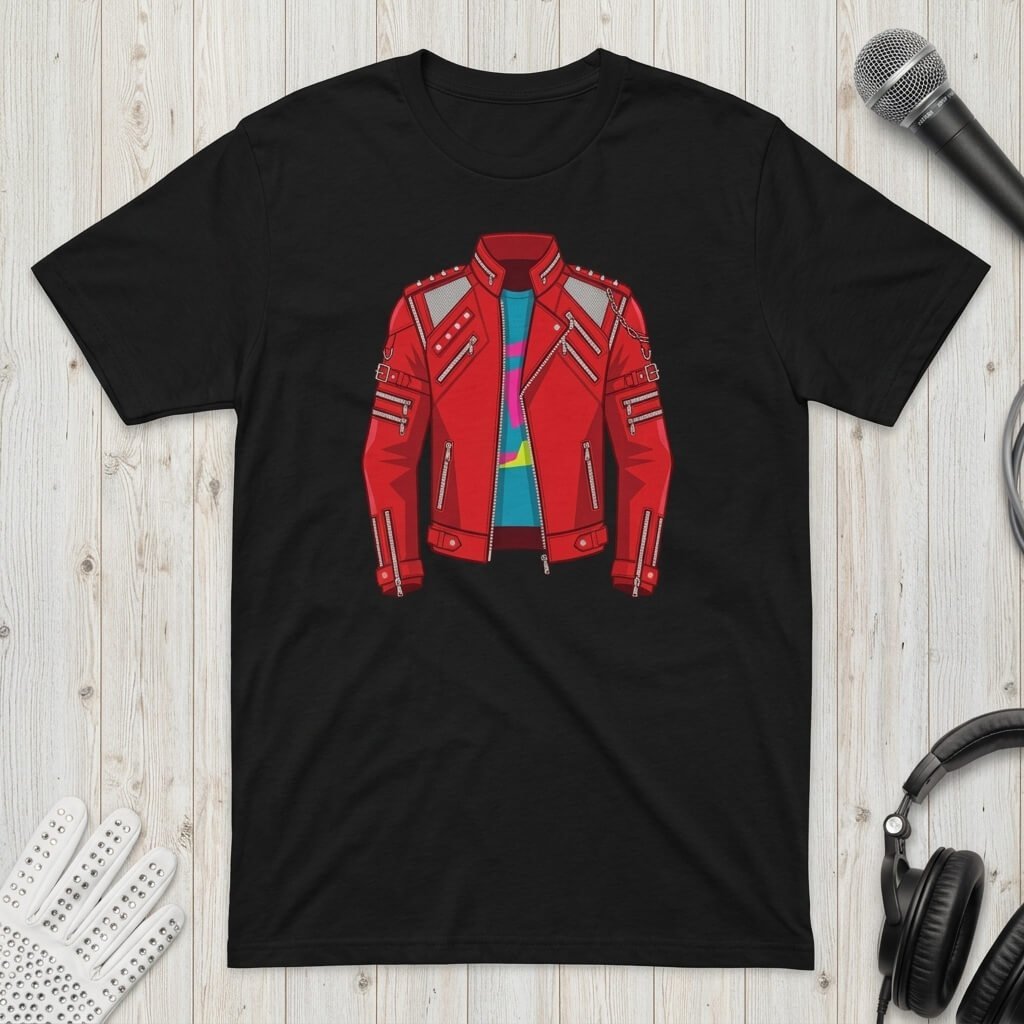
One of the best moments in Beverly Hills Cop isn’t a chase or a shootout — it’s a throwaway reaction shot. As Axel walks along a Beverly Hills street taking in the scenery, two people stroll past him wearing matching Michael Jackson Thriller-style red-and-black leather jackets. Murphy’s reaction — an involuntary, full-body laugh of disbelief — is completely genuine. The extras were working on a different production nearby, wandered into Brest’s shot, and nobody caught it until playback. Brest kept the take.
The scene functions as an accidental time capsule. Thriller had been out for less than a year when this was filmed in late 1983. The red leather jacket was everywhere in Beverly Hills, on Rodeo Drive, at the mall. The moment captures, without meaning to, exactly what Beverly Hills looked and felt like when Axel Foley showed up: a city so deep in 1984 pop culture that Michael Jackson was just part of the furniture.
It Outgrossed Ghostbusters to Become 1984’s #1 Film
Beverly Hills Cop opened on December 5, 1984, entering a year that had already produced Ghostbusters, Indiana Jones and the Temple of Doom, The Terminator, and Gremlins. It outran all of them. The film spent 14 consecutive weekends at #1 and earned $234 million domestically — edging Ghostbusters ($229M) for the year’s top spot. Worldwide, the total came to $316 million against a $14 million production budget.
The sequel — Beverly Hills Cop II (1987) — also opened at #1 and earned $154 million domestic. By that point Axel Foley wasn’t just a character; he was a franchise, a formula, and evidence that a Black leading man could carry a mainstream Hollywood action-comedy without qualifiers on the box office receipts. Compare this to Top Gun (1986), which defined the 80s blockbuster formula in a completely different direction — Beverly Hills Cop showed the industry what comedy-driven action could become.
Taggart and Rosewood Were Built on Set, Not the Page
Sergeant Taggart and Detective Rosewood arrive in the script as functional obstacles — two Beverly Hills cops assigned to keep an eye on Axel and make sure he doesn’t blow up the city. What ends up on screen is a fully realized comic relationship that neither actor planned. John Ashton and Judge Reinhold developed their dynamic through improvisation over the course of the shoot, and Martin Brest let them find it.
Reinhold’s habit of staring at Axel open-mouthed, of barely concealing his admiration for everything Foley does while Taggart fumes — none of that was written. Murphy tended not to tell his scene partners exactly what he was going to do on any given take, which meant Reinhold’s reactions to improvised lines were genuine reactions to things he hadn’t heard before. The trio dynamic they built became the template for nearly every buddy-cop comedy that followed. Lethal Weapon (1987) used the same push-pull between contrasting partners. So did every film in the genre for a decade. The fact that it looks organic on screen is because, largely, it was.
The 2024 Netflix Sequel Proved Axel Foley Still Has It
Beverly Hills Cop: Axel F arrived on Netflix on July 3, 2024 — forty years after the original and after decades of false starts on a fourth film. Murphy returned at 63 to play the same character with the same energy. Taylour Paige joined as Axel’s estranged daughter Jane. Judge Reinhold and John Ashton came back. The film became one of Netflix’s most-watched original releases of 2024, with tens of millions of viewers in its opening weekend.
What the sequel confirmed is that Axel Foley works because of the specific way Murphy plays him — not because of the plot or the Beverly Hills setting, but because of a comic presence that Murphy has never lost. The character is essentially a permission slip to watch Murphy be funnier than everyone else in the room. Forty years in, that’s still true. If you want more 80s films that cracked the blockbuster code, Ferris Bueller’s Day Off pulled off the same magic two years later — though through a very different kind of rule-breaking.
Frequently Asked Questions
Who plays Axel Foley in Beverly Hills Cop?
Eddie Murphy plays Axel Foley in all four films: Beverly Hills Cop (1984), Beverly Hills Cop II (1987), Beverly Hills Cop III (1994), and Beverly Hills Cop: Axel F (2024). Murphy was 22 during principal photography on the original.
Was Sylvester Stallone really supposed to be in Beverly Hills Cop?
Yes. Stallone was attached to the project and rewrote the script to be a more violent action vehicle before walking away shortly before filming began. His version of the script eventually became Cobra (1986).
What is the “Axel F” theme from Beverly Hills Cop?
The “Axel F” theme is a synth-driven instrumental composed by Harold Faltermeyer for the film. It peaked at #3 on the Billboard Hot 100 in 1985 and won the Grammy Award for Best Pop Instrumental Performance in 1986. Faltermeyer wrote it in a single overnight session.
How much did Beverly Hills Cop make at the box office?
Beverly Hills Cop earned $234 million domestically and $316 million worldwide against a production budget of approximately $14 million. It was the #1 film of 1984, outgrossing Ghostbusters.
Is there a Beverly Hills Cop 4?
Yes. Beverly Hills Cop: Axel F was released on Netflix on July 3, 2024. Eddie Murphy returns as Axel Foley, with Judge Reinhold and John Ashton also reprising their original roles. Taylour Paige co-stars as Axel’s daughter Jane.
Sources
- Beverly Hills Cop (1984) — IMDb — Cast, crew, and production details.
- Beverly Hills Cop — Wikipedia — Production history, box office figures, and franchise overview.
- Axel F — Wikipedia — Chart performance and Grammy history of Harold Faltermeyer’s theme.
- Beverly Hills Cop: Axel F — Variety — How the 2024 Netflix sequel pays homage to the original.
Image credit: mondoshop.com
The Retro Almanac
A monthly roundup of "on this day" highlights from that month, decades back — plus first dibs on new retro merch drops. No spam, just the good stuff.