80s Horror Movies: The Golden Age of Scares and Screams
The 1980s produced more bona fide horror classics than any decade before or since. Between 1980 and 1989, American horror went from drive-in afterthought to a billion-dollar business — and the franchises it spawned are still being remade, rebooted, and ripped off forty years later. If you cut your teeth on the back wall of a video store, the smell of plastic VHS clamshells and the lurid airbrushed cover art are probably already coming back to you.
What follows is a tour through the era that made horror what it is: the slashers, the gore kings, the haunted suburbs, the cult tapes you weren’t supposed to watch. Not a ranked list. Not a recap. A look at why 80s horror movies hit a creative peak nobody has matched.
The Retro Almanac
A monthly roundup of "on this day" highlights from that month, decades back — plus first dibs on new retro merch drops. No spam, just the good stuff.
Why the 80s Owned Horror
Three things broke in the genre’s favor at the start of the decade. Home video gave studios a second revenue stream that didn’t depend on theatrical performance. The MPAA, while still strict, was no longer gatekeeping every drop of fake blood. And a generation of filmmakers who had grown up on Hammer Films and the EC Comics suddenly had budgets and distribution. Tom Savini, Rob Bottin, Rick Baker, and a small army of effects artists were finally allowed to build the monsters they had been sketching in notebooks since junior high.
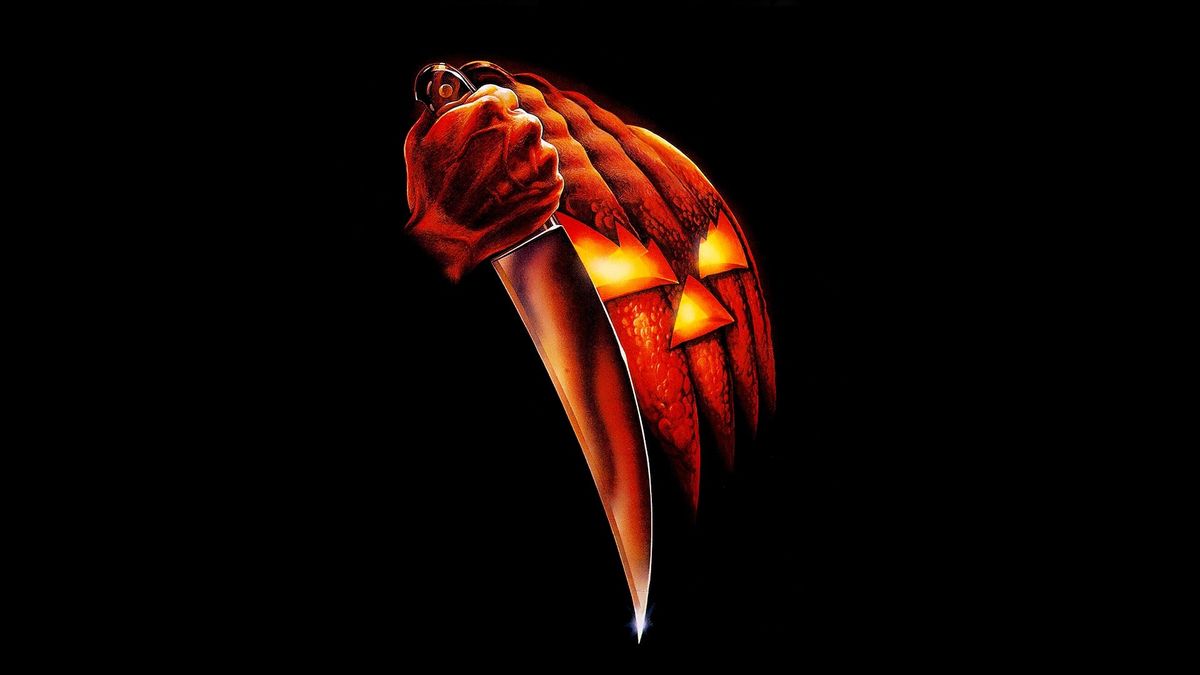
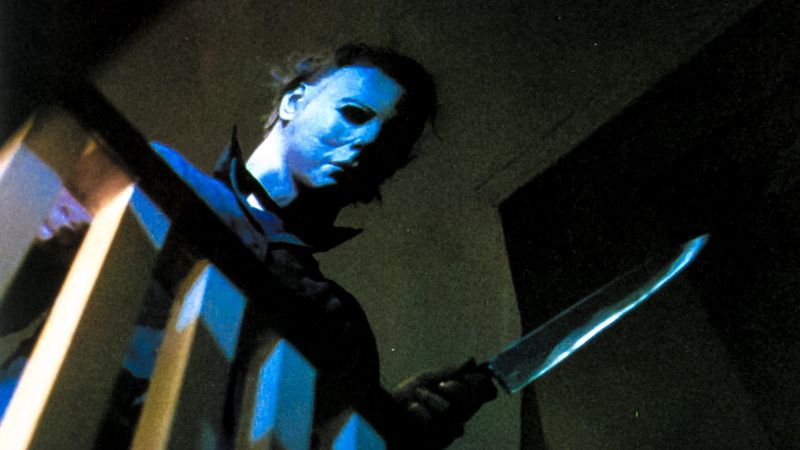
The result was a genre that ran on pure invention. A small studio could make a horror film for a million dollars and walk away with thirty. Halloween (1978) cost roughly $325,000 and grossed about $70 million worldwide, according to Box Office Mojo’s lifetime tally. Every studio executive in Hollywood saw that number and immediately greenlit something with a masked killer in it.
The Slasher Boom That Refused to Die
Sean Cunningham’s Friday the 13th (1980) wasn’t subtle. It was a cheap knockoff of Halloween made in seven weeks at a real summer camp in New Jersey, and it spent its entire production budget on Tom Savini’s kills. Paramount picked it up for distribution, dumped it into theaters with a now-iconic ad campaign, and watched it pull in $59 million off a $550,000 budget. That ratio rewrote the horror playbook for the rest of the decade.
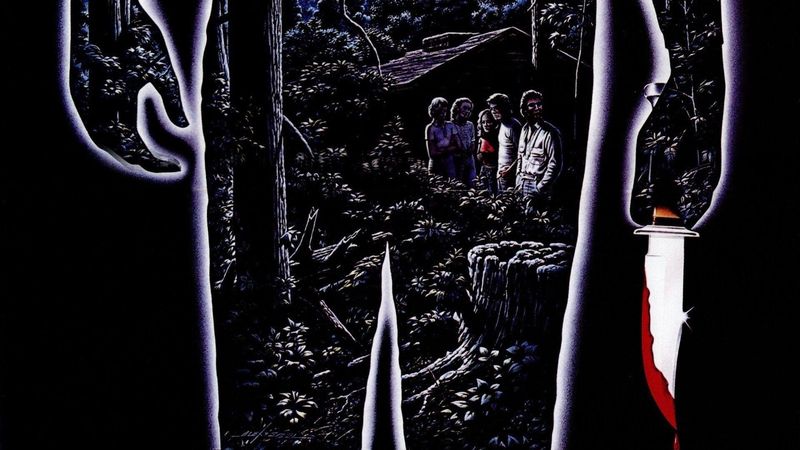
The hockey mask didn’t show up until Part III in 1982. Before that Jason wore a burlap sack — Part II kept his face hidden behind a hood pulled tight at the chin. The hockey mask became iconic by accident, picked off a prop shelf because Steve Miner liked the way it caught light. By the time Part IV: The Final Chapter opened in 1984, the slasher was a self-perpetuating machine. Even the franchises trying to be different — My Bloody Valentine, The Burning, Sleepaway Camp — used the same skeleton.
The strange thing about the slasher boom is how quickly it ate its own audience. By 1986 the form felt exhausted. The films stopped trying to scare you and started trying to one-up each other on kill count. Which is exactly the moment Freddy walked in.
Freddy Krueger Broke the Rules
Wes Craven had already made The Last House on the Left and The Hills Have Eyes when he pitched a script about a child killer who attacks teenagers in their dreams. Every major studio passed. New Line Cinema, then a tiny distributor of foreign films and reissues, said yes — and almost went bankrupt finishing it. A Nightmare on Elm Street opened in November 1984 and became the single film that kept New Line solvent for the next decade. Industry shorthand for the company became “The House That Freddy Built.”
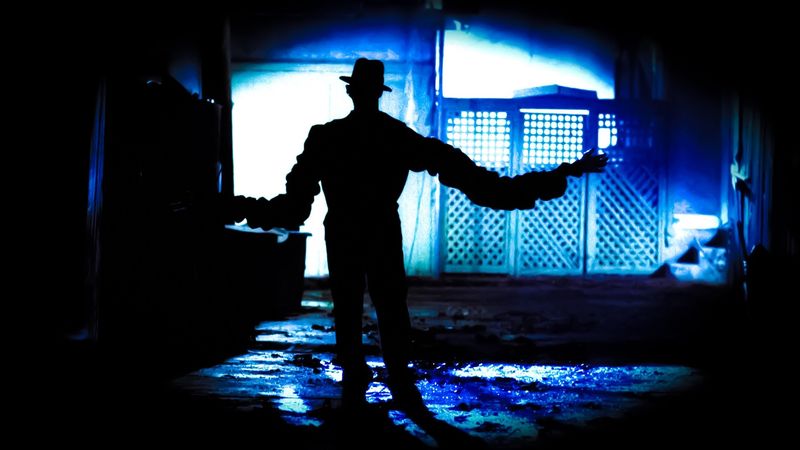
What made Freddy work wasn’t the glove or the burns. It was Robert Englund. The character on the page was a silent, hateful pedophile. Englund played him like a vaudeville comic who happened to murder children — cracking jokes, mugging for the camera, breaking the fourth wall. It was the first time a horror villain was funny and terrifying in the same scene. Every slick, quippy horror movie villain since 1984 — Chucky, Ghostface, the Leprechaun — descends directly from that performance.
If you want the full history of how Craven kept inverting the genre he’d just invented, the deeper Gen X read on the era we cover separately makes the case better than we can in two paragraphs here.
John Carpenter and the Practical Effects Arms Race
While the slashers were eating the box office, John Carpenter spent 1982 making the most uncompromising horror film of the decade and getting absolutely destroyed for it. The Thing opened against E.T. and bombed. Critics called it nihilistic, gratuitous, and dumb. Roger Ebert’s original review gave it two and a half stars and complained that the characters were undeveloped. He was wrong. Everyone was wrong. The Thing is a masterpiece, and the practical creature effects Rob Bottin built — at 23, working seven days a week for 56 straight weeks — are still the high-water mark for what latex and corn syrup can do.
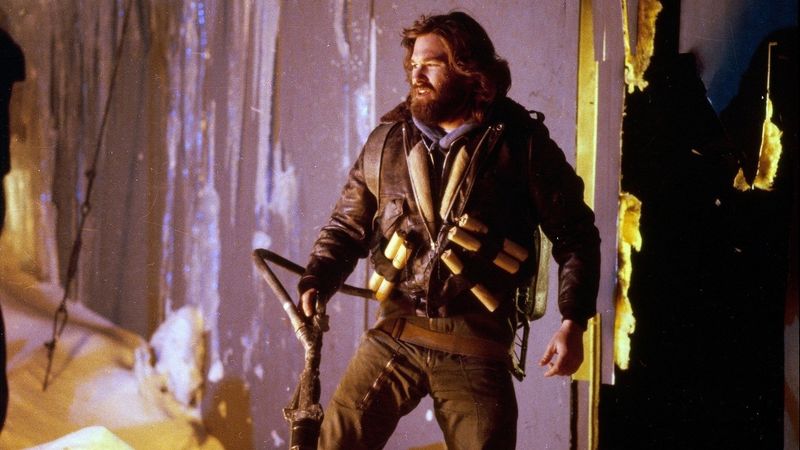
That arms race was the soul of 80s horror. Effects artists were the rock stars. Tom Savini’s work on Day of the Dead, Bottin’s transformation in The Howling, Rick Baker’s full Oscar-winning werewolf in An American Werewolf in London — these weren’t just gross-out moments. They were technical achievements that required the camera to hold still and let you see the work. CGI killed that style. You can’t watch a 1981 transformation sequence and not feel a small grief for what the genre lost when computers took over.

When the Suburbs Became Haunted
For all the slashers and creatures, the genre’s other obsession was the American suburb. Tobe Hooper and Steven Spielberg’s Poltergeist (1982) opens with a static-filled television, a clean cul-de-sac, and a five-year-old girl pressing her hands to a buzzing screen. The line “they’re here” is so embedded in the culture you probably said it in your own voice before you finished reading the sentence.
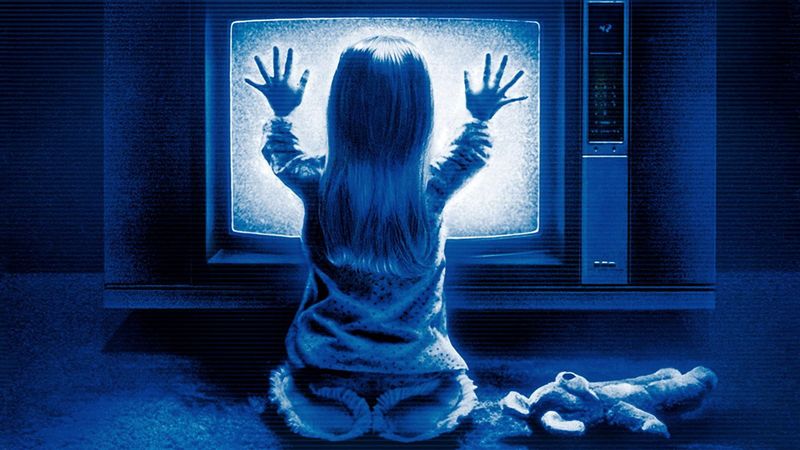
What Poltergeist understood was that the new American horror lived inside the things Boomer parents were proudest of: the tract house, the cable hookup, the swimming pool, the manicured lawn over the unmarked graves. Every haunted-suburb movie of the decade — Fright Night, The ‘Burbs, Beetlejuice, parts of Gremlins — was working that same vein. The mall is empty after 10 PM. The TV is on but nobody’s watching. The kid is talking to someone who isn’t there. Our deep dive into 80s mall culture covers how that same suburban iconography fed pop culture from the other direction.
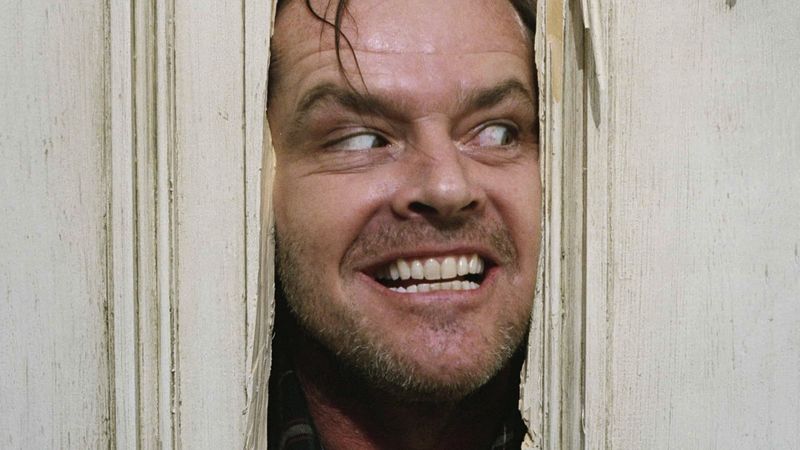
Stanley Kubrick had already set the tone with The Shining in May 1980 — a film that took every haunted-house trope and stretched it across a hotel the size of a city block. Jack Nicholson’s axe-through-the-door scene is now the most parodied horror moment in film history, but watch it cold and it still works. We covered the original Shining premiere when its anniversary came around earlier this year.
The VHS Era and the Cult Classics That Built Themselves
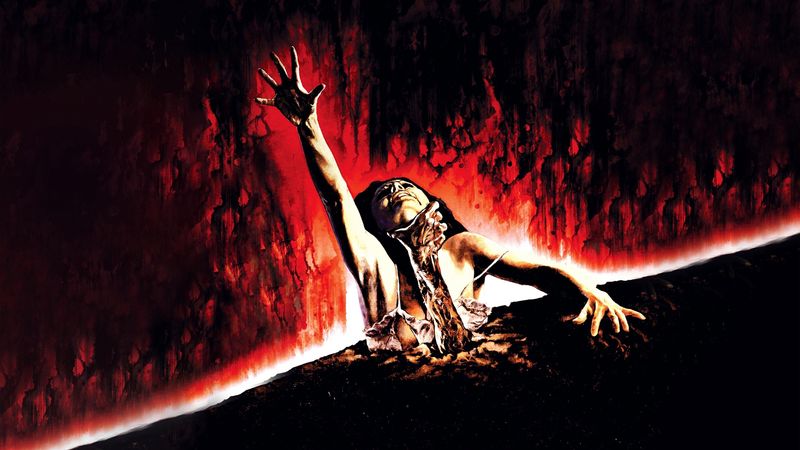
Walk into a Mom-and-Pop video store in 1985 and the horror section was always the same: a wall of clamshell boxes you weren’t quite old enough to rent, painted by airbrush artists who got paid by the severed limb. Sam Raimi’s The Evil Dead (1981), banned in the UK as a “video nasty,” found its audience entirely on tape. Stuart Gordon’s Re-Animator (1985) bombed in theaters and became required viewing on home video. Phantasm, Hellraiser, Pumpkinhead, The Stuff, Maximum Overdrive — the entire B-tier of 80s horror lived and died on rental.
The British Film Institute’s video nasties archive is the best documentation of how the UK government tried and failed to suppress this exact ecosystem. The list of banned tapes reads like a cult-horror starter pack: The Driller Killer, Cannibal Holocaust, I Spit on Your Grave, The Evil Dead itself. Banning a film in 1984 was the best marketing money couldn’t buy.
This is also where vampires made their comeback. Joel Schumacher’s The Lost Boys (1987) put Kiefer Sutherland in a mullet, gave him a Santa Cruz boardwalk to terrorize, and somehow made vampire mythology cool again for the first time since the Hammer days. We wrote the long memory piece on how The Lost Boys reinvented the vampire if you want the full story.
What Modern Horror Got Wrong
It’s not that today’s horror is bad. Hereditary, The Witch, Get Out, Talk to Me — there are extraordinary films being made right now. But none of them feel like horror movies the way an 80s horror movie felt like a horror movie. The 80s version had texture: film grain, foam latex, real fire, real squibs, lighting cues from MTV, soundtracks composed on a single Yamaha DX7. You could feel the budget on screen, and you could feel the absence of budget too. Watching a modern horror film is like watching a clean digital recording. Watching The Thing is like sitting too close to a campfire.
Streaming algorithms have also flattened the discovery curve. There’s no video store back wall anymore. No clerk with bad opinions handing you something cursed. No friend’s older brother saying you can’t handle Pieces because you definitely can’t handle Pieces. The randomness of finding 80s horror was half of what made the films feel transgressive. Pull a tape off the shelf and you really didn’t know what you were about to see.
If you grew up on this stuff, the genre got into your bones in a way that no algorithmic playlist will replicate. The good news is the tapes still exist. Boutique labels like Arrow Video, Vinegar Syndrome, and Severin are restoring even the most obscure 80s gore artifacts to 4K. Buy them physical. Watch them with the lights off. The 80s aren’t done with you yet.
For more of the era’s films that genuinely held the line, our list of the best 80s movies that still hold up today covers the picks we’d actually rewatch.
Sources
- Box Office Mojo — Halloween (1978) Lifetime Box Office — production cost and worldwide gross figures cited for Carpenter’s original.
- Roger Ebert — The Thing (1982) original review — the contemporary critical response that helped sink the film theatrically.
- British Film Institute — The History of the Video Nasties — documentation of the UK ban list that shaped 80s horror’s underground reputation.
- Fangoria — A Brief History of the Evolution of Jason Voorhees — primary source on the franchise’s mask history and production lore.
- SYFY Wire — The Thing 40th Anniversary on Rob Bottin’s effects — background on the 56-week practical effects workload behind the film.
Browse retro and vintage-inspired apparel at the RetroRadical shop →
The Retro Almanac
A monthly roundup of "on this day" highlights from that month, decades back — plus first dibs on new retro merch drops. No spam, just the good stuff.