The Jeffersons: How a Harlem Hustler Became TV’s Most Important Black Character
The Jeffersons TV show took a sitcom premise that could have stayed small and turned it into one of the sharpest pieces of mainstream American television of the 1970s and early 1980s. On the surface, it was about George and Louise Jefferson moving on up to a deluxe apartment in the sky. Underneath that catchy elevator pitch, it was a show about class, race, marriage, ambition, ego, and the weird social comedy that happens when people finally get the success they spent years chasing.
That is why The Jeffersons still plays so well now. It was funny enough to hook a mass audience, but it was also bold enough to poke at money, status anxiety, respectability politics, and the unfinished business of American life. Norman Lear did not build the show to sit politely in the background. He built it to make viewers laugh, wince, recognize themselves, and argue about what they had just seen.
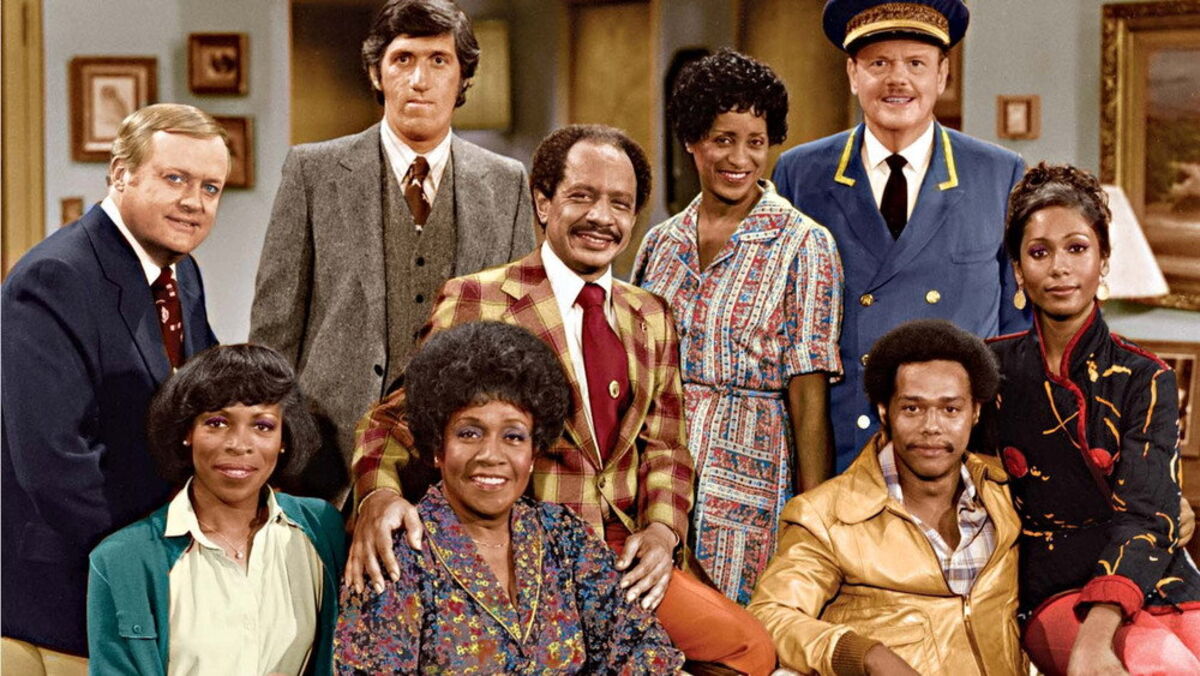
For Gen X kids who caught reruns, the show felt different from safer family sitcoms. George Jefferson was loud, petty, proud, ambitious, funny, and often dead wrong. Louise Jefferson was warm but never weak. Florence turned side-eye into an art form. Lionel kept getting pulled between generations. The doorman Ralph Hart became a deadpan weapon. Even the theme song felt like a mission statement. “Movin’ on up” was not just a hook. It was the whole tension of the show, the promise and the price of getting what you wanted.

The Jeffersons TV show made upward mobility funny and uncomfortable
Most sitcoms like to freeze a family in place. The Jeffersons started with movement. George Jefferson had built a successful dry-cleaning business and left Queens for a luxury apartment on Manhattan’s East Side after first appearing on All in the Family. That move changed everything. Instead of making working-class frustration the center of the joke, the show looked at what happened after a Black family got money, social access, and a new address.
That was a big deal. Television had shown Black families before, but The Jeffersons put visible prosperity right in the middle of prime time. George was not a saint, and that mattered. He was driven, vain, suspicious, funny, and competitive. Louise saw the world more generously, but she also understood exactly how much George’s swagger was tied to years of humiliation and exclusion. Their marriage worked because the show understood both people. George wanted validation. Louise wanted peace, dignity, and a life that actually felt worth the climb.
The result was a sitcom that kept asking a deliciously uncomfortable question: once you finally make it, what exactly do you do with the chip on your shoulder? George never completely let go of it, and that tension gave the show its engine. Success did not erase old resentments. It just moved them into better furniture.
It gave TV one of the greatest married couples ever
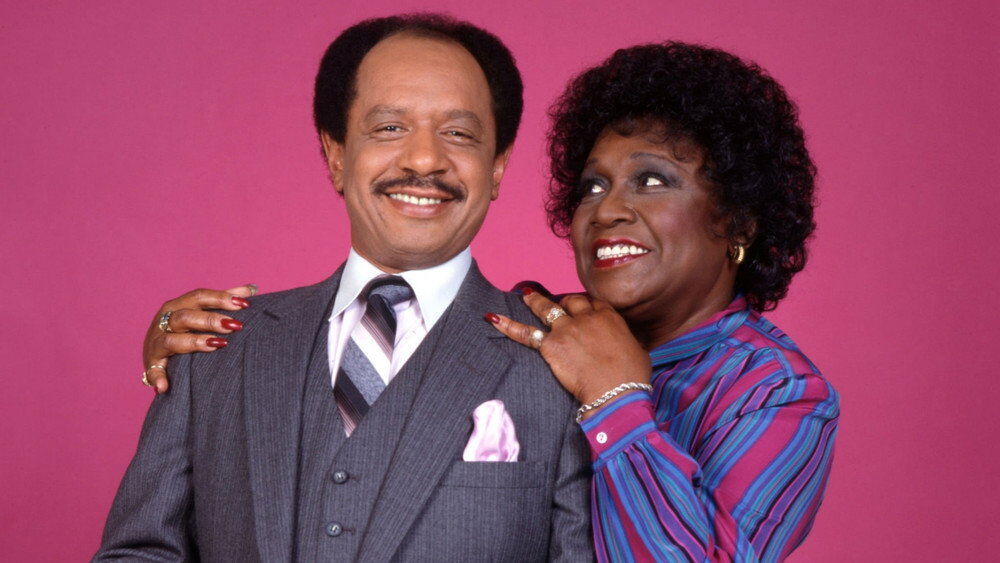
Sherman Hemsley and Isabel Sanford were the reason the whole machine worked. George and Louise Jefferson were not a fantasy couple. They argued, teased, flared up, and made each other crazy. But they were locked in. You believed these two people had built a life together the hard way. That gave the comedy weight.
Hemsley’s timing was all elbows and sparks. He could make a line hit like a trumpet blast. Sanford played Louise with warmth, patience, and just enough edge to keep George from swallowing every scene whole. When George puffed himself up, Louise punctured the performance without humiliating him. When George got mean, she pushed back. When he got scared, she understood it before he said it out loud.
The chemistry mattered beyond laughs. Prime-time television did not always know how to write married Black characters with depth, affection, and friction all at once. The Jeffersons did. That balance is one reason the show still feels alive instead of preserved in amber. George and Louise are not symbols first. They are people first, which is why the symbolism lands.

Florence turned insult comedy into a weekly event
If George Jefferson was the show’s engine, Florence Johnston was the nitrous boost. Marla Gibbs played Florence with a face that could do half the work before she even opened her mouth. Then she opened her mouth and finished the job. The George-Florence clashes became one of the signature pleasures of the series, because both actors understood rhythm. George barked, Florence sliced, and the audience got fed.
What made Florence more than a gag machine was that she never felt like a servant stereotype. She had opinions, standards, and zero fear. She talked back to George because she saw through him. In a show built around class performance, Florence was one of the few people who never acted impressed by status. George could move into a deluxe apartment, but Florence still treated him like a man who needed to calm down and stop acting brand new.
That dynamic helped The Jeffersons dodge stiffness. The show never became a museum piece about respectability because Florence kept walking in with a verbal crowbar.
The supporting cast made the world feel bigger than one apartment
A lot of old sitcoms live or die on the title characters. The Jeffersons built a whole ecosystem. Lionel Jefferson, played by both Mike Evans and Damon Evans over the run, gave the show a younger perspective on race, career, and family expectation. The interracial marriage between Lionel and Jenny Willis let the series tackle conflict with more bite than many network comedies were willing to risk. Tom and Helen Willis were not just neighbor gags. They were part of the show’s larger social experiment.
Then there was Ralph the doorman, who may be one of the great underappreciated sitcom weapons. Ned Wertimer played him with perfect dry restraint. George tried to lord status over everybody, and Ralph responded like a man who had watched a hundred Georges come and go. Zara Cully, Berlinda Tolbert, Franklin Cover, Roxie Roker, and Marla Gibbs all helped make the building feel like a pressure cooker of manners, money, resentment, and affection.
That larger world is a big reason The Jeffersons stayed fresh across more than 250 episodes. The writers could bounce George and Louise against class aspiration, family politics, marriage tension, workplace pride, and neighborhood friction without making the show feel trapped.

The theme song did more than set the mood
Some TV theme songs are nostalgic because we heard them a lot. “Movin’ On Up” is nostalgic because it instantly explains the show. It is joyful, proud, funny, and a little triumphant, but there is also pressure packed into it. The song says the Jeffersons are finally getting a piece of the pie. The series then spends episode after episode asking whether that pie was worth all the emotional mileage it took to get there.
That opening became a cultural object in its own right. Even people who have not watched a full episode know the phrase “movin’ on up.” It escaped the show and entered American shorthand. That kind of crossover only happens when a series finds a phrase, image, or melody that carries its whole identity in a few seconds.
There is also something wonderfully Gen X about how direct the song is. No wink. No ironic detachment. It tells you exactly what the characters want. In an era when a lot of TV openings were trying to charm you, The Jeffersons was practically announcing a social thesis over a groove.
The Jeffersons handled race and class without pretending they were solved
One reason the series still matters is that it never acted like moving into a nicer building magically fixed America. George Jefferson was rich compared to where he started, but he was still carrying history into every room. The show let that reality create comedy, but it never pretended it was trivial. The tension between aspiration and exclusion sat underneath the jokes the entire time.
That is part of Norman Lear’s larger legacy. His sitcoms were willing to put social discomfort in the living room and trust that audiences could handle it. As NPR noted when reflecting on Lear’s work, shows like The Jeffersons opened mainstream space for complicated depictions of Black families while still carrying the contradictions of their era. That is a fair description of what gives the show its staying power. It was progressive in visible ways, but never frictionless.
That complexity is exactly why the show is worth revisiting now. It is not a perfectly preserved moral lesson. It is a funny, messy, ambitious piece of television that reflects how success, identity, and acceptance rarely arrive neatly packaged.

It created one of TV’s strongest spin-off success stories
Spin-offs usually feel like corporate optimism in search of a miracle. The Jeffersons actually became the miracle. Spun out of All in the Family, it ran for 11 seasons, outlived a lot of trendier shows, and built a cultural footprint strong enough to stand on its own. That alone tells you something. Viewers did not keep tuning in because they remembered where George came from. They stayed because they liked watching where he went.
The show also proved that a spin-off could widen the original conversation instead of merely copying it. All in the Family used Archie Bunker to stage conflict around prejudice and social change. The Jeffersons shifted the lens toward money, status, Black ambition, interracial family dynamics, and social mobility. Same universe, different pressure points.
That success helped normalize the idea that Black-led sitcoms could be central to the network business rather than a side experiment. It did not solve representation, obviously, but it made it harder for television executives to pretend the audience was not there.
Its DNA runs through later sitcoms and retro TV nostalgia
You can see bits of The Jeffersons in later shows that understand how comedy sharpens when class and ego collide. You can also see its influence in the way we remember classic television now. We do not just remember shows that were “nice.” We remember shows with voices. George Jefferson had one of the loudest voices in TV history, but the series around him had one too.
That is part of why retro TV nostalgia keeps circling back to series with a strong point of view. We still revisit things like ALF, Fraggle Rock, and The Muppet Show because they had distinct worlds and unmistakable rhythms. The Jeffersons belongs in that company, even though its humor hit from a more adult angle. You knew within seconds what kind of room you had entered, who was in charge, and who was about to get roasted.
It also holds up because the central conflict never really expired. Plenty of people still know what it feels like to enter spaces that promise success while quietly measuring whether you belong there. George Jefferson just turned that feeling into comedy loud enough for the whole country to hear.

Why The Jeffersons still lands
The best old sitcoms do more than trigger memory. They reveal what they understood about people. The Jeffersons understood that ambition is funny, class performance is funny, marriage is funny, and insecurity is very funny if the writing is sharp enough. It also understood that upward mobility does not erase where you came from. It just gives you a nicer place to wrestle with it.
That is why the show still matters. It gave television a Black family with money, flaws, style, and edge. It gave us George’s bluster, Louise’s poise, Florence’s annihilating comebacks, and a theme song that still hits the pleasure center. It made social commentary feel like entertainment instead of homework. And it did all that while staying loose enough to be rerun comfort food for decades.
If you hear that opening song and instantly picture the skyline, the apartment, and George puffing up like he owns the whole East Side, that is not just nostalgia talking. That is the sound of a sitcom that knew exactly what it was doing.


Sources
- TV Guide, The Jeffersons — series overview and cast reference.
- Television Academy Foundation, Isabel Sanford — archival interview material on Sanford and the show.
- Television Academy Foundation, Marla Gibbs — archival interview material on Gibbs and Florence.
- BET, Remembering the Cast of The Jeffersons — cast gallery and retrospective captions.
- NPR, Norman Lear’s TV shows pioneered depictions of Black families, but it’s complicated — context for Lear’s legacy and representation.