Bigfoot Monster Truck: The Original That Started It All
If you grew up in the 1980s, you remember the exact moment. Maybe it was a grainy VHS tape, maybe it was a Saturday morning commercial break, maybe your dad dragged you to a county fairground that smelled like diesel and corn dogs. But you saw it — a jacked-up Ford F-250 rolling over a row of junked sedans like they were aluminum cans, and your entire concept of what a truck could be shattered into a million beautiful pieces.
That truck was Bigfoot. And nothing — not your G.I. Joe collection, not your BMX bike, not even the Millennium Falcon — was ever quite as cool again.
The Retro Almanac
A monthly roundup of "on this day" highlights from that month, decades back — plus first dibs on new retro merch drops. No spam, just the good stuff.
Bob Chandler and the Ford That Started Everything
The Bigfoot story starts the way all great American stories start — with a guy in Missouri who just really, really loved his truck.
Bob Chandler bought a 1974 Ford F-250 in 1975. He wasn’t trying to create a cultural phenomenon. He was just a construction worker who liked four-wheeling on the weekends and kept breaking parts on the trails around St. Louis. So he’d replace the broken parts with bigger, tougher ones. Then he’d break those parts. Then he’d go even bigger.
By the time Chandler opened a 4×4 parts shop in 1975 called Midwest Four Wheel Drive & Performance Center, the truck had become a rolling advertisement. Customers would walk in, see the Ford sitting in the lot with axles the size of telephone poles, and place an order on the spot. The nickname came from the shop crew — Chandler had a habit of riding the clutch hard with his heavy right foot, and somebody started calling him “Bigfoot.” The name stuck to the truck. The truck stuck to the imagination.
By 1979, those tires had grown to 48 inches. A year later, they were 66 inches. The drivetrain was running surplus military axles pulled from M35 cargo trucks. The whole rig weighed close to 10,000 pounds and looked less like a pickup and more like a piece of farm equipment that had grown teeth. Bob Chandler had built the first monster truck — and nobody, including him, had a word for what it was yet.
The Night Bigfoot Crushed Two Cars and Changed Everything
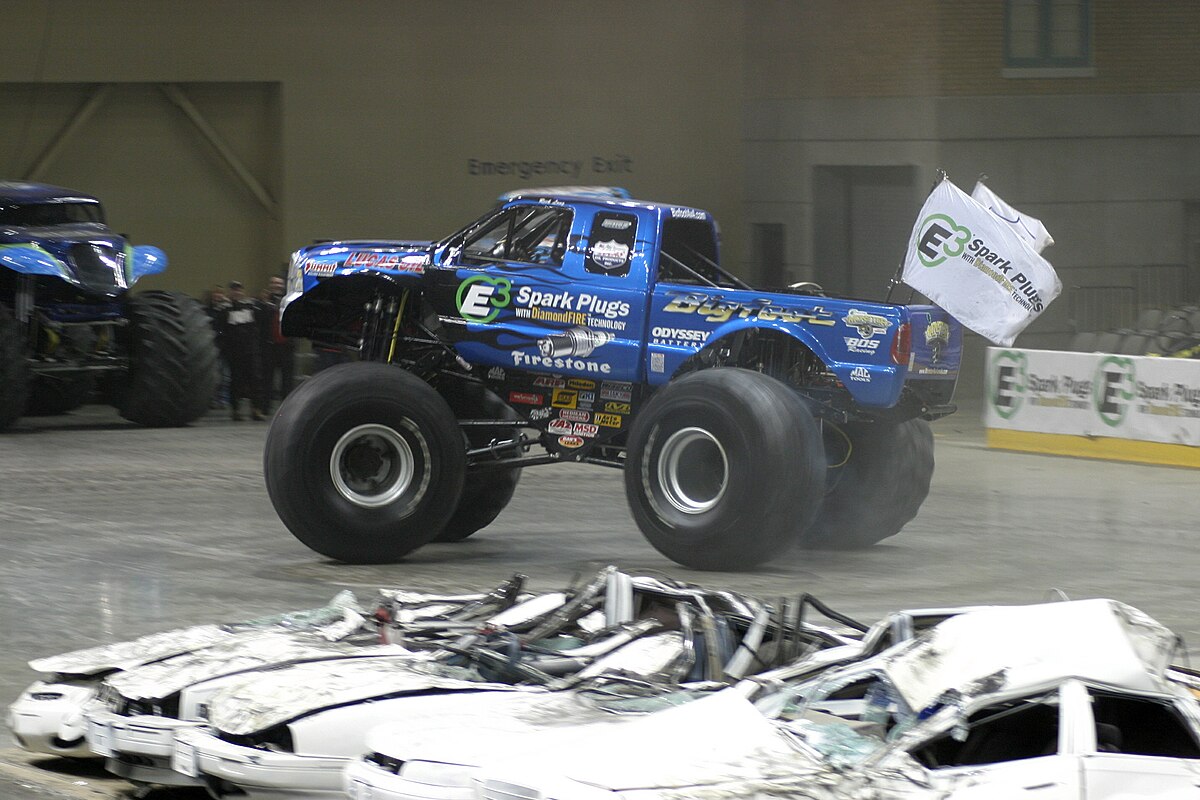
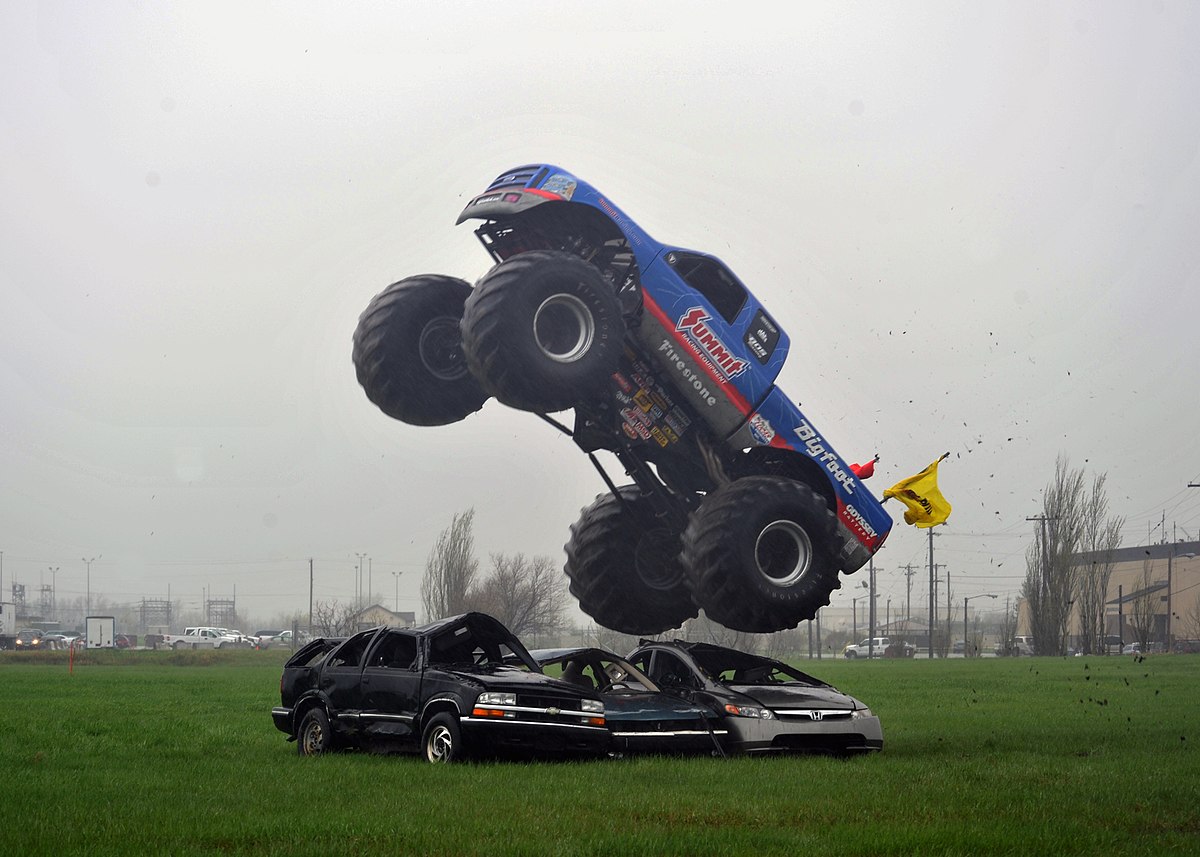
Every cultural movement has its origin myth, the moment everything pivots. For monster trucks, it happened in a field in 1981.
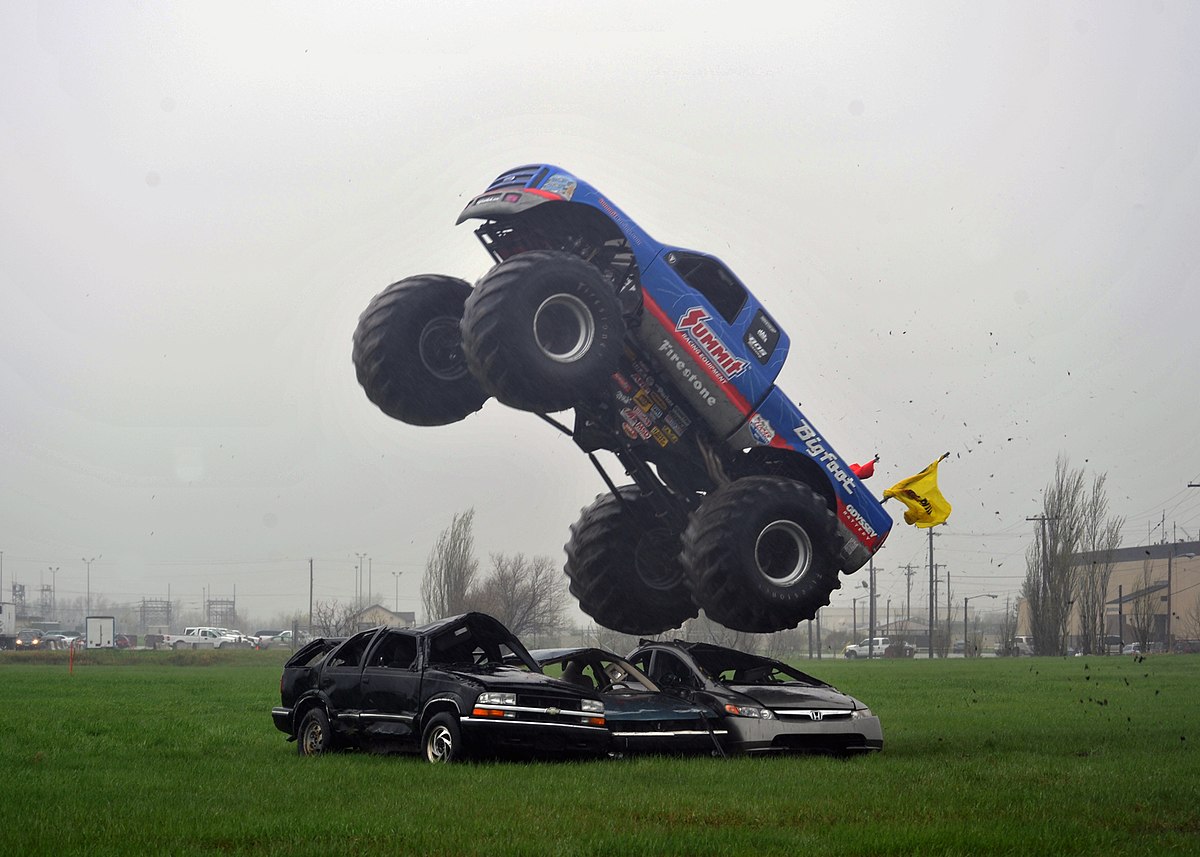
Chandler had taken Bigfoot to a private field outside St. Louis to test what would happen if the truck drove over a pair of junked cars. He filmed it. He wasn’t putting on a show. He was checking suspension behavior — the kind of thing a serious 4×4 guy does to see if the rig will survive a stupid stunt before he tries it in front of a crowd. The footage was supposed to live and die on a VHS tape in his garage.
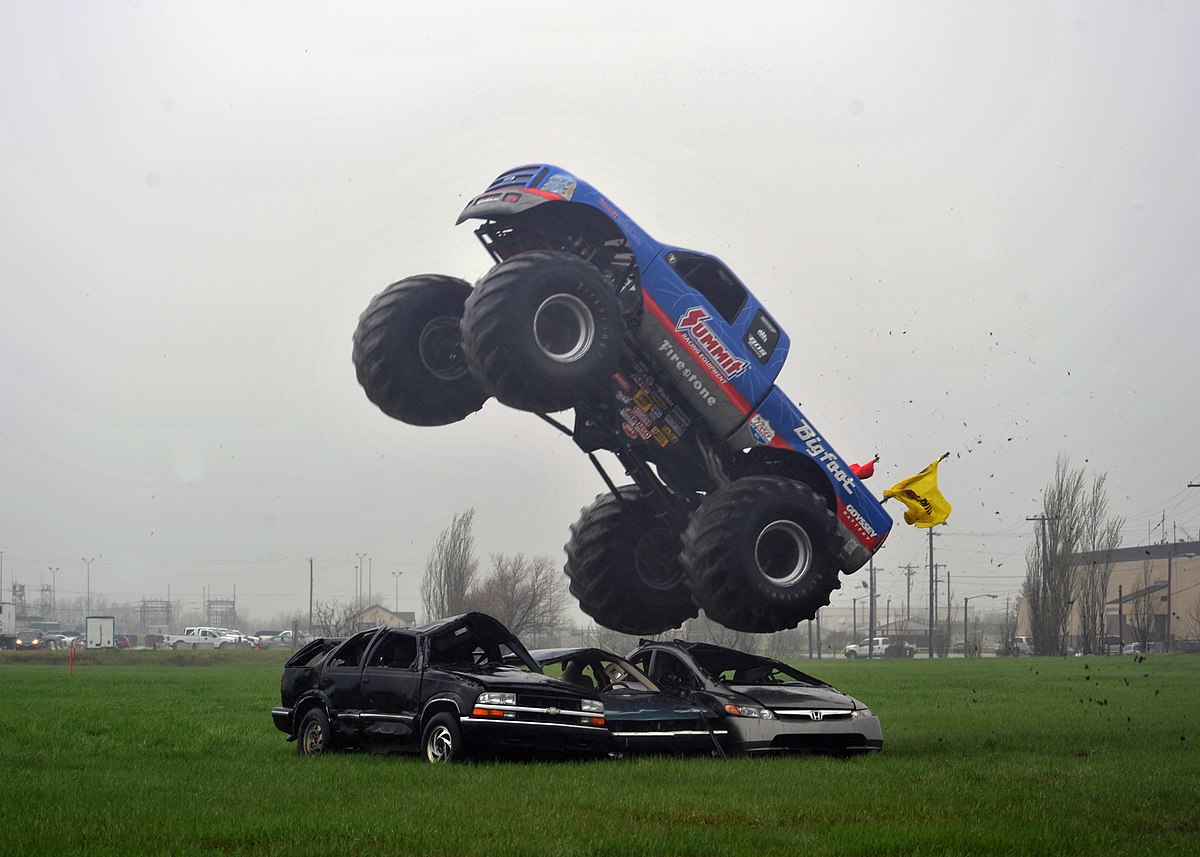
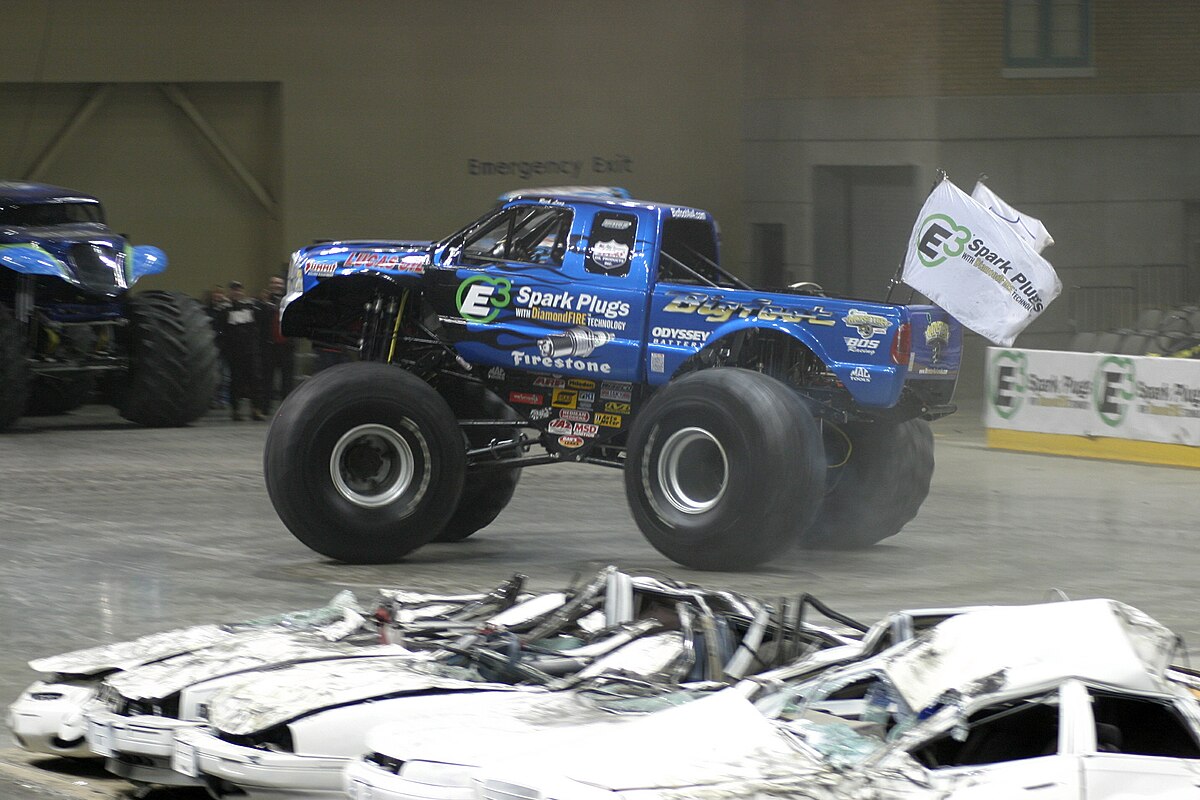
Then a promoter saw the video and asked him to do it live at a Columbia, Missouri tractor pull. Chandler showed up, drove Bigfoot over two abandoned sedans, and the crowd lost its mind. The noise, the crunch, the sheer disrespect for the laws of physics — none of it had been seen at a motorsports event before. Within months, every fairground in the Midwest wanted a piece of it. Within two years, Bigfoot was selling out arenas. The accidental experiment had become a touring act, then a sport, then a slice of American iconography that ran straight through the rest of the decade and into the merchandising boom of the early 90s.
From Pickup Truck to Pop Culture Phenomenon
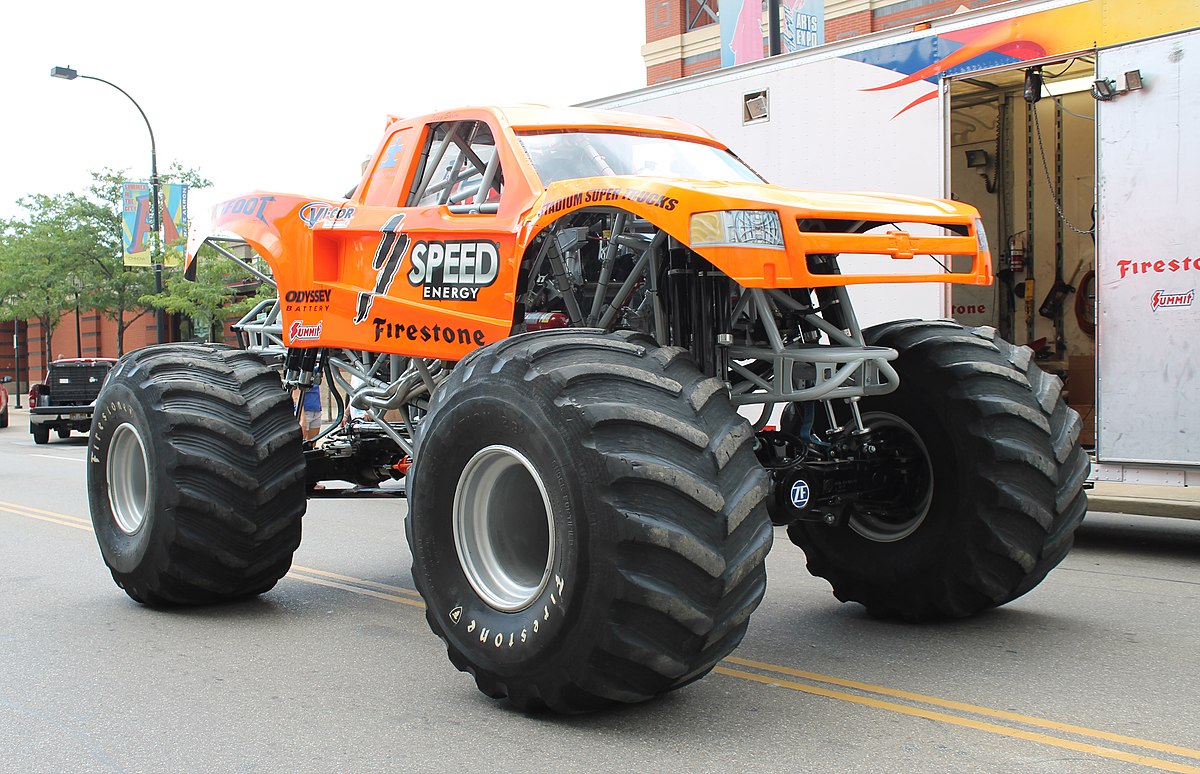
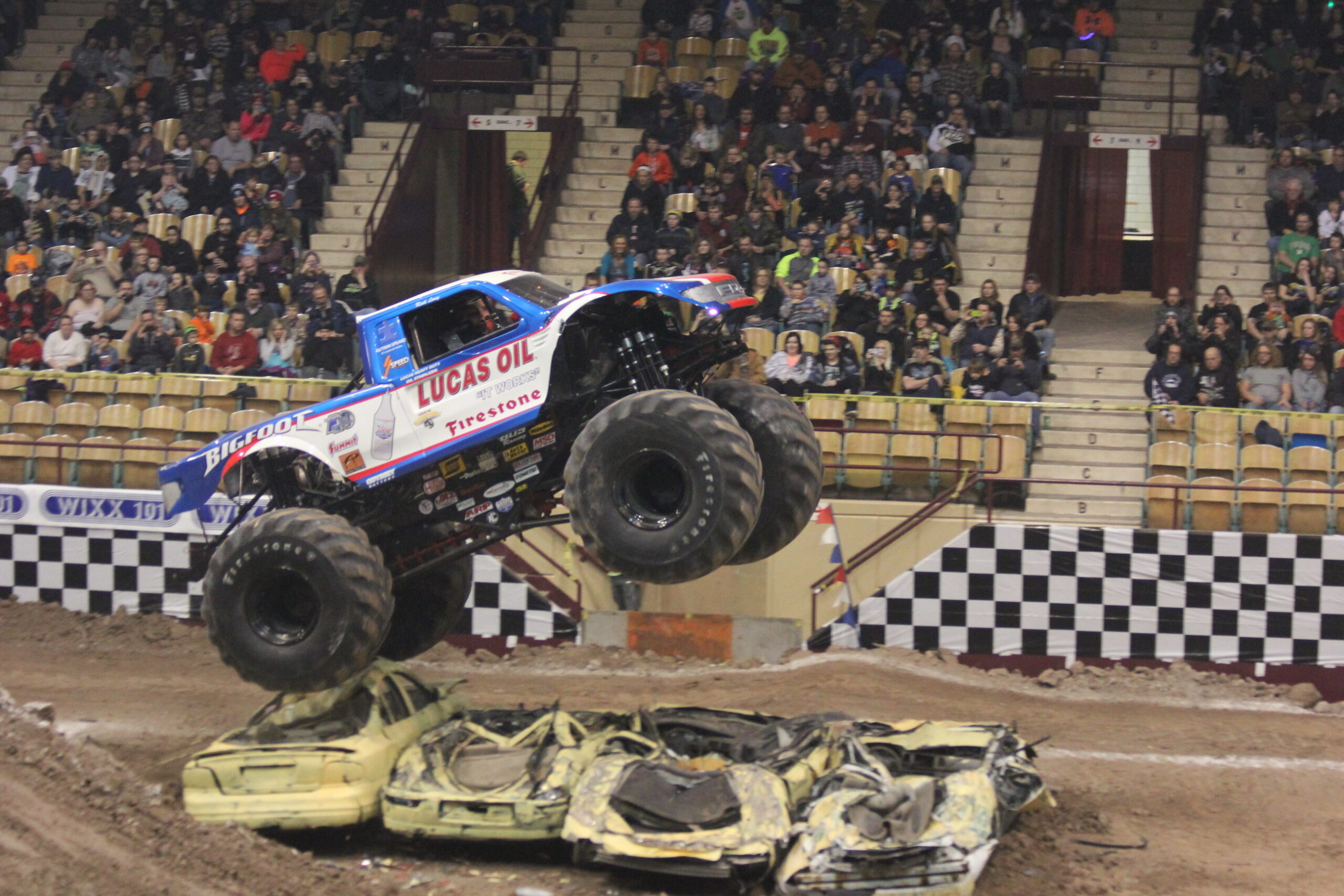
By 1983 there were already multiple Bigfoots. Chandler built Bigfoot 2 specifically for show appearances so the original could rest between events. Bigfoot 3, 4, and 5 followed in quick succession — each one heavier, taller, more theatrical. Bigfoot 5 was the one with the 10-foot-tall tires, lifted off a U.S. Army land train that had been built for arctic supply runs. It still holds the title for the tallest pickup truck ever built, and it still sits on display at the Bigfoot headquarters in Pacific, Missouri.
The 1980s ate it up. Bigfoot showed up on That’s Incredible. Bigfoot showed up on Real People. Bigfoot showed up in the Burt Reynolds movie Cannonball Run II. Bigfoot showed up at the start of NFL games, at halftime shows, in Pepsi commercials, on the side of breakfast cereal boxes. A black GMC van full of A-Team chaos was the only other vehicle that competed with Bigfoot for tough-truck supremacy in the kid imagination — and one of the reasons BA Baracus and that 1983 GMC owned the 1980s was because the entire era was running on diesel fumes and aggressive American steel.
Bigfoot didn’t just sell tickets. It sold a feeling. The feeling was: bigger is better, louder is better, smashing things is the most satisfying thing a vehicle can do, and the American garage tinkerer with a welder and a dream can become a household name in eighteen months flat. The decade was a buffet of that kind of story, which is part of why 80s nostalgia still rules the cultural conversation forty years later.
When Monster Trucks Took Over Saturday Morning
If you were under ten years old in 1985, here’s how the rotation worked. Saturday morning cartoons until noon. Lunch. Then the Saturday afternoon ABC Wide World of Sports block — which somewhere between the cliff diving and the figure skating would air a USHRA monster truck event. Bigfoot would come out, the announcer would scream, the crowd would scream, and somewhere in a suburban basement a kid would scream too, because the next twenty minutes of his life were settled.
Bigfoot was a fixture of the same TV ecosystem that delivered Optimus Prime, He-Man, and the Teenage Mutant Ninja Turtles. The pacing was the same. The merchandising logic was the same. The Saturday-morning ad slots between The Smurfs and Pee-wee’s Playhouse were stuffed with Bigfoot promos — local tour dates, toys, monster truck rallies coming to the Pontiac Silverdome or the Rosemont Horizon. The entire experience was so deeply baked into the weekly schedule that the Saturday morning ritual itself became a defining piece of 80s childhood, and Bigfoot rode shotgun for the whole thing.
The Bigfoot Toy Aisle Empire
The Bigfoot toy run started in 1983 when Playskool released a Stompers-compatible motorized Bigfoot that ran on a single AA battery and could climb a stack of paperback books. It was the kind of toy that ended up in every birthday party loot bag for the next three years. By 1989 there were Bigfoot Hot Wheels, Bigfoot remote controls, Bigfoot pull-back racers, Bigfoot stamp sets, and an entire LJN line of monster truck action figures that nobody’s mom understood and every kid begged for.
Hit the mall in 1986 and the toy aisle at KB Toys had an entire Bigfoot endcap. Walk three storefronts down and the Spencer’s had Bigfoot patches and Bigfoot bumper stickers. Walk to the food court and there was a Bigfoot tour poster taped to the back wall of the Orange Julius. The truck had become the wallpaper of a whole generation’s shopping ritual. It’s no accident that the era when malls ruled everything was the same era when a Ford with 66-inch tires was the most desirable piece of merchandise a ten-year-old could imagine.

The Sport That Bigfoot Built — And Still Rules
Bigfoot didn’t just inspire a sport. It was the sport for the better part of a decade. By the time the USHRA, TNT, and the early ESPN-broadcast monster truck circuits were drawing real crowds, Bigfoot had won three points championships, set the first official car-crushing record, and built the prototype for what would eventually evolve into the modern Monster Jam circuit. The freestyle format, the donut competitions, the racing brackets, the cage-style chassis — every piece of it traces back to a Missouri shop owner who wouldn’t stop upgrading his pickup.
The chassis evolution alone is worth telling. By the late 1980s, monster trucks had moved away from production truck bodies on lifted production frames. Tube chassis took over. Fiberglass bodies replaced sheet metal. Suspension travel exploded from a few inches to almost three feet. Bigfoot 8, introduced in 1992, was the first Bigfoot built on a tube frame — and the design language it used is still recognizable in every truck on a Monster Jam floor today. That’s a lineage most professional sports leagues can’t claim. Bigfoot is the Babe Ruth of monster trucks: the original, the standard, and somehow still in the game.
The Rivalry That Made Bigfoot Bigger
No legend works without a heel, and Bigfoot got its perfect one in 1988. Grave Digger arrived from North Carolina with a black-and-purple paint job, a chassis covered in graveyard graphics, and a driver, Dennis Anderson, who treated the freestyle portion of every show like a punk concert. The two trucks could not have been more opposite. Bigfoot was the clean-cut, red-white-and-blue, “built in a Missouri shop” everyman truck. Grave Digger was the outlaw.
That contrast turned a niche motorsport into appointment television. Kids picked sides at school the same way they picked Hulk Hogan over Andre the Giant. Lunch boxes had Bigfoot on one side and Grave Digger on the other. By the early 90s, having both trucks on a card was a guaranteed sellout. Bigfoot vs. Grave Digger gave the sport the storytelling spine it needed to graduate from county-fair sideshow to a multi-decade global tour. Both trucks are still on the schedule in 2026, still pulling 60,000-seat houses, still feeding off the rivalry that started when one Missouri Ford met one North Carolina Chevy in a stadium dirt pit.
Why Bigfoot Still Matters in 2026
Forty-plus years after that first car-crushing video, Bigfoot is still a working organization. The Pacific, Missouri headquarters still builds new trucks. The fleet is up past Bigfoot 22. The original 1974 Ford F-250 — the actual truck that started everything — is still parked on display in the shop, dust on the wheel wells, paint chipped from a half century of fairground duty. The company itself is still owned and operated by the Chandler family, which is almost unheard of for a brand that hit cultural saturation in the 80s and 90s.
What Bigfoot proved, and keeps proving, is that the best American inventions don’t come out of boardrooms. They come out of garages run by guys who wanted a slightly better version of something they already loved. Steve Jobs got that lesson in California. Bob Chandler got it in Missouri. The Ford F-250 in his lot was the entry point for a sport that didn’t exist yet, a toy line that hadn’t been imagined yet, and a piece of pop culture that would outlive every other vehicle on the 80s landscape.
If you’re a kid born after 2010, Bigfoot is probably a Monster Jam logo on a Hot Wheels package or a name your dad says with weird reverence. If you grew up watching the original on a 19-inch Magnavox console TV, it’s something else entirely. It’s the first time a vehicle felt like a superhero. It’s the first time you understood that engineering could be a form of showmanship. It’s the smell of diesel and the sound of a crowd at the exact moment the Ford’s front tires came down on the windshield of an abandoned Pinto.
That’s the part the merchandise can’t quite capture, and the part Bob Chandler keeps building toward, one big tire at a time.
Sources
- Bigfoot 4×4 — Official Bob Chandler History — primary source for the truck’s origin, build history, and current fleet
- Bigfoot 4×4 — The Trucks — official catalog of all Bigfoot trucks from #1 through current fleet
- Monster Jam Official Site — current monster truck touring league descended from the USHRA circuit Bigfoot helped build
- Bigfoot (truck) — Wikipedia — secondary reference for fleet timeline and media appearances
Browse retro and vintage-inspired apparel at the RetroRadical shop →
The Retro Almanac
A monthly roundup of "on this day" highlights from that month, decades back — plus first dibs on new retro merch drops. No spam, just the good stuff.