Fraggle Rock: How Jim Henson Smuggled World Peace Into a Cave
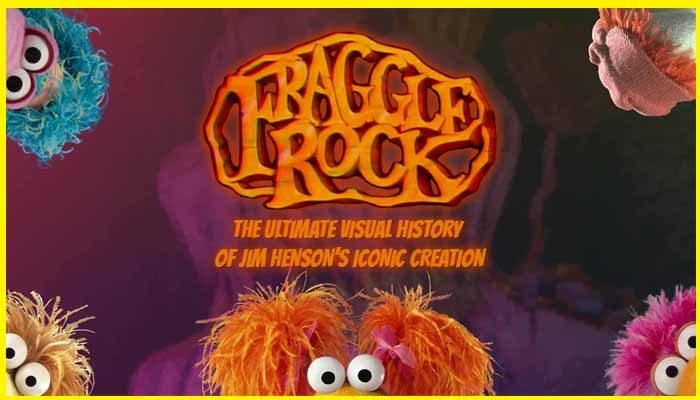
Fraggle Rock hit HBO on January 10, 1983, and within five minutes of the first episode, Jim Henson had pulled off something nobody in children’s television had even tried. The show wasn’t really about furry creatures dancing in a cave. It was a five-season experiment in how to talk to kids about war, prejudice, and ecological collapse without ever using those words. The trick worked so well that millions of us spent the 80s singing “dance your cares away” and didn’t realize until adulthood that Henson had been smuggling a peace treaty into our living rooms.
The show ran for 96 episodes across 5 seasons, ending in 1987. It became HBO’s first original series, the first American kids show built from day one for international co-production, and the cleanest example of what happens when a genius decides children deserve real ideas instead of moral lectures. Forty-three years later, the reason Fraggle Rock still hits harder than any other 80s puppet show is exactly the reason your parents let you watch it: the surface looked silly, and the substance was anything but.
The Year Jim Henson Decided to Save the World With Puppets
By 1981 Jim Henson had already won. The Muppet Show had finished its run, Sesame Street was a public institution, and The Dark Crystal was about to drop in theaters. He could have coasted. Instead, he sat down at the Carlyle Hotel with a small team and said he wanted to make a children’s show that would, in his own words, “bring peace to the world.”
The Retro Almanac
A monthly roundup of "on this day" highlights from that month, decades back — plus first dibs on new retro merch drops. No spam, just the good stuff.
That sounds ridiculous on paper. In practice, he was dead serious. The premise was simple — a hidden underground cave system home to a society of small singing creatures called Fraggles, who share their world with two other species: the tiny industrious Doozers and the lumbering Gorgs. Each species depends on the other, and none of them quite understand it. Henson described the show as “a metaphor for the world’s interconnectedness.” That was the pitch. The Jim Henson Company still describes it that way today.
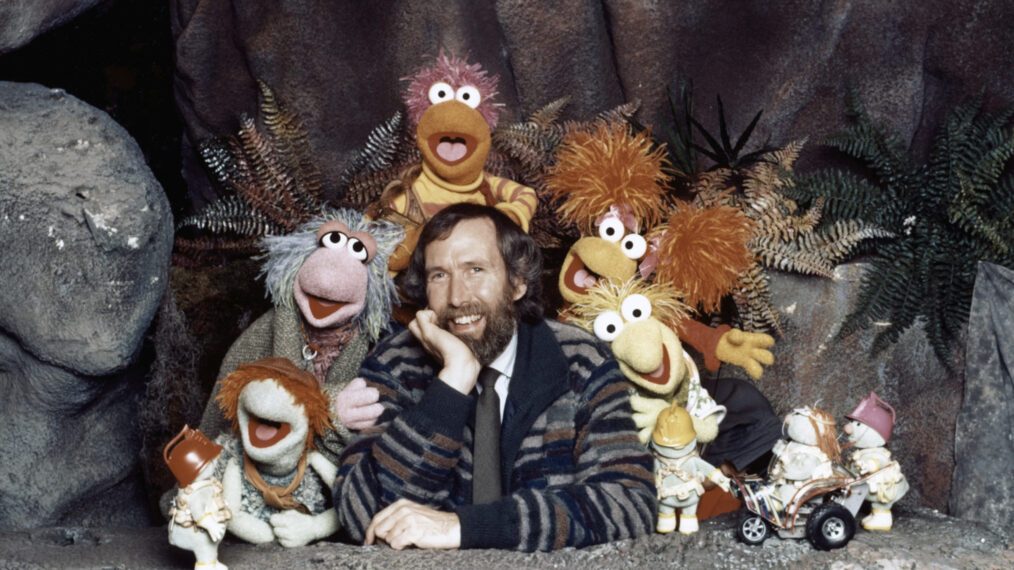
What made the project unusual wasn’t the message. It was the architecture. Henson designed Fraggle Rock to be filmed once and recut for dozens of countries — the live-action human framing scenes were swapped out per market so that British kids saw an inventor’s workshop, French kids saw a bakery, German kids saw a Bavarian artisan’s shop. The Fraggle scenes in the cave never changed, but the human window into Fraggle Rock did. Nobody had ever built a children’s show this way. More than a dozen national versions eventually aired, which is part of why the show feels different in every country that grew up on it.
Doc and Sprocket, the Trojan Horse for the Whole Thing
Every Fraggle Rock episode opens the same way in North America: Doc, a tinkerer in his lighthouse-adjacent workshop, fixing some contraption while his dog Sprocket eyes the hole in the wall. That hole, the one Doc never notices, leads to Fraggle Rock. Gobo the Fraggle sneaks out periodically to retrieve postcards from his Uncle Travelling Matt, the explorer who has wandered into “outer space” — which is, of course, our world.
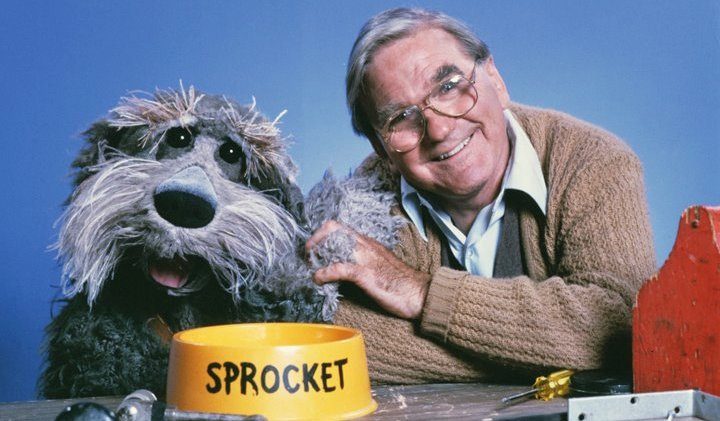
This is the trick. Doc is the audience surrogate, the bewildered human who keeps almost figuring out that magical creatures live behind his wall. Sprocket is the kid in the room — he sees Gobo, he knows. The Uncle Matt postcards reverse the lens, letting the Fraggles describe human behavior as if we are the strange exotic creatures, which we are. The framing was so smart that the show could swap out Doc for a French baker or a British inventor without losing a beat. Same hole in the wall. Same dog. Different vehicle. The format was a co-production tool, but it was also the show’s quiet thesis: every culture has its own window into the same underground world.
The Doozers Were Working While You Were Watching
Six inches tall, helmets on, tool belts strapped across green flocked-foam bodies, the Doozers spend every waking hour building intricate crystal towers out of radish dust. The Fraggles eat the towers. The Doozers love it, because that gives them more to build. The whole thing is a self-renewing economy hidden inside a children’s show.
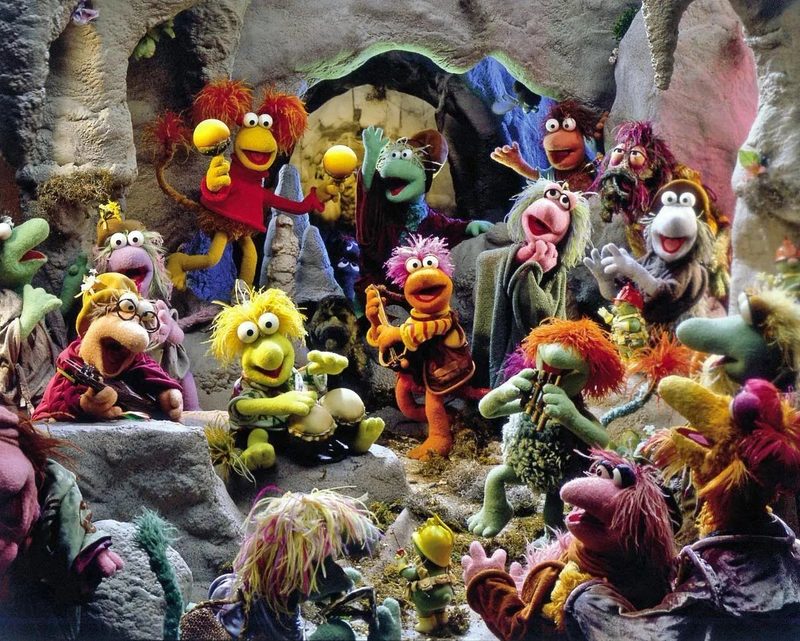
If you grew up with this show and never thought about why the Doozers were okay with their work being eaten, congratulations — you absorbed an economics lesson without ever knowing it. The Doozer puppets themselves were among the hardest creatures Henson’s shop ever built. The latex bodies had mechanical hands that could carry and assemble the crystal sticks on camera, which sounds simple until you realize the puppeteers were operating them from below the set in spaces about the size of a coffee table. Henson workshop alumni have called the Doozers the engineering showpiece of the entire run.
The Gorgs Were Tyrants With a Garden Problem
Then there’s the Gorg family. Pa Gorg, Ma Gorg, and Junior Gorg live above ground in a tumbledown castle and consider themselves the rulers of the universe. They aren’t. They are three lonely giants in a falling-down house, growing radishes that the Fraggles keep stealing, ruled by a delusion of grandeur that the show treats with surprising tenderness.
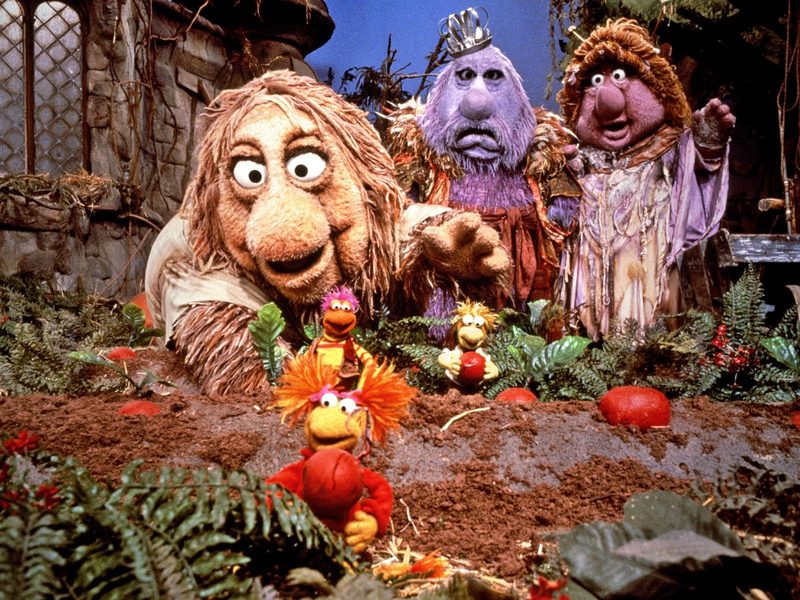
The Gorgs aren’t villains. They’re the kid in your class who insisted he was the coolest because nobody told him otherwise. Junior, the only Gorg child, spends episodes trying to catch a Fraggle and slowly developing a friendship he isn’t allowed to admit. The show was, almost from the beginning, a study in how power and isolation feed each other. Try finding that lesson in any other 1983 cartoon. The best 80s cartoons we still talk about rarely got within shouting distance of that kind of subtext.
The Music Was Written by a Jazz Pro, and It Shows
Composer Philip Balsam and lyricist Dennis Lee wrote more than 250 original songs across the show’s run, and they weren’t bubblegum filler. Balsam came out of the Toronto jazz and folk circuit, and you can hear it — Fraggle songs have actual chord changes, modulations, mournful ballads sitting next to barn-burning ensemble numbers. “Dance Your Cares Away” is the one everyone remembers, but the catalog includes country waltzes, swamp-blues numbers, and one full gospel-style anthem sung by a character called Cantus the Minstrel that holds up next to anything on adult radio in 1983.
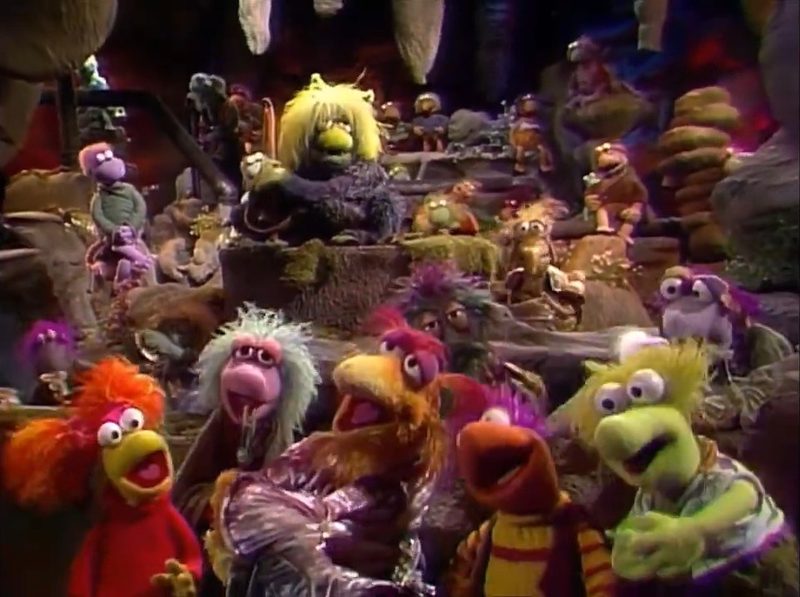
What makes the Fraggle Rock soundtrack hit harder than it should is that the lyrics aren’t kid-talk. Lee was a respected Canadian poet — his collection Alligator Pie is the most-taught children’s poetry book in Canadian schools. He didn’t write down. The songs treat anxiety, grief, longing, and joy as the same set of muscles, and the kids singing along weren’t being condescended to. Anyone who can remember the melody of “Children of Tomorrow” without prompting is carrying that proof around in their head.
The Trash Heap Was the Show’s Conscience
Every time the Fraggles hit a moral crossroads, they trooped out to consult Madame Trash Heap, a sentient pile of garbage with two snarky vegetable advisors. She was wise, kind, occasionally wrong, and absolutely the show’s voice of conscience. The Trash Heap dispensed advice that landed with the weight of a grandmother who has seen things. Her songs were among the show’s most emotionally direct.
The reason this works — the reason Marjory the Trash Heap doesn’t feel like a Saturday-morning gimmick — is that the show wrote her as a character with real authority. She gives advice. The Fraggles take it, often badly, and learn the hard way. The show never used her as a deus ex machina. She just told the truth, and the truth never made the immediate problem easier. That single design choice puts Fraggle Rock closer in spirit to a folktale than a cartoon. You can draw a line from her to Yoda, to Granny Weatherwax, to a dozen other wise-old-character archetypes that Gen X kids absorbed without realizing they were being trained to recognize them. The Saturday morning ritual that defined a generation never produced anything quite like her.
The Final Episode Broke Children’s TV’s Cardinal Rule
Most children’s shows from the 80s ended either with a clip-show cash grab or a quiet fade-out. Fraggle Rock did neither. The series finale, “Change of Address,” aired in 1987. Gobo’s Uncle Matt comes home permanently. Doc, the human anchor of the whole show, decides to move away to take care of his aging sister. The Fraggles, devastated, watch their human friend pack up. In the final minutes, Doc realizes he can hear the Fraggles singing through the wall — he had always known they were there. He says goodbye to Gobo on camera, the only time a Fraggle and a human ever directly interact in the original series.
That ending broke the cardinal rule of 80s children’s television — never directly acknowledge sadness or change. The finale is openly about goodbye. About leaving. About the way the people you trusted as a kid might one day not be there. It’s a five-minute lesson on how to mourn delivered to children. And it works because the show had spent 96 episodes earning the right to deliver it. Jim Henson’s Muppet Show legacy is the obvious comparison point, but the finale of Fraggle Rock is somehow braver.
Apple TV+ Brought the Fraggles Back, and Henson’s Original Vision Held
In 2022, Apple TV+ launched Fraggle Rock: Back to the Rock, a full reboot using the original puppet performers where possible. Karen Prell came back as Red. Dave Goelz came back as Boober. The whole production was helmed by John Tartaglia, who voiced Gobo in the new series and grew up obsessed with the original. The reboot was greenlit because the underlying premise — different species sharing a fragile ecosystem, learning to value each other — turned out to be exactly the show 2022 needed.
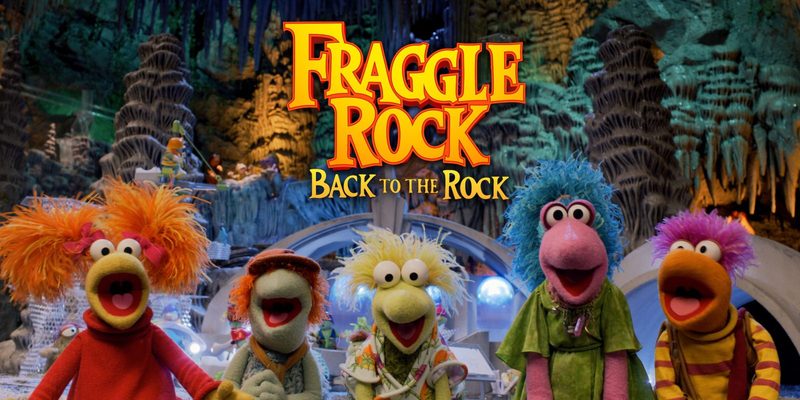
The new season tackled climate change directly, which Henson would have approved of. Guest voices included Cynthia Erivo, Daveed Diggs, Patti LaBelle, Foo Fighters, and Kenan Thompson. Apple’s own press announcement called the show “iconic Emmy Award-winning,” which is corporate-speak for “we know what we have.” The reboot found an audience because the show was never tied to its decade. It was tied to an idea, and the idea kept holding up.
Why Fraggle Rock Still Hits in 2026
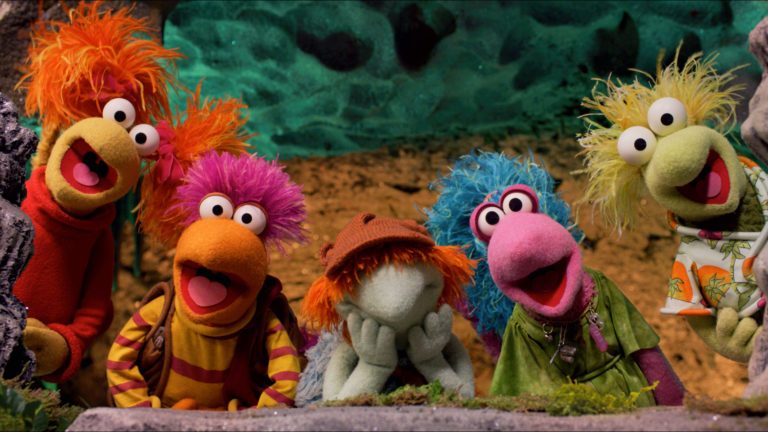
The 80s gave us hundreds of children’s shows. Most of them were toy ads. The reason Fraggle Rock survives — the reason a streaming service spent the money to bring it back — is that Henson treated the audience as small humans with full emotional ranges and gave them real questions to chew on. The show never told you how to feel. It set up a situation where Junior Gorg felt lonely, or Boober felt anxious, or Red felt jealous, and trusted you to recognize yourself in it.
The connection to why 80s nostalgia still hits so hard for Gen X isn’t accidental. The kids who watched Fraggle Rock first-run are now in their late 40s and early 50s, and the show is still in our heads because it was the first time many of us were told a story that didn’t talk down to us. Jim Henson died in 1990 at age 53, and the world he was building inside that cave never got the sequel he had in mind. What we got instead was five seasons of a show that took children seriously and trusted them to grow into it.
Henson once said in a 1983 interview that he wanted Fraggle Rock to make children “feel that life is good and that we have more in common with the other inhabitants of this planet than we have differences.” It sounds naive. It also sounds like the kind of thing somebody should probably still be saying. The show is on Apple TV+ now. Watch it with a kid you know. Watch it alone. Either way, dance your cares away.
Sources
- The Jim Henson Company — Fraggle Rock production history — official background on the show’s international co-production model.
- Fraggle Rock — Wikipedia — production dates, episode count, cast list, international distribution.
- Apple TV+ Press — Back to the Rock renewal announcement — confirms reboot guest voice cast and Emmy recognition.
- Muppet Wiki — Doozers character file — puppet construction details and performer credits.
- TV Insider — 10 Facts About Fraggle Rock at 40 — HBO first-original status and production trivia.
Browse retro and vintage-inspired apparel at the RetroRadical shop →
The Retro Almanac
A monthly roundup of "on this day" highlights from that month, decades back — plus first dibs on new retro merch drops. No spam, just the good stuff.