Pac-Man arcade cabinet
|

The Decade That Won’t Let Go: Why 80s Nostalgia Still Rules

Some decades politely fade into history. The 1980s flat-out refuse. Forty years after Pac-Man chomped his way through a quarter of America’s pocket change, the synth stabs, neon grids, and shoulder pads are still everywhere — in our streaming queues, our T-shirt drawers, our Spotify playlists, and apparently our group chats. 80s nostalgia isn’t a fad anymore. It’s a cultural operating system, and Gen X is still running it.
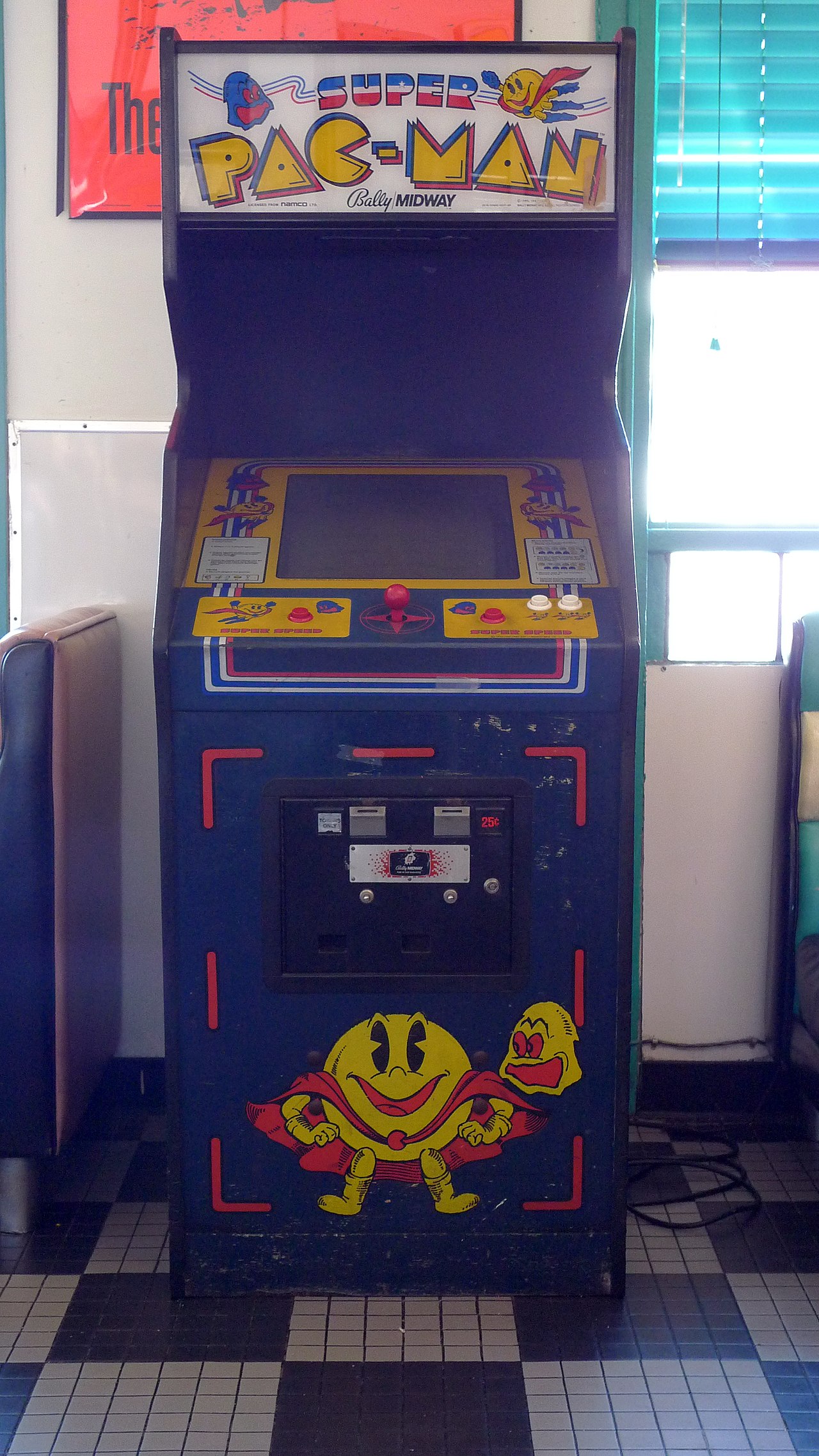
Pac-Man arcade cabinet

Ask anyone who lived through it and you’ll get the same far-off look — the kind that says they can still smell the inside of a Toys R Us, still hear the dial-up of a 2600 cartridge clicking into place, still feel the exact weight of a foam-padded Walkman headphone on their ears. The 80s weren’t necessarily better. But man, were they louder, brighter, and more committed to the bit than anything that came before or after.

The Decade That Built Modern Pop Culture

Before we get sentimental, let’s get factual: a stunning amount of what we now consider “normal” pop culture was invented or perfected in the 1980s. The summer blockbuster as we know it (Spielberg, Lucas, Cameron). The music video as an art form. The home video game console as a household appliance. The personal computer as something a kid could touch. The 24-hour cable channel. The concept of “the franchise.”

Pick any pillar of 21st-century entertainment and you can usually trace the foundation back to a Reagan-era boardroom or a garage in Sunnyvale. The Marvel Cinematic Universe owes its DNA to the 80s blockbuster. TikTok owes its grammar to MTV. Stranger Things — the show that arguably kicked off the modern 80s nostalgia wave back in 2016 — is a love letter so detailed it sometimes feels like a reenactment.

Synth, Spandex, and Saturday Mornings

Music in the 80s did something strange and wonderful: it sounded like the future and the past at the same time. Synthesizers, drum machines, and gated reverb made everything feel chrome-plated, but the songwriting was rooted in classic pop hooks your grandma could hum. That’s why “Take On Me” still slaps. That’s why “Don’t Stop Believin'” became, against all odds, the unofficial anthem of every karaoke bar on Earth.

Sony Walkman TPS-L2
Sony Walkman TPS-L2

And the soundtrack came with you, which was the radical part. The Sony Walkman, introduced in 1979 and absolutely conquering the early 80s, was the first time music became portable in a way that felt personal. Before the Walkman, you listened to what the room listened to. After the Walkman, you had a soundtrack. Every kid walking to school suddenly had main character energy, twenty-five years before the phrase existed.

Saturday mornings, meanwhile, were sacred ground. You woke up before your parents, poured a bowl of something neon (Smurf-Berry Crunch, Cookie Crisp, Ghostbusters cereal — yes, that existed), and parked yourself six inches from a CRT television for four uninterrupted hours of He-Man, G.I. Joe, Transformers, Smurfs, Muppet Babies, and whatever else the toy companies were selling that quarter. We didn’t realize we were watching half-hour commercials. We just knew Cobra Commander was up to something and Optimus Prime was going to handle it.

When Tech Actually Felt Like Magic

It’s easy to forget, in an era when your refrigerator can DM you, just how mind-bending the technology of the 80s felt at the time. A Texas Instruments Speak & Spell that talked? Witchcraft. An Atari 2600 that put a recognizable spaceship on your TV screen? Sorcery. A Casio calculator watch on your wrist? Congratulations, you’re basically Knight Rider.

Then came the arcade boom — a brief, glorious window from roughly 1978 to 1984 when neighborhood arcades were the most exciting rooms on Earth. The carpets were sticky. The air was a fog of cigarette smoke and pizza grease. And every cabinet — Pac-Man, Donkey Kong, Galaga, Defender, Tron, Dragon’s Lair — pulsed like a tiny lightning storm. A quarter bought you three minutes of being a hero. The high-score initials carved at the top of the leaderboard were the closest thing your school had to a hall of fame.

Home computing arrived in the same window — the Commodore 64, the Apple II, the IBM PC, the TRS-80. If you were lucky enough to have one in the house, you typed BASIC commands out of the back of magazines just to make a sprite blink across the screen. That weird little dopamine hit — “I made the machine do the thing” — is the same hit that built every software company on Earth. Most of Silicon Valley is just kids who didn’t get over the 80s.

The Toys That Defined a Generation

If you want to understand 80s nostalgia at its purest, look at the toys. Cabbage Patch Kids in 1983 caused literal riots. Adults trampled each other in department stores so their daughters could have a soft-bodied doll with a yarn-haired birth certificate. Riots. Over dolls.

The Rubik’s Cube, originally invented in Hungary in 1974, didn’t really detonate until 1980 — and when it did, it sold over 100 million units in three years. Every classroom had at least one kid who claimed they could solve it. (They couldn’t. They peeled the stickers off.)

Then there were the toys that openly tried to kill you. Lawn darts (Jarts), banned in 1988 after a horrifying string of injuries. The Slip ‘N Slide on a concrete driveway. The Big Wheel ridden full-tilt down a hill with no helmet, because helmets were for hockey players. We treated our own bodies like crash-test dummies and considered it Tuesday.

And of course, the toys-as-television-shows industrial complex: He-Man, G.I. Joe, Transformers, My Little Pony, Care Bears, Strawberry Shortcake. Every action figure had a 22-minute infomercial waiting on Saturday morning, and every Christmas list was basically a wishlist scraped from Mattel’s catalog.

MTV and the Visual Revolution

On August 1, 1981, MTV launched with the eerily prophetic “Video Killed the Radio Star” by The Buggles. For the rest of the decade, music wasn’t just something you heard — it was something you watched. Michael Jackson’s “Thriller” was a 14-minute mini-movie that aired in primetime. Madonna’s “Like a Prayer” caused a Vatican-level controversy. A-ha’s “Take On Me” made every kid in America want to be pulled into a pencil drawing.

MTV didn’t just change music. It changed everything. Editing got faster. Fashion got louder. The relationship between artist and audience flipped. Suddenly, image mattered as much as sound. You can draw a straight line from MTV’s opening montage to every TikTok trend, every Instagram Reel, every 15-second ad cut today. The 80s taught us how to look at things.

The Movies That Hit Different

If we’re being honest, no decade has a stronger movie roster than the 80s — at least not for a certain kind of viewer. Back to the Future. E.T.. The Goonies. Ghostbusters. The Breakfast Club. Ferris Bueller. Die Hard. Aliens. Top Gun. Stand By Me. The Princess Bride. Big. Coming to America. Beetlejuice. Labyrinth. The Karate Kid.

And those are just the obvious ones. The 80s had this knack for making movies that worked on two levels at once — they were fun and stupid and quotable for kids, but they were also weirdly emotional and well-crafted for adults. Spielberg in particular was operating at a level no filmmaker has matched since: Raiders, E.T., Indiana Jones and the Last Crusade, plus producing Back to the Future, Goonies, Gremlins, Who Framed Roger Rabbit, and Land Before Time. One man. One decade.

Why We Keep Coming Back

So why does 80s nostalgia keep returning? Why do Stranger Things, Cobra Kai, Top Gun: Maverick, and a thousand synthwave Spotify playlists keep mining the same vein?

Part of it is demographic. Gen X is finally in charge — running studios, programming streamers, greenlighting projects, writing checks. The kids who grew up with Atari joysticks now sit in boardrooms. They’re making the stuff they wish someone had made for them, just with bigger budgets.

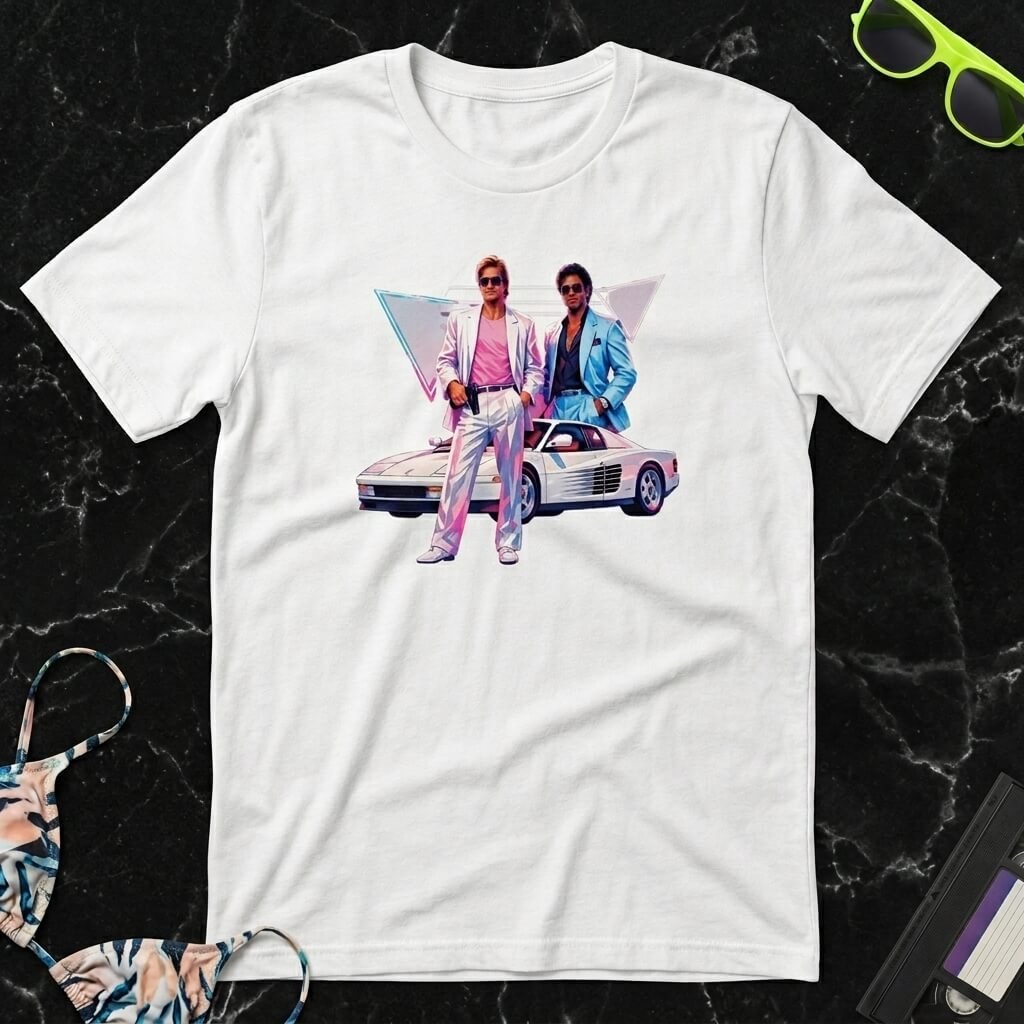
Part of it is aesthetic. The 80s had a look. Neon, chrome, magenta sunsets, gridlines stretching to infinity. Synthwave didn’t invent that look — Miami Vice did, and Tron, and the cover of every paperback at the airport. But that visual language has aged into something timeless, the way Art Deco aged into something timeless. It just reads as cool.

And part of it — maybe most of it — is the simple fact that the 80s were the last decade of analog childhood. No phones in pockets. No infinite scroll. No always-on. If your friends weren’t home, you got a busy signal and went outside. If you wanted to know what was happening, you watched the six o’clock news. If you wanted to record a song off the radio, you sat there with your finger on the cassette deck waiting for the DJ to shut up. The world had edges. It had off-time.

That’s a kind of freedom we accidentally traded away, and we know it. So when we put on Running Up That Hill, or fire up an emulator, or buy our kid a vinyl copy of the Top Gun soundtrack, we’re not really pining for shoulder pads or hairspray. We’re pining for the version of ourselves that existed before the always-on internet showed up and started running our brains like a slot machine.

The Nostalgia Economy

None of this is lost on the people selling things. The 80s nostalgia economy is enormous and it isn’t slowing down. Vinyl sales hit 30-year highs. Disposable cameras are cool again. Polaroid is back. Casio is back. Doc Martens never left. Ray-Bans, scrunchies, oversize blazers, mom jeans — all on rotation. Hollywood reboots Top Gun and prints money. Netflix reboots He-Man, Masters of the Universe, Cobra Kai, Karate Kid. Even the synth — the most 80s instrument imaginable — is having a third or fourth resurgence depending on how you count.

The cynical take is that nostalgia is the easiest sell in entertainment, and the 80s happen to be the sweet spot where the largest chunk of disposable-income adults wants to feel young again. That’s true. But it’s also true that some decades just produce more durable culture than others, and the 80s — for all the cheese, all the bad fashion, all the legitimately questionable politics — produced a lot of durable culture.

So no, the 80s aren’t going anywhere. Not while there’s a Walkman in someone’s drawer, a Pac-Man cabinet in someone’s basement, a Cabbage Patch doll in someone’s attic, and a kid somewhere discovering Bowie for the first time. The decade ended on December 31, 1989. The vibe is still going.

Sources

Similar Posts

Leave a Reply

Your email address will not be published. Required fields are marked *