The Anatomy of Grunge: Tape Decks, Doc Martens, and Bad Attitudes
The cassette copy of Bleach cost Nirvana $606.17 to record in 1988. That money came mostly from a drummer named Chad Channing and a local producer who charged $30 an hour at the end of a rental car lot in Seattle. Most people who first heard that album got it from a tape somebody else dubbed — which is exactly how grunge worked before it didn’t, passed hand to hand, dubbing generation to dubbing generation, until the hiss was so deep you could barely hear the guitars under it.
The Sound Was Built to Hurt
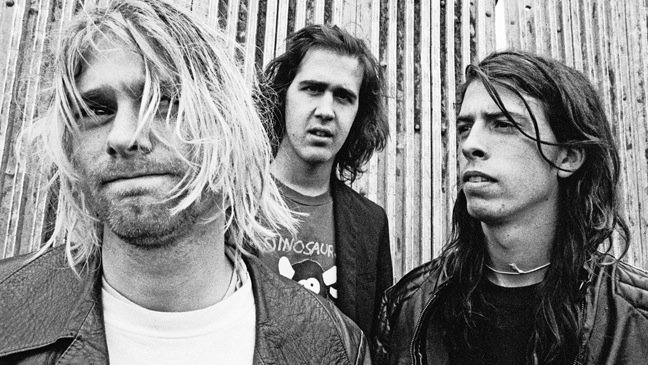
Grunge guitar tone came from two directions that had nothing to do with each other. One was Black Sabbath — Tony Iommi’s open-tuned, doom-heavy riffs, the kind that felt like the ceiling was dropping. The other was the Pixies, specifically the quiet-loud-quiet structure that Kim Deal and Black Francis had been using on songs like “Debaser” and “Bone Machine.” Put those together with a cheap Big Muff distortion pedal and a guitar that cost less than a week’s rent, and you had the grunge template.
Kurt Cobain played a Fender Mustang — a student guitar, discontinued before he was born, that he bought for around $200 in the late 1980s. He liked it because nobody else wanted it, and because its shorter scale neck made it easier to play hard without thinking too hard. Eddie Vedder tuned down to drop D on a battered Sunburst Les Paul. Chris Cornell tuned even lower. The whole genre lived in the bottom half of the frequency spectrum, which is one reason it sounded like weather on a car radio — dense, physical, filling all the available space.
The Retro Almanac
A monthly roundup of "on this day" highlights from that month, decades back — plus first dibs on new retro merch drops. No spam, just the good stuff.
Before Seattle: The Roots Nobody Wanted to Own
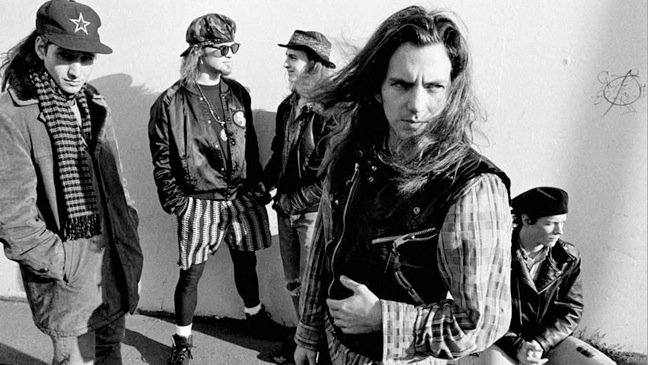
Neil Young called himself the godfather of grunge, and nobody really disputed it. His mid-70s recordings — especially Tonight’s the Night and Rust Never Sleeps — had that same quality of deliberate ugliness, songs that sounded unfinished because finishing them would have been a lie. The Seattle bands heard that and recognized it as permission.
But the more direct DNA runs through punk. Black Flag’s relentless touring in the early 1980s put them in every mid-size American city, including Seattle, and the Replacements proved you could be melodic without being clean. The Melvins — from Aberdeen, Washington, same small town Cobain grew up in — took all of that and slowed it down to a speed that was almost frightening. Mudhoney picked up where the Melvins left off and added enough noise to make Sub Pop Records take notice. Sub Pop signed them in 1988, put out “Touch Me I’m Sick,” and pressed exactly 2,000 copies. That was enough.
The label’s genius was understanding scarcity. Their singles club — a subscription service that mailed limited-press 7-inches to members — turned Seattle records into objects with weight. You didn’t just hear a Sub Pop record. You owned it. You held it. That physical relationship with music mattered more then than it’s possible to fully explain now.
Two Pairs of Boots and Everything From Goodwill
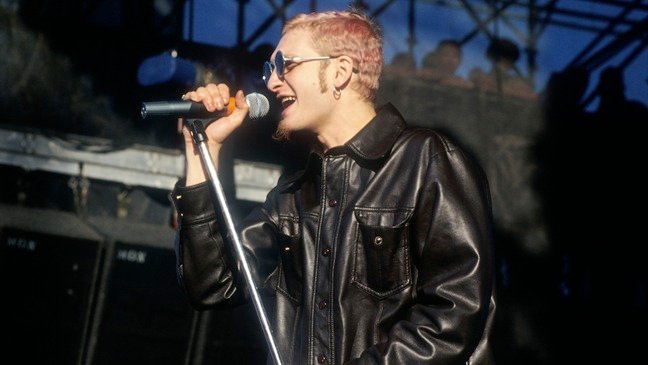
Doc Martens were originally British working-class footwear — sturdy, air-cushioned soles patented in 1945 by a German doctor who’d broken his ankle skiing and wanted something that wouldn’t hurt to walk in. Punk adopted them in the late 1970s. By 1990, they were the only boots that made sense for grunge because they were built to last, they cost about $70 at the time, and wearing them meant something in a specific subcultural vocabulary that flannel shirts did not.
The flannel was different. Flannel in Seattle wasn’t a fashion statement — it was weather management. Lumberjacks and construction workers wore it because the Pacific Northwest is cold and damp for eight months of the year, and the shirts were cheap at any surplus store. The grunge bands wore them for the same reason they shopped at Goodwill: not because it was a statement, but because they were broke. When the fashion industry picked up the look in 1992 and Marc Jacobs sent models down the runway in $200 grunge-inspired flannel for Perry Ellis, the musicians found it genuinely baffling. Cobain wore a worn flannel to the Grammys. He wasn’t making a point. He just didn’t own anything else.
The Tape Deck as Broadcast Tower
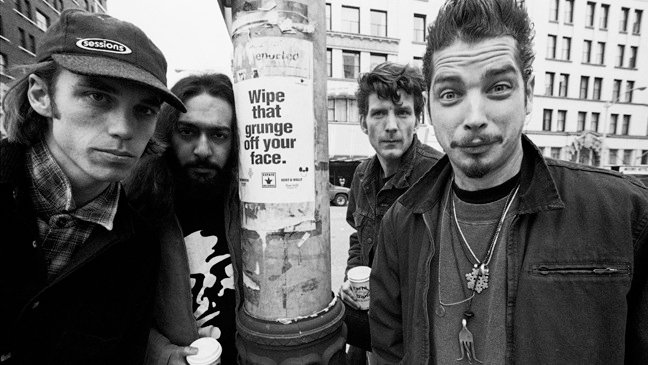
Seattle’s geographic isolation worked in both directions. It kept the bands away from the East Coast music industry long enough to develop something genuine. It also meant that without the tape deck, grunge stays regional. KCMU, the University of Washington’s college radio station, played early Mudhoney and Soundgarden to maybe 5,000 people in a city of 500,000. The reach was essentially nothing. What spread the music was cassette dubbing — a complete copy of a Sub Pop single pressed onto a C-60 tape and handed to a friend, who handed it to a friend, who mailed a copy to someone in Minneapolis who’d written a letter to the zine Maximumrocknroll.
This is not a romantic story about analog purity. The copies were bad. Each generation of dubbing added noise and compressed the dynamics further. But it also meant that when you finally heard the real record, it hit like a wall. The tape told you something was there. The actual recording showed you how far away from there the tape had been.
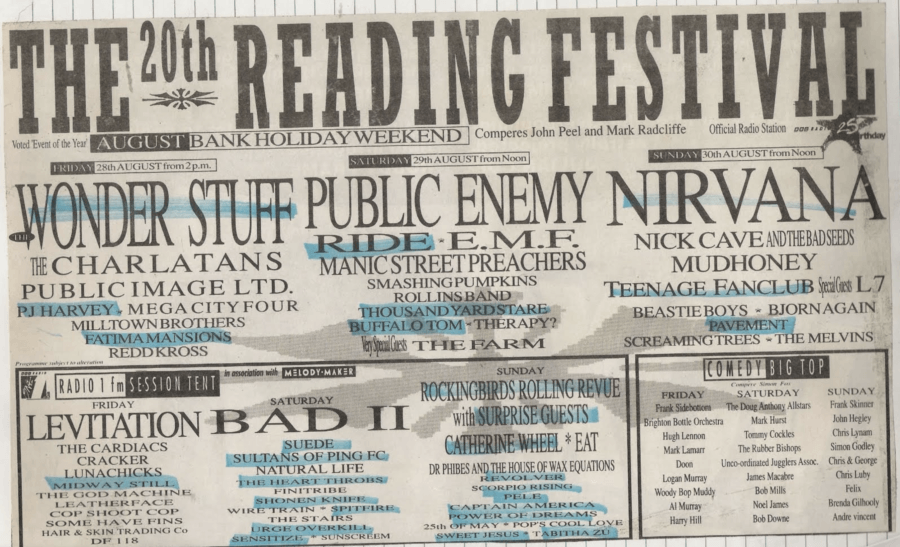
By the time Nirvana played Beehive Records in Seattle on September 16, 1991 — four days before Nevermind dropped — the word had been traveling by tape and fanzine for three years. The in-store crowd already knew the words.
The Bad Attitude Was the Message
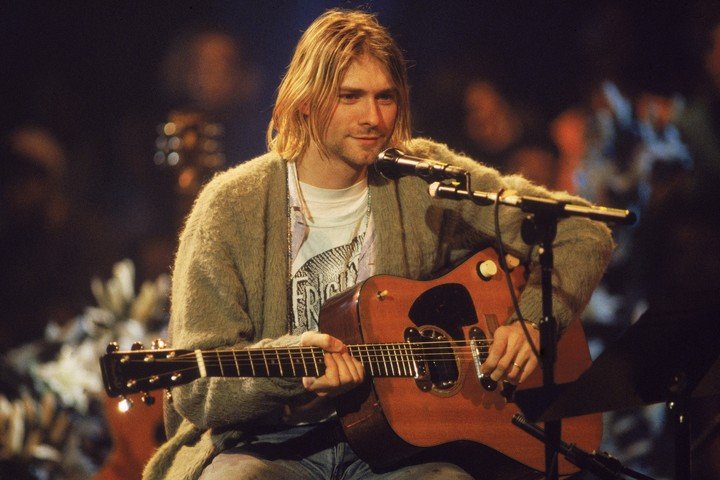
“Smells Like Teen Spirit” was named after a deodorant. Kathleen Hanna of Bikini Kill wrote “Kurt smells like Teen Spirit” on his wall at a party, referring to a girl he’d been hanging around who wore that deodorant. Cobain turned it into an anthem, then immediately disowned what it became. The arena shows full of jocks who used to beat him up in high school made him genuinely sick — and he said so in interviews, clearly, without hedging.
That discomfort with success was not a pose. It was structural. Hair metal had spent a decade celebrating money, fame, and access — Sunset Strip, the tour bus, the 10-city sell-out run. Grunge aesthetically rejected every piece of that, not as a marketing position but as a sincere expression of what the bands actually valued. When Soundgarden signed to A&M in 1989, the Sub Pop faithful treated it as a betrayal. When Pearl Jam refused to make videos in 1994, they were taking a financial loss on principle. These were not great business decisions. They were consistent ones.
The bad attitude, in the end, was just a refusal to pretend that everything was fine. In the early 1990s, after 12 years of trickle-down economics and before the dot-com boom erased the evidence, a lot of things were not fine. Grunge said so out loud, at volume, without a synthesizer anywhere in the mix.
September 24, 1991 — The Line Between Before and After
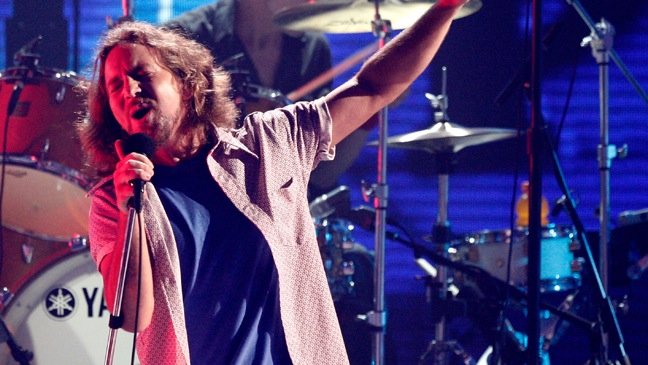
Nevermind sold 400,000 copies in its first two weeks. By January 1992, it had knocked Michael Jackson’s Dangerous off the Billboard number-one spot. The album eventually moved more than 30 million copies worldwide, making it one of the 20 best-selling records of all time. DGC Records had expected it to sell 250,000 total, lifetime.
Pearl Jam’s Ten came out four weeks earlier and moved even slower, then faster — eventually selling 13 million copies in the United States alone. Soundgarden’s Badmotorfinger dropped the same week as Nevermind. Alice in Chains released Dirt the following year. The labels spent most of 1992 signing every band from Seattle they could find, whether those bands sounded like grunge or not. A lot of flannel got shipped to cities where it hadn’t rained in four months.
For anyone who was paying attention between 1988 and 1991, the commercial explosion was the ending, not the climax. The music was better before Ticketmaster got involved.
The Scene Didn’t End — It Caved In
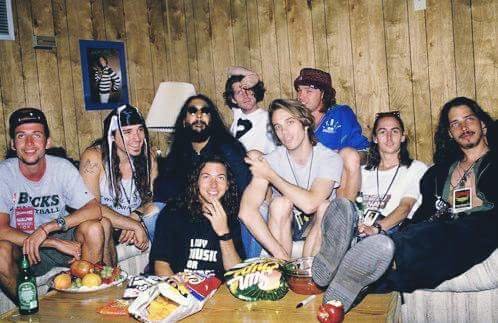
Cobain died in April 1994. Layne Staley died in 2002. Chris Cornell died in 2017. Andrew Wood of Mother Love Bone, whose death in 1990 preceded the mainstream explosion, in some ways started the chain. These losses are not metaphors. They are the actual human cost of what it takes to be that honest for that long inside an industry that wanted to own what was honest about you.
What grunge left behind is harder to name than what it left in the charts. Alternative radio exists because of it. The template for earnest, heavy-but-melodic rock that bands like Foo Fighters and Radiohead would later build on — that came directly from the Seattle scene. And the idea that a record pressed in a small quantity in a rainy city and duplicated onto third-generation cassette tapes could reach every corner of the world before the internet existed: that happened once, and it was specific, and it was real.
The tape deck is in a box somewhere. The boots are still in production. That seems about right.
For more on how 90s music shaped culture, check out our look at the bands and the burnout that defined the grunge era. If you want to see how a different underground scene built its own look from scratch, 90s hip-hop fashion did something equally deliberate. And for the TV network that kept both scenes alive and killed them at the same time, Yo! MTV Raps is the whole story in one show.
Sources
- Rolling Stone — Grunge Photo Exhibit: Rise of a Generation — visual documentation of the scene’s major acts from 1989–1994
- Hollywood Reporter — A History of Grunge in Pictures — archival photography from the grunge era
- HistoryLink.org — Nirvana’s Nevermind Release Party, September 1991 — documented account of the pre-release Seattle shows and the album’s early reception
The Retro Almanac
A monthly roundup of "on this day" highlights from that month, decades back — plus first dibs on new retro merch drops. No spam, just the good stuff.