Timbs and Tommy: The Style Revolution That Came Out of 90s Rap
It’s 1994. “Juicy” drops on your radio, and within seconds you’re not just listening—you’re picturing it. Biggie Smalls in a Coogi sweater, a heavy rope chain sitting just right, surrounded by the kind of opulence he grew up without. He’s selling a song, yes—but he’s also selling a look. And whether you lived in Bed-Stuy or Boise, you bought it. Golden Age hip-hop, the ten-year run from 1990 to 1999, didn’t just change what was on the radio. It changed what America put on its back.
The Uniform Nobody Designed
Hip-hop fashion in the Golden Age wasn’t the product of some studio executive or fashion house sitting in a midtown Manhattan office. It came off the streets of New York—Harlem, the Bronx, Brooklyn, Queensbridge—and it carried an attitude that no marketing budget could manufacture. The look was large: oversized hoodies, baggy jeans worn low, fresh sneakers kept pristine despite the weather. It was built for the block, not the boardroom.
Run-DMC had written the first chapter in the mid-80s with their Adidas tracksuits and fat laces, but by 1990 the aesthetic had evolved into something richer and more layered. Baseball caps tilted sideways or worn backwards. Kangol bucket hats, made famous by LL Cool J. Starter jackets bearing team logos that had nothing to do with sports allegiance—you wore a Charlotte Hornets jacket because the teal and purple went hard, not because you followed NBA basketball. This was fashion as personal statement, as territory marker, as armor against a world that wasn’t always looking out for you.
The Retro Almanac
A monthly roundup of "on this day" highlights from that month, decades back — plus first dibs on new retro merch drops. No spam, just the good stuff.
The Boot That Conquered the Concrete
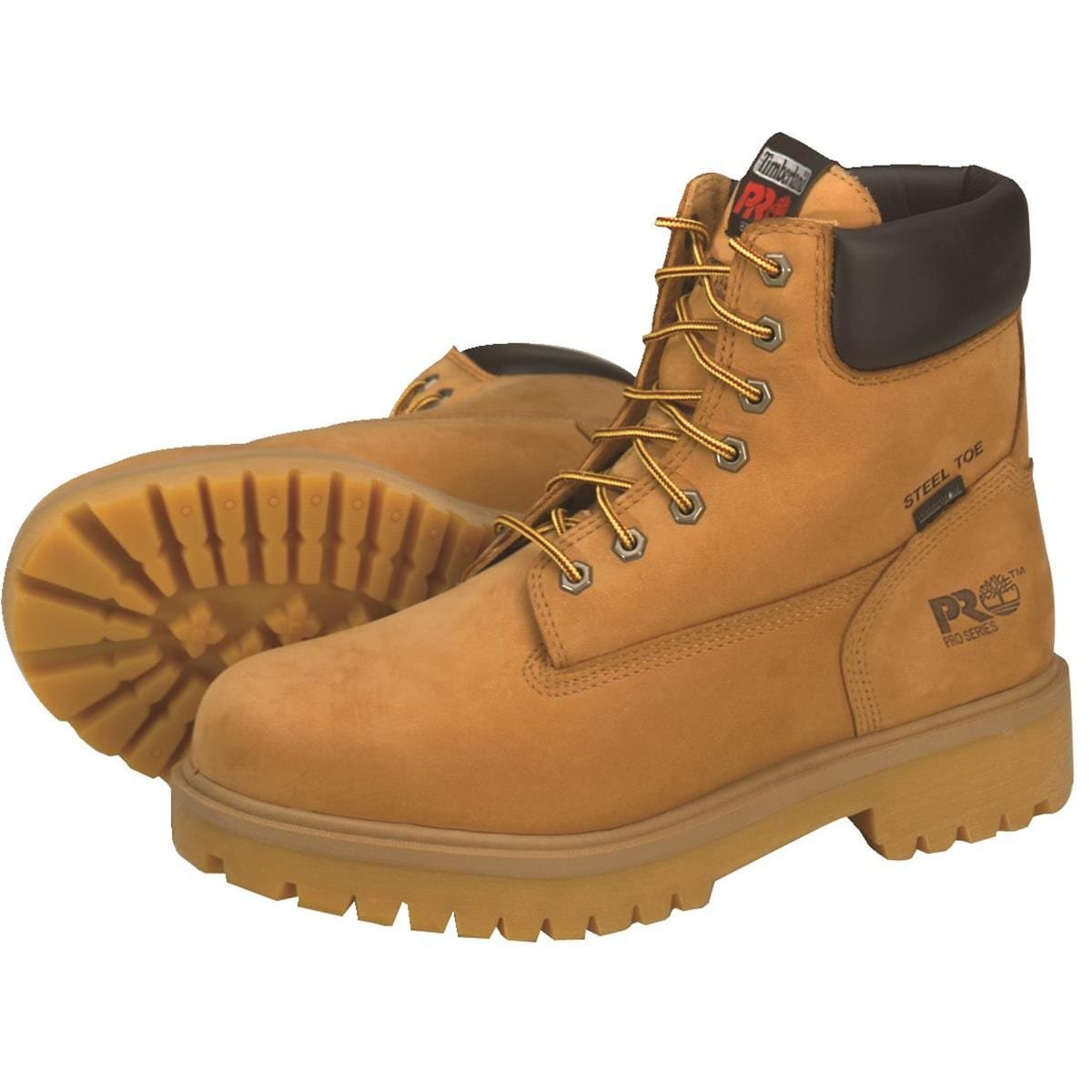
No piece of clothing says “Golden Age hip-hop” quite like a pair of wheat-colored Timberland boots. The irony runs deep: Timberland built those boots for New England fishermen and construction workers. The company was founded in New Hampshire. It had never set foot in hip-hop culture—and yet hip-hop found it anyway.
By the early 90s, Timbs were the definitive footwear of the streets. Wu-Tang Clan codified them. Raekwon and Ghostface Killah wore them on the streets of Staten Island, and they showed up in lyrics, in videos, in every photograph of the era. The sturdy boot, made to survive rough conditions, became a metaphor for something deeper: the resilience required to navigate an urban landscape that didn’t offer many safety nets. They were tough, expensive enough to signal status, and authentic in a way that flashier footwear couldn’t match.
Timberland itself reportedly tried to distance the brand from hip-hop culture in the mid-90s, concerned about what the association might mean for the company’s existing customer base. Hip-hop wore them anyway. That’s how powerful the Golden Age aesthetic was—it didn’t need permission from the brands it adopted. The culture did the selecting, and once something was in, it was in for good.
Cross Colours, FUBU, and the Brands Born from the Culture
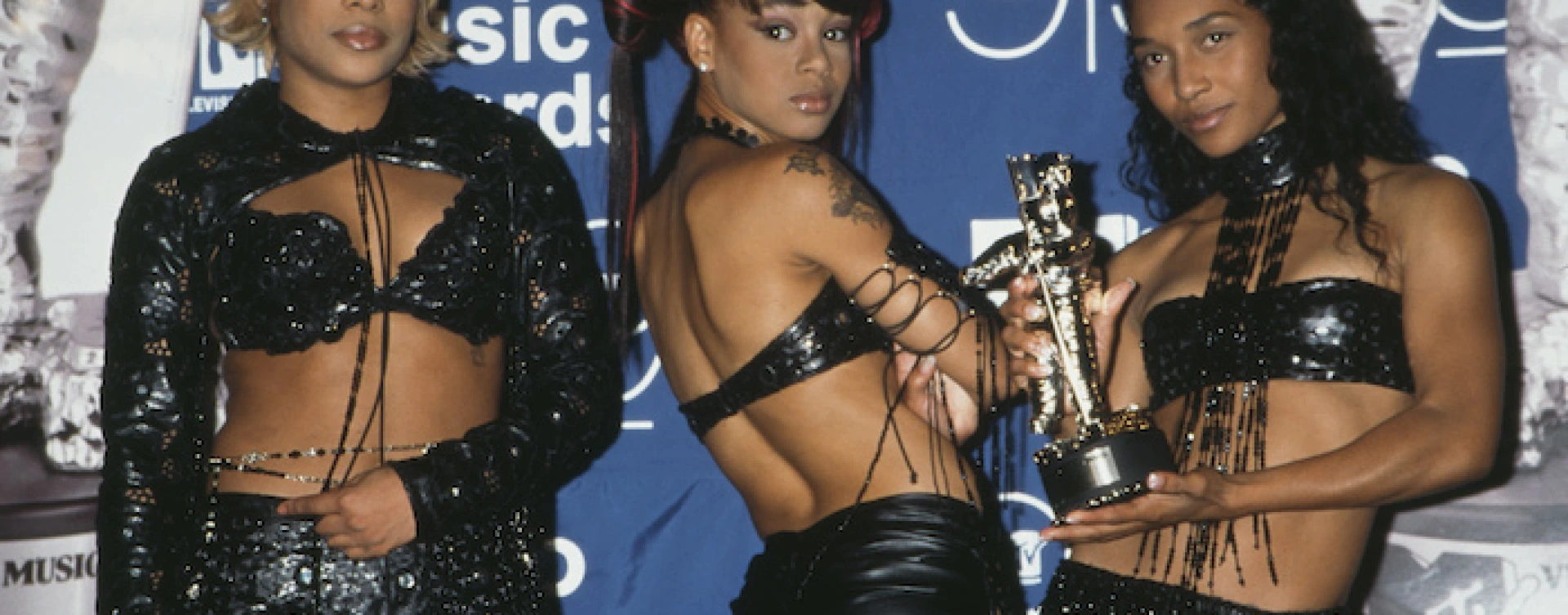
Not every brand was co-opted from the outside. Some were built from within. Cross Colours launched in Los Angeles in 1989 with the tagline “Clothes Without Prejudice”—bright, Afrocentric, politically charged streetwear that arrived at exactly the right moment in American cultural history. When TLC wore Cross Colours in their early videos, the brand exploded. The vibrant color blocking, the oversized silhouettes, the message sewn into the seams: Cross Colours looked like hip-hop felt. Loud, proud, and unapologetically Black.
Karl Kani was another pillar of the era. His jeans and tracksuits appeared everywhere in the first half of the decade. Tupac Shakur wore Karl Kani so consistently that the brand became nearly synonymous with him—and with a particular West Coast cool that contrasted with the harder-edged New York street aesthetic. Where the East Coast look leaned dark and heavy and layered, the West Coast vision that Karl Kani fit into was sunlit, relaxed, and defiantly comfortable.
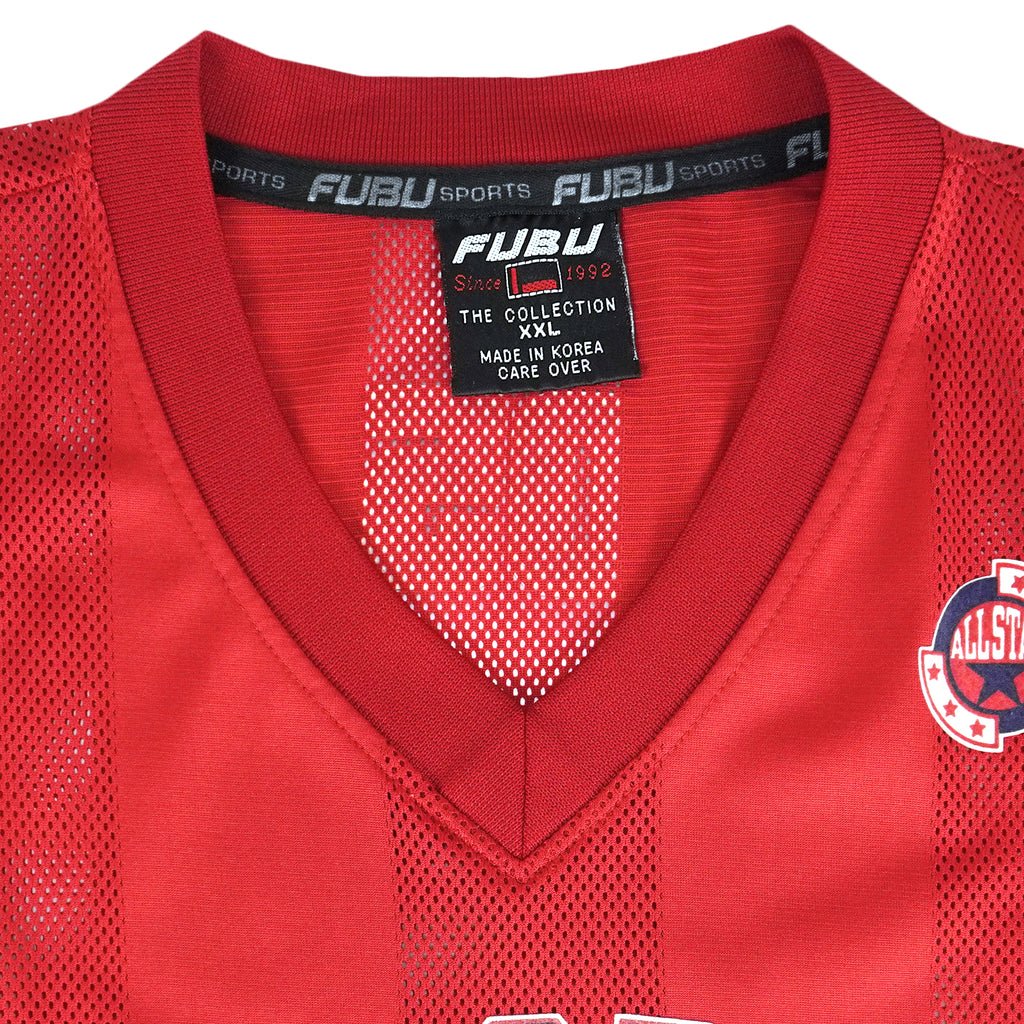
No Golden Age brand story, though, hits quite like FUBU. Daymond John started the company in his mother’s basement in Hollis, Queens—four friends sewing hats and hustle-printing the name on T-shirts. For Us By Us. He mortgaged the house for startup capital, cold-called department stores, and got doors slammed in his face more times than he could count. When LL Cool J, a Hollis native, wore a FUBU hat on camera during a Gap commercial—logo visible, subtle as a nod between neighbors—the brand got national exposure without spending a dollar on advertising. FUBU eventually did $350 million in annual sales. It was the Golden Age’s entrepreneurial spirit made literal: the culture building its own economy, on its own terms.
The Tommy Hilfiger Coup
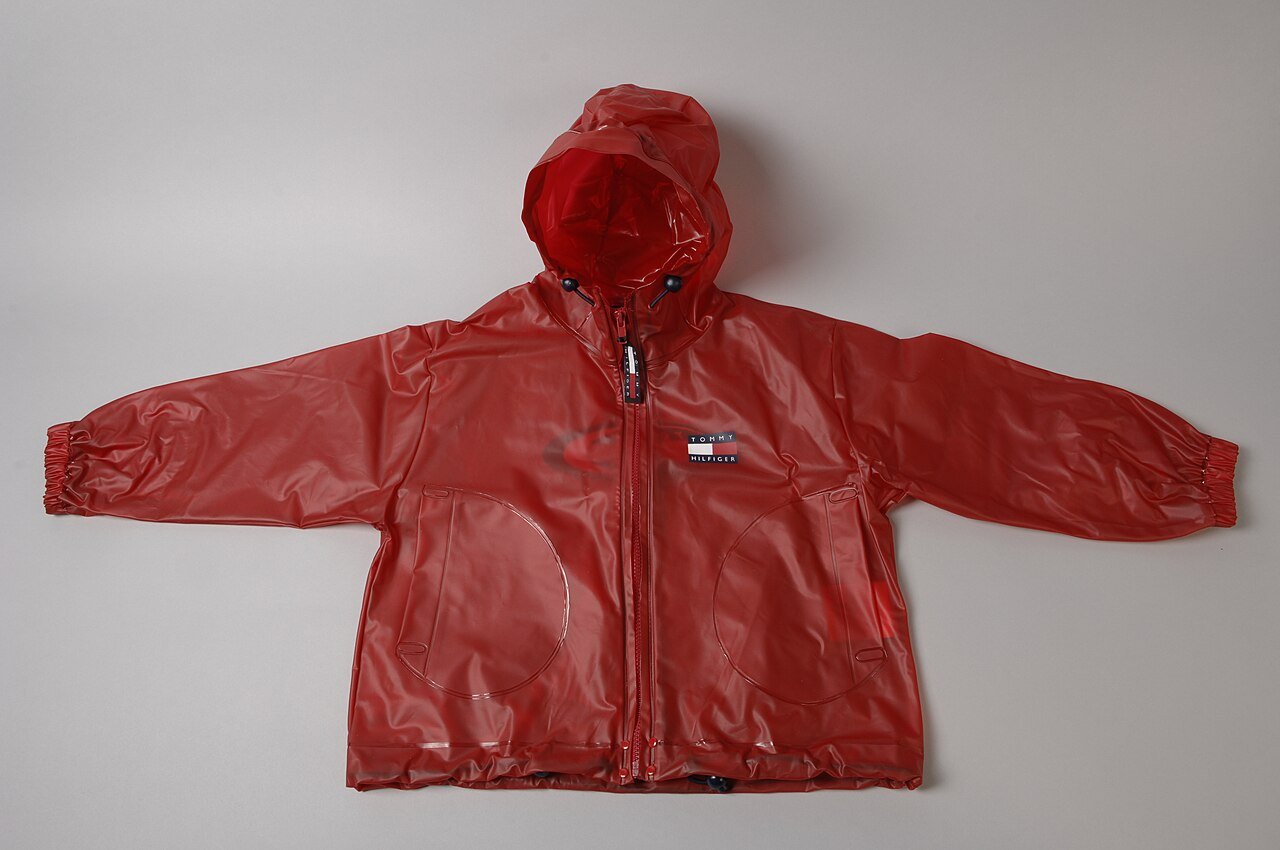
Tommy Hilfiger was not a hip-hop brand. He designed prep-school Americana—clean lines, red-white-and-blue color palettes, collared shirts built for the yacht-club set. His intended customer was the Connecticut kid whose father played golf on weekends. Then hip-hop found him, and everything changed.
The turning point is often traced to 1994, when Snoop Dogg appeared on Saturday Night Live wearing an oversized Tommy Hilfiger rugby shirt. Reports circulated that those shirts sold out at retail stores within days of the broadcast. Whether the exact numbers hold up, the cultural shift was undeniable: hip-hop had anointed Tommy, and Tommy was suddenly everywhere. Aaliyah wore Tommy Hilfiger jeans in the mid-90s in a way that defined a generation’s idea of effortless cool. The brand’s sales surged through the decade, fueled in large part by a community the designer hadn’t designed for—and couldn’t have imagined.
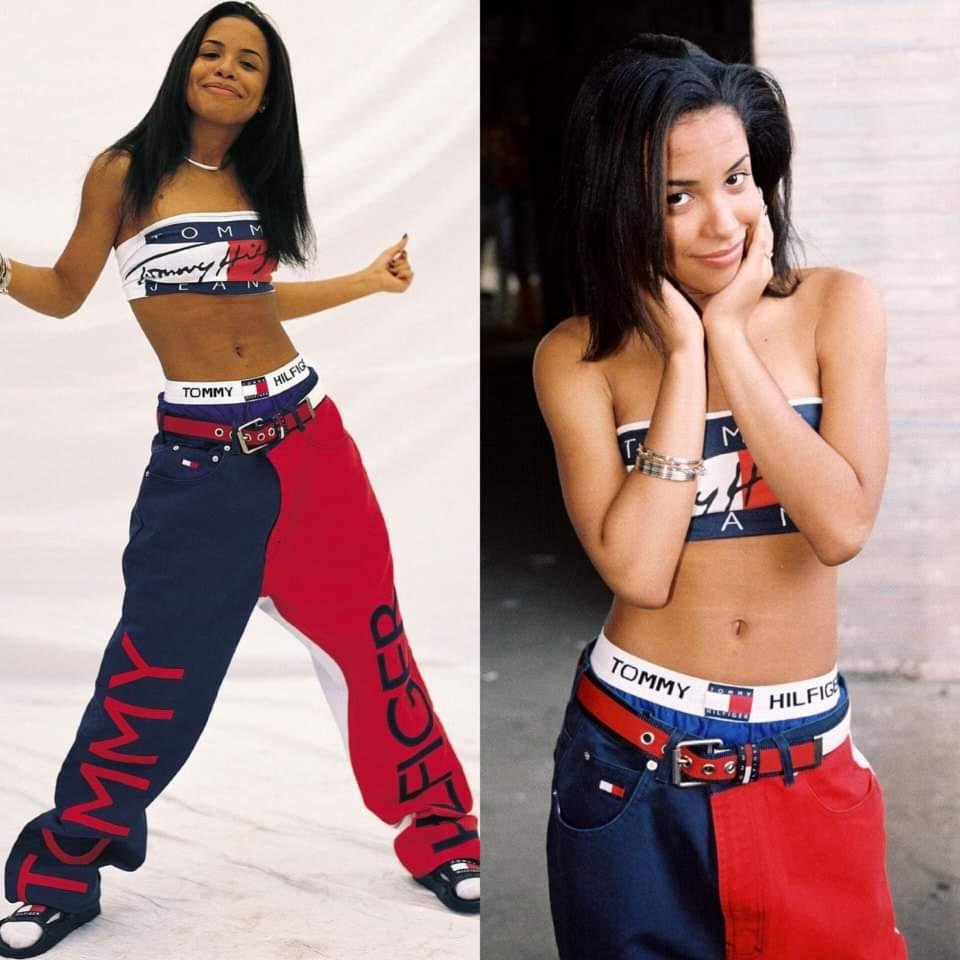
Polo Ralph Lauren followed a parallel but distinct path. The Lo Lifes—a collective from Brooklyn’s Brownsville and Crown Heights neighborhoods—had been claiming Polo gear since the late 80s as a form of status-building and community identity. By the Golden Age proper, rappers were celebrating Polo openly and unapologetically. Raekwon’s 1995 solo debut, Only Built 4 Cuban Linx…, name-checked luxury brands throughout—Polo, Gucci, Moschino—transforming conspicuous consumption into poetic aspiration. These weren’t just clothes. They were signifiers of arrival, a refusal to accept scarcity as a permanent condition.
The Rappers Who Set the Standard
The Notorious B.I.G. understood fashion as storytelling. His look evolved as his stature grew: from the Coogi sweater-and-crown-ring era of his early videos to the Versace and tailored suits of his later work. Biggie was never a small man, and he wore his size like a statement rather than an apology. He made luxury look earned rather than borrowed—a lesson not just in fashion but in the kind of confidence that can’t be bought off a rack.
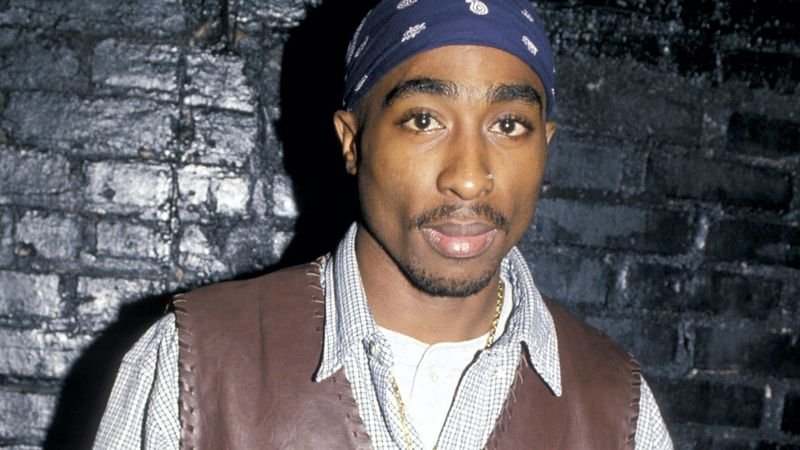
Tupac Shakur operated on a completely different frequency. His style was rawer, more confrontational: the bandana tied around his head, the tattoos climbing his arms and chest, the low-slung jeans, the tank tops displaying the “Thug Life” text across his abdomen. Where Biggie dressed toward aspiration, Tupac dressed toward the streets he never fully left. Both were right. Both were entirely hip-hop. The tension between their aesthetics mirrored the larger bicoastal cultural conversation happening in real time.
TLC brought playful, rule-breaking energy to the conversation that the male voices in the genre weren’t providing. Lisa “Left Eye” Lopes and her oversized overalls with one strap swinging—and that condom worn over her left eye, simultaneously an HIV awareness statement and a fashion choice nobody else would have thought to make—was absurdist and unforgettable in equal measure. Kris Kross wore their clothes backwards and somehow made it cool for approximately eighteen glorious months. Aaliyah combined athletic and feminine in a way nobody had mapped before: cropped tops, baggy cargo pants, Tommy Hilfiger reworked through a lens entirely her own. She showed a generation that the Golden Age look didn’t need to be masculine to carry real weight.
When the Suburbs Caught On
By the mid-90s, Golden Age hip-hop style had cleared the fence from the inner city to the mall. Kids in suburban Ohio and rural Georgia were wearing FUBU jerseys and wheat Timbs and Starter jackets. The look appeared in teen magazines, in high school hallways, on early internet message boards where kids argued about whether certain fits were real or wack. Hip-hop’s aesthetic had achieved total cultural penetration.
This crossover generated real tension within the culture. The mainstream adoption of hip-hop fashion by chain retailers—watered-down versions produced for suburban audiences at a fraction of the original’s meaning—raised hard questions about authenticity, appropriation, and who owns a look once the masses absorb it. The debate never fully resolved, and it probably shouldn’t have. But what the crossover proved beyond any argument was that Golden Age hip-hop had produced the most influential aesthetic of the entire decade. Not grunge. Not rave culture. Not the swing revival. Hip-hop dressed America.
The Blueprint That Never Expired

Every major streetwear brand that matters today—Supreme, Off-White, Fear of God, Palace—is built on a foundation that Golden Age hip-hop poured in the 1990s. The limited-edition drop model. The brand-as-identity philosophy. The conviction that your clothes are a statement about who you are, where you’re from, and what you refuse to apologize for. All of it flows directly from what Daymond John was sewing in a basement in Queens and what Raekwon was rocking on the streets of Staten Island.
Timberlands are still selling, almost completely unchanged since the 90s. FUBU is still a name people say with nostalgia and genuine respect. And when Biggie’s face shows up on a T-shirt at a Target in 2026, it’s because the look he embodied was never just fashion. It was culture. It was economics. It was a generation refusing to be invisible. And culture—real culture—doesn’t have an expiration date.
Sources
Wikipedia — Golden Age Hip Hop | Wikipedia — FUBU | Wikipedia — Cross Colours | Complex | The Source
The Retro Almanac
A monthly roundup of "on this day" highlights from that month, decades back — plus first dibs on new retro merch drops. No spam, just the good stuff.