Grunge’s Strange Trip from Aberdeen Basements to Anna Wintour’s Front Row
There’s a version of the story that starts in a damp basement in Aberdeen, Washington, with a left-handed kid named Kurt scraping pawn-shop strings through a busted amp. There’s another version that starts in 1993, when fashion designer Marc Jacobs sent waifish models down a Park Avenue runway draped in $1,400 flannel and got fired the next morning. Both versions are true. The wild thing about grunge is that it took only five years to travel from the first scene to the second — from nobody to inescapable, from secret handshake to corporate uniform, from a sound to a costume to a cliché.

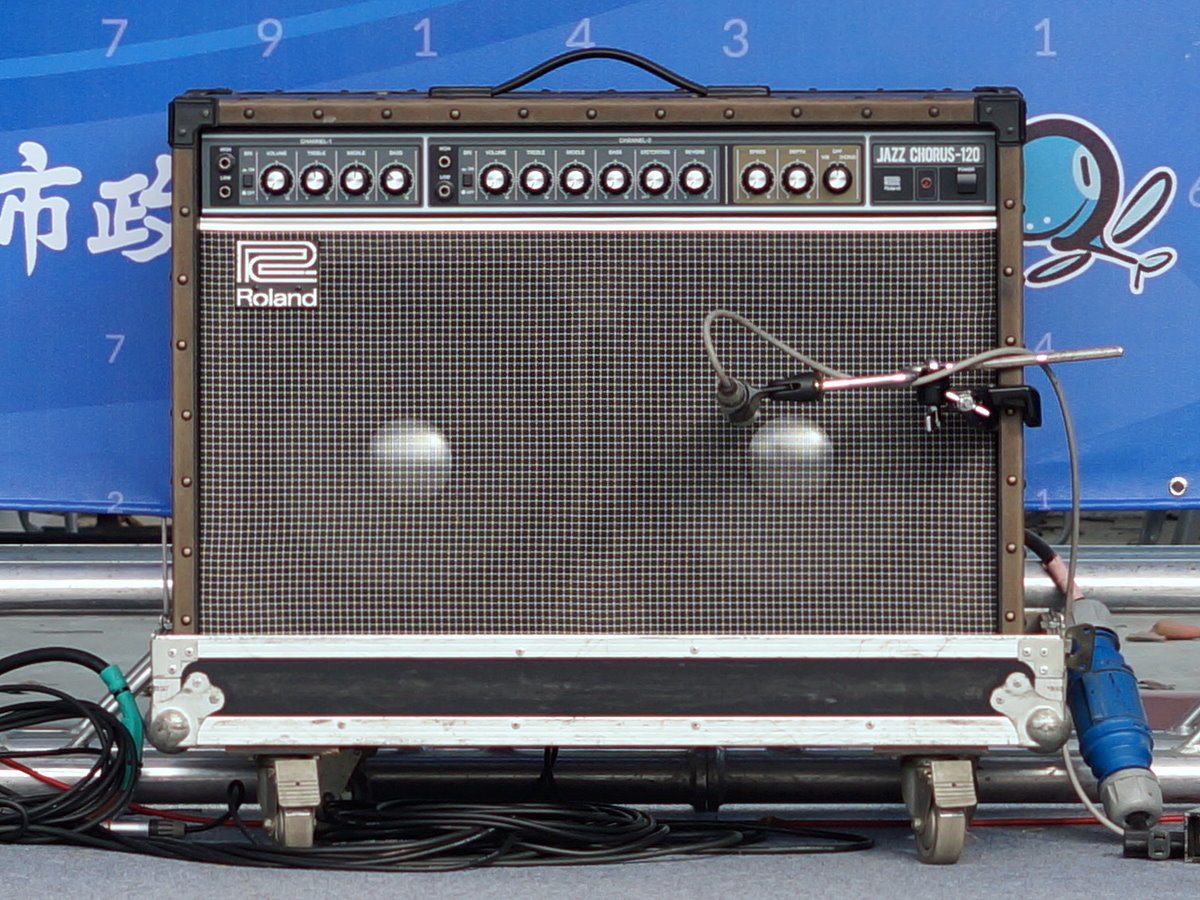
This is the complete guide to grunge — the music, the fashion, and the culture. We’ll trace how a sludgy, sarcastic strain of punk that nobody outside the Pacific Northwest cared about in 1988 became, by 1992, the most powerful brand in popular music, and by 1995, the thing your dad bought at the mall. It’s a story about timing, frustration, and one extremely loud Marshall stack.
The Sound: Sabbath Riffs, Punk Speed, and a Generation That Was Tired
Grunge wasn’t invented in a single moment, but if you had to pick one, you could do worse than 1986, when Green River — a Seattle band featuring future members of Pearl Jam and Mudhoney — released the EP Come on Down. It was the first record ever put out by a tiny new label called Sub Pop, and it sounded like Black Sabbath had stumbled into a Black Flag rehearsal and refused to leave.
That was the grunge recipe in a nutshell. Take the doom-laden, downtuned riffs of 1970s metal. Add the speed, sarcasm, and DIY ethics of hardcore punk. Drop the hair-metal showboating, the spandex, and the guitar solos that lasted longer than most relationships. Then run the whole thing through cheap amps in damp basements, because nobody had money for anything else. The result was heavy without being macho, melodic without being polished, and angry in a way that felt less like a tantrum and more like a shrug.
By 1989, the core bands were all in motion. Soundgarden — fronted by Chris Cornell, possessor of a four-octave howl — had signed to A&M and were dragging Zeppelin riffs into weird, dissonant new shapes. Mudhoney’s Superfuzz Bigmuff EP was the noisiest, funniest record in town. Alice in Chains were building something darker and slower out in suburban Seattle, with Layne Staley’s voice riding over Jerry Cantrell’s harmonized riffs like a hearse on a sunny day. And in the Olympia/Aberdeen orbit, a trio called Nirvana put out a debut album titled Bleach that cost $606.17 to record and went nowhere fast.
Sub Pop: The Label That Sold a City
You cannot tell the grunge story without Sub Pop, and you cannot tell the Sub Pop story without admitting it was, at first, mostly held together with duct tape and bravado. Founders Bruce Pavitt and Jonathan Poneman were perpetually broke, but they understood something most labels didn’t: regional identity sells. They marketed the bands as a scene — the Seattle Sound — long before there was really a scene to speak of. They flew British journalist Everett True out to write up the bands in Melody Maker. They pressed limited-run colored vinyl that turned every release into a collectible.
The genius was framing. Sub Pop didn’t sell records. Sub Pop sold the idea that something was happening in a rainy corner of America that you, dear reader in London or Tokyo or Cleveland, were missing. By the time anyone bothered to fact-check, the prophecy had fulfilled itself. The bands were good, the city was real, and the Sub Pop logo on a t-shirt became the first piece of grunge merchandise that doubled as a passport.
September 24, 1991
Everything pivots on one date. On September 24, 1991, Nirvana released Nevermind, Pearl Jam released Ten, A Tribe Called Quest released The Low End Theory, and the music industry’s center of gravity moved several thousand miles north and west overnight. Nevermind wasn’t supposed to be a hit. Geffen pressed 46,000 copies. By Christmas, it was outselling Michael Jackson’s Dangerous. By January, it knocked Jackson off the number-one spot on the Billboard 200.
Ten was slower to climb but stickier in the end, selling north of 13 million copies in the U.S. alone. Soundgarden’s Badmotorfinger dropped two weeks later. Alice in Chains’ Dirt arrived the following September. The flannel floodgates opened, and they did not close for the rest of the Bush administration.

The Look: Thrift Store as Manifesto
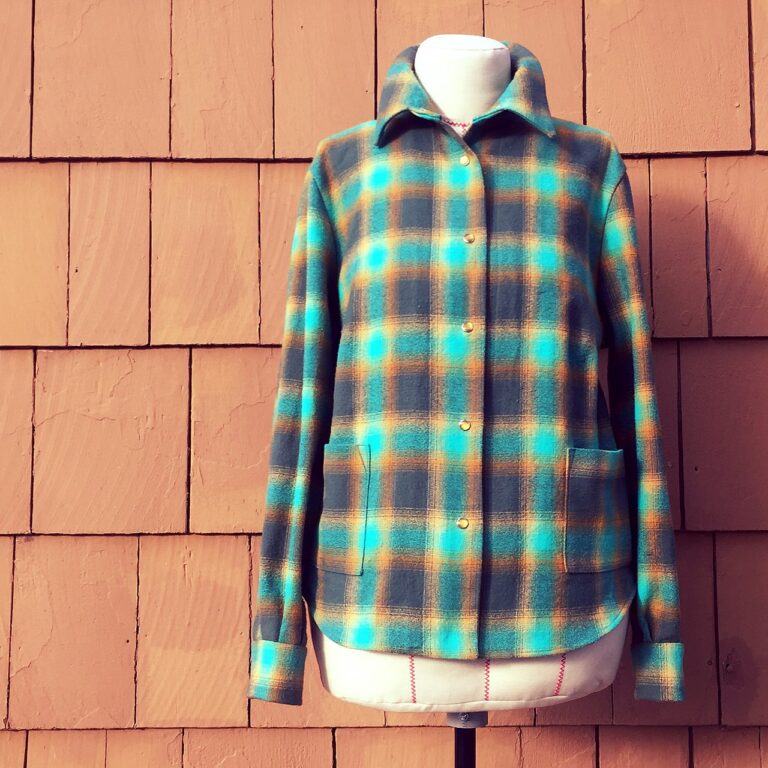
Grunge fashion was a happy accident that became an aesthetic that became a marketing category. The original uniform — flannel shirts, ripped jeans, combat boots, a beanie pulled low — was not a fashion statement. It was what you wore when you lived in a city where it rained 150 days a year, you worked at Kinko’s, and the heating was busted at the house show. Layering wasn’t an aesthetic choice. It was thermodynamics.
The components were thrift-store cheap on purpose. A flannel from Goodwill cost two dollars. Doc Martens, originally a British workwear boot, were durable enough to survive a mosh pit and ugly enough to confuse your parents. Levi’s 501s were never meant to be ripped, but they ripped anyway, and nobody bothered fixing them. The whole look was an explicit rejection of the spandex-and-Aqua-Net pageantry of 1980s hair metal — and, more quietly, of the yuppie pinstripe sincerity of the Reagan years.
The Marc Jacobs Disaster
And then, in November 1992, a 29-year-old designer at Perry Ellis named Marc Jacobs went to Seattle. He saw the kids. He flew home and built an entire spring 1993 collection out of plaid flannel, slip dresses, knit caps, and combat boots — except his flannel was silk, and his boots retailed for $700. The show debuted on Park Avenue in April 1993. Anna Wintour loved it. The Perry Ellis board did not. Jacobs was fired within months. Courtney Love and Kurt Cobain were reportedly mailed a box of the collection and burned it.
It was the perfect grunge moment: a subculture built on rejecting the fashion industry got drafted into the fashion industry, hated it, and then watched the fashion industry collapse around the attempt. Jacobs, for his part, took the firing and parlayed it into one of the most successful fashion careers of the next thirty years. Grunge didn’t kill him. It launched him.
The Culture: Generation X Finds Its Mirror
Grunge didn’t invent Generation X — Douglas Coupland’s novel beat it to the punch — but it gave the generation its soundtrack and its emotional vocabulary. Gen X, the latchkey kids of the divorce boom, the first generation told it would do worse than its parents, the cohort that watched the Cold War end and discovered there was no peace dividend coming. They wanted music that didn’t lie about how that felt. Grunge obliged.
The lyrical content was a major departure. Where 1980s metal had sung about parties, fast cars, and women as accessories, grunge sang about addiction (Alice in Chains’ Dirt is one long heroin diary), depression (most of In Utero), survivor’s guilt (Pearl Jam’s Alive), child abuse (Jeremy), and the suffocating quality of consumer culture. The bands routinely declined to be sex symbols, which made them more popular as sex symbols. Cobain wore dresses on magazine covers. Eddie Vedder wrote on his arm in Sharpie. Chris Cornell took his shirt off, but apologetically.
Riot Grrrl, the Underrated Sister
Grunge gets remembered as a boys’ club, but it was deeply intertwined with the riot grrrl movement that emerged in Olympia at the same moment. Bikini Kill, Bratmobile, Heavens to Betsy, and Sleater-Kinney built a parallel scene that took grunge’s distortion and pointed it at patriarchy. Hole, fronted by Courtney Love, sat right at the intersection, and the 1994 album Live Through This stands with anything Nirvana or Pearl Jam released that decade. The two scenes shared zines, venues, boyfriends, drummers, and a refusal to be charming.

MTV: The Accelerant and the Embalmer
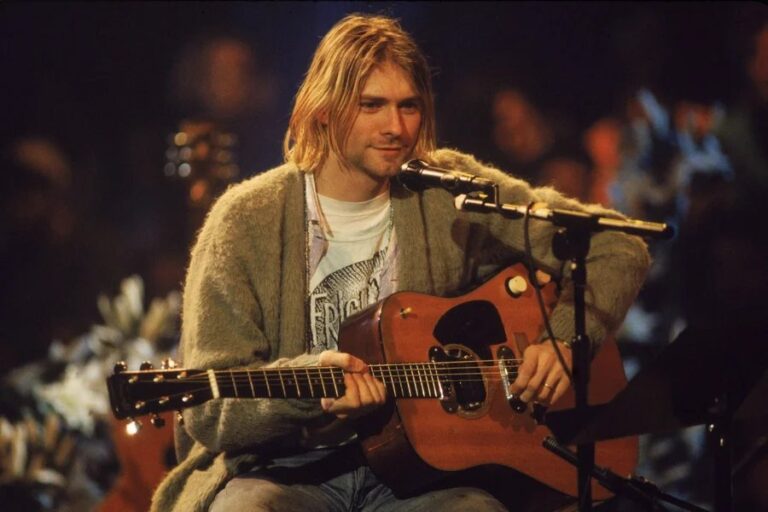
None of this would have happened — or not at this speed — without MTV. The network put the Smells Like Teen Spirit video into heavy rotation in late 1991, and within weeks teenagers from Boise to Birmingham were dressing like Seattle baristas. Headbangers Ball, 120 Minutes, and eventually MTV’s Alternative Nation became the pipeline. Pearl Jam’s Jeremy won Video of the Year in 1993. Unplugged in New York, recorded by Nirvana in November 1993 and aired the following month, became one of the most beloved acoustic sessions ever broadcast.
But the same machine that broke grunge also embalmed it. By 1994, the major labels were signing anything from Seattle that could be photographed in a flannel. Bands that had nothing to do with grunge — Stone Temple Pilots, Bush, Candlebox, Silverchair — got marketed as the next wave. The word “alternative” became meaningless. The bands who started the movement watched their underground get power-washed into a focus group.
The Death and the Long Afterlife
The conventional date for grunge’s death is April 5, 1994 — the day Kurt Cobain ended his life in the room above his garage. It’s not quite that simple. Soundgarden released Superunknown a month earlier and rode it to a Grammy. Pearl Jam waged a multi-year war against Ticketmaster that limited their touring but cemented their reputation. Alice in Chains kept making records, though Layne Staley’s addiction would catch him in 2002. The Foo Fighters — Dave Grohl’s post-Nirvana project — debuted in 1995 and never really stopped.
But culturally, the energy was gone. By 1996, MTV was playing Spice Girls. By 1998, nu-metal had inherited the angst slot. By 2001, irony and the Strokes had inherited the rest. Grunge became a period piece almost instantly — the way punk had after 1977, the way disco had after 1979. The flannel went into closets. The Sub Pop logo stopped meaning rebellion and started meaning nostalgia.
Why It Still Matters
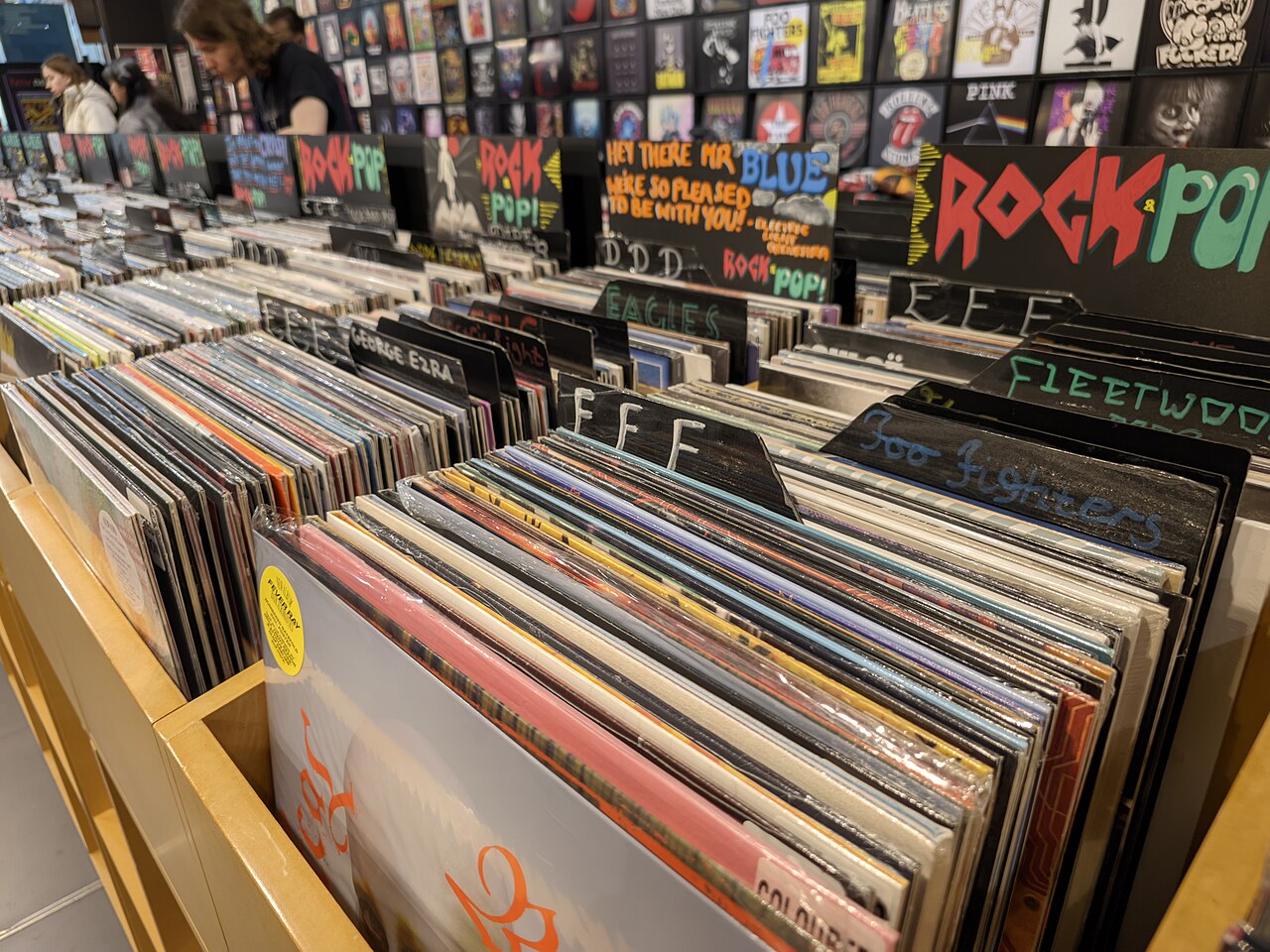
Three decades later, grunge keeps refusing to fully die. Nevermind still moves units. Ten still gets passed down between generations like a family heirloom. Soundgarden is in the Rock and Roll Hall of Fame. Pearl Jam still plays three-hour shows. And every five or six years, some fashion designer rediscovers flannel and a slip dress, and the cycle restarts.
The deeper reason grunge endures, though, isn’t the riffs or the wardrobe. It’s that grunge was the last mass-popular movement built on the idea that authenticity matters more than competence — that a sincere howl from a kid who can barely play is worth more than a polished take from a kid who can. Whether that’s true is up for debate. But it’s an idea that hits hard at 16, and most of us never quite get over hearing it the first time.

Aberdeen is still there. Sub Pop is still in business. The flannel, somewhere in the back of a closet in Tacoma or Toledo, is still folded and waiting. Grunge didn’t last long, but it doesn’t have to. It already happened. It changed everything. And it never asked for your permission.
Sources
- Wikipedia — Grunge
- Sub Pop Records
- Rock and Roll Hall of Fame
- Find Nevermind on vinyl
- Find Pearl Jam’s Ten on vinyl