Pope John Paul II Assassination: 7 Shocking 1981 Facts
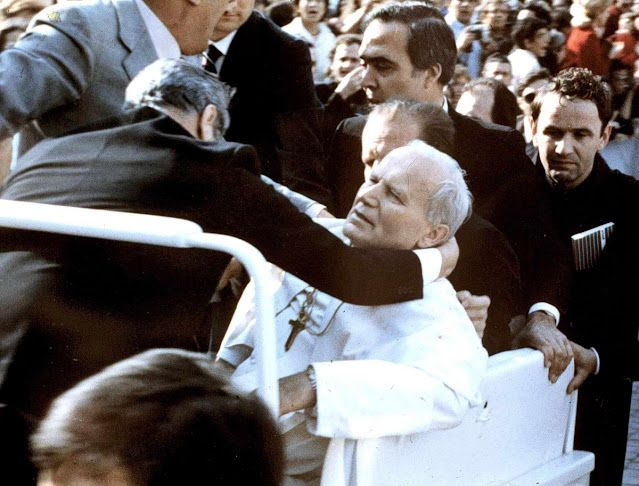
The Pope John Paul II assassination attempt of May 13, 1981 still ranks as one of the most shocking television moments of the early 80s — a sunny Wednesday afternoon in Rome, the popemobile circling St. Peter’s Square, and then four cracks from a 9mm Browning that nearly ended the most famous papacy of the century. The shooter, 23-year-old Turkish gunman Mehmet Ali Ağca, fired at near point-blank range from the crowd and hit the pontiff twice — once in the abdomen and once through the left hand. The Pope lost almost three-quarters of his blood on the ambulance ride to Gemelli Hospital, survived a five-and-a-half-hour surgery, and walked out of that hospital alive 22 days later.
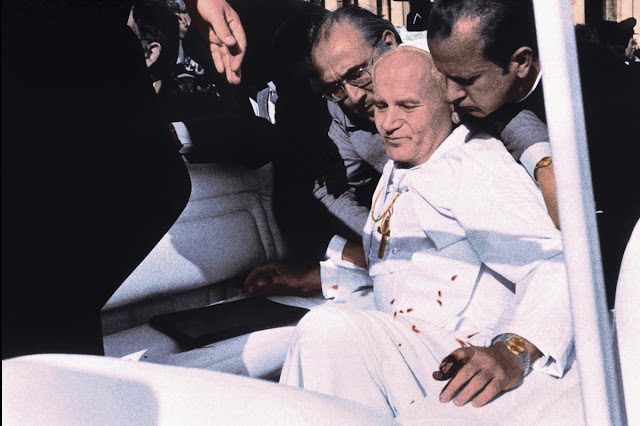
If you were old enough to read a newspaper in 1981, the front-page color photo of John Paul II slumped in the white Fiat Campagnola is probably burned into your retina. We grew up with two assassination images on the wall of the news room: Reagan being shoved into the limo on March 30, and the Pope crumpling 44 days later. Two attempts on two of the most prominent figures in the Western world inside of six weeks. The 80s didn’t ease in — they kicked the door down.
Here are seven things about the Pope John Paul II shooting that still hit hard 45 years later — including the bullet that should have killed him, the gunman the Pope eventually forgave, and the conspiracy theory that has never been fully buried.
1. The Bullet Missed His Heart by Millimeters
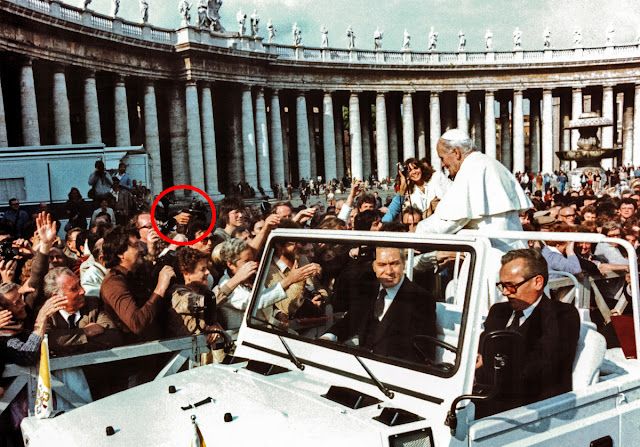
The first round entered the Pope’s abdomen and tore a path through his lower intestine without striking the abdominal aorta — the main artery feeding the lower body. A shift of even a quarter inch and John Paul II bleeds out in the popemobile before the driver can clear the colonnade. Surgeons at Policlinico Agostino Gemelli later said the bullet’s trajectory was statistically improbable; one of the Pope’s own doctors, Francesco Crucitti, called the survival “humanly inexplicable.” The pontiff himself attributed his survival to divine intervention, specifically to the Madonna of Fátima — a detail we’ll come back to.
The second round struck his left index finger and the side of his elbow, ricocheting off into the crowd. Two American tourists, Ann Odre of Buffalo and Rose Hall of Massachusetts, were also hit by stray bullets and survived. Ağca had been firing a Browning Hi-Power, a 13-round 9mm Belgian pistol favored by everyone from special forces operators to professional hit men. He emptied four shots and was tackled before he could fire the rest of the magazine.
2. The Date Wasn’t a Coincidence
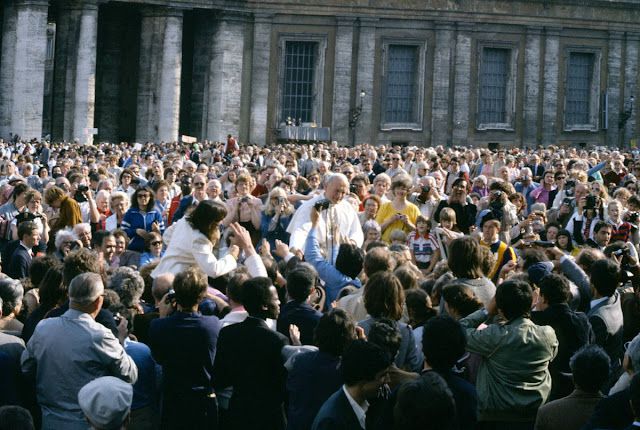
May 13 is the feast day of Our Lady of Fátima. On May 13, 1917 — exactly 64 years before the shooting — three Portuguese shepherd children reported seeing a vision of the Virgin Mary in the fields of Fátima, the first of six apparitions that became one of the most influential Catholic devotions of the 20th century. The Pope, a devout Polish Catholic with a deep personal devotion to the Marian apparitions, did not consider it a coincidence that he was shot on that specific date.
One year later, in May 1982, he flew to Fátima, Portugal and placed the bullet that surgeons had recovered from his body inside the crown of the statue of Our Lady of Fátima. It is still there today. He spoke publicly of believing the Madonna had “deflected the bullet” — a claim he repeated for the rest of his life. Skeptics rolled their eyes. Believers wept. Either way, the symbolism of a Marian feast day was a gift to the Vatican’s communications team and a permanent piece of papal lore.
3. The Gunman Was a Wanted Murderer in Two Countries
Mehmet Ali Ağca wasn’t some lone-wolf religious crank. He was a member of the Grey Wolves, a Turkish ultra-nationalist paramilitary group, and he was already wanted for the February 1979 murder of Abdi İpekçi, the liberal editor of Turkey’s largest newspaper, Milliyet. Ağca had been arrested, convicted, and sentenced to life — and then somehow walked out of a maximum-security Istanbul military prison in November 1979, six months into his sentence, in what is still widely suspected to have been an inside job.
By the time he showed up in Rome with a stolen passport and a Browning Hi-Power, he had moved through at least eight European countries. He had written letters to Turkish newspapers in 1979 threatening to kill John Paul II during the Pope’s visit to Turkey. Italian intelligence had been warned. The warning either never reached Vatican security or wasn’t taken seriously. That gap — between what the world’s intelligence services knew and what the men running the popemobile knew — is one of the most uncomfortable details of the entire incident, and it’s why the conspiracy theories never quite died.
4. The Popemobile Wasn’t Bulletproof in 1981 — That’s the Whole Point
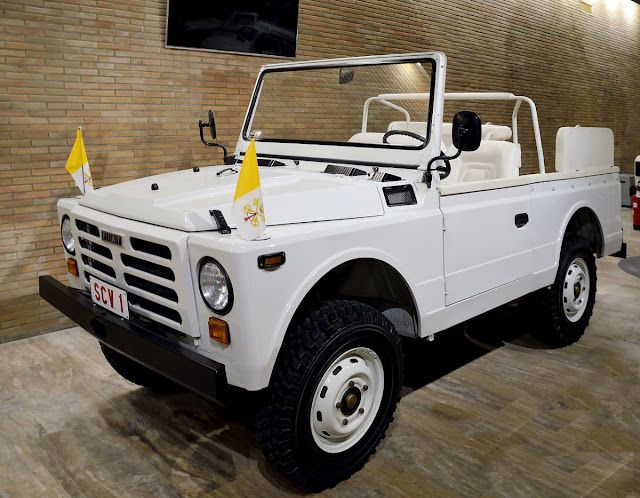
The vehicle in those famous photos — the open white jeep with “SCV 1” license plates — is a Fiat Campagnola, donated by Fiat to the Vatican in 1980 during the Pope’s pastoral visit to Turin. It had no armor, no bulletproof glass, no protective panels. The whole concept of the popemobile in 1981 was “open enough that the faithful can see and touch the Holy Father.” John Paul II, a former actor and athlete with a politician’s intuition for crowd work, loved it. He insisted on standing.
That Campagnola is now on permanent display at the Vatican Museums’ Popemobile Pavilion in Rome. After May 13, 1981, every popemobile that followed it had armored glass, a raised bulletproof box, and a hardened floor pan. The white jeep era of the modern papacy ended on a single afternoon in St. Peter’s Square. If you have ever wondered why Pope Francis rides through crowds inside what is basically a Mercedes-Benz aquarium, you can thank Mehmet Ali Ağca.
5. Where the Gun Came From Is Still Murky
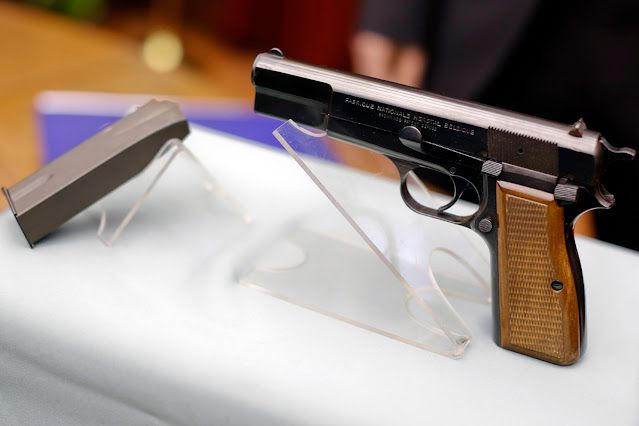
The Browning Hi-Power Ağca used was traced to a Bulgarian-linked arms pipeline that fed weapons to the Grey Wolves throughout the late 1970s. The Italian investigation into the shooting — running through the 1980s under magistrate Ilario Martella — concluded that the assassination attempt was probably coordinated with the assistance of three Bulgarian state-security officers based in Rome, allegedly acting on behalf of the Soviet KGB. Ağca himself made and recanted these accusations on the witness stand multiple times, which destroyed his credibility and ultimately led to the acquittal of all three Bulgarians in 1986 for “lack of evidence.”
That ruling didn’t satisfy anybody. The 2006 Italian parliamentary “Mitrokhin Commission,” after reviewing Soviet-era archives, concluded that the Kremlin had “indisputably” ordered the hit — angered by the Polish pope’s open support of the Solidarity trade union in Poland and the cracks that movement was opening in the Eastern Bloc. The Russian foreign ministry called the finding “absurd.” Read the Mitrokhin Commission report and the primary court documents side by side and you can come away with three completely different theories. It is genuinely the JFK assassination of European Cold War history.
6. The Pope Recovered, Went Back to Work, and Then Forgave the Shooter
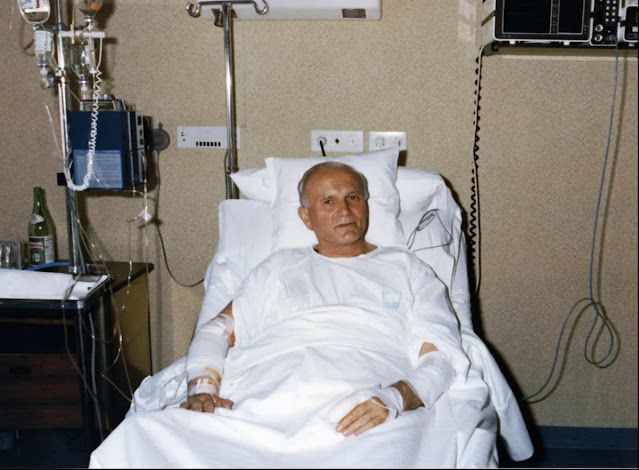
The Pope was released from Gemelli on June 3, 1981 — 22 days after the shooting — and was back in St. Peter’s Square delivering general audiences within months. He suffered a serious cytomegalovirus infection that summer (from a blood transfusion) and went back to the hospital briefly, but by Christmas 1981 he was traveling internationally again. He would go on to reign as pope for another 24 years, until his death on April 2, 2005, making John Paul II one of the longest-serving popes in modern history and the third-longest-serving pontiff ever.
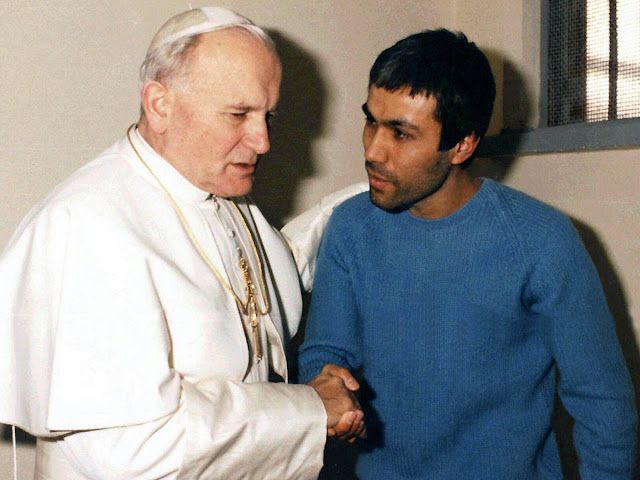
Eighteen months after Ağca shot him, on December 27, 1983, John Paul II walked into Rebibbia Prison in Rome and met privately with his would-be killer. The two men sat in a corner of Ağca’s cell for 21 minutes. Photographers were allowed in for one minute and produced what is probably the most photographed prison visit of the 20th century: an old man in white papal robes leaning in toward a young man in a blue wool sweater, holding his hand. The Pope never publicly described what they discussed. “What we talked about will have to remain a secret between him and me,” he said. “I spoke to him as a brother whom I have pardoned.” That story is reinforced by other figures from the same era — for the Cold War backdrop, see our piece on the 1984 Olympics boycott, and for the doomsday paranoia gripping both sides at the time, read our coverage of the Soviet Dead Hand system.
7. The Story Didn’t End in 1983 — Or in 2000 — Or Ever
Ağca served 19 years in Italian prison before being pardoned by Italian President Carlo Azeglio Ciampi in June 2000 at John Paul II’s personal request. He was deported to Turkey to serve out a separate 10-year sentence for the 1979 murder of Abdi İpekçi and was finally released from Turkish custody in January 2010. On December 27, 2014 — the 31st anniversary of his prison meeting with the Pope — Ağca quietly visited John Paul II’s tomb in St. Peter’s Basilica and laid two white roses on it. He told reporters waiting outside, “I came to pray for the Holy Father.” It was the same St. Peter’s where, 33 years earlier, he had tried to murder the man whose grave he was kneeling at.
The full documentary record of the case — the trials, the recantations, the Mitrokhin findings, the Bulgarian denials — runs to thousands of pages. For an overview that doesn’t take sides, the BBC, Reuters, and the Vatican’s own archives all maintain detailed files. The most readable single source is probably the Vatican News retrospective on the 45th anniversary. For an outside historical lens, the History.com day-in-history page covers the basics in three paragraphs.
Watch: The Plot to Kill the Pope
This full-length documentary walks through the entire investigation — from the Grey Wolves connection to the Bulgarian Connection to the Mitrokhin findings — and includes archival footage of the shooting itself. Worth the watch if you only know the headline version of the story. For another 1980 moment of televised political shock from the same era, see our writeup on the Iranian Embassy siege in London.
Why May 13, 1981 Still Matters
The Pope John Paul II assassination attempt sits at a strange intersection of late-Cold-War geopolitics, religious symbolism, and pure dumb luck. If Ağca had shifted his aim by an inch, the geopolitical history of the 1980s changes — no Polish pope cheerleading Solidarity, no 1989 visit to Czechoslovakia, possibly a slower fall of the Berlin Wall. If the bullet had been an inch the other way, the same headline becomes a different story entirely: not “Pope Survives Shooting” but “Pope Assassinated in St. Peter’s Square.” The fact that we’re talking about this 45 years later as a survival story instead of a martyrdom is, by any reasonable measurement, an enormous historical coin-flip.
What stayed with that generation — what is probably stuck in your head right now if you remember the news cycle — wasn’t the politics. It was the white robes against the white popemobile against the red of the blood, and then 18 months later that strange, still photograph of an old man in a folding chair holding the hand of the kid who shot him. The 80s gave us plenty of front-page violence. Not many of them ended with a handshake.
Sources
- Wikipedia: Attempted assassination of Pope John Paul II — Comprehensive overview of the shooting, trial, and conspiracy investigations.
- Vatican News: 13 May 1981 — The day the attack on John Paul II shocked the world — Official Vatican retrospective on the 45th anniversary.
- History.com: Pope John Paul II shot — May 13, 1981 — Day-in-history overview.
- Rare Historical Photos: Pope John Paul II meets with Mehmet Agca, 1983 — Photo archive of the 1983 prison meeting.
- NPR: John Paul II’s Would-Be Assassin Lays Roses At His Tomb — 2014 follow-up coverage of Ağca’s return visit.
- Wikipedia: Mehmet Ali Ağca — Background on the shooter, the Grey Wolves, and the post-pardon timeline.