On This Day: May 30, 1993 — Fittipaldi Drinks the OJ
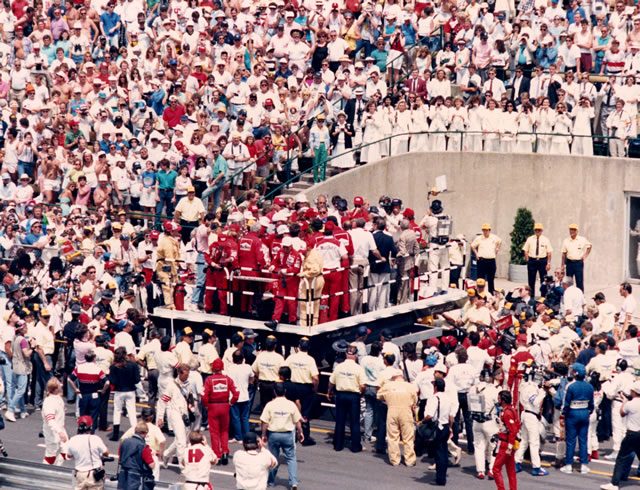
On May 30, 1993, Emerson Fittipaldi crossed the yard of bricks first at the 77th Indianapolis 500, beat Arie Luyendyk by 2.862 seconds, and then committed what some fans still call the single most baffling marketing decision in American auto racing history: he refused the bottle of milk in Victory Lane and reached for orange juice instead. ABC’s cameras were rolling. The Brazilian crowd at home went wild. The Indiana dairy farmers, somehow, did not.
The 1993 Indy 500 should have been remembered for the racing. A 46-year-old two-time Formula One world champion held off the reigning F1 champion, the pole-sitter, and a 53-year-old Mario Andretti running his final competitive Indy. Instead, it’s remembered for a beverage. That’s a particularly 1993 problem, and it’s a story that gets weirder the closer you look at it.
The 1993 Indy 500 Field That Made Sense Only on Paper
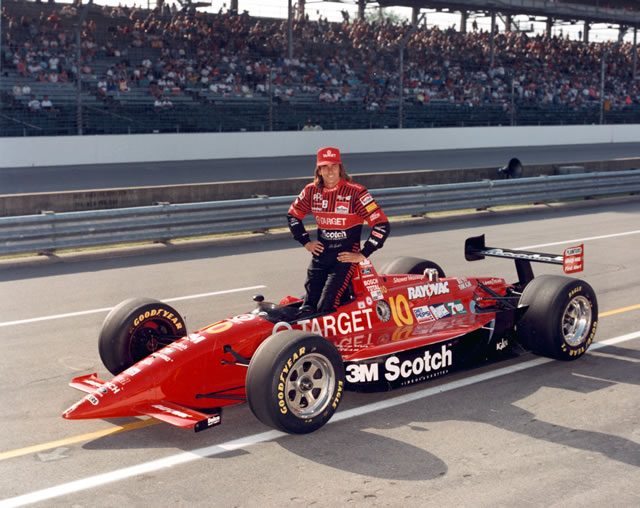
Pole day at Indianapolis Motor Speedway is where the year’s headlines get written, and 1993’s pole was a curveball nobody expected. Arie Luyendyk, the Dutchman who had already won the 500 in 1990, posted 223.967 mph in qualifying and took the front spot. Behind him sat a roster that read more like a Formula One reunion than a CART grid.
Nigel Mansell, the reigning F1 world champion, had walked out of Williams over a contract dispute and signed with Newman/Haas Racing for the CART season. He had never raced on an oval before in his life. He qualified eighth. Emerson Fittipaldi, who had won F1 titles in 1972 and 1974 and then quietly built a second career in American open-wheel racing, was driving the Marlboro Penske PC-22 for Roger Penske. The grid also held Nelson Piquet, another F1 world champion, in his first start since a horrific practice crash in 1992 had nearly cost him his feet.

And then there was the morning of pole day itself. A.J. Foyt, four-time Indy winner and the patron saint of American oval racing, climbed out of his car after his teammate Robby Gordon crashed in practice and announced his retirement on the spot. Foyt had been at Indianapolis for 35 straight years. He decided he couldn’t keep doing this and run a team. The press conference happened before the engines fired. The race hadn’t even started and the story was already too big for the broadcast.
The Race Itself: Mansell’s Inexperience, Fittipaldi’s Patience
For most of the afternoon, the 1993 Indy 500 ran like a chess match conducted at 220 miles per hour. Mario Andretti, in his last competitive run at the Brickyard, led 73 laps — more than anyone else in the race. The 53-year-old was openly emotional about the start. He had finished second at Indianapolis four times across his career and had not won the 500 since 1969, despite leading more laps at the track than any other driver in history. This was his last serious shot.

By the closing laps it had narrowed to a three-way fight between Fittipaldi, Luyendyk, and Mansell. The yellow flag came out on lap 182. Mansell, leading the race, lined up for the restart on lap 184 and did exactly the wrong thing for an oval rookie: he hesitated. Coming out of Turn 4, he carried less speed than he should have, and Fittipaldi, who had spent a career stalking patient lines, drove around him on the outside before the green flag had even cleared properly.
That was the race. Fittipaldi led the last 16 laps, Luyendyk slotted past Mansell for second, and the three of them crossed the line in an order that hadn’t been seen since the Wilson administration. The top three at the 1993 Indy 500 — Fittipaldi (Brazil), Luyendyk (Netherlands), Mansell (Britain) — were all foreigners. That hadn’t happened at Indianapolis since 1915.

The Milk Tradition: Why Fittipaldi’s Choice Cut So Deep
To understand why the orange juice landed the way it did, you have to understand the milk. The tradition started in 1936, when Louis Meyer asked for buttermilk in Victory Lane because his mother always said it was a good hot-weather drink. A dairy executive saw the photo, recognized free advertising when it walked up and bought him a sandwich, and the American Dairy Association of Indiana made it official. Every winner from 1956 forward got a glass bottle of milk handed to them as they climbed out of the car.
By 1993, the milk wasn’t just a quirky habit. It was a contract. The Dairy Association paid a $5,000 prize to every winner who drank it on camera, and the photo of a champion chugging from a sweating glass bottle was the single most reproduced image of the race every year. Fans had grown up with it. Drivers from Foyt to Mears to Unser had done it. Refusing was a roughly comparable act to a Tour de France winner declining the yellow jersey because he preferred a different color.

The Orange Juice Moment, Live on ABC
The cameras caught everything. Fittipaldi climbed out of the Penske PC-22, accepted the wreath, and waved off the milk three times. He reached instead for a clear bottle of orange juice that had been quietly handed to him by his own team. To Jack Arute, doing the live interview for ABC, he explained it cleanly: “I’m going to drink the orange juice. I produce orange juice.” That part was true. Fittipaldi owned a half-million-acre orange grove in Brazil and had been quietly building a citrus export business for years. Brazilian OJ was a real industry that needed an American spokesperson, and Emerson had just become the most visible Brazilian in North America for that one Memorial Day Sunday.
What the camera couldn’t quite catch was the audible silence from the crowd. The booing didn’t start in Victory Lane. It started the following weekend at Milwaukee, where Fittipaldi was introduced to a chorus of jeers from a Wisconsin audience that took dairy slights personally and had not forgotten by Tuesday. Wisconsin is dairy country in a way Indiana only flirts with being, and the crowd let him hear about it.

The Apology and the Sip Nobody Saw
Roger Penske, who had won more Indy 500s as a team owner than anyone alive and was not in the business of being booed at Milwaukee, took Fittipaldi aside in Victory Lane after the live feed cut. According to multiple accounts — UPI ran a detailed wire story two days later — Penske told his driver to drink the milk. Fittipaldi, off-camera, took a sip from the bottle he had pushed away on national television. There is no widely circulated photo of this. It happened after the cameras packed up, which is exactly the wrong order for a public relations rescue.
By June 1, Fittipaldi had publicly apologized. He told reporters he hadn’t realized how strongly the tradition mattered to American fans. The American Dairy Association of Indiana refused to give him the $5,000 prize. Team Penske donated the prize money anyway to the Championship Auto Racing Auxiliary, a CART charity for crew families, which was probably the most graceful exit available. The dairy farmers got their gesture. The charity got the check. Fittipaldi got to drink his orange juice and apologize on the same week.
The honest truth is that most racing controversies fade in a season. This one didn’t. The milk tradition got more sacred after 1993, not less. Every winner since Fittipaldi has reached for the bottle without hesitation. Like other 90s sports moments that became permanent reference points, the OJ incident is what people remember about a race that produced some of the deepest international talent ever fielded at Indianapolis.
What the 1993 Indy 500 Tells You About the Era
This wasn’t a story that could have happened in 1973 or in 2013. In 1973, Fittipaldi was an F1 driver who would never have run Indianapolis at all; the open-wheel American series was a different planet. By 2013, social media would have done the Milwaukee booing in real time during the broadcast, the apology would have been issued within an hour, and the whole sequence would have collapsed into a 24-hour cycle.
1993 sat in a sweet spot where global racing talent could cross over into CART — Mansell, Fittipaldi, Piquet, all running American ovals — but the broadcast and merchandising ecosystem still ran on Memorial Day weekend rhythms. ABC owned the broadcast. The newspapers ran wire stories Monday morning. A driver could give a controversial interview on Sunday and not know how badly it had landed until Wednesday. Fittipaldi’s OJ moment is, in its way, a perfect artifact of the last pre-internet sports controversy.

The CART Era Was Already Cracking
The other thing 1993 was quietly signaling: the CART vs. USAC tension that would eventually fracture American open-wheel racing into the IRL split was already there. The fact that the top three at Indianapolis were all foreigners, and that A.J. Foyt had walked away that same morning, were not coincidences. The race had become genuinely international, the cars had become genuinely modern, and a lot of American racing fans were quietly uncomfortable with both. Three years later, Tony George would announce the Indy Racing League, the splits would happen, and the 500 would spend a decade in the wilderness.
Looking back now, the 1993 Indy 500 was the last clean Indianapolis race before the civil war. Fittipaldi’s choice of orange juice was the small story. The larger one was that an Indianapolis crowd had just watched a Brazilian driver, a Dutchman, and a British F1 champion finish in the top three at the most American race on the calendar, and the loudest postrace argument was about a dairy product. Indianapolis has a long history of weird sports moments, and this one fit right in.

Watch the 1993 Indy 500 in Full
IndyCar uploaded the full ABC broadcast of the race to YouTube as part of its Classic Rewind series. The Fittipaldi-Mansell restart battle on lap 184 starts roughly three hours in. Jack Arute’s Victory Lane interview, complete with the orange juice handoff, is at the end. The whole broadcast holds up surprisingly well — the analyst booth has Bobby Unser working in his usual mid-Atlantic blend of Albuquerque and theatrics.
Fittipaldi’s Real Legacy at Indianapolis
Strip away the orange juice and 1993 was Fittipaldi’s high point as an American racer. He had already won the 500 in 1989, beating Al Unser Jr. in a famous last-lap pass at Turn 3. The 1993 win made him a two-time champion at Indianapolis, a club that included Foyt, the Unsers, Mears, and very few others. The Penske PC-22 he drove that day now sits in the Penske Racing Museum in Phoenix, and Fittipaldi has spent the last 30 years showing up at Indianapolis as an honored guest who occasionally tells the OJ story on himself. Like other Cold War-era international sports tensions, the controversy says more about the moment than the man.
His career ended in 1996 with a brutal crash at Michigan that should have killed him. He recovered, raised his sons (two of whom became F1 drivers themselves), kept the orange grove going, and built a separate career as a senior elder statesman of Brazilian motorsports. The Indianapolis Motor Speedway brought him back to drive a parade lap at the 25th anniversary of the 1993 win, in 2018, and somewhere in a closet at his Brazilian compound is the bottle of milk he eventually drank.
Love the retro era? Browse our shop for vintage finds, retro clothing, and 80s/90s nostalgia gear.
Sources
- 1993 Indianapolis 500 — Wikipedia — Race results, lap-by-lap, key moments and biographical detail on the Fittipaldi milk incident.
- Fittipaldi apologizes for milk incident — UPI Archives, June 1, 1993 — Wire story from two days after the race confirming the apology and Penske’s role.
- Fittipaldi is sorry he passed up victory milk — Tampa Bay Times archive — Contemporaneous newspaper coverage of the apology tour and fan reaction at Milwaukee.
- Classic Rewind: Celebrating 25 years since Fittipaldi’s second Indy 500 win — IndyCar.com — IndyCar’s official retrospective with the full 1993 ABC broadcast.
- Winners Drink Milk: Inside the iconic dairy celebration at the Indy 500 — FOX Sports — Background on the 1936 Louis Meyer origin of the milk tradition.