The Most Dangerous Race in the World Had Its Greatest Moment in 1992 and Nobody Watched It Live
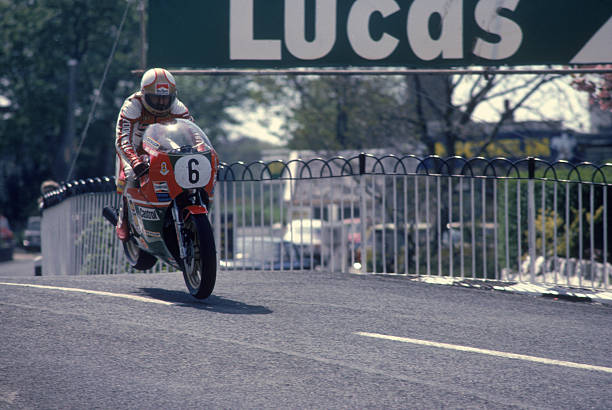
On a Tuesday afternoon in June 1992, two men rode motorcycles at 120 mph across a 37-mile circuit of closed public roads on a small island off the northwest coast of England — and the rest of the world barely noticed. No live television. No Twitter. No ESPN highlights. Just a radio crackle and a crowd of leather-jacketed faithful lining stone walls as history happened in front of them.
What Steve Hislop and Carl Fogarty produced that day is still called The Greatest Race. The margin was 4.4 seconds. They broke the lap record on the same lap. And one of them was on a Norton — a Norton that hadn’t won at the Isle of Man TT since 1961.
What the TT Actually Was
If you grew up in the 80s or 90s and weren’t deep into motorcycle racing, the Isle of Man TT was a name you’d heard but couldn’t quite place. It sounded ancient, slightly mad, and very British. That’s because it was all three.
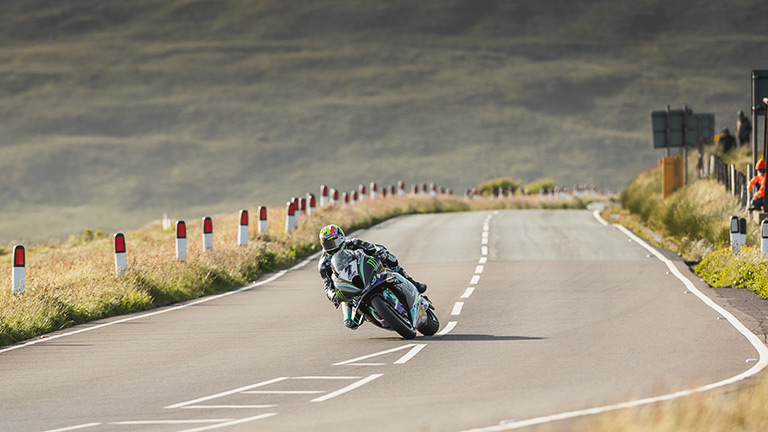
The Tourist Trophy race has run since 1907 on the Isle of Man’s Snaefell Mountain Course — a 37.73-mile loop of actual public roads. No purpose-built track, no runoff zones, no Armco barriers at every corner. Just farmhouse walls, telegraph poles, lampposts, and the occasional pub. The course climbs 1,400 feet, drops back down, and winds through seven towns. Average speeds in the 1990s were pushing 120 mph. Peak speeds on the straight sections were above 180.

Riders don’t race each other directly — they launch in pairs every ten seconds in a time-trial format. You only know you’re winning by watching the clocks. The mental game is extraordinary: you’re alone on a road you’ve memorized corner-by-corner, trusting memory and muscle while the whole thing is happening too fast for conscious thought.
Joey Dunlop and the 80s Dynasty

Before 1992, the TT in the 80s was essentially Joey Dunlop’s personal kingdom. A barman from Ballymoney, Northern Ireland, Joey drove his own Transit van to the Isle of Man, loaded with bikes. No corporate team, no PR staff. Just Joey, some tools, and a profound, almost supernatural talent for the Mountain Course.
From 1983 to 1988, Joey won the Formula 1 TT six consecutive times. He was also the first man to lap the course at over 115 mph — a milestone that felt as distant to the sport’s origins as breaking the sound barrier did to the Wright Brothers. In 1980, when Joey first cracked 115 mph, veterans of the 1950s races thought it was physically impossible to go that fast on those roads.

But Joey’s story wasn’t just racing. During the Bosnian War in the mid-90s, he made solo humanitarian runs in his Transit — food, clothing, medicine — into war zones. No announcement, no cameras. He just went. The man who could ride a motorcycle faster than almost any human alive was also, quietly, one of the decent ones.
1992: The Race That Needed a DVD to Find an Audience

By June 1992, Carl Fogarty had already established himself as the future. He was fast, aggressive, and riding a factory Ducati — the red machine that was systematically dismantling British superbike racing. Fogarty would go on to win four World Superbike championships. In 1992, he was hungry and looking to prove something at the TT.
Steve Hislop was the defending Senior TT champion and one of the smoothest riders the Mountain Course had ever seen. But his mount for 1992 was the eyebrow-raiser: a Norton NRS588, a rotary-engined machine with a sound unlike anything else on the grid — a whistling, jet-turbine howl that turned heads every time it went by. Norton hadn’t won at the TT in over 30 years.
The race developed into a two-man war from the first lap. Fogarty set blistering times on his Ducati. Hislop answered. They traded the lead through intermediate checks as their mechanics held up frantic pitboards in the pits. The crowd grew quieter with each update. By the final lap, the gap was under five seconds across a 37-mile circuit.
Hislop crossed the line first. Official margin: 4.4 seconds. Both had lapped at over 120 mph in the same lap — setting the lap record together, in the same race, at the same moment.
Nobody watched it live. No live TV broadcast existed. Word spread slowly through the paddock, then the newspapers, then a VHS — and eventually a DVD released years later titled, with complete accuracy, The Greatest Race.
Inside the Pit Drama: How the Lead Changed Hands

The 1992 Senior was six laps, which meant one mandatory pit stop for fuel. That’s where the race got psychological. Hislop entered lap 4 with a five-second buffer on Fogarty after putting in a 122.63 mph lap from a standing start — still the standing-start record at the time. Fogarty’s pit crew waved him through a quicker stop, gambling that a low-fuel Ducati on the early laps after refueling would close the gap.
It almost worked. Foggy came back out and threw down an 18:18.8 — a new outright course record at 123.61 mph average. Hislop, watching the pitboards through goggles fogged with mountain mist, answered with an 18:19.5 the next lap. They were trading the lap record back and forth on the same morning. No race in TT history before or since has had two riders break the outright record on consecutive laps of the same race.
What separated them was style. Fogarty rode the Ducati like a World Superbike weekend at Brands Hatch — late braking, aggressive line, full commit on every corner. Hislop rode the Norton the way you ride a public road at 180 mph: with millimetric precision, no wasted lean angle, and the rotary engine’s smooth power delivery doing the rest. On a closed circuit, Foggy’s style probably wins. On 37.73 miles of stone walls and lamp posts, Hislop’s style won by 4.4 seconds.
Why It Hits Different Now

The 1992 Senior TT happened in what we might call the last age of unwitnessed greatness. Events could still be genuinely great — historically great — without being broadcast, streamed, or shared. The only proof was the clock, the photographs, and the word of people who were there.
Gen X grew up at the tail end of that world. You heard about things. Someone’s older brother had the tape. The story got retold with extra time passing and details sharpening. By the time you actually saw the footage, it had already become mythology.
That’s what the 1992 TT was. A perfect race that most of the world had to take on faith.
Fogarty never raced the TT again after 1992 — too dangerous, he said, for a works Ducati rider with a World Superbike title in reach. He went on to prove that point, winning four championships. Hislop retired from TT racing in 1994 after a crash scare. Both survived. Joey Dunlop was not so fortunate — he died in a race in Estonia in July 2000, at 48.
The Bloodline Continues in 2026

This week, the 2026 Isle of Man TT is running. And at the top of the qualifying sheets is Michael Dunlop — Joey’s nephew, son of Robert Dunlop, who also raced the Mountain Course and also died there. Michael has 28 TT wins, more than anyone alive. He is, by most accounts, the best TT racer of the modern era.
The family that made the Mountain famous is still at it, 26 years after Joey died on a track in Estonia.
Some things about the TT haven’t changed since 1992. There’s still no runoff at Ballagarey. The stone walls are still there. The bikes are faster — 135+ mph average laps now — but the road is the same road. And somewhere in the crowd this week, there’s a kid who’s going to hear about what they saw for the rest of their life.
Probably no one will broadcast it live. Probably that’s fine. The TT has always worked better as a story told after the fact — passed down from someone who was there to someone who wished they had been.
Sources
- Official Isle of Man TT — historic race results and lap records
- Wikipedia — 1992 Isle of Man TT, Senior race summary and rider entries
- Wikipedia — Steve Hislop biography and TT career record
- Wikipedia — Carl Fogarty career, including 1992 TT retirement decision
- Wikipedia — Joey Dunlop, 1980s TT dominance and Bosnia humanitarian runs
- Wikipedia — Norton rotary era and the NRS588 race bike
The 1992 Senior TT is available in full on YouTube — search “The Greatest Race 1992 TT” or watch the embedded video above. The race runs 6 laps across 37.73 miles. The margin at the end was 4.4 seconds.