Bob Marley Legend Album: The Story of the Best-Selling Reggae Record of All Time
Bob Marley was three years dead when Legend came out.
The album was released on May 8, 1984 — three years after Marley died of melanoma in Miami at age 36. Island Records put it out as a greatest hits compilation, a way to introduce his music to listeners who had missed him the first time. Nobody expected what happened next.
Legend became the best-selling reggae album of all time. It has sold over 35 million copies worldwide. It spent more weeks on the UK Albums Chart than any other album in history. Three decades after its release, it is still in the Top 20 of the UK chart on any given week.
The Retro Almanac
A monthly roundup of "on this day" highlights from that month, decades back — plus first dibs on new retro merch drops. No spam, just the good stuff.
This is the story of how one posthumous compilation defined an artist’s legacy for the rest of the world.
What Is the Bob Marley Legend Album?
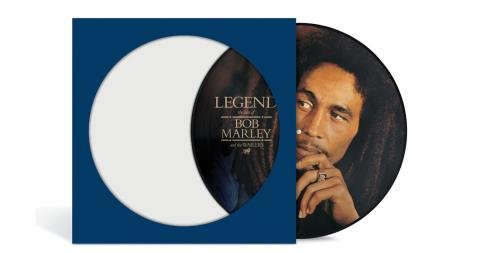
Legend: The Best of Bob Marley and the Wailers is a compilation album released by Island Records on May 8, 1984. It was compiled by Chris Blackwell — the founder of Island Records who had signed Marley in 1972 and guided his career through its most important years.
The album was designed as an entry point: a single record that could give someone unfamiliar with Marley the essential version of his catalog. Twelve tracks on the original UK release. Fourteen on the US version. Every song a standard.
It wasn’t meant to be a definitive statement. It was meant to sell. What it became was something different — the lens through which millions of people first encountered reggae, first heard Rastafari, first understood what Bob Marley meant.
The Track Listing
The UK original contained twelve tracks. The expanded US version added two more. The 2002 reissue added a bonus disc. Here is the core fourteen:
- “Is This Love” (1978)
- “No Woman, No Cry” (live, 1975)
- “Could You Be Loved” (1980)
- “Three Little Birds” (1977)
- “Buffalo Soldier” (1983)
- “Get Up, Stand Up” (1973)
- “Stir It Up” (1973)
- “One Love / People Get Ready” (1977)
- “I Shot the Sheriff” (1973)
- “Waiting in Vain” (1977)
- “Redemption Song” (1980)
- “Satisfy My Soul” (1978)
- “Exodus” (1977)
- “Jamming” (1977)
“Redemption Song” — just Marley and an acoustic guitar, recorded in 1980 — is the last song on the standard tracklist. He was already ill when he recorded it. He knew it. The song functions as a kind of farewell that he never announced as one.

Why It Sold Like Nothing Else
Legend succeeded for the same reason most great compilations succeed: the right songs, the right sequencing, the right moment.
By 1984, Marley had been dead for three years. The grief period had passed. The nostalgia had set in. New audiences — especially in the United States, where reggae had never fully broken through during his lifetime — were ready to discover him. Legend met them where they were.
The sequencing matters. The album opens with “Is This Love” — melodic, radio-friendly, immediately accessible — before building toward the weight of “Redemption Song” at the close. It is not chronological. It is emotional architecture.
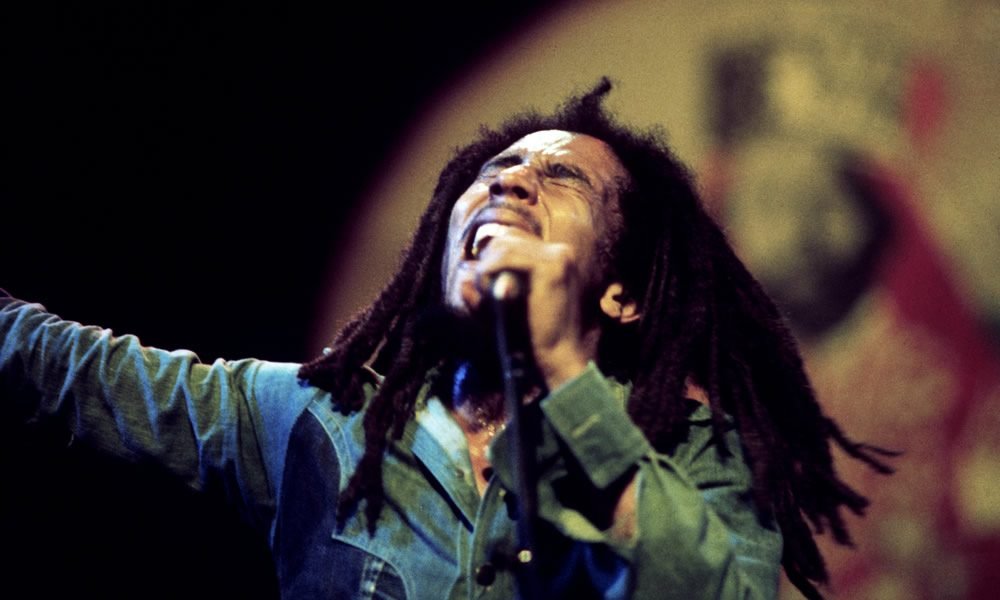
The cover matters too: Marley in profile, the iconic image by Island Records photographer Dennis Morris, printed in warm gold tones. It became one of the most recognizable album covers ever printed.

The Sales Numbers
The numbers are almost impossible to contextualize within reggae, because nothing else in reggae comes close.
- 35+ million copies sold worldwide — the most of any reggae album ever
- UK Albums Chart: has spent over 1,300 weeks on the chart — more than any other album in British chart history
- US: certified 12x Platinum by the RIAA
- Australia, Germany, Netherlands: multi-platinum across all major markets
- Still charting: as of 2024, the album regularly re-enters the UK Top 20 during summer months
For comparison: The Beatles’ best-selling compilation has sold roughly 30 million copies. Legend outsold it. For a posthumous compilation from a Jamaican artist who died at 36 and never had a Number One album in his lifetime, the numbers defy easy explanation.
The Controversy: What Legend Left Out
For Marley purists, Legend is a double-edged thing.
The argument against it: the album flattened a complex, politically engaged body of work into twelve radio-friendly songs, stripping out the harder edge of records like Burnin’ (1973) and Natty Dread (1974). Songs like ‘Rebel Music,’ ‘Revolution,’ and ‘War’ — where Marley was at his most explicitly political — did not make the cut.
The argument for it: Legend introduced Marley to 35 million people who would never have found him otherwise. Every one of those people is a potential entry point to the full catalog.
Chris Blackwell, who assembled the album, has addressed this directly. His position: Legend was designed to bring people in, not to be a final word. The deeper records are still there. Legend is a door, not a ceiling.

The Album’s Role in Marley’s Legacy
Legend is why Bob Marley’s face appears on more dorm-room posters than any musician except perhaps Jimi Hendrix. It is why “One Love” gets played at airport departures and graduation ceremonies. It is why people who couldn’t name five other Wailers songs still know every word to “No Woman, No Cry.”
This is sometimes presented as a problem — the commodification of a revolutionary. The argument has merit. Marley’s political content was sharpest when aimed at specific Jamaican realities that a greatest-hits compilation cannot convey.
But it is also worth noting what the album preserved. ‘Get Up, Stand Up.’ ‘I Shot the Sheriff.’ ‘Buffalo Soldier.’ These are not passive songs. They arrived in hundreds of millions of living rooms and car stereos carrying ideas about resistance, about dignity, about systems of oppression. Whatever Legend simplified, it did not sanitize those ideas entirely.

No Woman, No Cry: The Version on Legend
The version of “No Woman, No Cry” on Legend is the live recording from the Lyceum Ballroom in London, July 18, 1975 — not the studio version.
This is a significant choice. The live version runs nearly seven minutes. The audience response is audible throughout. The song builds and breathes differently than the studio recording.
It’s widely considered the definitive version. The choice to use it on Legend — rather than the cleaner, shorter studio take — says something about what Blackwell understood about how Marley worked best: with a crowd, in the room, making the music real in real time.
Redemption Song: How Legend Ends
“Redemption Song” closes Legend. It was the closing track on Uprising (1980), Marley’s final studio album. He was already ill when he recorded it.
The song is two minutes and fifty-two seconds. Just Marley and an acoustic guitar. The lyrics are built around a Marcus Garvey speech: “Emancipate yourselves from mental slavery / None but ourselves can free our minds.”
Placing it at the end of a greatest hits compilation transforms the song’s function. On Uprising, it was a closing statement from a man facing death. On Legend, it becomes a valediction — the last thing he says before the record ends.
Thirty-five million people have heard that ending. Most of them were hearing Marley for the first time.
Bonus Disc: The 2002 Reissue
In 2002, Island/Tuff Gong reissued Legend as a two-disc set. The second disc added twelve more tracks — including studio versions of songs the original had passed over: ‘Sun Is Shining,’ ‘Concrete Jungle,’ ‘Roots, Rock, Reggae,’ and others.
The reissue is the version most streaming platforms serve now. Listeners who start with ‘Is This Love’ and let the album run eventually arrive at a second disc that partially addresses the purist complaint — the harder, rawer side of Marley’s work sits one disc away from the hits.
FAQ
What is the Bob Marley Legend album?
Legend: The Best of Bob Marley and the Wailers is a greatest hits compilation released by Island Records on May 8, 1984 — three years after Marley’s death. It is the best-selling reggae album of all time, with over 35 million copies sold worldwide.
What songs are on Bob Marley Legend?
The core fourteen tracks include “Is This Love,” “No Woman, No Cry” (live), “Could You Be Loved,” “Three Little Birds,” “Buffalo Soldier,” “Get Up, Stand Up,” “Stir It Up,” “One Love / People Get Ready,” “I Shot the Sheriff,” “Waiting in Vain,” “Redemption Song,” “Satisfy My Soul,” “Exodus,” and “Jamming.”
How many copies has Bob Marley Legend sold?
Over 35 million copies worldwide. It is certified 12x Platinum in the US and has spent more weeks on the UK Albums Chart than any other album in British chart history.
When was Bob Marley Legend released?
May 8, 1984 — three years after Bob Marley died on May 11, 1981.
Who compiled the Legend album?
Chris Blackwell, founder of Island Records, who had signed Marley in 1972 and worked with him throughout his career.
Is Legend the best introduction to Bob Marley?
For most listeners, yes. It collects his most accessible songs in a single sequence. Purists argue it omits his most politically engaged material — the deeper records like Burnin’ and Natty Dread show a harder edge. But as an entry point, Legend has introduced more people to Marley’s music than anything else.
The Retro Almanac
A monthly roundup of "on this day" highlights from that month, decades back — plus first dibs on new retro merch drops. No spam, just the good stuff.