
How the Golden Age of Hip-Hop Conquered the 1990s
If you came of age in the 1990s, you remember exactly where you were when the beat dropped. Maybe it was a boombox on a stoop, a cassette dubbed off a friend, or the moment Yo! MTV Raps turned your living room into the center of the universe. The Golden Age of hip-hop didn’t sneak up on the decade so much as kick the door in. Between 1990 and 1999, rap stopped being a regional novelty and became the loudest, most fearless sound in American culture. This is the story of how that happened.

What Made It “Golden”
People throw the phrase “Golden Age” around a lot, so let’s be specific. The 1980s built the foundation — Run-DMC, LL Cool J, Public Enemy. But the 90s were when the genre exploded into a dozen directions at once and somehow every direction produced a classic. East Coast boom bap, West Coast G-funk, Southern bounce, jazzy bohemian rap, hardcore street narratives, and crossover pop hits all coexisted, often in the same Billboard Top 40.
What unified it wasn’t a sound. It was ambition. Artists treated albums like statements, sampling was an art form before lawyers made it expensive, and lyricism mattered more than it ever had. A teenager from Queensbridge could write verses that English teachers would later assign as poetry. That tension — street reality colliding with genuine artistry — is what gave the era its glow.
The Retro Almanac
A monthly roundup of "on this day" highlights from that month, decades back — plus first dibs on new retro merch drops. No spam, just the good stuff.
The Chronic Changed the Weather
In December 1992, Dr. Dre released The Chronic and the entire industry recalibrated. After leaving N.W.A, Dre built a sound around slow, synth-heavy funk grooves — G-funk — that felt like sunshine and menace at the same time. It introduced a skinny, impossibly charismatic kid named Snoop Doggy Dogg, and within months his drawl was inescapable. “Nuthin’ but a ‘G’ Thang” wasn’t just a hit; it was a takeover.

The Chronic proved hip-hop could dominate mainstream radio without softening its edges. Suburban kids who had never set foot in Compton knew every word. The West Coast had arrived, and the rest of the decade would be spent answering it.
1994: The Year Everything Clicked
If you had to pick one year as the peak, you could make a strong case for 1994. In a span of months, fans got Nas’s Illmatic, The Notorious B.I.G.’s Ready to Die, Outkast’s debut Southernplayalisticadillacmuzik, and a wave of records that still get cited as untouchable.

Illmatic was only ten tracks, but it rewired expectations of what a rap album could be. Nas wrote like a novelist, painting the Queensbridge projects in vivid, unsentimental detail over production from DJ Premier, Pete Rock, Q-Tip and Large Professor. It barely went gold at first and is now routinely called one of the greatest albums ever made, in any genre.
Ready to Die introduced Biggie Smalls — Christopher Wallace — a Brooklyn kid with a voice like rolling thunder and a gift for making despair sound like a party. “Juicy” turned a rags-to-riches story into an anthem. Suddenly New York had a new king, and the city’s swagger came roaring back.
Enter the Wu-Tang
A year earlier, a nine-man collective from Staten Island had quietly rewritten the rulebook. Wu-Tang Clan’s Enter the Wu-Tang (36 Chambers) sounded like nothing else — grimy, lo-fi, stitched together from kung-fu movie samples and RZA’s cracked, dusty beats. They turned a crew of distinct personalities into a brand, then negotiated a deal that let each member sign solo to different labels.
That business move was as influential as the music. Over the next few years, Method Man, Raekwon, Ghostface Killah, GZA and Ol’ Dirty Bastard all dropped landmark solo records. Wu-Tang didn’t just make classics — they proved a hip-hop group could operate like a self-aware empire.
The Producers Were the Real Architects
It’s easy to remember the faces on the mic and forget the people behind the boards, but the Golden Age was a producer’s era. DJ Premier chopped jazz and soul records into hypnotic loops with scratched-up hooks. Pete Rock layered horns until they shimmered. The Bomb Squad, RZA, Dr. Dre, Q-Tip and a young Kanye-to-be generation of crate-diggers treated dusty vinyl like a painter’s palette.
This was sampling’s wild frontier, before the legal clampdowns of the late 90s made clearing samples prohibitively expensive. A Tribe Called Quest’s The Low End Theory and Midnight Marauders wove jazz bass lines into bohemian poetry, while De La Soul and the rest of the Native Tongues collective proved hip-hop could be playful, weird and warm. Boom bap — that crisp, head-nodding kick-and-snare — became the heartbeat of the East Coast.
East vs. West, and the Cost of the Feud
No story about 90s hip-hop is honest without the rivalry that defined and ultimately scarred it. As Death Row Records ruled the West and Bad Boy Records ran the East, a media-fueled competition curdled into something far darker. Tupac Shakur and the Notorious B.I.G., once friendly, became symbols of a coast-versus-coast war.
Tupac was the era’s most magnetic contradiction — a sensitive poet who could record “Dear Mama” and a furious provocateur who could record “Hit ‘Em Up.” His double album All Eyez on Me in 1996 was a commercial juggernaut. Then, within the span of six months across 1996 and 1997, both Tupac and Biggie were shot and killed. The genre lost its two brightest stars at their absolute peak, and the murders remain officially unsolved.

The tragedy forced a reckoning. The beef that sold magazines and moved units had a body count, and the culture knew it.
The Women Who Refused to Be Sidelined
The Golden Age is too often told as a boys’ club, which sells half the story short. Queen Latifah delivered “U.N.I.T.Y.,” a clapback at street harassment that won a Grammy. MC Lyte, Salt-N-Pepa, Da Brat and Missy Elliott all moved the genre forward, with Missy’s 1997 debut Supa Dupa Fly bending hip-hop and R&B into futuristic new shapes alongside producer Timbaland.
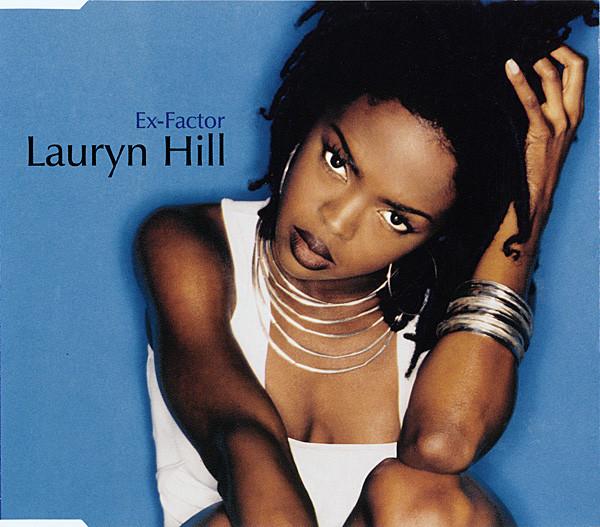
The exclamation point came in 1998. Lauryn Hill’s The Miseducation of Lauryn Hill fused soul, reggae and hip-hop into something timeless, sold millions, and swept the Grammys — the first hip-hop album to win Album of the Year. It was both a farewell to the Golden Age and proof of how far the genre had traveled in a single decade.
How the Golden Age Ended — and Never Really Did
By the late 90s the underground purism of the boom bap years was giving way to the shiny-suit, platinum-plaque pop of Puff Daddy and the glossy production of a new commercial wave. Jay-Z, DMX and the rise of the South signaled the next chapter. Sampling laws tightened. Budgets ballooned. The scrappy, sample-stuffed creativity of the early decade became harder to pull off.
But “ended” is the wrong word. The Golden Age set the template every era since has either built on or rebelled against. The albums from 1991 to 1998 still top critics’ lists, still get sampled, still teach new artists how it’s done. When a Gen Z fan discovers Illmatic or 36 Chambers for the first time and feels that same jolt, the Golden Age isn’t history — it’s just getting started again.
For Gen X, though, it will always belong to a specific time: the cassette deck, the parental advisory sticker, the music video you stayed up to catch. The decade hip-hop stopped asking for permission and simply took over.
Sources
- Wikipedia — Golden Age of Hip Hop
- Wikipedia — Illmatic (Nas)
- Wikipedia — The Chronic (Dr. Dre)
- Rolling Stone
- Shop Golden Age hip-hop albums on Amazon
Browse retro and vintage-inspired apparel at the RetroRadical shop →
Shop on Amazon
90s Collectibles on Amazon →
As an Amazon Associate we earn from qualifying purchases.
Shop on eBay
90s Collectibles on eBay →
We may earn a commission when you shop through our eBay links.
The Retro Almanac
A monthly roundup of "on this day" highlights from that month, decades back — plus first dibs on new retro merch drops. No spam, just the good stuff.