Cheers TV Show: 9 Wild Facts About the 80s Sitcom
In its very first season, Cheers ranked 74th out of 77 network shows. By any normal logic, it should have been buried and forgotten by spring. Instead NBC held its nerve, and a decade later the same show signed off with one of the biggest audiences in American television history. That gap — from near-cancellation to national institution — is the real story of Cheers, and it’s stranger than most people remember.
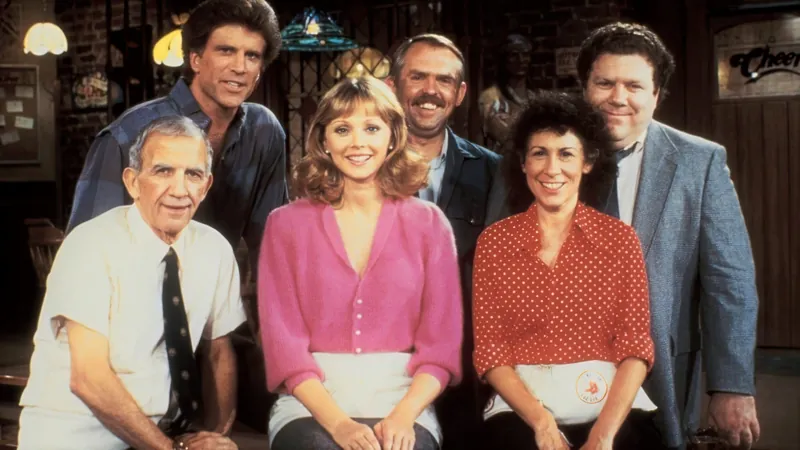
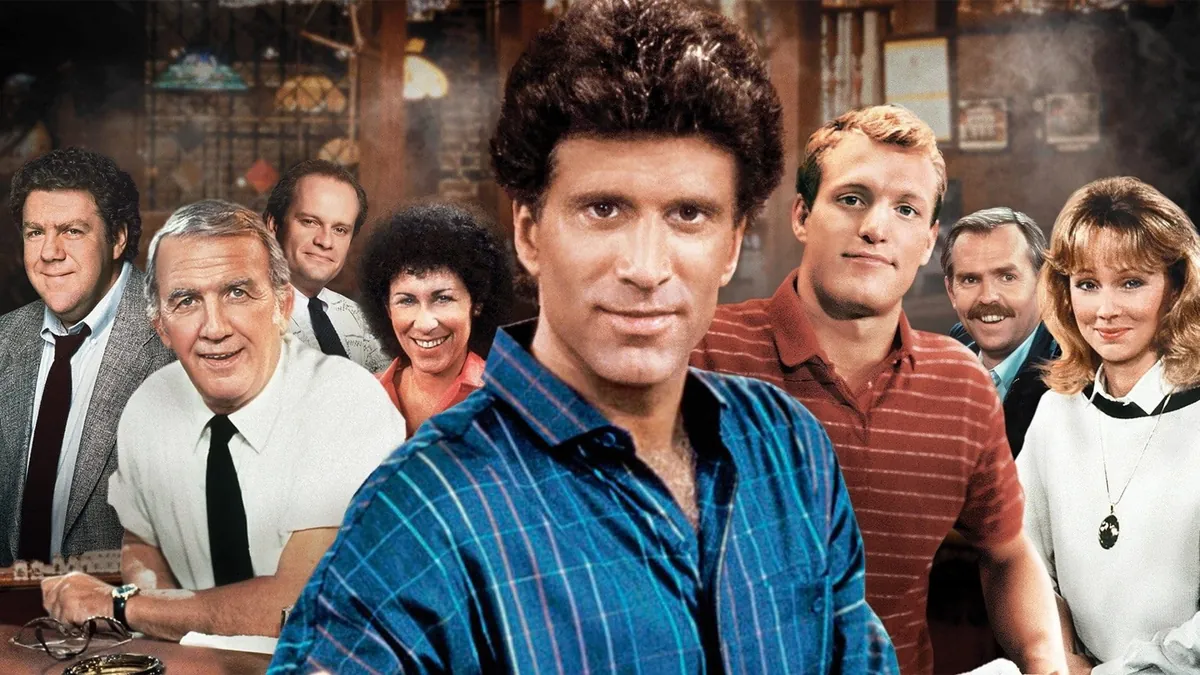
The original 1982 ensemble — Coach, Sam, Diane, Cliff, Carla and Norm.
The Retro Almanac
A monthly roundup of "on this day" highlights from that month, decades back — plus first dibs on new retro merch drops. No spam, just the good stuff.
The Cheers TV show almost got cancelled after one season
The Cheers TV show debuted on September 30, 1982, and almost nobody watched. It finished 74th out of 77 prime-time programs that year — the kind of number that usually ends a career, not starts a legacy. NBC was in last place among the three networks at the time, which turned out to be the show’s saving grace. Programming chief Brandon Tartikoff and NBC boss Grant Tinker had little to lose and a stack of glowing reviews to point at, so they left it on the air and let it find an audience in reruns and word of mouth.
That patience is almost unthinkable now. A show pulling those ratings today gets yanked before Halloween. Cheers is the clearest argument going that the best comedies often need a full season to breathe — and that a network willing to wait can end up with eight top-ten seasons out of eleven.
Sam Malone was written as a football player, not a bartender
Sam “Mayday” Malone started life on paper as a washed-up wide receiver. Creators Glen and Les Charles and director James Burrows first leaned toward former NFL player Fred Dryer for the part, picturing an ex-footballer running a bar. Then Ted Danson read with Shelley Long, the chemistry jumped off the page, and everything changed — including Sam’s backstory, which was rewritten to make him a former Boston Red Sox relief pitcher and recovering alcoholic.
Danson had never pulled a pint in his life, so he enrolled in a real bartending school in Burbank to look convincing behind the taps. Watch the early episodes and you can see the homework paying off — the man actually knows where the glasses go.
Cliff Clavin didn’t exist until the audition
Here’s a fact that should comfort anyone who ever bombed a job interview. John Ratzenberger auditioned for Norm Peterson, lost the part to George Wendt, and — instead of walking out — asked the producers whether they’d written a “know-it-all” barfly into the show. Every real bar has one, he argued. They hadn’t, but they liked the pitch enough to invent mail carrier Cliff Clavin on the spot.
Cliff’s fountain of confidently wrong trivia became one of the show’s signature bits, and Ratzenberger stuck around for all 11 seasons. Not bad for a guy who technically didn’t get the job he came in for.
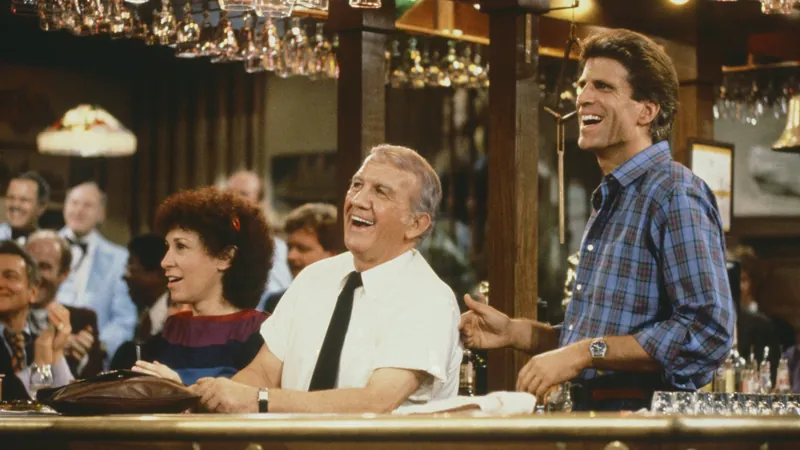
Carla, Coach and Sam mid-scene — the beer in those mugs wasn’t quite what it looked like.
Norm’s beer was fake and nobody ever drove home drunk
The mugs George Wendt drained as Norm weren’t full of some tasty microbrew. It was “near beer” — around 3.2% alcohol, with a pinch of salt dropped in to keep a photogenic head of foam through take after take. The hard liquor lined up behind the bar, on the other hand, was completely real; it just sat there as set dressing while nobody touched it.
The producers also made a quiet rule that still holds up: in 11 years of a show set entirely in a bar, no character ever drove home drunk. If someone had one too many, they called a cab. For a comedy built on barstools, that’s a small piece of responsibility most viewers never even clocked.
The Cheers bar is based on a real pub in Boston
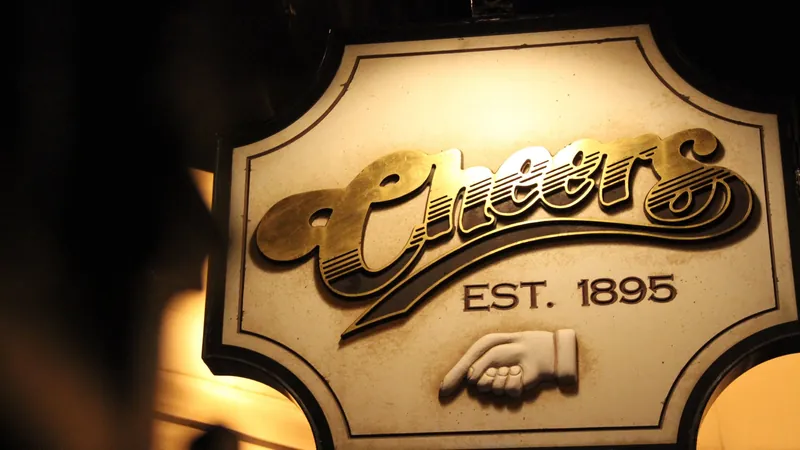
The exterior you see in the opening credits belongs to a genuine Boston watering hole — the Bull & Finch Pub on Beacon Street, tucked below street level across from the Public Garden. Location scouts photographed it in 1982, and after the show blew up, tourists started arriving by the busload. The owners eventually leaned all the way in and renamed it “Cheers Beacon Hill.”
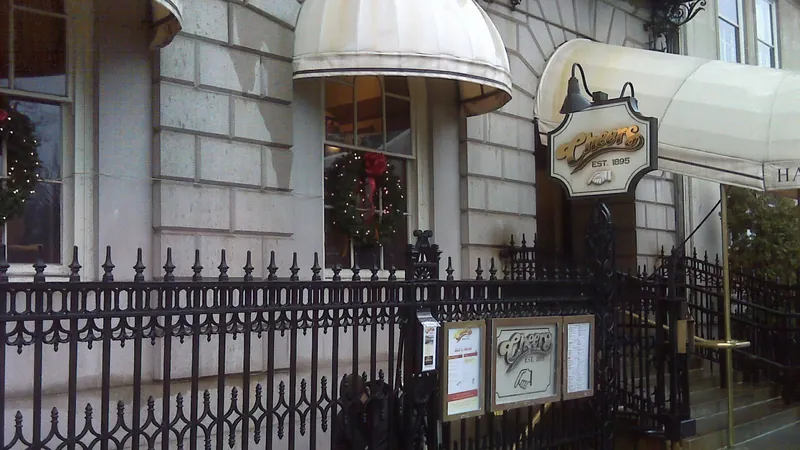
The real Beacon Hill bar that inspired the show — now a permanent tourist stop.
Here’s the catch that disappoints first-time visitors: the inside looks nothing like the TV bar. Every interior scene was shot 3,000 miles away on Stage 25 at Paramount Studios in Los Angeles. The cozy basement room with the brass rail and the pass-through you saw every week never existed in Boston at all. The show’s fictional address, 112½ Beacon Street, is a fraction that doesn’t map to any real doorway — a tidy bit of make-believe hiding in plain sight.
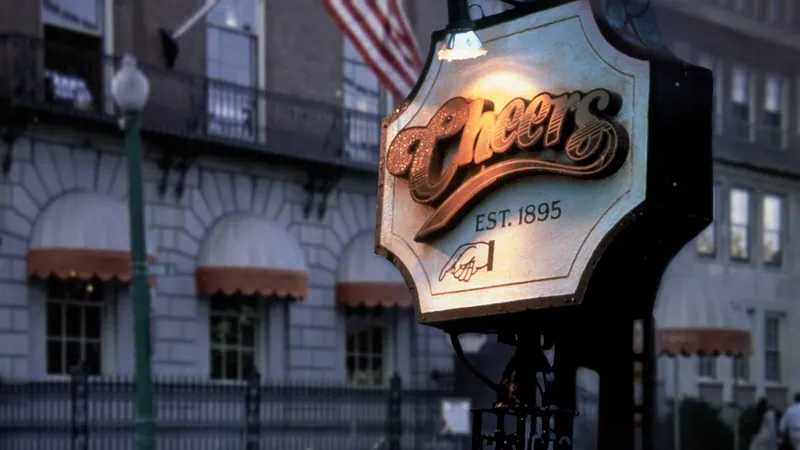
The theme song was almost thrown away
“Where Everybody Knows Your Name,” written by Gary Portnoy and Judy Hart-Angelo, is routinely voted the greatest TV theme ever recorded — Rolling Stone readers crowned it number one in 2011, and TV Guide did the same in 2013. What most people don’t know is that the melody was originally shaped for a completely different, abandoned project before it got repurposed for a bar comedy nobody expected to survive.
The lyric did something clever that the show itself was built on. It isn’t really about drinking; it’s about the ache of wanting one place where people are glad you walked in. That’s the whole premise in 90 seconds, and it’s why the song outlived the series by decades. Here’s the original opening sequence:
Losing Coach changed the whole show
Nicholas Colasanto, who played sweet, forgetful bartender Ernie “Coach” Pantusso, died of a heart attack in February 1985 during the show’s third season. It hit the cast hard — Colasanto was a mentor figure on set as much as on screen. In tribute, the crew hung a photo of Geronimo he kept in his dressing room on the Cheers set, and in the final episode years later, Woody quietly moves that same picture, a goodbye only longtime fans caught.
Rather than recast Coach, the writers brought in a wide-eyed farm kid from Indiana: Woody Boyd, played by a then-unknown Woody Harrelson. The naive-newcomer energy was different enough that it refreshed the bar instead of trying to replace what was lost. It’s one of the better examples of a show turning a genuine tragedy into a graceful creative pivot.
Shelley Long left, and Cheers somehow got bigger
The Sam-and-Diane will-they-won’t-they was the engine of early Cheers, so when Shelley Long left after season five in 1987 to chase a film career, plenty of people wrote the show’s obituary. The fix was to hand the bar a new dynamic rather than a Diane clone. In came Kirstie Alley as Rebecca Howe, an ambitious corporate manager whose neuroses played completely differently against Sam’s swagger.
It worked better than anyone had a right to expect. The Rebecca years pulled some of the show’s highest ratings, and Alley won an Emmy for the role in 1991. The lesson Cheers kept proving is that a great ensemble is bigger than any single star — the same durability you see across the golden age of sitcoms that followed it.

The finale was a genuine national event
When Cheers signed off on May 20, 1993, roughly 80 million Americans tuned in for the 98-minute finale — a huge slice of the entire country watching one bar close up shop. Boston’s mayor threw a viewing party, and afterward the cast famously staggered over to a live, slightly boozy Tonight Show episode that Jay Leno broadcast straight from the Bull & Finch. It felt less like a TV ending and more like a city saying goodbye to friends.
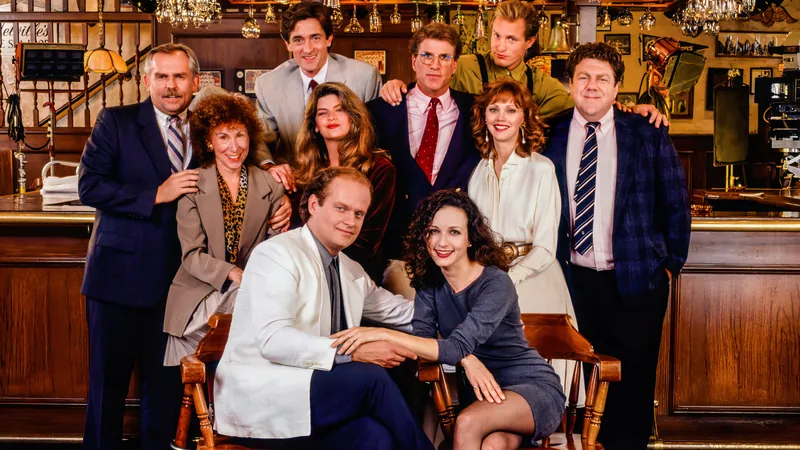
The later-era cast — Rebecca, Frasier and Lilith all joined after the original lineup.
By then the show had racked up 28 Emmy wins from a record 117 nominations, numbers that still put it near the top of the sitcom pantheon. It also proved that a slow start means nothing if the writing and the cast are right — a bet that paid off far better than the shows that shared its era and its audience, from The Cosby Show to the observational comedy that Seinfeld would perfect a few years later.
Cheers never really ended — it became Frasier
The bar closed, but the universe kept going. Kelsey Grammer’s pompous psychiatrist Dr. Frasier Crane, introduced in season three as one of Diane’s love interests, walked out of Boston and into his own Seattle spinoff. Frasier then ran another 11 seasons and won 37 Emmys of its own, stretching the Cheers bloodline across two full decades of television.
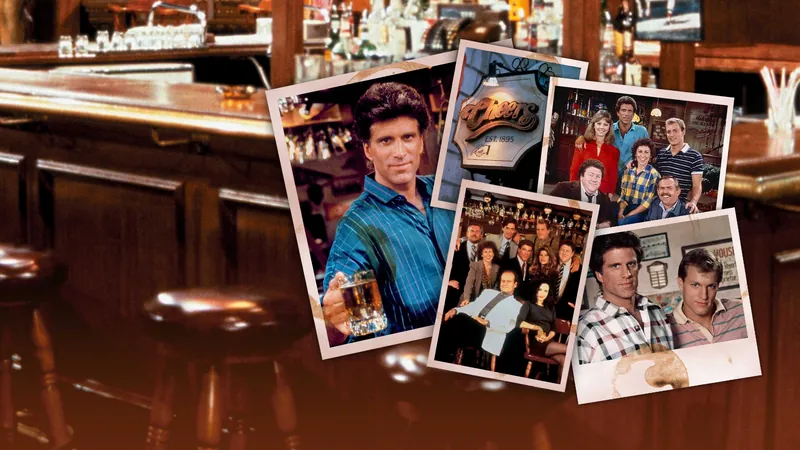
That’s the quiet legacy of the Cheers TV show. It was never the flashiest comedy of the 80s, and it certainly wasn’t the fastest out of the gate. It just understood something most shows miss — that people don’t tune in for the jokes so much as for the company. Four decades on, “where everybody knows your name” still sounds less like a jingle and more like a promise. Pour one and stay a while.
Sources
- Cheers — Wikipedia — full production history, ratings, cast changes and finale figures.
- 6 Behind-the-Scenes Secrets from Cheers — Mental Floss — near beer, the swinging bar set, and casting notes.
- Cheers — Encyclopaedia Britannica — overview, Emmy record and cultural impact.
- The Cheers Story — Gary Portnoy Official Site — how “Where Everybody Knows Your Name” was written.
Browse retro and vintage-inspired apparel at the RetroRadical shop →
Shop on Amazon
80s Collectibles on Amazon →
As an Amazon Associate we earn from qualifying purchases.
The Retro Almanac
A monthly roundup of "on this day" highlights from that month, decades back — plus first dibs on new retro merch drops. No spam, just the good stuff.