The Decade Hip-Hop Learned to Tell Stories
Somewhere between the boom-bap of a dusty drum break and a kid pressing record on a beat-up boombox, hip-hop grew up. The party-starting bravado of the late ’70s and ’80s didn’t vanish — but across the 1990s, a generation of MCs figured out that a verse could do more than make you nod your head. It could put you on a specific street corner, in a specific stairwell, at a specific hour of a specific bad night. Golden Age hip-hop (1990–1999) is remembered for a lot of things, but the quiet revolution underneath all of it was this: the decade rap learned to tell stories.
If you were a Gen X kid with a Walkman and a stack of cassettes, you lived through it in real time — rewinding the same sixteen bars to catch a line you missed, arguing on the bus about whose lyrics were deeper. This is the story of how the microphone turned into a pen.

From Bragging Rights to Written Chapters
Early hip-hop was built on the battle: my rhymes are better, my crew is tougher, my sneakers are fresher. That energy never died — but by 1990 the best writers wanted a bigger canvas. Slick Rick had already proven with “Children’s Story” that a rapper could sit you down like a bedtime tale. What the Golden Age did was take that idea and hand it to a whole roster of writers who treated a three-minute track like a short film.
The Retro Almanac
A monthly roundup of "on this day" highlights from that month, decades back — plus first dibs on new retro merch drops. No spam, just the good stuff.
Suddenly the details mattered. The brand of the gun, the name on the door buzzer, the smell of the hallway, the exact amount of money in the shoebox. Rappers stopped describing how great they were and started describing where they were from — and they did it with the specificity a novelist would recognize.
Nas and the View From the Window
No single record made the case louder than Illmatic. When Nas dropped his debut in 1994 at just twenty years old, he wasn’t rapping about conquering the world — he was rapping about the twelfth-floor view of the Queensbridge projects, the largest housing project in North America. Ten tracks, no filler, each one a snapshot so precise you could draw a map from it.
What made it revolutionary wasn’t just the vocabulary — it was the point of view. Nas wrote like a kid narrating his own neighborhood from the fire escape, equal parts reporter and poet. Critics who’d never taken rap seriously started using words like “literary.” A generation of younger MCs heard Illmatic and realized the bar had just been raised somewhere near the ceiling.
Biggie: The Cinematic MC
If Nas painted with detail, The Notorious B.I.G. moved like a film director. His 1994 debut Ready to Die opened with the sound of a baby being born and closed on a devastating final act — the whole album playing like a life told in scenes. Biggie’s genius was structure. He could set up a heist, populate it with characters, land a punchline, and pull the rug out from under you, all inside one verse.
Listeners talk about his flow, and rightly so, but the storytelling is what kept people coming back. “Warning” isn’t just a great track — it’s a two-hander with dialogue, tension, and a twist. Biggie made you forget you were listening to a record instead of watching one.
Wu-Tang and the World-Building Machine
Then there were the nine (sometimes more) men from Staten Island who treated storytelling as a collective sport. When Wu-Tang Clan released Enter the Wu-Tang (36 Chambers) in 1993, they didn’t just drop an album — they dropped a universe. Kung-fu movie samples, a shared mythology, aliases stacked on aliases, and a producer, RZA, who built beats that sounded like they’d been dug out of a haunted basement.

The Wu proved a story didn’t have to be linear. GZA’s wordplay, Ghostface Killah’s stream-of-consciousness detail, Method Man’s charisma — nine writers passing the mic and building a shared world one verse at a time. It was the closest thing ’90s rap had to a comic-book multiverse, and it launched enough solo careers to keep the decade busy on its own.
Tupac and the Story With a Pulse
Out west, Tupac Shakur was proving that storytelling didn’t have to keep its distance. Where some writers reported from the block, Pac climbed inside the feelings — the fear, the grief, the loyalty, the contradiction. “Brenda’s Got a Baby” told the story of a teenage girl the whole world had failed, and it did it with the empathy of a social worker and the hook of a hit single.
That was Tupac’s gift: he could make a story feel like it was happening to you. “Dear Mama” turned a personal letter into a national anthem for anyone raised by a struggling parent. By the time he passed in 1996, he’d shown that the most powerful narrative tool in a rapper’s kit wasn’t detail or structure — it was raw, unguarded honesty.

The West Coast Turns Up the Cinema
Storytelling wasn’t a coastal monopoly. When Dr. Dre released The Chronic in 1992 and followed it with Snoop Doggy Dogg’s Doggystyle in 1993, the G-funk sound gave narrative a whole new mood — sun-baked, laid-back, and impossibly detailed about a specific Southern California world. Snoop’s easy drawl could walk you through an entire afternoon and make it sound like the most interesting day of your life.
The West Coast writers understood setting the way great regional novelists do. You didn’t just hear the story — you felt the weather. The palm trees, the low-riders, the barbecue smoke. It was cinema you could bump in a car with the windows down.
The Native Tongues and the Everyday Epic
Not every great story was about survival. A Tribe Called Quest, De La Soul, and the wider Native Tongues collective proved that the small stuff could be just as compelling. Tribe’s “I Left My Wallet in El Segundo” is a road-trip comedy in miniature — a lost wallet, a long drive, a punchline. It’s storytelling for the sheer joy of it.
This was the other half of the Golden Age’s genius: it made room for the ordinary. Jazz-inflected beats, playful rhymes, and stories about college, crushes, and everyday hustle showed that hip-hop’s narrative range ran from tragedy to sketch comedy and everything in between.
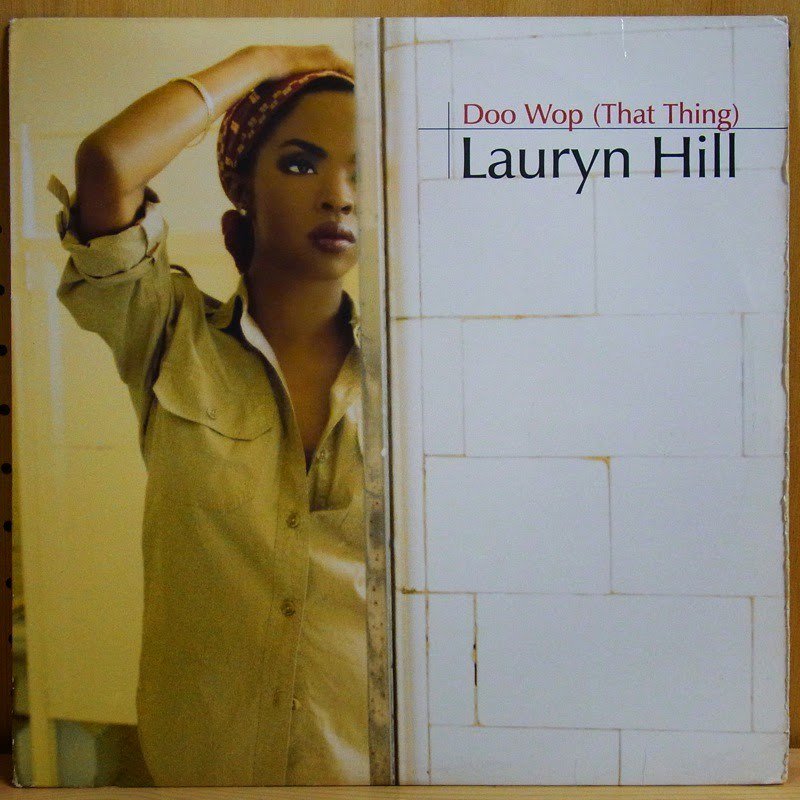
Lauryn Hill Closes the Chapter
If the decade needed a final statement, it got one in 1998. Lauryn Hill’s The Miseducation of Lauryn Hill fused rapping and singing into confessional storytelling so complete it swept the Grammys and crossed every audience line in sight. Hill wrote about love, motherhood, faith, and betrayal with a novelist’s honesty and a preacher’s cadence.
It was the sound of a form that had fully arrived. Nobody in 1998 needed convincing that a rap album could carry the emotional weight of a memoir — the Golden Age had spent nine years proving it, one verse at a time.
Why the Storytelling Still Hits
Pull up any of these records today and the thing that jumps out isn’t the equipment or the era — it’s the craft. These writers were doing what Mark Twain and Raymond Carver did: finding the universal in the hyper-specific, making you care about people and places you’d never visit. That’s why a teenager in 2026 can put on Illmatic and feel the twelfth-floor window as clearly as a Gen X kid felt it in 1994.
The Golden Age of hip-hop conquered charts and changed fashion, sure. But its deepest legacy is quieter and more durable: it turned a generation of MCs into the great American storytellers of the decade, and it left behind a stack of records that still read like the best short stories ever pressed to wax. If you’ve got a turntable and a rainy afternoon, that’s the collection worth starting.
Sources
- Wikipedia — Illmatic
- Wikipedia — Enter the Wu-Tang (36 Chambers)
- Wikipedia — The Miseducation of Lauryn Hill
- Rolling Stone
- Shop 90s hip-hop vinyl on Amazon
Browse retro and vintage-inspired apparel at the RetroRadical shop →
Shop on Amazon
90s Collectibles on Amazon →
As an Amazon Associate we earn from qualifying purchases.
Shop on eBay
90s Collectibles on eBay →
We may earn a commission when you shop through our eBay links.
The Retro Almanac
A monthly roundup of "on this day" highlights from that month, decades back — plus first dibs on new retro merch drops. No spam, just the good stuff.