How Yo! MTV Raps Turned the Golden Age of Hip-Hop Into Must-See TV
It is a Saturday morning somewhere in the American suburbs, 1992. You have already burned through your cartoons and now you are channel-surfing the wasteland of mid-morning TV when something stops you cold — a flash of color, a bass line you can feel through the couch cushions, and a guy in a patterned shirt and chunky glasses talking into the camera like he is letting you in on the greatest secret in the world. His name is Fab Five Freddy, and what he is about to show you is going to change everything about how you hear music, dress, talk, and move through the world. Welcome to Yo! MTV Raps. School is in session.
The Idea That Shouldn't Have Worked
By 1988, MTV was a glossy rock-and-roll machine. Its playlist was almost exclusively white guitar bands, its aesthetic borrowed from the British New Wave, and its audience was exactly the kind of demographic that made advertisers comfortable. Introducing hip-hop — raw, street-born, unpolished, and politically charged — felt like a provocation. Network executives were skeptical. Nobody predicted what came next.
The show launched as a late-night special on August 6, 1988, and the ratings were startling enough that MTV quickly expanded it into a weekly program. By 1989 there were two editions: a Saturday afternoon version hosted by Fab Five Freddy, and a daily weekday show that introduced the world to the comedy duo Ed Lover and Doctor Dre. The network had stumbled into a cultural phenomenon it barely understood and could not explain to its own sales department. That uncertainty, paradoxically, is part of what made the show so vital — nobody was filtering it for palatability yet.
The Retro Almanac
A monthly roundup of "on this day" highlights from that month, decades back — plus first dibs on new retro merch drops. No spam, just the good stuff.
For hip-hop, this was everything. The golden age of hip-hop had been building since the early 1980s — refining its production techniques, deepening its lyrical ambition, expanding its geographic reach from New York outward to Los Angeles, Atlanta, Houston, and beyond. What it lacked was a national broadcast platform that could deliver all of that cultural energy into a single living room on a Saturday afternoon. Yo! MTV Raps became that platform.
Fab Five Freddy and the Art of Making Hip-Hop Safe to Watch
Fred Brathwaite arrived at MTV with credentials that had nothing to do with radio. He had come up in the downtown New York art scene — a friend of Andy Warhol, a graffiti writer who had crossed over into fine art galleries, a figure who moved easily between the South Bronx and SoHo. That crossover fluency is exactly what made him remarkable on television. He did not explain hip-hop to white audiences the way a documentary would. He just lived it on camera, cool and unhurried, letting viewers catch up.
His signature look — the oversized glasses, the Afrocentric patterns, the deliberate verbal flow — communicated something important: this was a man of taste. You trusted him. And when he walked you through the streets of Compton or the housing projects of Brooklyn, you followed. Fab Five Freddy made golden age hip-hop feel like an invitation rather than an intrusion, and for a generation of suburban kids who had never set foot in those neighborhoods, that distinction mattered enormously.
He also had genuine relationships with the artists. When he interviewed N.W.A. or A Tribe Called Quest, these were not press junkets with publicists lurking in the corner — these were conversations between people who shared a world. Viewers could feel the difference. The music sounded better when someone who actually loved it was explaining why it mattered.
Ed Lover, Doctor Dre, and the Comedy That Carried the Weekdays
The weekday version ran on a different fuel entirely. Ed Lover and Doctor Dre — the second Doctor Dre, not the Compton producer — were comedians first, hip-hop fans second, and television personalities somewhat by accident. Their chemistry was immediate and enjoyably chaotic. Ed Lover's rubbery physical humor played against Doctor Dre's dry, skeptical delivery in ways that felt genuinely unscripted, because much of the time it was.
What they understood instinctively was that hip-hop had always been funny. Not in the sense of being trivial — in the sense that the best MCs had always trafficked in wit, wordplay, and street-corner absurdism that mainstream radio had no idea how to handle. Ed Lover and Doctor Dre brought that sensibility to daytime television and made it feel natural. Their most lasting contribution was probably "The Ed Lover Dance," a simple, slightly awkward shimmy that became a running joke across hundreds of episodes. It was the kind of bit that should not have worked. It became genuinely beloved anyway.
The Performances That Launched Careers
Whatever else Yo! MTV Raps accomplished, its most lasting function was as a launching pad. Before social media, before YouTube, before SoundCloud or Spotify, a major MTV appearance was one of the only ways for an artist to reach a truly national audience in a single afternoon. The show deployed that power constantly and without hesitation during the peak years of golden age hip-hop.
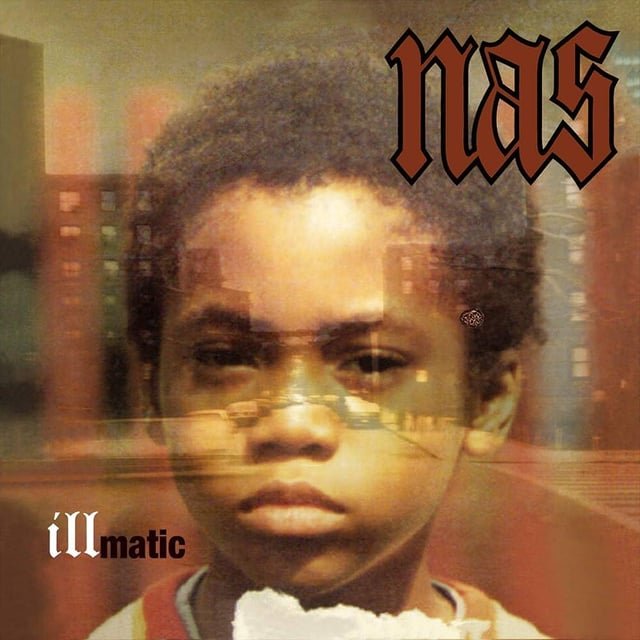
Consider what the camera captured during those years: a young Tupac Shakur, barely twenty years old, electric and entirely himself, explaining his politics as easily as he explained his rhymes. The Notorious B.I.G. — Biggie — showing up on that screen for the first time and somehow filling every inch of it, even before Ready to Die dropped and the rest of the world caught up to what Brooklyn had always known. Nas at nineteen, quiet and precise, saying more with a stillness than most artists managed with an entire performance.
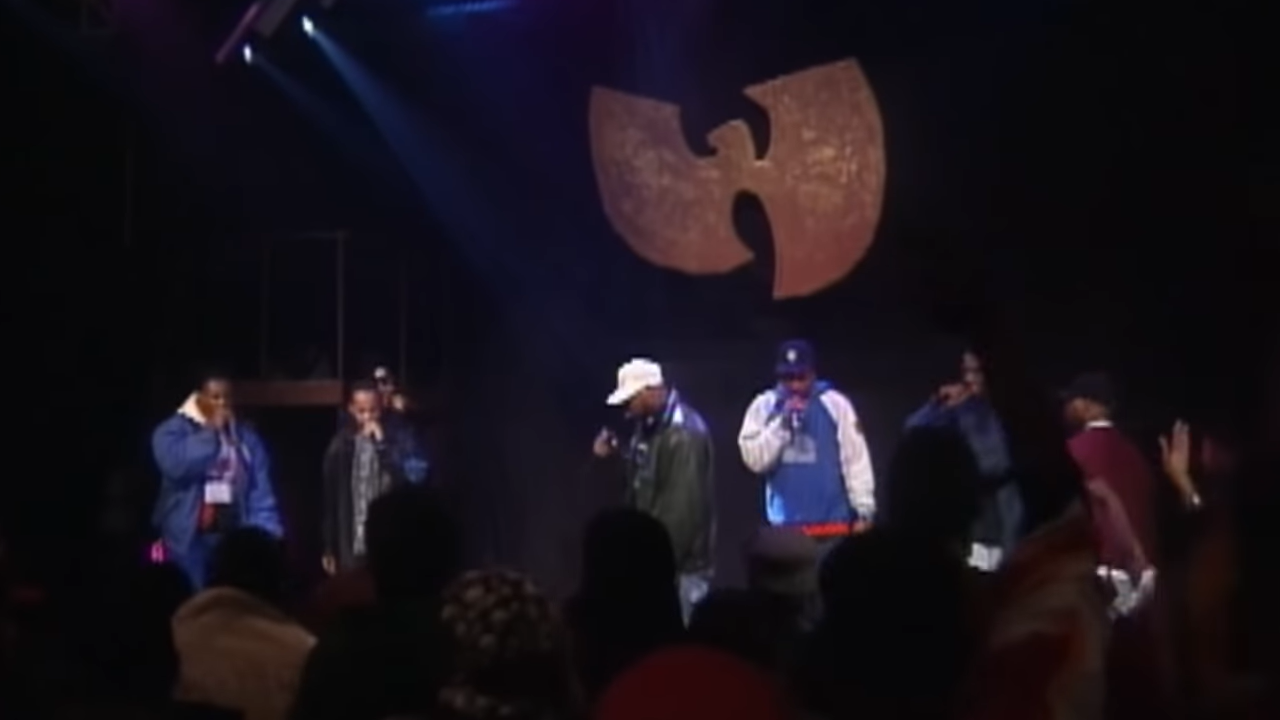
Wu-Tang Clan's debut appearance remains legendary in hip-hop circles — nine men from Staten Island who looked and sounded like nothing that had ever appeared on American television before. The production budget was minimal. The impact was not. Within weeks of their first MTV appearance, "C.R.E.A.M." was everywhere. A Tribe Called Quest, De La Soul, and the rest of the Native Tongues collective found their suburban audience through this show. So did Public Enemy, whose political intensity might have been dismissed as too confrontational without the framing that Fab Five Freddy provided. Even LL Cool J and Run-DMC, artists who had been working for years, reached entirely new demographics because of what national television could do for a career overnight.
The Signal That Reached the Suburbs
Here is the part that tends to get underplayed in cultural histories of this era: Yo! MTV Raps did not just bring hip-hop to America. It brought hip-hop to the kids who would spend the next three decades keeping it the dominant force in popular music — the suburban teenagers in Ohio and Nebraska and Florida who had no organic connection to the South Bronx or South Central but who recognized something in this music that felt true and urgent in a way that rock radio no longer did.
The fashion followed immediately. Starter jackets. Timberland boots worn unlaced. Cross Colours. FUBU. These were not just clothes — they were a statement of cultural allegiance, visible proof that a kid in Iowa had been paying attention on Saturday afternoons. The slang traveled even faster. Words that had existed for years in specific neighborhoods suddenly appeared in school cafeterias across the country, filtered through MTV and the artists who had been given a platform to use them on national television.
This is what alarmed some parents and thrilled most kids: here was a form of music that was not asking for permission. It was not sanitized. It did not code-switch to make anyone comfortable. And yet it had found its way into the living room on a Saturday afternoon, on the same cable channel that played Bon Jovi. The door was open, and golden age hip-hop walked through it without looking back.
The Videos That Rewrote the Visual Language
Yo! MTV Raps also functioned as the primary distribution system for hip-hop music videos during the golden age, and those videos were doing something formally interesting that often gets overlooked. The visual grammar of hip-hop video in the early 1990s was distinct from anything else on television — low-budget but high-concept, street-shot and cinematically self-aware at the same time.
"Nuthin' But a G Thang" looked like a West Coast summer dream assembled from backyard barbecues and open fire hydrants. The "C.R.E.A.M." video captured a New York that was cold, crumbling, and absolutely real. Tribe's "Check the Rhime" turned a rooftop in Queens into the center of the universe. Each of these videos was constructing a visual vocabulary that audiences absorbed without entirely realizing it — a grammar of hip-hop that would eventually dominate not just music but advertising, film, and fashion for the decades that followed.
The Last Episode and What It Left Behind
Yo! MTV Raps aired its final episode in September 1995. By then, hip-hop had won. It no longer needed its own dedicated corner of the schedule — it owned the schedule. The show ended not because golden age hip-hop had failed to find a mainstream audience but because the audience had been found, had grown up, and had started making its own music. The kids who had watched Fab Five Freddy on Saturday afternoons were now in studios, behind consoles, running labels, writing for magazines, directing videos.
Some television programs matter because of the content they carried. Yo! MTV Raps matters because of what it made possible. It created a generation of fans who became the infrastructure of an industry — artists, producers, executives, journalists, and directors who carried the energy of the golden age forward into every decade that followed. The signal went out over coaxial cable and rabbit-ear antennas somewhere in the middle of America. What came back reshaped the culture in ways that are still being measured.
Sources
The Retro Almanac
A monthly roundup of "on this day" highlights from that month, decades back — plus first dibs on new retro merch drops. No spam, just the good stuff.