On This Day: July 25, 1980 — AC/DC Released Back in Black
Fifty million copies. That is not a typo. On July 25, 1980, AC/DC released an album that would become the second-best-selling studio record in history — and they recorded it in seven weeks while still in mourning for the man whose absence made it necessary. Back in Black is one of the most improbable comeback stories in the history of popular music, built on grief, stubbornness, and a Newcastle singer nobody outside England had heard of.
The Night Bon Scott Died

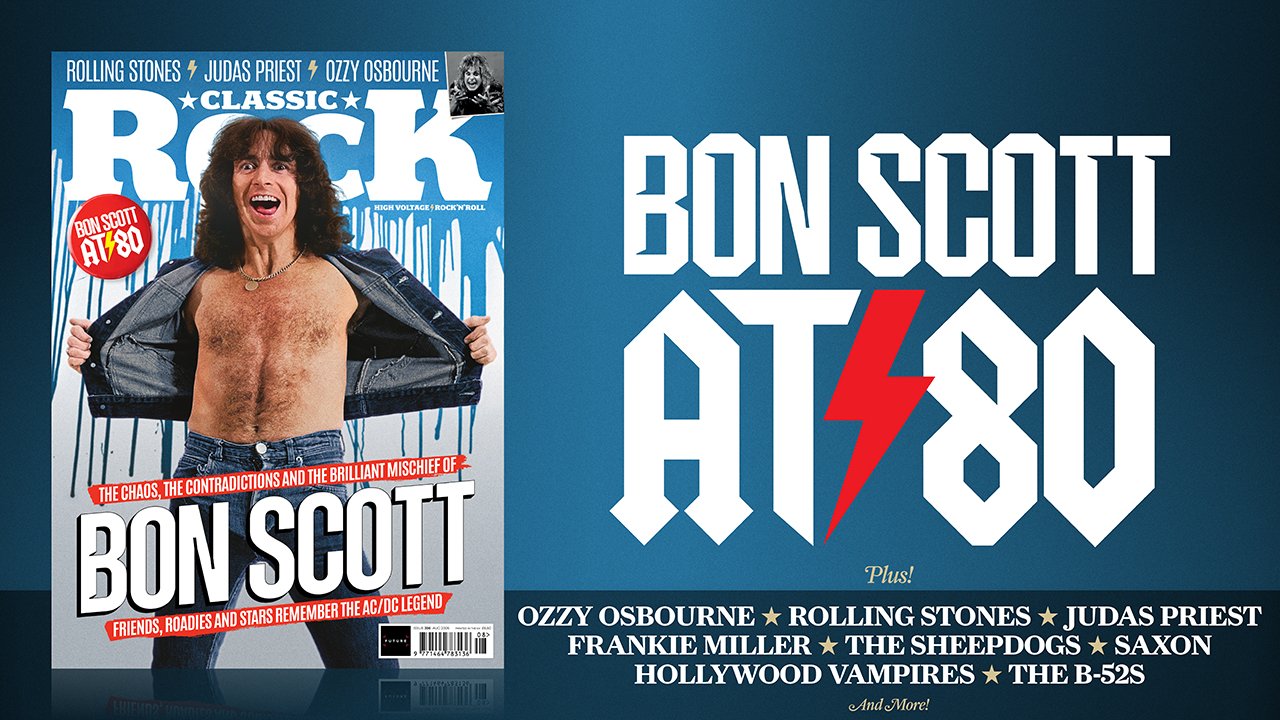
On February 19, 1980, Ronald “Bon” Scott was found dead in a car in East Dulwich, London. He was 33 years old. The official cause was “death by misadventure.” He had been out drinking with a friend the night before, passed out in the back seat of a car, and never woke up. For AC/DC — who had spent eight years building some of the most ferocious rock and roll on the planet with Scott as their frontman — his death should have been the final word.
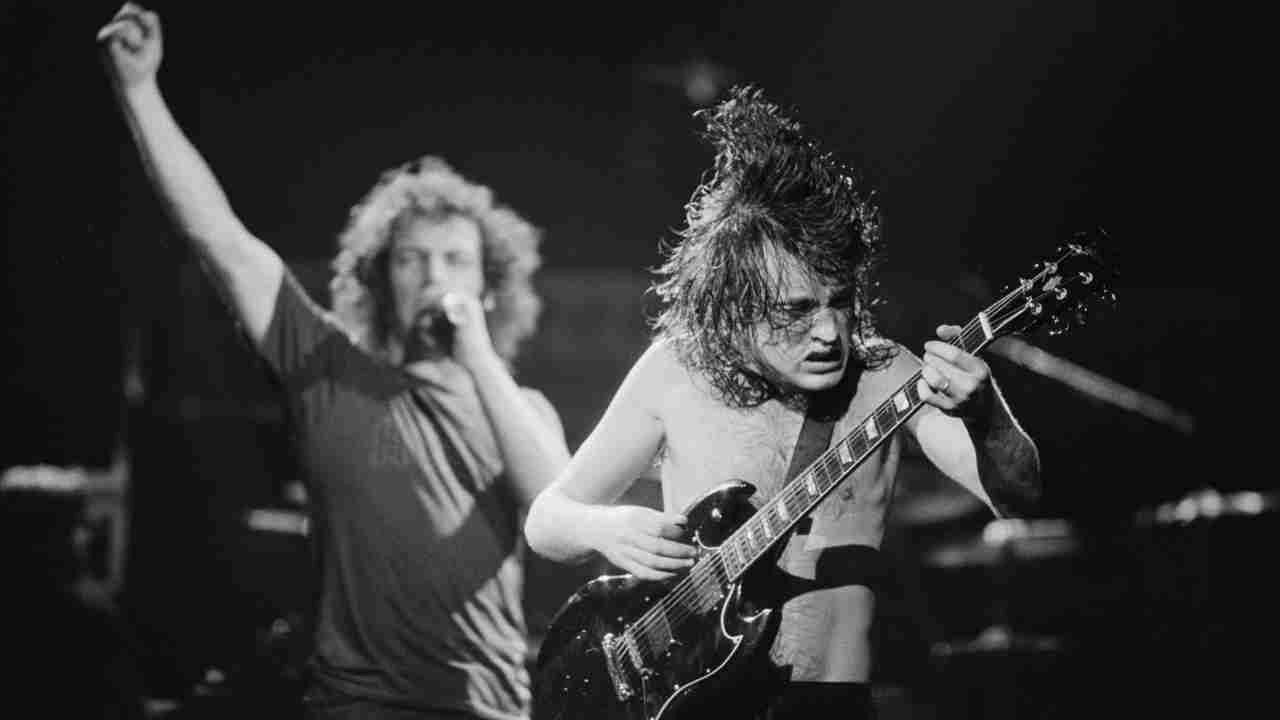
Brothers Angus and Malcolm Young had known Scott since 1974. He wasn’t just a singer they hired; he was the engine of their identity. His raw charisma, his biker mythology, his ability to turn a three-chord riff into something that felt genuinely dangerous — AC/DC without Bon Scott was a band that barely made sense on paper. By early 1980, Highway to Hell had just cracked the US Top 20. They were at the cusp of real American success, the kind that takes years to build and a single tragedy to obliterate.
The Retro Almanac
A monthly roundup of "on this day" highlights from that month, decades back — plus first dibs on new retro merch drops. No spam, just the good stuff.
The question of whether to continue at all was real and wasn’t resolved quickly. Some reports suggested the band would dissolve. Then Malcolm Young said something that became the band’s compass for the months ahead: if Bon were here, he’d tell us to get on with it.
Finding Brian Johnson
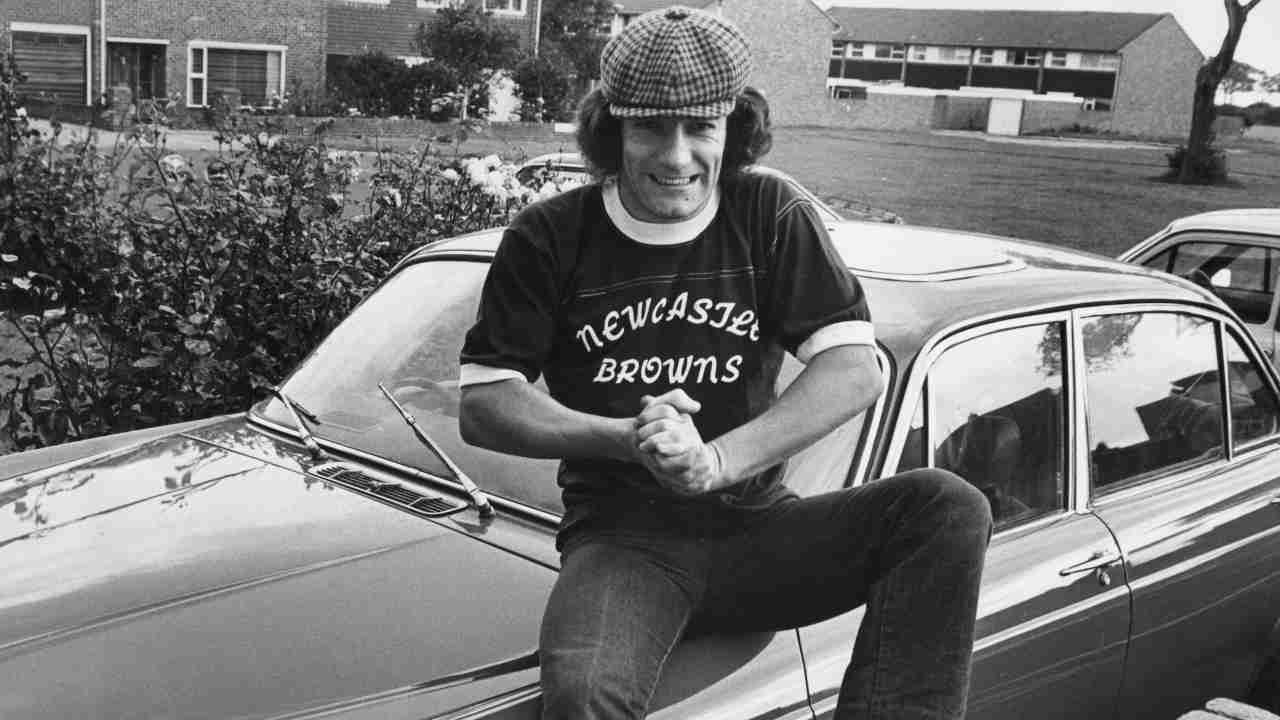
The auditions were held at Vanilla Studios in London. The brief was deliberately vague — bring your best — and what the Youngs were looking for was impossible to describe precisely. They needed someone who could carry the AC/DC catalogue live without seeming like a replacement, which is a near-impossible ask. Most of the singers who came in tried to replicate Bon Scott’s approach. That was the wrong answer before anyone opened their mouth.
Brian Johnson was working as a car service manager in Gateshead when the call came. He had fronted a band called Geordie through the 1970s, scoring a UK hit with “All Because of You” in 1973, but Geordie had long since dissolved and Johnson’s recording career had gone quiet. He showed up at Vanilla Studios in February 1980 without any particular expectation and apparently sang his throat raw.
Malcolm Young said later that Johnson didn’t sound like anyone else in the room that day. He had a serrated, high-pitched bellow that worked differently from Scott’s swagger — where Scott was sly, Johnson was raw power. According to rock folklore — and multiple AC/DC interviews over the years — Bon Scott had once told a friend that if he ever quit, they should hire Brian Johnson. Whether that’s fact or a story the band burnished over time is impossible to verify. What’s not in question is that Johnson got the call in late February 1980 and said yes immediately.
Seven Weeks in Nassau

Producer Robert “Mutt” Lange had worked with AC/DC on Highway to Hell and knew how the band operated. He booked Compass Point Studios in Nassau, Bahamas, for April through May 1980. The rationale was practical: get out of the UK winter, minimise distractions, and create a working environment where nothing else competed for anyone’s attention. Lange kept the atmosphere tight and professional.
Johnson wrote all of his lyrics in a bedroom next to the main recording space, working while the band tracked instrumentals in the adjacent room. He had no catalogue of unused AC/DC words to fall back on — everything on the record was written fresh in Nassau over those seven weeks. Angus Young later described watching Johnson pace and scribble and emerge with full verses, almost as if the pressure of the situation was clarifying rather than paralyzing.
Engineer Tony Platt placed microphones in ways that gave Lange and the band a fuller, heavier sound than they’d had on previous records. The result was a recording that sounded enormous even on transistor radios. One of the more famous production choices was the bell that opens the album’s first track: a 2,000-pound bronze bell custom-cast at John Taylor Bellfoundry in Loughborough, England, specifically for the record. It was a tribute that didn’t announce itself as one — it just tolled, slowly, until Angus’s guitar came in and finished the sentence.
What Was On the Record
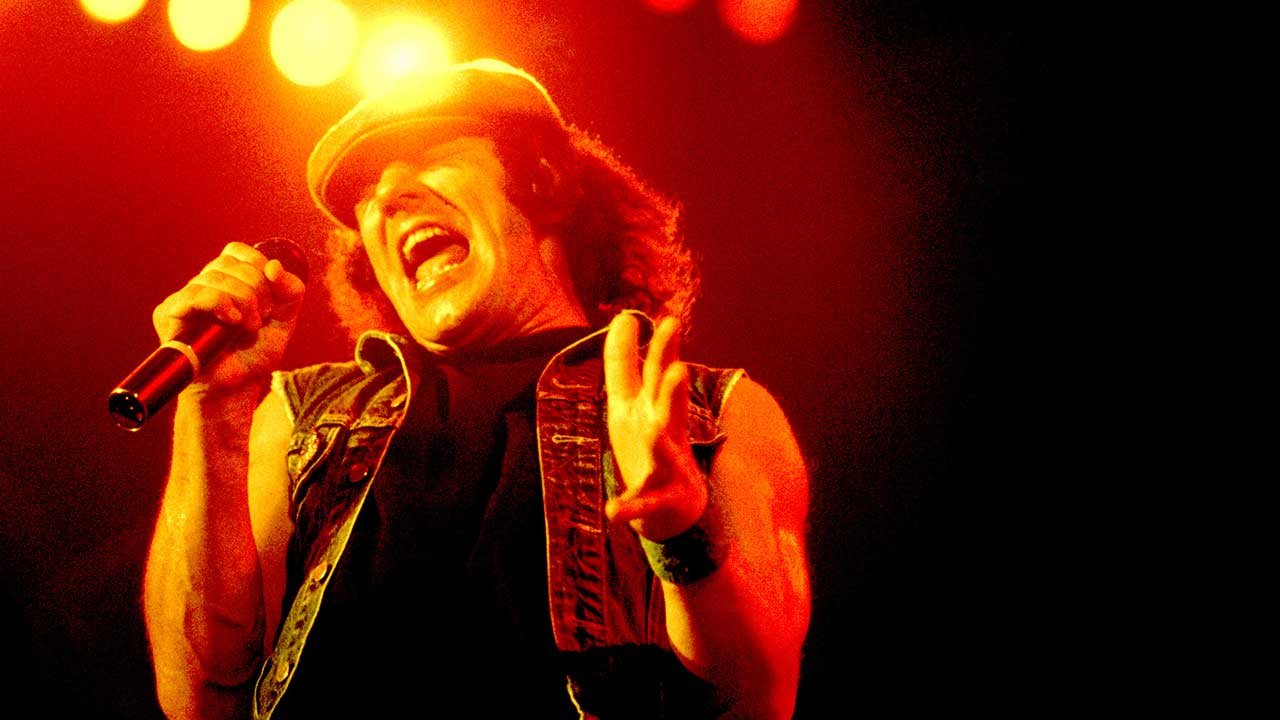
“Hells Bells” opens the album with that bell and a riff that builds for almost two full minutes before the band plays at full volume. It’s a patient, dramatic opener for a band that had never really done patient or dramatic — and it works entirely because of what you already know before a note plays. The album was dedicated to Scott. The opener couldn’t have been anything else.
“Shoot to Thrill” comes in immediately after like the band shaking themselves awake. “Back in Black,” the title track, is the musical tribute — written from the perspective of someone coming back after a loss, and it works both as a rock anthem and as a quiet statement of intent. “You Shook Me All Night Long” was the single that got radio play, AC/DC’s first US Top 40 hit. “Rock and Roll Ain’t Noise Pollution” closed the record.
None of those songs have a wasted note. That’s the thing about AC/DC at their peak — they weren’t flashy musicians doing complicated things. They were relentless musicians doing simple things better than almost anyone. Malcolm’s rhythm guitar was the engine; Angus’s leads were the punctuation; the rhythm section of Cliff Williams and Phil Rudd locked in with the kind of precision that makes heavy music actually swing rather than just thud.
The Cover and the Release
The album sleeve was pure black with the AC/DC logo in grey outline. No photograph, no band name on the front, no tracklist. Atlantic Records was not enthusiastic. The conventional wisdom in 1980 was that album packaging needed to sell the product at a glance in a record store bin, and an all-black sleeve didn’t sell anything.
The band held firm. The sleeve was a deliberate statement — a record wearing mourning clothes, a visual full stop on everything that came before. In retrospect it’s one of the most recognisable album covers in rock history, and it conveyed more about the record’s emotional weight than any photograph of the band could have. Grief doesn’t need to explain itself.
Back in Black hit shelves on July 25, 1980. It debuted at number 1 in the UK and climbed to number 4 on the US Billboard 200 — a chart peak that remains, absurdly, one of the more discussed anomalies in music history, given the album’s eventual sales trajectory. It never went to number 1 in America. The American market was months behind the cult that was building around the record in clubs and on tour.
The Numbers and the Legacy

The Back in Black Tour ran 143 shows between June 1980 and February 1981. Johnson’s first live performance with AC/DC was on June 29 in Namur, Belgium — before the album had even been released — and he reportedly worried after the first song that the crowd was too quiet. Then the room figured out what it was hearing, and that was that. By the time the record dropped in late July and the tour hit the United States and then Australia, the band was playing to audiences that had clearly been waiting for something like this without knowing it.
As of August 2024, Back in Black is certified 27x Platinum by the RIAA. Total global sales are estimated at over 50 million copies, making it the second-best-selling studio album in history behind only Michael Jackson’s Thriller. That statistic is more remarkable when you consider it was achieved with no major MTV push, no social media, and minimal airplay compared to mainstream pop. People bought it, played it, and told other people about it. That went on for decades.

James Hetfield of Metallica has pointed to the album as a core influence on what thrash metal became — the locked-in rhythm, the refusal to clutter the arrangement, the riffs built to be played live in arenas. Guns N’ Roses absorbed it. Every hard rock band that came out of the early 1980s had to decide what to do with the fact that AC/DC had just set a standard that was almost definitionally impossible to top on its own terms.
The official YouTube video for the title track passed one billion views in 2024. A song from 1980, recorded in the Bahamas by a band that had just lost their singer, made on the bet that rock and roll doesn’t stop for grief. Brian Johnson was at home in Gateshead fixing cars when the call came. Three months later he was on that stage in Belgium, singing “Back in Black” to a crowd hearing it for the first time. Forty-five years later they’re still listening.
Read More from Retro Radical
This album came out five years before Live Aid brought rock to its biggest global audience ever, the 1985 concert that Back in Black-era bands like AC/DC helped make possible. If you’re tracing the DNA of 80s hard rock, the boombox that carried all that music into the streets is part of the same story. And for another July 80s moment, Aliens hit theaters six years later in the exact same cultural moment Back in Black helped build.
Love the retro era? Browse our shop for vintage finds, retro clothing, and 80s/90s nostalgia gear.
Sources
- Louder Sound — The Epic Inside Story of AC/DC’s Back in Black — First-hand accounts from Brian Johnson and engineer Tony Platt on the recording sessions
- Riffology — AC/DC Back in Black: The Complete Story — Detailed breakdown of recording, sales certifications, and cultural impact
- Ultimate Classic Rock — The Night Brian Johnson Played His First Show With AC/DC — Coverage of the June 29, 1980 Namur debut
- Songfacts — AC/DC Release Back In Black, July 25, 1980 — Date verification and release details
- iHeart — 22 Things You Might Not Know About AC/DC’s Back In Black — Production details including the Bellfoundry bell
The Retro Almanac
A monthly roundup of "on this day" highlights from that month, decades back — plus first dibs on new retro merch drops. No spam, just the good stuff.