The Beat Was the Argument: How Golden Age Hip-Hop’s Producers Built an Era
The needle drops. A loop emerges — two bars from a 1968 soul record, lifted clean, pitched, chopped. Add drums. A snare that snaps like a gunshot. A kick like a punch to the chest. Before any MC has written a single bar, the song already has a heartbeat. This is how the Golden Age of hip-hop was built — not on stages, not in vocal booths, but in dim studios and basement bedrooms where producers bent time and taste to create something entirely new.
From 1990 to 1999, a generation of beat-makers — DJ Premier, Pete Rock, Q-Tip, RZA, Large Professor, J Dilla — redefined what popular music could sound like by working almost entirely from other people’s records. They were thieves of genius, curators of culture, architects of the most critically celebrated decade in hip-hop history. The MCs got the credit. The producers built the world they lived in.
The New York Blueprint
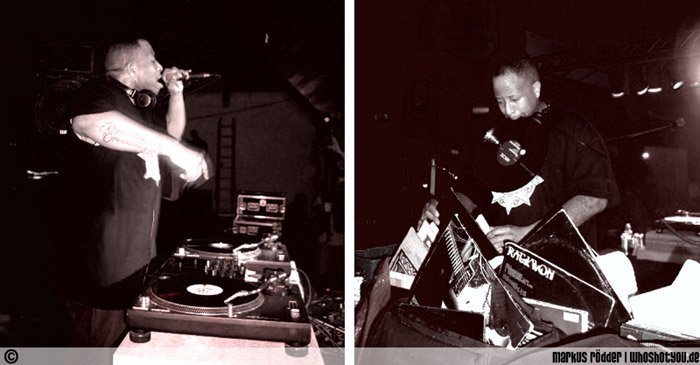
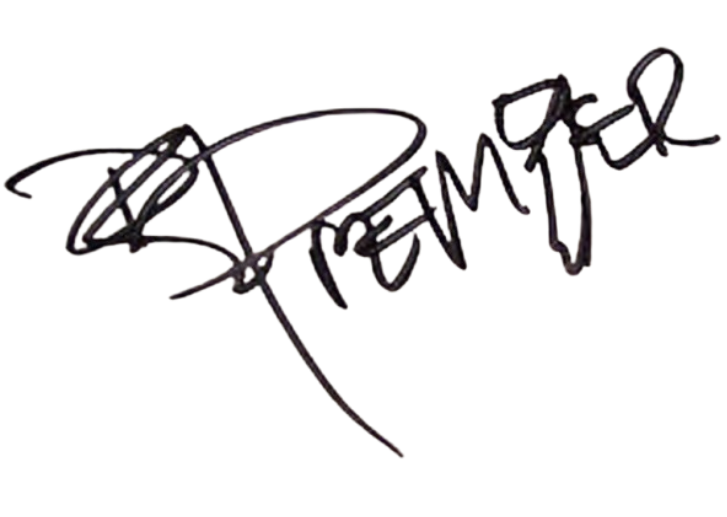
No producer defined the hard-edged sound of 90s New York hip-hop more completely than DJ Premier. Born Christopher Martin in Houston but raised in Brooklyn, Premier became the invisible hand behind some of the era’s most iconic recordings. His fingerprints are on Nas’s “NY State of Mind,” Notorious B.I.G.’s “Unbelievable,” Jay-Z’s “D’Evils,” and nearly every Gang Starr album from 1992 to 2003.
The Retro Almanac
A monthly roundup of "on this day" highlights from that month, decades back — plus first dibs on new retro merch drops. No spam, just the good stuff.
Premier’s production language was brutally specific: heavy drums, a vocal sample scratched in as a hook — making the turntable itself a rhythmic instrument — and a dark melodic loop pulled from an obscure jazz or soul record. He wasn’t trying to make radio hits. He was making music for 3 a.m. in a borough where the stakes were real.
What made his beats different wasn’t just the selection — it was the edit. Where other producers might loop eight bars, Premier found the two-bar pocket that never got old. He understood repetition the way a good bass player does: not as limitation but as hypnosis. Every extra bar he removed was a decision. Every drum hit he kept was intentional. He made sparseness feel like abundance.
Pete Rock and the Ache of the Groove
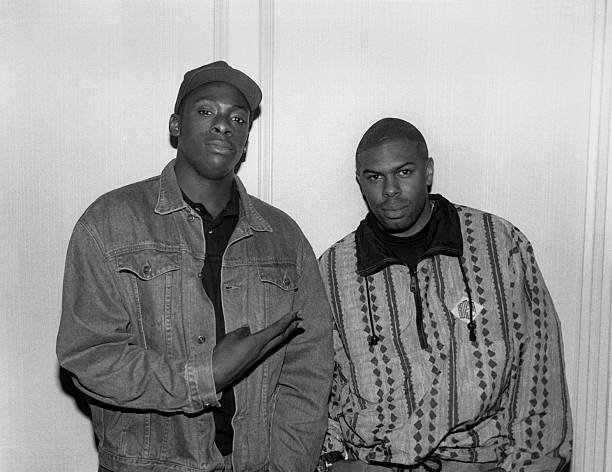
If Premier was the city’s hard edge, Pete Rock was its soul. Growing up in Mount Vernon, New York — just north of the Bronx — Pete Rock absorbed a diet of jazz, funk, and rare groove before turning those influences into beats so warm and organic they felt less like production and more like memory.
His 1992 collaboration with MC CL Smooth, Mecca and the Soul Brother, produced the song that may be the most emotionally resonant moment in all of Golden Age hip-hop: “They Reminisce Over You (T.R.O.Y.).” Written as an elegy for their friend Trouble T-Roy, who had died in a stage accident, the song was built around a jazz flute loop so perfectly placed it seemed discovered rather than invented. The track proved something that had seemed impossible: a hip-hop record could make you cry.
Pete Rock went on to produce for Nas, LL Cool J, Heavy D, and his own group InI, but “T.R.O.Y.” remains the benchmark. It proved that boom-bap could carry real emotional weight — that the genre wasn’t just braggadocio and flex, but had space for loss, for longing, for the particular ache of missing someone who isn’t coming back. He gave the Golden Age its grief, and the Golden Age never forgot it.
The Jazz Lab: Q-Tip and the Tribe’s Sound
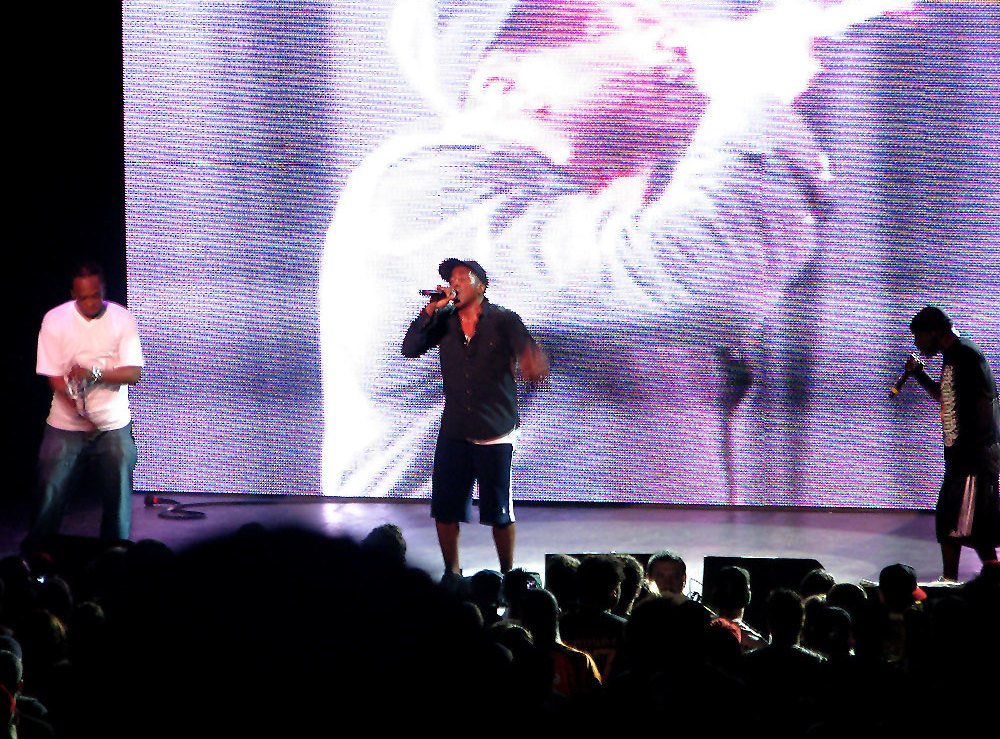
While Premier and Pete Rock were rooting their sound in the grit of New York streets, Q-Tip — the producer at the creative center of A Tribe Called Quest — was taking the genre somewhere softer and stranger. He pushed hip-hop into territory it had never explored: walking bass lines, live guitar fills, jazz flute loops, and arrangements that felt more like improvisation than traditional beatmaking.
The Low End Theory (1991) is the essential text. Q-Tip stitched together samples from Art Blakey, Grant Green, Grover Washington Jr., and Lou Donaldson with the effortlessness of someone who had absorbed the jazz canon and decided to write a hip-hop sequel. The album felt simultaneously like a classic jazz record and something that had never existed before. It made hip-hop credible to people who had never given it a chance, without asking any of those people for permission.
Midnight Marauders (1993) sharpened the formula without losing the looseness. “Electric Relaxation,” “Award Tour,” “Oh My God” — these were singles that got real radio play without surrendering an inch of artistic integrity. Q-Tip made the Tribe’s Afrocentric, intellectually restless aesthetic feel not just cool but inevitable, like the music had always been heading somewhere better and he was just the one driving.
The Wu Frequency
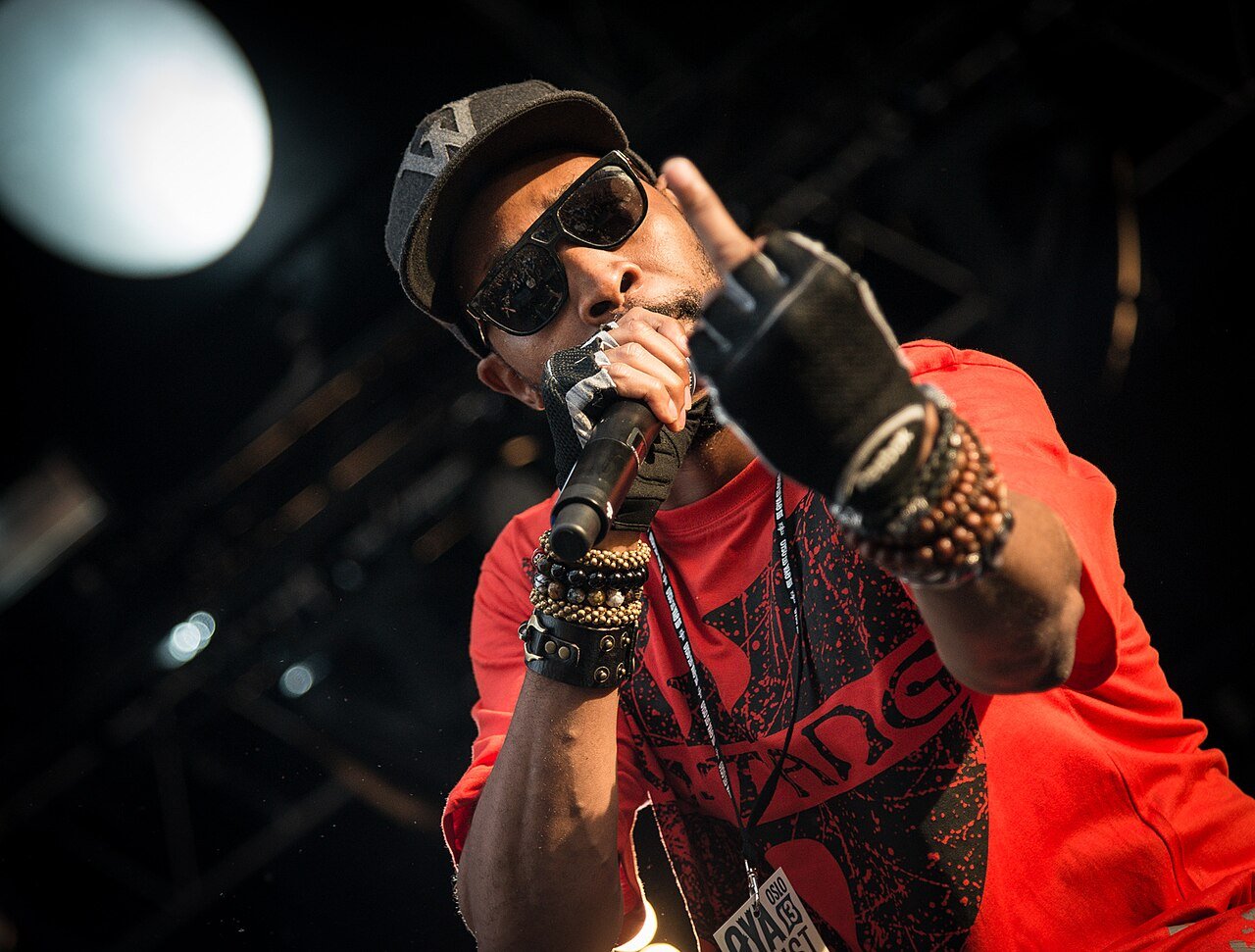
Staten Island should not have become the center of hip-hop’s world. It was the forgotten borough, the one even other New Yorkers joked about not visiting. But in 1993, Robert Diggs — known as RZA — assembled eight other MCs under the name Wu-Tang Clan and released Enter the Wu-Tang (36 Chambers), and suddenly Staten Island was everywhere.
RZA’s production for that debut was deliberately lo-fi, almost rough to the point of rawness: soul samples from obscure R&B records and kung fu film soundtracks slowed to a lurching crawl, drums that hit like concrete, movie dialogue sliced into the breaks. The effect wasn’t polished — it was purposeful. RZA wanted the music to sound like it came from somewhere outsiders couldn’t reach, a frequency they couldn’t tune into without study.
The Wu production template extended outward into an entire solar system of solo albums: Raekwon’s Only Built 4 Cuban Linx…, Ghostface Killah’s Ironman, GZA’s Liquid Swords — each built from the same sonic language but expressed in distinct dialects. RZA proved that a single producer could be the auteur of an entire movement, not just the backing track for someone else’s voice.
The Art of the Dig
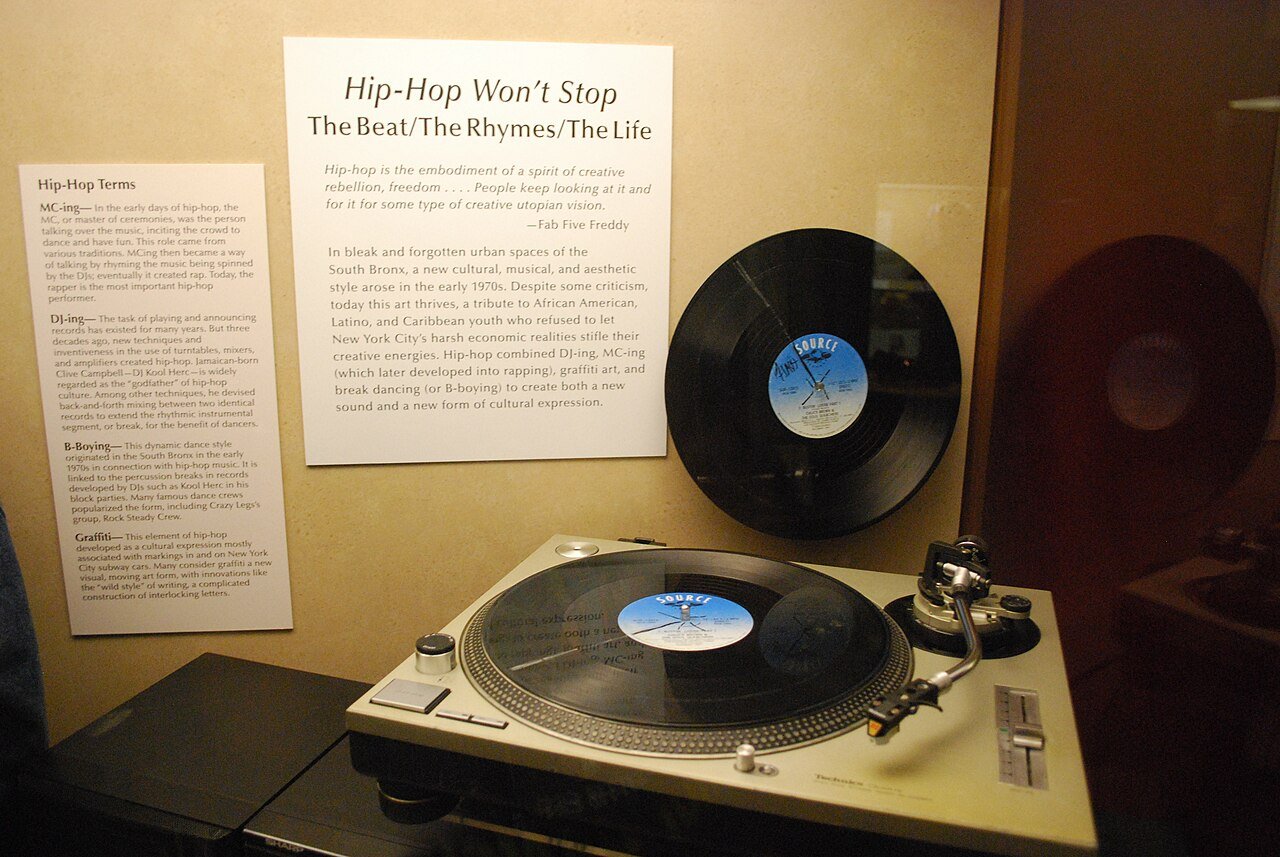
What united these producers — and the dozens working in their wake — was an obsession with vinyl. Before Spotify, before YouTube, before digital anything, finding the perfect sample meant spending weekends in record store basements, thrift shops, and flea markets, flipping through thousands of albums with the patient intensity of a jeweler sorting rough stone.
The community called it crate digging, and it was more than a sourcing method — it was a philosophy, a discipline, almost a religion. Producers like Large Professor, who executive-produced Nas’s landmark Illmatic and contributed several of its key tracks, were known to spend entire days in record stores, listening to the first few bars of every album they could find, hunting for the two-second loop that would unlock a new track.
The records they sampled — soul, funk, jazz, classic rock, gospel, film scores — were often from artists who had fallen entirely off the cultural radar. Hip-hop’s producers didn’t just borrow this music; they preserved it. They introduced James Brown, Isaac Hayes, Curtis Mayfield, and Roy Ayers to a generation that had never heard them, and in many cases sparked enough renewed interest that the original records became collector’s items overnight. The producers were, accidentally, archivists — keeping the American musical tradition alive through the act of theft.

J Dilla and the Shape of What Came Next
By the mid-to-late 1990s, a producer from Detroit named James Yancey — known professionally as J Dilla — was quietly doing something that the rest of the hip-hop world wouldn’t fully understand until years later. Where other producers programmed drums to sit perfectly on the quantized grid, Dilla’s beats were deliberately off — not sloppy, but human. His kicks and snares fell slightly before or after the beat in a way that created a feeling of syncopated, swinging genius that no software setting could replicate.
Dilla produced for A Tribe Called Quest, De La Soul, Busta Rhymes, and the Pharcyde, but his most celebrated work existed largely in underground circles during the Golden Age itself. His influence expanded posthumously — after his death in 2006 at age 32 from a rare blood disease — until today he is almost universally considered one of the most important producers in music history, full stop. His late-90s output showed what Golden Age production principles could become when pushed past their apparent limits: pure feel, pure sound, stripped of everything except the loop, the chop, and the human imperfection that made it breathe.
What the Beats Carried
The Golden Age producers were not invisible. They were credited on albums, they appeared in music videos, they built reputations that would carry their names forward for decades past their most productive years. But the culture’s mythology was always built around the MC — the voice, the wordsmith, the person standing at the microphone with something to prove.
This was perhaps inevitable. Hip-hop had always been, at its roots, about speech — about finding language for an experience that mainstream culture was ignoring or criminalizing. The producers understood that. They built rooms for the words to live in. They set the scene before the actors showed up.
What they left behind isn’t just a collection of drum patterns and flipped samples. It’s a sonic grammar that still governs how hip-hop sounds — how it thinks about rhythm, about texture, about what happens when you put two disparate pieces of music together and something entirely new falls out. Every producer who has mattered in the genre since 1999 can be traced back to this decade, back to these names, back to the basement studios and crate-digging Saturdays that made everything possible.
The beat was never just the beat. It was the whole argument. And it won.
Sources
- Wikipedia — DJ Premier
- Wikipedia — Pete Rock
- Wikipedia — J Dilla
- Wikipedia — A Tribe Called Quest
- AllMusic
The Retro Almanac
A monthly roundup of "on this day" highlights from that month, decades back — plus first dibs on new retro merch drops. No spam, just the good stuff.