Beetlejuice 1988: How Tim Burton Made the Perfect Cult Classic
The opening weekend numbers told half the story. Beetlejuice pulled in $8 million over Easter weekend 1988 — solid, not spectacular. What nobody anticipated was the slow burn that followed. Word-of-mouth transformed a strange ghost comedy into a generational touchstone. By summer’s end, it had finished as the 10th-highest-grossing film of the year and launched Tim Burton from promising newcomer to major Hollywood force. The film did this on a budget most studios wouldn’t greenlight for a mid-tier drama.
A $15 Million Bet That Rewrote the Rules of Horror-Comedy
Warner Bros. was skeptical throughout production. The studio pushed back on the title — “Beetlejuice” felt unmarketable to them — and lobbied for “House Ghosts” as a safer alternative. Burton, only half-joking, countered with “Scared Sheetless.” The back-and-forth ended with the studio capitulating on the name, which turned out to be the right call.
The budget landed at $15 million total, with just $1 million set aside for visual effects. For a film involving ghosts, shape-shifting, miniature model towns, and various supernatural transformations, that number sounds delusional. Burton’s solution was to lean hard into practical effects and in-camera tricks. Almost everything in the afterlife sequences — the waiting room, the bureaucratic chaos of the dead — was built on actual sets with live actors in heavy makeup. The budget constraint accidentally gave the film its most distinctive quality: that slightly handmade, tactile weirdness that still holds up in an era of wall-to-wall CGI.
The Retro Almanac
A monthly roundup of "on this day" highlights from that month, decades back — plus first dibs on new retro merch drops. No spam, just the good stuff.
The Title Character Almost Had a Completely Different Face
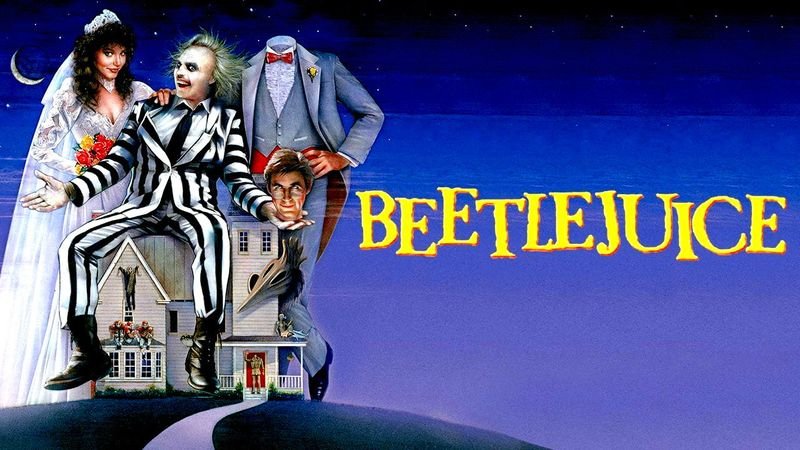
Tim Burton’s original choice for Betelgeuse — the self-described bio-exorcist — was Sammy Davis Jr. Burton had been a fan of Davis since childhood. Studio executives vetoed the casting before it went anywhere. It was producer David Geffen who suggested Michael Keaton.
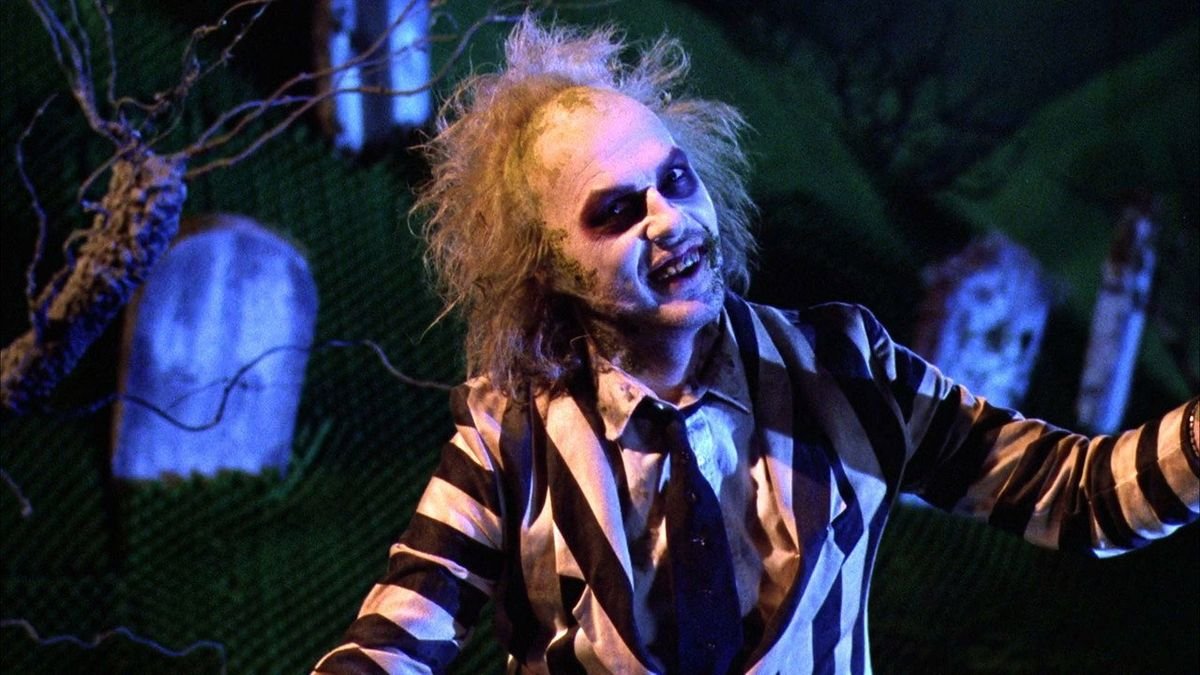
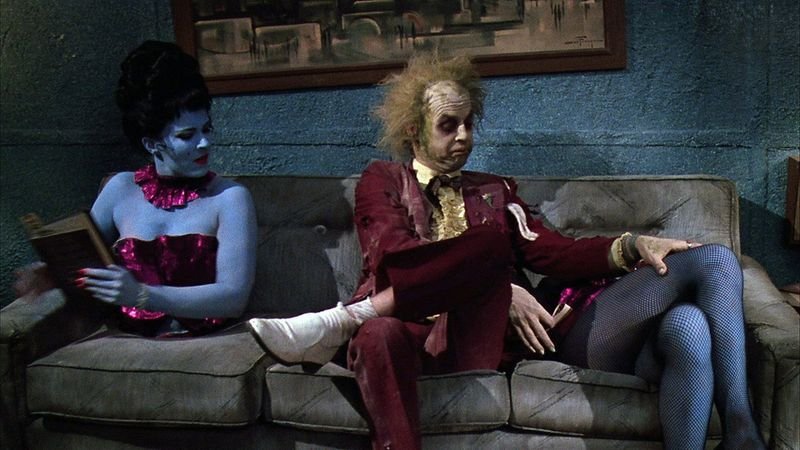
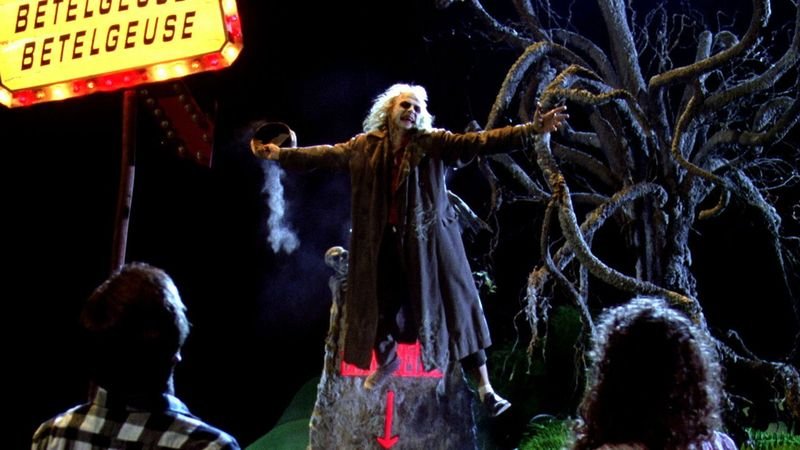
Keaton was coming off Mr. Mom and Johnny Dangerously. Burton met with him skeptically, unfamiliar with his work. What changed the director’s mind was what happened in the room. Burton described Betelgeuse as a ghost who “exists in all times and all spaces simultaneously,” and Keaton ran with the concept in real time. He conceived the character’s look from scratch — the electrically disheveled hair, rotten teeth, mold creeping across his face — and improvised much of the dialogue during his scenes. The result was something so strange and specific that no director could have scripted it and no other actor could have matched it.
Despite being the title character, Keaton spent roughly two weeks total on set. Betelgeuse doesn’t appear until the 25-minute mark, and his total screen time amounts to about 17.5 minutes of a 92-minute film. Minimal presence, permanent impression.
The Name That Wasn’t Supposed to Stick
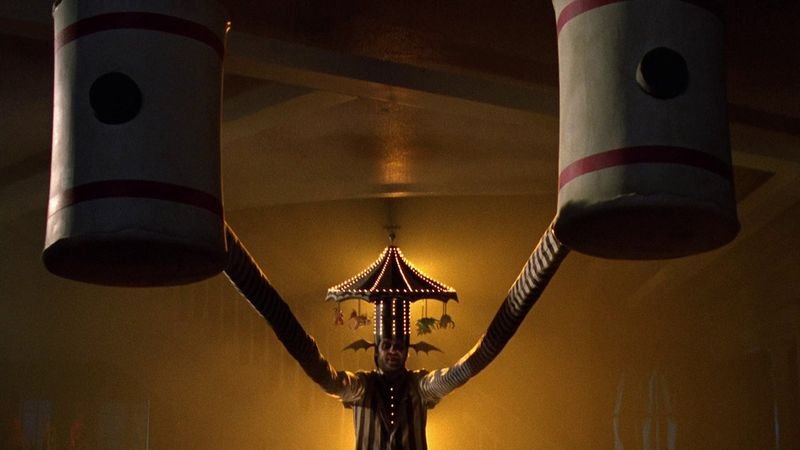
“Beetlejuice” — spelled as one word — is a phonetic corruption of Betelgeuse, one of the brightest stars in the constellation Orion. Depending on who you ask, the star is pronounced either “beetle-juice” or “BET-el-jooze.” The film picked the former, and Warner Bros. spent months wishing they’d called it something else.
Beyond the title fight, the original screenplay was considerably darker. The first draft by Michael McDowell depicted the Maitlands’ death more graphically, and Betelgeuse was originally conceived as a genuinely malevolent winged demon whose goal was to kill the living family in the house — not scare them away. Burton softened the character toward comedy while keeping the menace in the performance. Test screenings still prompted additional filming: the witch doctor epilogue, where Charles Deetz’s head is shrunk, was shot after audiences reacted to an earlier ending cut.
Three Casting Decisions That Made the Film What It Is
Anjelica Huston was the original choice to play Delia Deetz, the aggressively modernist sculptor who invades the Maitland house. She withdrew due to illness, and Catherine O’Hara stepped in. O’Hara’s version of Delia — high-strung, dramatically self-absorbed, somehow sympathetic in her complete obliviousness — is one of the film’s structural anchors. She later married Bo Welch, who served as Beetlejuice’s production designer.
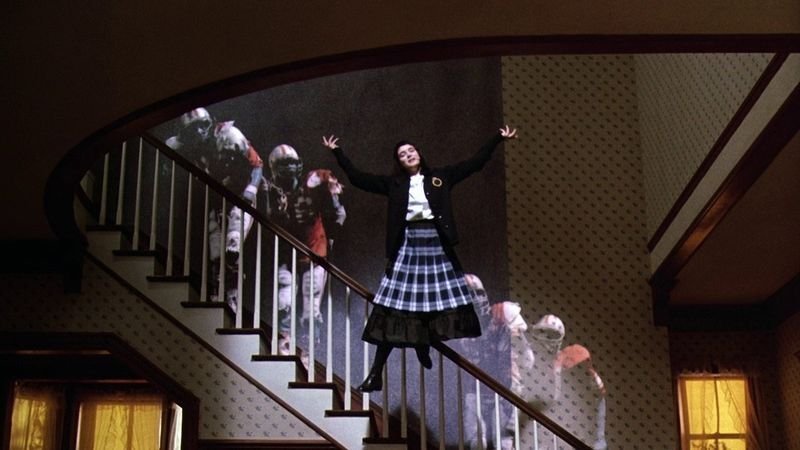
For Lydia Deetz, the gothic teenager at the story’s emotional center, Burton auditioned a number of well-known young actresses. Molly Ringwald, Sarah Jessica Parker, and Brooke Shields were among the candidates. Burton cast Winona Ryder after seeing her in the 1986 film Lucas. Ryder was 15 when principal photography began in March 1987 and 16 when the film released in April 1988.
Alec Baldwin and Geena Davis, as the recently deceased Maitlands, anchored the film with a warmth that could have curdled into sentimentality in less careful hands. Their straightforward affection for each other makes the supernatural chaos around them feel genuinely threatening rather than just silly.
The Dinner Scene That Nobody Could Have Planned
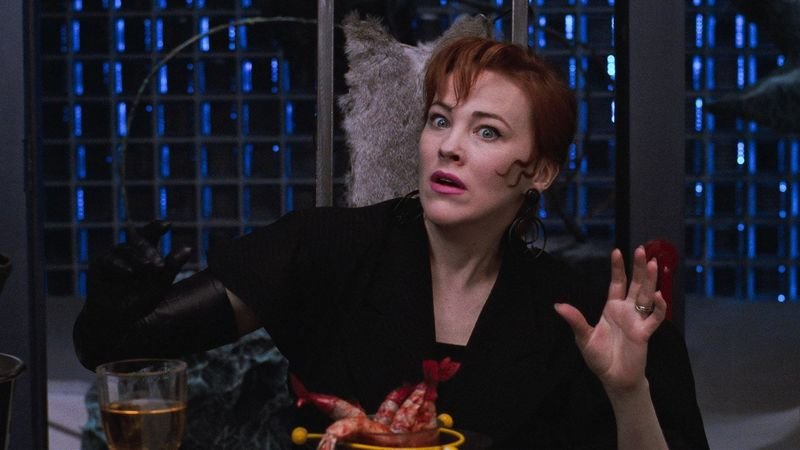
The most quoted moment in Beetlejuice is the dinner party sequence, where Betelgeuse hijacks a formal gathering and compels every guest to dance to Harry Belafonte’s “Day-O (Banana Boat Song).” Catherine O’Hara’s possessed shimmy, with lobster-claw hands steering her fork toward her own face, became the film’s iconic image.
The scene works because of its precision. Burton loved Belafonte’s music and built the sequence around that specific song — the manic, Caribbean-inflected cheerfulness of “Day-O” crashing into a formal dinner party of Manhattan aesthetes losing control of their own bodies. It’s strange, but it isn’t cruel. That balance is the entire film compressed into four minutes.
The Afterlife Looks Like a DMV, and That Was Keaton’s Idea
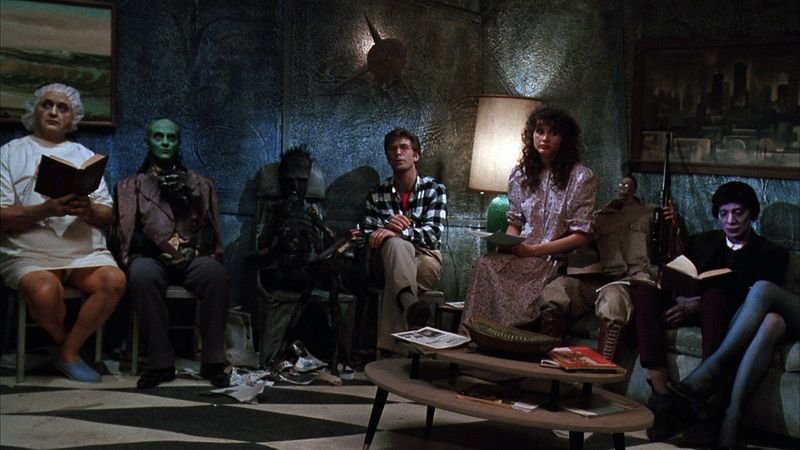
Michael Keaton wasn’t just the actor — he helped shape the film’s conceptual logic. It was Keaton who first described the afterlife as needing to feel like a bureaucratic unemployment office: endless waiting, pointless paperwork, and a case worker who hasn’t cared about anything since 1963. Burton ran with it entirely.
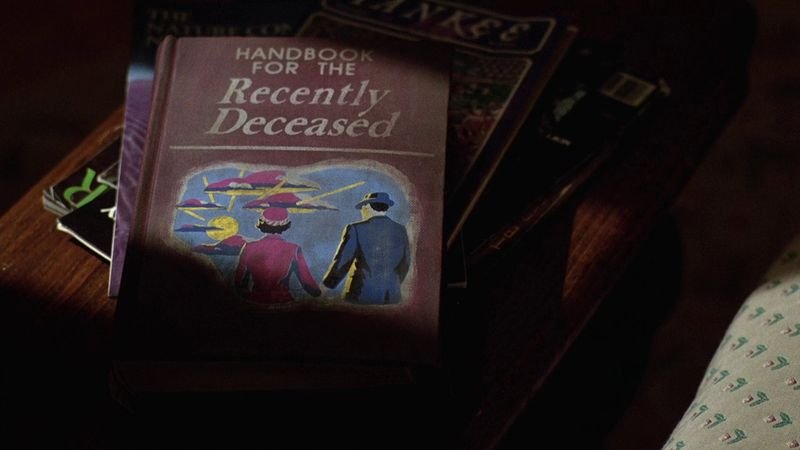
The result is the afterlife waiting room — a beige, fluorescent-lit purgatory where the recently dead sit with numbered tickets, thumb through the Handbook for the Recently Deceased, and deal with a chain-smoking receptionist named Juno who has seen everything and cares about none of it. Sylvia Sidney played Juno, and she won the Saturn Award for Best Supporting Actress for the role. The set cost almost nothing and became one of the most memorable spaces in the film.
The Grosses, the Oscar, and the Craft Behind the Comedy
Beetlejuice opened on March 30, 1988, and crossed $84 million domestically by the end of its theatrical run — roughly $206 million adjusted for inflation. It was the 10th-highest-grossing film of a year that also included Rain Man, Coming to America, and Die Hard. For a film built around a concept that nobody could easily pitch, that performance was remarkable.
At the Academy Awards the following spring, Beetlejuice won the Oscar for Best Makeup — the work of Ve Neill, Steve La Porte, and Robert Short. The film also took three Saturn Awards: Best Horror Film, Best Makeup, and Best Supporting Actress for Sidney. None of that reflected how much of the makeup was done on a shoestring. The two hours Keaton spent in the makeup chair every morning produced a character that still gets recognized on Halloween costumes more than three decades later.
The film was shot on location in East Corinth, Vermont, for its outdoor winter river-town sequences, with interiors built at The Culver Studios in Culver City, California. Principal photography ran from March 11 to June 11, 1987. The entire post-production process — visual effects, Danny Elfman’s score, editing — happened in roughly nine months before the spring 1988 release.
36 Years Before Anyone Said the Name Three Times
Development on a sequel began almost immediately after the first film’s success. Tim Burton and Michael Keaton discussed it publicly across three decades. Scripts were written and abandoned. The project spent the better part of a generation in various stages of development hell — a fact that became part of the film’s lore, a joke the fanbase had been making since the early 2000s.
Beetlejuice Beetlejuice arrived in theaters on September 6, 2024, with Keaton, Winona Ryder, and Catherine O’Hara all returning. Keaton wore the same striped suit. The sequel grossed more than $450 million worldwide and became one of Tim Burton’s biggest commercial successes. The 36-year wait between the two films was, at the time of release, the longest gap between an original film and its theatrical sequel in Hollywood history.

The Cartoon, the Musical, and What Actually Lasts
A Beetlejuice animated series launched on ABC in 1989 and ran until 1991, producing 94 episodes. The cartoon kept the character’s visual design but changed his personality substantially — the animated Betelgeuse was a mischievous friend to Lydia, not a threatening presence. It introduced the character to an audience too young for the film and helped cement the franchise’s reach into the early 1990s.
The stage musical premiered in 2018 at the National Theatre of Washington D.C. before transferring to Broadway in 2019, where it ran for three years before closing in 2023. The original cast recording found a large second life on social media — particularly TikTok — where Gen Z discovered the show years after its Broadway run ended. A national tour is in preparation.
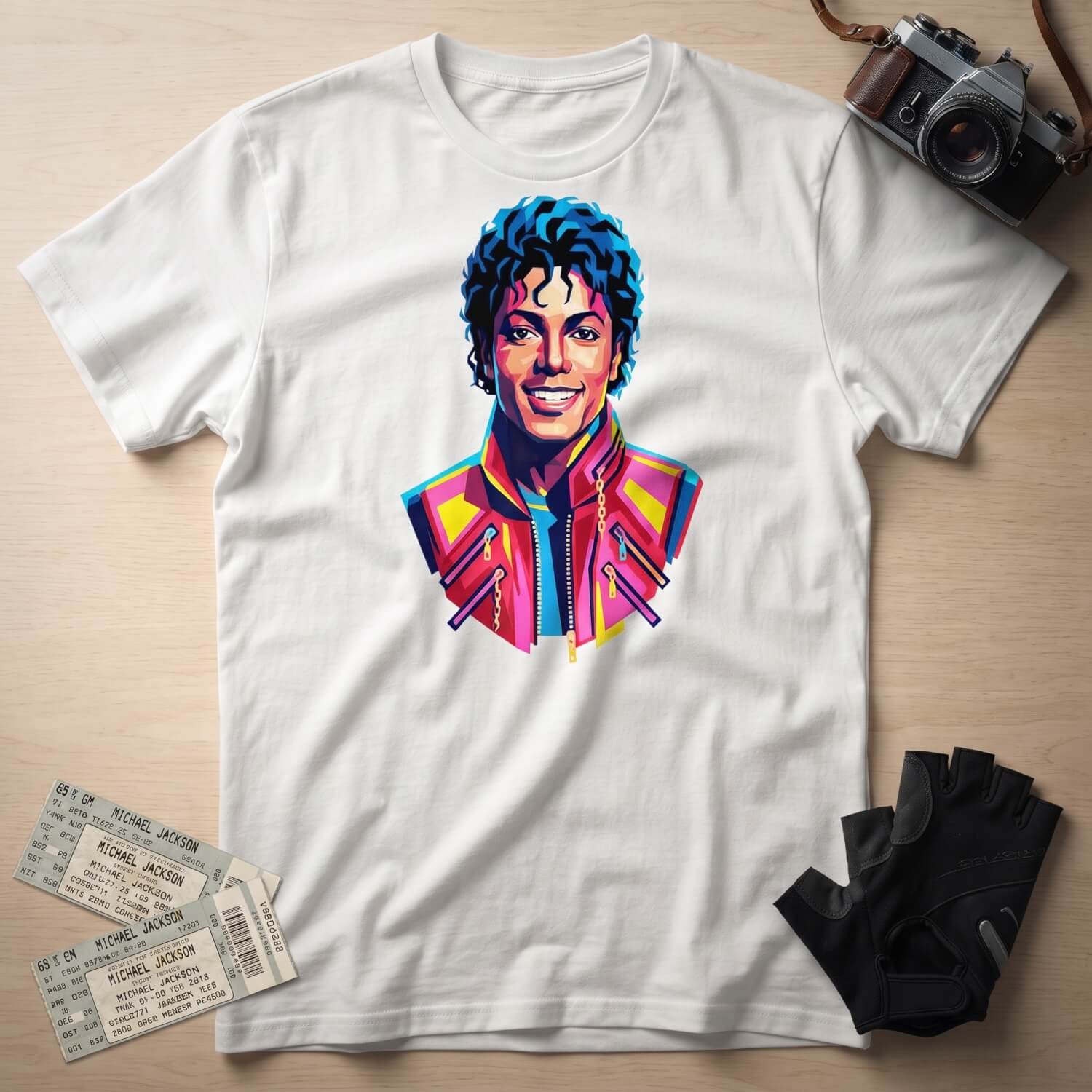
What Beetlejuice accomplished in 1988 was harder than it looked. The Lost Boys came out the same year and attempted something similar in the horror-comedy space. The Breakfast Club had already defined what 80s teen cinema could be. Michael Jackson’s Thriller had shown what a genre-crossing pop cultural moment looked like. Beetlejuice stood apart from all of them by refusing to be afraid of its own weirdness. Tim Burton bet on strange, and strange won.
The film’s Halloween relevance alone — the costume, the striped suit, the face paint — has generated more cultural mileage than most blockbusters manage in their first weekend. Thirty-six years on, you can still say the name three times and someone in the room will finish the reference.
Sources
- Wikipedia — Beetlejuice (film) — Production history, cast, and box office figures
- IMDb — Beetlejuice (1988) — Cast, crew, and trivia
- Britannica — Beetlejuice — Overview and critical reception
- Screen Rant — Tim Burton: Behind the Scenes Facts & Trivia About Beetlejuice — Production details and casting facts
The Retro Almanac
A monthly roundup of "on this day" highlights from that month, decades back — plus first dibs on new retro merch drops. No spam, just the good stuff.