
Mortal Kombat: The Game That Built the ESRB
By December 1993, two U.S. senators had used Mortal Kombat as Exhibit A in a congressional hearing on video game violence. By July 1994, the ESRB existed because of it. The game did not just survive the backlash — it institutionalized it. The “M for Mature” rating on every adult game you’ve ever bought is Mortal Kombat’s most lasting creation, and most players have never thought about it that way.
The Street Fighter Problem
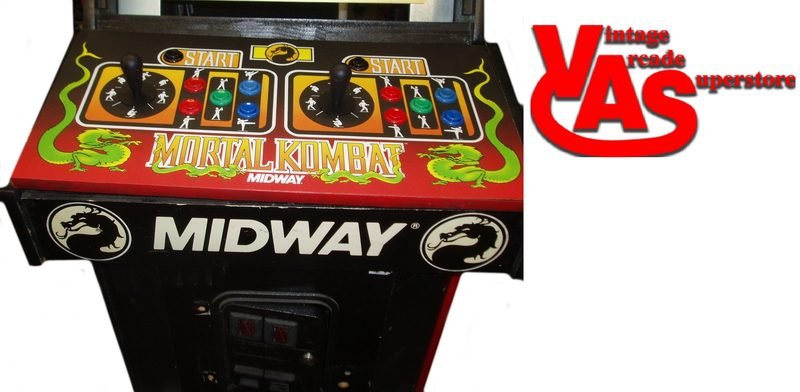
Midway Games had a problem in 1991: Capcom’s Street Fighter II was pulling quarters out of American arcades at a rate nobody had seen before. The question Midway gave its two-man development team — programmer Ed Boon and artist John Tobias — wasn’t subtle: build something that could compete with it.
The Retro Almanac
A monthly roundup of "on this day" highlights from that month, decades back — plus first dibs on new retro merch drops. No spam, just the good stuff.
The answer Boon and Tobias arrived at was to break every convention Street Fighter had set. Instead of illustrated sprites, they would film real actors against a black backdrop and digitize the footage directly into the game. The fighters would look like photographs in motion, not cartoons. And where Street Fighter had a Hadouken, Mortal Kombat would have a fatality — a player-activated finishing move where the winner could execute the loser in graphic, specific, unforgettable ways.
Scorpion removes his mask to reveal a flaming skull. Sub-Zero rips out a spine. These were not abstractions. They were designed to make a parent stop walking past an arcade cabinet and stare. That reaction was the marketing strategy.
Real People in a Fake World
The digitized fighter system created an odd behind-the-scenes situation at Midway. Daniel Pesina — a martial artist from Chicago — played Johnny Cage in the motion capture sessions and served as the physical basis for all four male ninjas, including Sub-Zero and Scorpion, swapping costumes between takes. Ho Sung Pak played Liu Kang. Elizabeth Malecki was Sonya Blade. The credits buried most of this.
The technique gave the game a look that no competitor could match in 1992. Characters moved with a weight and specificity that pure animation couldn’t replicate, and the gore read as real precisely because the bodies underneath it had been real bodies. When Tobias designed the fatalities, he was working with footage of actual human proportions, which made the violence land differently than anything in gaming history to that point.
Dan Forden, the game’s sound designer, inserted one additional piece of real-world footage: his own face, appearing in the lower corner of the screen after certain uppercuts, shouting “Toasty!” It became one of the most recognized Easter eggs in gaming. Forden never stopped appearing in sequels. He’s still in there.
The Blood That Broke the SNES
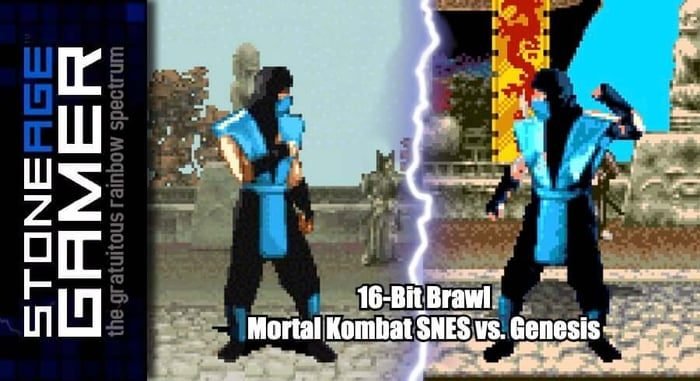
When the home console versions arrived in September 1993, Nintendo and Sega made opposite decisions about how to handle the game’s content. Nintendo required Acclaim — the publisher — to ship a censored version for the Super Nintendo: grey sweat instead of red blood, most fatalities gutted or replaced with tamer animations. Sega approved the unmodified game for Genesis with one condition: a blood code that players had to unlock themselves.
The Genesis blood code was ABACABB. Every kid who owned a Sega Genesis in 1993 knew those seven letters the way they knew their own phone number. Players wrote it on their hands before going to a friend’s house. It circulated through schools the same way the Konami Code had four years earlier. ABACABB was not just a cheat — it was proof that you had the real version, and the SNES kids had been sold something lesser.
This created an unexpected problem for Nintendo. The company had built its brand on being the safe, family-friendly alternative to Sega’s edgier marketing. When Mortal Kombat launched with full blood on Genesis and censored content on SNES, it validated exactly what Sega had been claiming in its ads. The Genesis version outsold the SNES version that month by a margin analysts traced directly to the blood code.

Mortal Monday — September 13, 1993
Acclaim marketed the simultaneous home release as “Mortal Monday.” It was one of the first coordinated launch campaigns in gaming history — every store in the country receiving the game on the same day, the date announced months in advance, $10 million spent on television advertising, commercials building toward it like a movie opening. The campaign worked beyond anyone’s projections. An estimated 1.3 million cartridges sold in the first week across both platforms.
The coverage that followed the launch was not what Acclaim expected. News segments appeared on local television stations across the country showing the game’s fatalities in slow motion and asking parents whether they knew their children were playing it. Most parents did not. The game carried no age rating, no content warning, nothing on the box to indicate it might not be appropriate for an eight-year-old. In 1993, no such system existed for video games.
Senator Joe Lieberman of Connecticut watched those news segments. He called Senator Herb Kohl of Wisconsin. Together, they scheduled hearings.
Senator Lieberman vs. the Arcade Cabinet
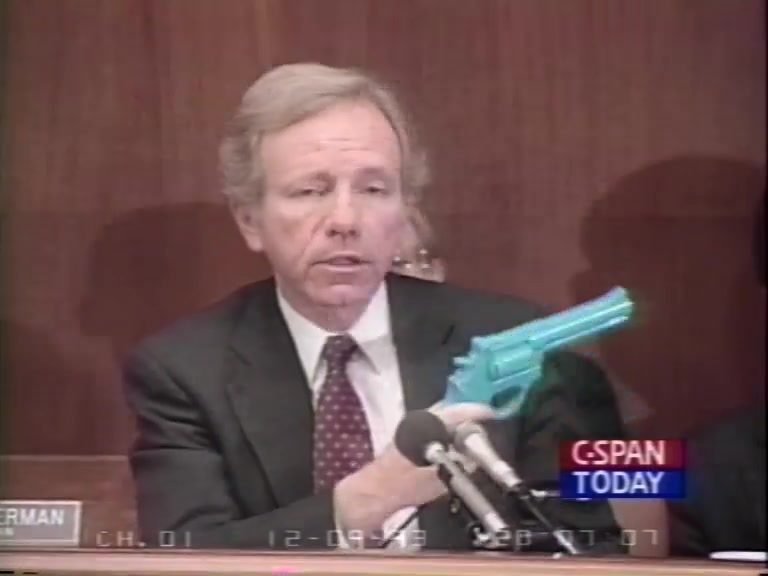
The Senate hearings on video game violence opened on December 9, 1993. Lieberman and Kohl called executives from Nintendo, Sega, and several game publishers to testify before the Subcommittee on Regulation and Government Information. They showed footage of Mortal Kombat fatalities on a screen in a Senate chamber and asked the assembled executives to explain what children were being sold. They also brought a toy gun to illustrate what they saw as the desensitizing effect of interactive violence on children.
The exchanges were theatrical and largely unproductive as policy — but they changed the industry’s calculation overnight. Sega already had a rating system of sorts, a three-tier label it had been applying to some titles. Nintendo had been relying on its own content guidelines. Neither system was standardized, neither was recognizable to consumers, and neither had any teeth. Lieberman made it clear that if the industry didn’t create something coherent and enforceable, Congress would do it for them.
The hearings also gave Mortal Kombat a second wave of coverage. News organizations that had missed the September launch now had a congressional hook to run the story again. Every report that showed the game’s content in order to warn parents about it also told millions of teenagers exactly where to find it. Game rental stores reported shortages in the weeks after the hearings. The controversy had become the advertising.

The Rating System Nobody Wanted Until They Needed It
The video game industry formed what became the Interactive Digital Software Association in early 1994 specifically to build what Congress was threatening to mandate. The result — announced in July 1994, roughly nine months after Mortal Monday — was the Entertainment Software Rating Board. The ESRB’s initial rating categories (EC, E, T, M, AO) were designed to be recognizable at a glance on store shelves, borrowing the same principle from the MPAA film ratings. Every game sold at retail in the United States would carry one.
The parallel to the PMRC hearings a decade earlier is hard to miss. Just as the music industry’s censorship battle with Congress produced the Parental Advisory sticker, Mortal Kombat’s congressional moment produced the game industry’s equivalent warning system. In both cases, the industry moved to self-regulate before lawmakers could do it worse. In both cases, the warning label became a badge of honor.
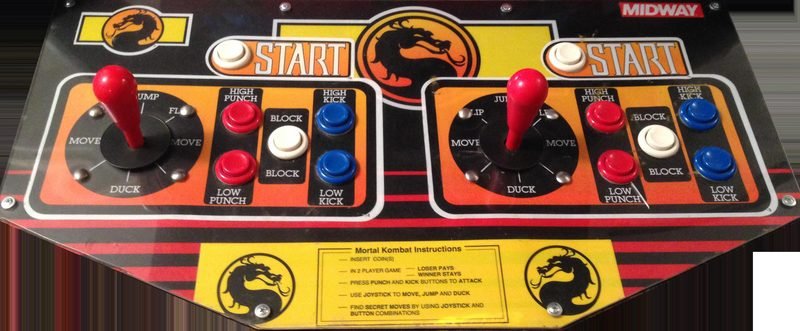
Mortal Kombat II, released in arcades in 1993 and on home consoles in 1994, arrived just as the new system launched. It was rated M. It outsold the original. The rating system that had been built partly to slow the franchise down instead gave parents a clear signal and gave retailers a defensible framework — which paradoxically made it easier, not harder, to stock titles like Mortal Kombat on mainstream shelves.
The Movie That Somehow Worked
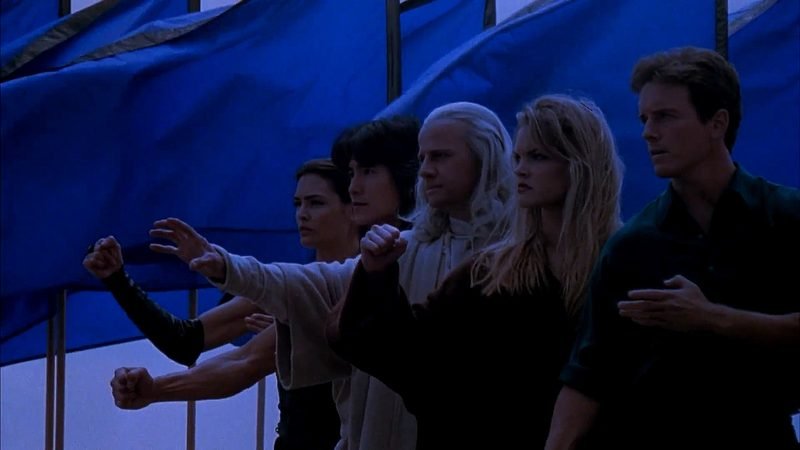
The 1995 Mortal Kombat film had every reason to fail. The Street Fighter movie, released in December 1994, had gone out with a $35 million budget, Jean-Claude Van Damme, and a reputation as a disaster. The conventional wisdom was that video game adaptations couldn’t satisfy the people who cared most about the source material. Mortal Kombat had an $18 million budget, a director with no major feature credits (Paul W.S. Anderson), and a cast of relative unknowns.
It made $122 million worldwide. The film is widely considered the high-water mark of the 1990s video game movie era — not because it’s great cinema, but because it understood what the game was actually selling: tournament mythology, clean archetypes, and the particular satisfaction of seeing Sub-Zero and Scorpion on screen. The arcade era had built an audience that already knew these characters, and Anderson gave them what they came for.
The sequel, Annihilation, came out in 1997 and did not.
What Mortal Kombat Actually Built
The franchise has sold more than 73 million copies across all titles as of 2023. Mortal Kombat 1 — a reboot released in September 2023 — sold over three million units in its first month. The characters Boon and Tobias created in 10 months in 1991 have more cultural staying power than almost anything else from that arcade era. Scorpion is one of the most recognized video game characters on the planet, alongside Mario and Pac-Man.
What the game built beyond its own franchise is harder to measure but more important. The ESRB was created by publishers before Congress could mandate something worse. That self-regulation model — imperfect, industry-funded, occasionally gamed — has governed American gaming for over 30 years. Every “M for Mature” sticker on a game is a direct line back to two Midway programmers who built a fatality system and a senator who held up a toy gun in December 1993.
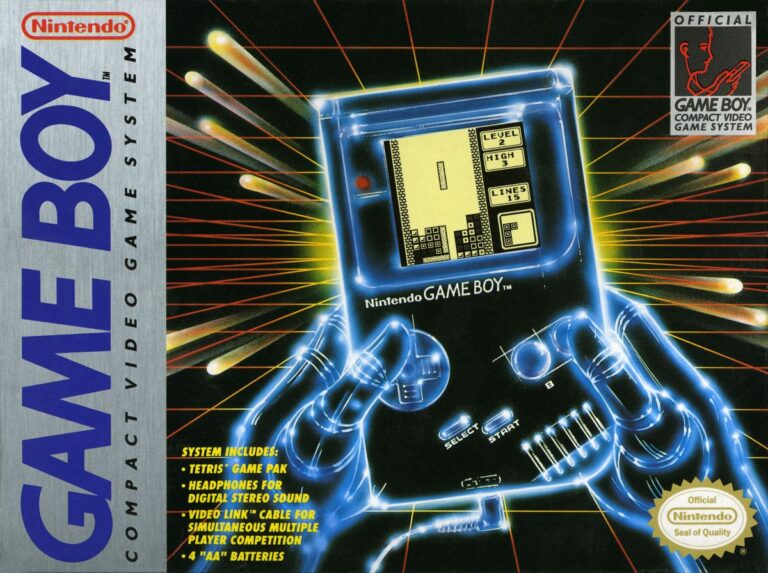
Boon still works at NetherRealm Studios — Midway’s successor — and still has final say on every Mortal Kombat game. The Game Boy generation grew up, bought consoles, and kept buying Mortal Kombat. Tomorrow marks 33 years since Mortal Monday. The game is still selling. The rating it created is still stamped on every title that needs one.
Sources
- Smithsonian Magazine — How Mortal Kombat Created the ESRB — Primary source documentation of the December 1993 Senate hearings and ESRB founding.
- ESRB — About the ESRB / History — Official founding timeline and rating category definitions.
- Wikipedia — Mortal Kombat (1992 video game) — Development timeline, cast, sales figures, and platform version details.
- Vox — The history of Mortal Kombat and the video game controversy that changed gaming forever — Comprehensive account of the ESRB hearings and consequences.
- IMDb — Mortal Kombat (1995) — Box office data and production information for the 1995 film.
The Retro Almanac
A monthly roundup of "on this day" highlights from that month, decades back — plus first dibs on new retro merch drops. No spam, just the good stuff.