Boombox: 9 Wild Facts About the 80s Ghetto Blaster
In 1986, Americans bought 20.4 million boomboxes. By 2003, that number had collapsed to 329,000. Few pieces of consumer tech have risen and fallen as dramatically as the portable stereo that once rode on a shoulder through every city block, park, and subway platform in the country. The boombox wasn’t just a way to hear music — it was a way to make everyone else hear yours. Here are nine facts about the machine that gave the 1980s its soundtrack, whether the neighbors wanted it or not.
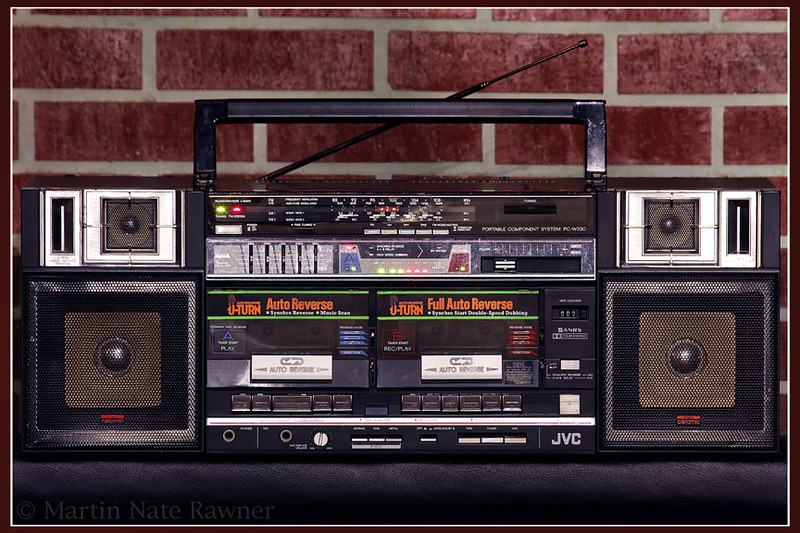
The JVC PC-W330 — dual decks, chrome trim, and enough wattage to fill a park.
1. The First Boombox Wasn’t American — or Even a Boombox
The machine everyone associates with New York sidewalks actually traces back to the Netherlands. Philips built the first portable radio-cassette recorder, the Radiorecorder, in the mid-1960s. It was a modest, mono, business-traveler gadget — nothing like the chrome monsters that came later. The real transformation happened in Japan, where companies like JVC, Sharp, Panasonic and Sanyo spent the 1970s bolting bigger speakers, brighter VU meters, and stereo sound onto the concept. By the time the boombox reached American shelves in the late ’70s, it had grown a second speaker, a carry handle, and an attitude.
The Retro Almanac
A monthly roundup of "on this day" highlights from that month, decades back — plus first dibs on new retro merch drops. No spam, just the good stuff.
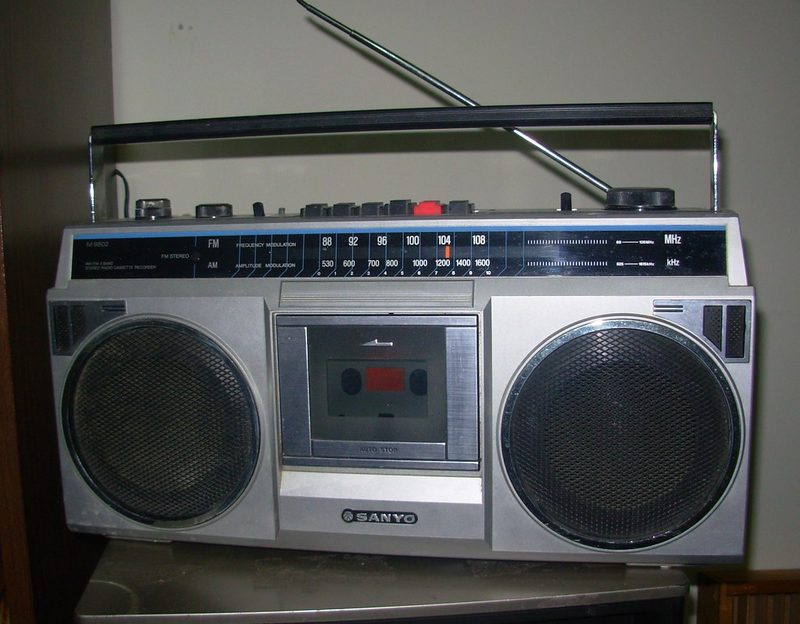
The Sanyo M9802 (1984) — clean silver lines and a single deck, a mid-range workhorse.
2. “Ghetto Blaster” Was Both an Insult and a Badge
The nickname cut two ways. To critics, “ghetto blaster” was a loaded, often racially coded jab at the young Black and Latino kids who carried the loudest models through urban neighborhoods. To the kids carrying them, it was a badge — proof you had the biggest sound on the block. The term stuck harder in the UK, while “boombox” won out in the States. Either way, the machine became shorthand for a specific kind of public presence: unignorable, mobile, and yours. Depending on who you asked, that was either the problem or the entire point.
3. The JVC RC-M90 Was the Undisputed King
If the boombox had a crown, it sat on the JVC RC-M90. Released in 1981, it paired a 10-inch woofer with removable tweeters and a price tag north of $300 — real money in 1981, close to a thousand of today’s dollars. Radio Raheem carried one in Spike Lee’s Do the Right Thing, cementing its status as the boombox of record. Collectors still hunt working RC-M90s, and clean units routinely sell for more than they cost new. It wasn’t the biggest boombox ever made, but it was the one everybody wanted.

The legendary JVC RC-M90 — the boombox Radio Raheem made famous.
4. They Ran on a Truckload of D Batteries
Portability came at a cost, and that cost was batteries — a lot of them. Big models swallowed eight to ten D-cell batteries, and pushing them at full volume drained the set in a few hours. Anyone who actually hauled a boombox around learned to budget for batteries the way a smoker budgets for cigarettes. The heavier machines could tip past 25 pounds loaded, which is why you saw so many balanced on a single shoulder — it was the only way to carry the weight and keep the speakers pointed at the world. Rechargeable packs barely helped; the standard advice was to keep the boombox plugged into the wall at home and save the batteries for when you actually needed to make a scene. Some owners rigged car adapters or lugged spare cells in a backpack, treating a night out like a small logistics operation. That trade-off — enormous sound versus a wallet full of Duracells — defined the whole experience of owning one.
5. The Boombox Built Hip-Hop From the Ground Up
Before hip-hop had record deals, it had boomboxes. Park jams in the Bronx — the old-school hip-hop era — ran on portable stereos. Kids recorded radio broadcasts of DJs like Mr. Magic and Kool DJ Red Alert straight onto cassette, then played those tapes back through the same machines the next day. The boombox was the distribution network — no label, no store, just a tape passed hand to hand and blasted on the corner. Public Enemy’s Chuck D once called radio and the boombox the “Black CNN,” and he wasn’t exaggerating. The machine carried the music the industry hadn’t figured out how to sell yet. The dual-cassette models mattered most here: two decks meant you could dub a tape, and dubbing meant a mixtape could travel. A kid in one borough could hand a cassette to a kid in another, and by that weekend a DJ set recorded off the radio was playing on ten different corners. That copy-and-pass loop was the closest thing early hip-hop had to a streaming platform, and the boombox was the hardware that ran it.

6. Breakdancers Turned It Into a Dance Partner
Set a boombox on the sidewalk, unroll a scrap of linoleum, and you had a stage. Breakdancing and the boombox grew up together — the machine was loud enough to draw a crowd and portable enough to move the cypher wherever the crowd formed. Movies like Breakin’ and Beat Street put the pairing on screen, but it started on real corners with real crews. The boombox didn’t just play the beat for the dancers; it was the reason a random patch of concrete could become a dance floor in ten seconds flat.
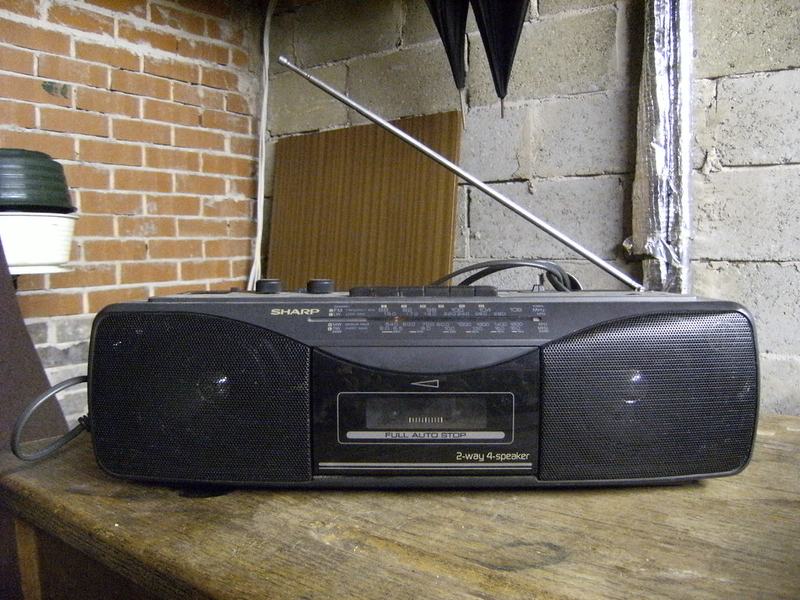
A weathered Sharp QT260 — the kind of everyday boombox that actually saw the streets.
7. They Got Absurdly, Gloriously Big
Once the arms race started, restraint went out the window. Conion, Lasonic, Helix and others built boomboxes with four, five, even six speakers, light-up equalizer displays, and detachable tweeters. The Conion C-100F stretched past three feet wide and weighed enough to double as free weights. Wattage claims on the boxes crept upward every year, and the light-up spectrum analyzers — rows of bouncing LEDs that danced with the music — turned the front panel into a small concert of its own. These weren’t practical — they were flexing devices, engineered to be the loudest and most eye-catching object in any room or on any block. The bigger the box, the bolder the statement, and by the mid-’80s the statements had gotten very loud indeed.
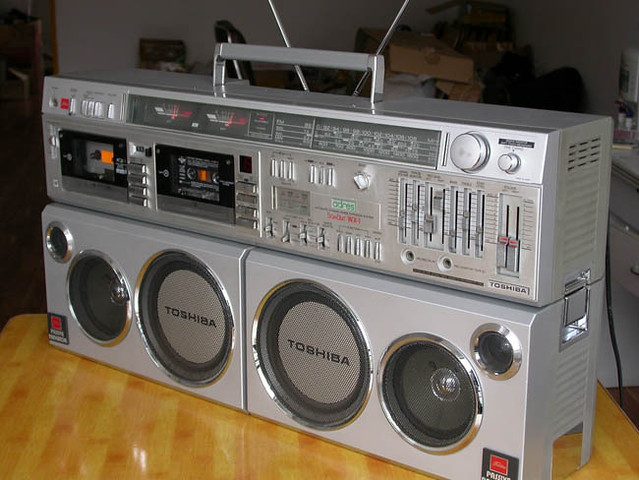
The four-speaker Toshiba BomBeat WX-1 — a true wall of sound you could carry.
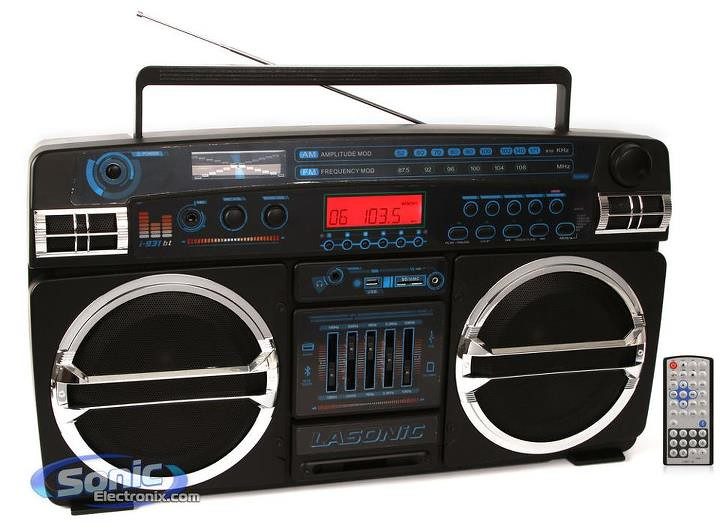
Lasonic kept the oversized ghetto-blaster look alive — chrome grilles, EQ sliders, and all.
8. The Walkman Quietly Killed It
The boombox’s rival didn’t out-shout it — it went the opposite direction. Sony’s Walkman, launched in 1979, made music private, light, and headphone-bound. Through the ’80s the two coexisted, but the logic of the Walkman won: most people, most of the time, didn’t actually want to broadcast their music to strangers. Add city noise ordinances and the shrinking novelty of public volume, and the boombox’s core appeal eroded. The 20-million-a-year sales peak of 1986 was, in hindsight, the top of the hill. You can trace the whole shift from shared sound to private sound in the gap between these two machines. Cities helped the decline along: New York and others cracked down on public volume, and by the late ’80s carrying a blasting boombox onto a subway car could earn you a ticket. What had felt like freedom at the start of the decade increasingly read as a nuisance by the end of it.
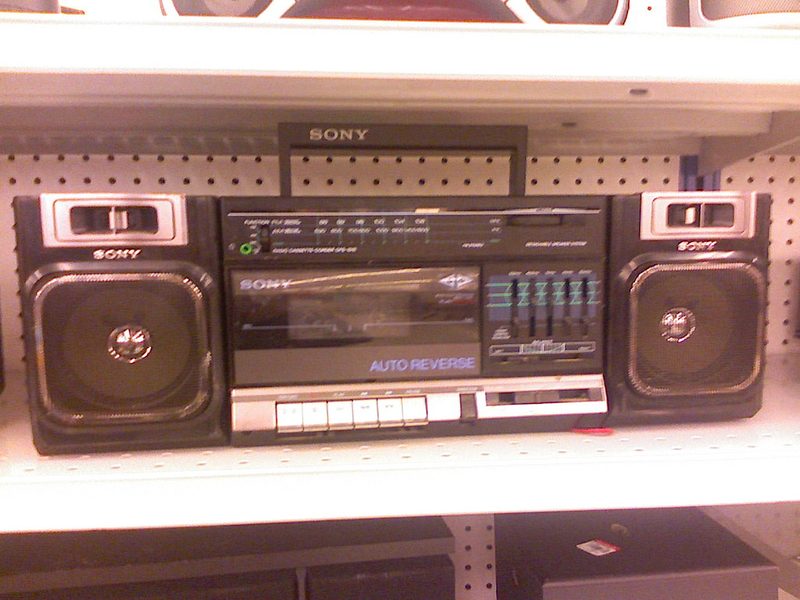
A dual-deck Sony — the same brand whose Walkman would ultimately bury the boombox.
9. The Boombox Never Really Died
Sales cratered, but the object refused to disappear. Lasonic reissued its classic i931 model with Bluetooth and USB, keeping the oversized ghetto-blaster silhouette fully intact. Streetwear brands and artists still reach for the boombox as instant ’80s shorthand, and vintage collectors have pushed prices on clean JVC and Sharp units to levels the original owners would find hilarious. The boombox stopped being everyday tech and became something better: a symbol. It stood for a moment when music was loud, public, and impossible to ignore — and that idea has aged a lot better than the D batteries ever did.
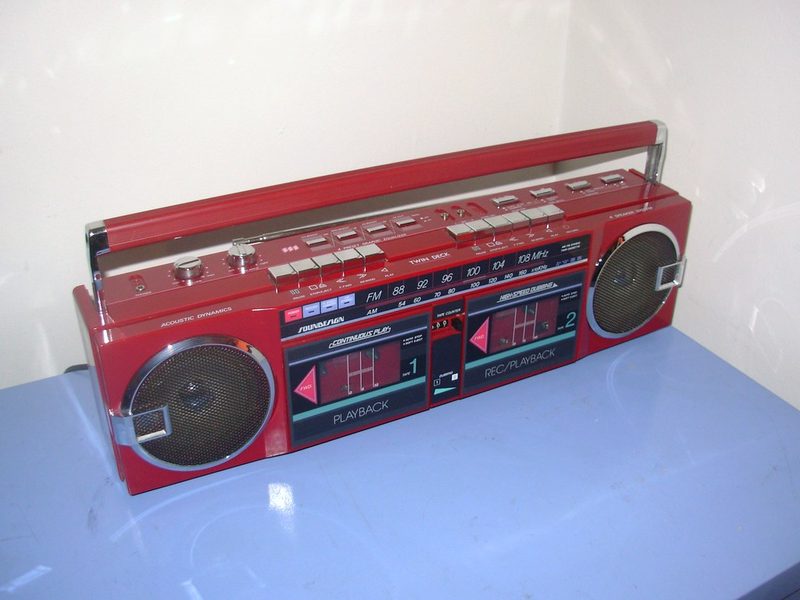
A candy-red Soundesign from 1986 — proof the boombox was as much fashion as function.
Boombox FAQ
What is a boombox? A boombox is a large portable stereo that combines an AM/FM radio with one or two cassette decks and built-in speakers, designed to be carried and played out loud. Most ran on both wall power and a bank of D batteries.
Why is it called a ghetto blaster? The nickname came from the boombox’s association with young Black and Latino communities in 1980s cities, where the loudest models were a fixture on the streets. The term was often derogatory, though many owners wore it as a badge of pride.
What was the most famous boombox? The JVC RC-M90, released in 1981, is widely considered the definitive boombox, helped along by its starring role in Do the Right Thing.
Do boomboxes still exist? Yes. Companies like Lasonic still sell retro-styled models with modern Bluetooth, and vintage units from the ’80s are actively collected and restored.
Sources
- Boombox — Wikipedia — History, technical specs, and sales figures for portable stereos.
- Boombox — Smithsonian National Museum of American History — Museum documentation of the boombox as a cultural artifact.
- The New York Times — Contemporary 1980s reporting on the boombox’s peak popularity.
- The History of The Boombox (Ghetto Blaster) — Video retrospective on the rise and fall of the portable stereo.
Browse retro and vintage-inspired apparel at the RetroRadical shop →
The Retro Almanac
A monthly roundup of "on this day" highlights from that month, decades back — plus first dibs on new retro merch drops. No spam, just the good stuff.