Hocus Pocus 1993: The Flop That Won Halloween
Thirty-three years later, most people who love Hocus Pocus have never watched it in a theater. They found it on cable, on a couch, sometime in October, probably more than once. That’s not an accident of good taste — it’s the entire reason the movie survived. Hocus Pocus is one of the rare films whose afterlife completely rewrote its reputation, and the story of how that happened says as much about 1990s television economics as it does about three witches and a black flame candle.
What happened when Hocus Pocus hit theaters on July 16, 1993
Walt Disney Pictures released Hocus Pocus into the middle of the summer blockbuster season, which remains one of the strangest marketing decisions in the studio’s history. A movie built entirely around Halloween imagery — pumpkins, black cats, a witches’ coven, trick-or-treaters — landed in theaters in the middle of July, competing directly against Jurassic Park, which pulled in $98 million that month alone, and against Free Willy, which opened the very same weekend and out-earned it in its opening run. Disney even had Snow White and the Seven Dwarfs back in theaters as a re-release that summer, cannibalizing its own family audience.
The Retro Almanac
A monthly roundup of "on this day" highlights from that month, decades back — plus first dibs on new retro merch drops. No spam, just the good stuff.
The opening weekend take was $8.1 million — a soft number for a studio picture with that kind of production value. By the end of its run, Hocus Pocus had earned $29.5 million domestically against a $28 million budget, with another $23.7 million overseas bringing the worldwide total to roughly $53 million. On paper that’s technically profitable once video and TV rights are factored in, but for a Disney summer release it read as a clear miss, and trade coverage at the time treated it that way.
The story: three resurrected witches, one candle, and a curse
The plot is simple enough to explain in a sentence, which is part of why it worked once people finally caught up with it. In 1693 Salem, the Sanderson sisters — Winifred, Sarah, and Mary — are hanged for draining the life force of a local child, but not before Winifred curses a boy named Thackery Binx into an immortal cat and swears she’ll return if a virgin lights the Black Flame Candle on a Halloween full moon. Three hundred years later, a skeptical teenager named Max does exactly that to impress a girl, and the sisters come back with one night to regain their youth before sunrise turns them to dust.
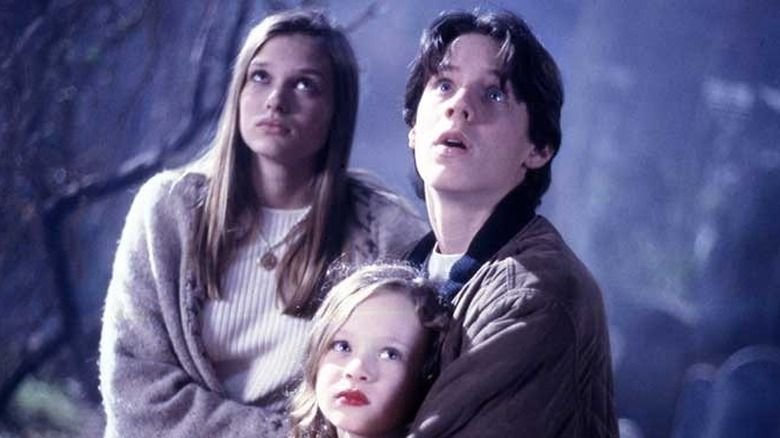
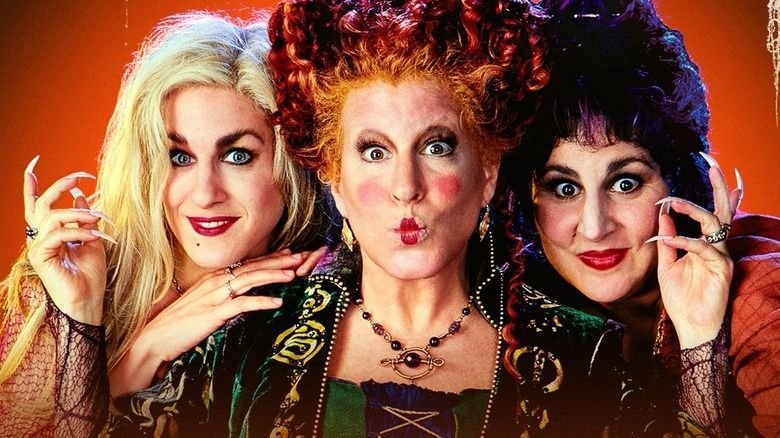
Bette Midler, Sarah Jessica Parker, and Kathy Najimy played the sisters, and the casting is the reason the film has any staying power at all. Midler is doing full musical-theater villainy as Winifred, chewing every line like she knows the movie is a comedy even when the script isn’t sure. Omri Katz played Max, Thora Birch played his little sister Dani, and Vinessa Shaw played Allison, the love interest whose family history conveniently connects back to the original 1693 curse. Director Kenny Ortega — who would go on to choreograph and direct the High School Musical franchise — brought a theater-kid energy to the whole production that a straighter horror-comedy director probably wouldn’t have.
Why critics and audiences shrugged in 1993
Gene Siskel called it dreadful. Empire magazine used the same word. The reviews weren’t cruel so much as baffled — critics didn’t know what to do with a movie that was too dark for small children, too silly for horror fans, and released at completely the wrong time of year to read as a Halloween film at all. Test audiences in July aren’t thinking about pumpkins, and a script built entirely around Halloween iconography loses a lot of its punch when there’s no seasonal context around it.
There’s also a case that the movie is simply stranger than its marketing let on. The Sanderson sisters’ plan involves killing children to extend their own lives — that’s the actual stakes of the film, dressed up in slapstick and musical numbers. Parents bringing kids expecting a lighthearted Halloween romp got something with genuine menace in it, particularly in a scene where Winifred nearly succeeds in draining Dani’s life force. That tonal whiplash didn’t hurt the film’s eventual cult following, but it clearly confused its opening weekend.
Filmed in Salem — the real locations you can still visit
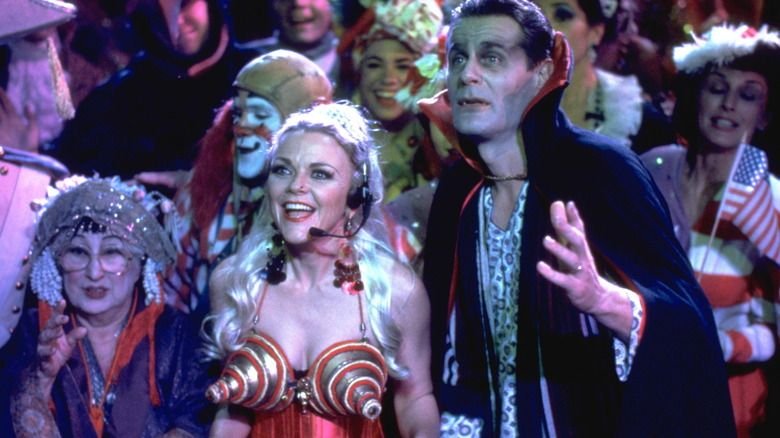
Disney shot the bulk of Hocus Pocus on location in Salem, Massachusetts, which is the detail that turned the film into a pilgrimage site instead of just a rerun. Salem’s Old Town Hall stands in for the building where Winifred performs “I Put a Spell on You” at the costume party — the exterior is the real building, still standing in the middle of Salem Common, and it hosts an annual Halloween event now specifically because of the movie’s popularity.


Max’s high school exterior was shot at what was then Phillips Elementary School, a red-brick building on Salem Common that still stands, though it’s since been converted. A handful of private colonial homes near the harbor doubled as Max and Dani’s house and Allison’s family home — Disney paid the owners for access, and decades later those same houses still get photographed by fans every October, much to the mixed feelings of whoever lives there now.

The opening 1693 sequence — Thackery Binx cursed into a cat before the sisters are hanged — was filmed at Pioneer Village, a working recreation of the original 17th-century settlement. Salem leaned into the connection hard once it became clear tourists cared: guided walking tours of the filming locations now run for most of October, and the city’s existing witch-trial history gives the movie’s fictional coven a strange kind of real-world texture that a studio backlot could never have faked.
How reruns turned a flop into a Halloween institution
Here’s the part of the story that doesn’t get told enough: nobody at Disney planned Hocus Pocus’s comeback. The film went to home video in January 1994 and sold reasonably, then mostly disappeared from cultural conversation for a few years. The turning point was corporate, not creative. When Disney bought ABC and its cable properties in 1996, the company suddenly needed a steady rotation of family-appropriate October programming for ABC Family and the Disney Channel — and Hocus Pocus was already sitting in Disney’s own library, fully owned, zero licensing cost, seasonally themed. It got slotted into rotation because it was convenient, not because anyone believed in it.

That convenience compounded for a decade. ABC Family’s “13 Nights of Halloween” block made Hocus Pocus an annual fixture starting in the early 2000s, and an entire generation discovered the film at age nine or ten on a random weeknight rather than in a theater with their parents. VHS and later DVD sales spiked every October — reporting at the time put seasonal home-video sales at roughly $1 million a month during the fall stretch, years after the theatrical run had been written off. When Disney re-released it theatrically in September 2020 during pandemic-era cinema closures, it topped the box office that weekend, pulling in $4.8 million against essentially no new marketing spend — proof that the audience built by television had real commercial weight decades later.
The sequel nobody expected, and a third one now in the works
Hocus Pocus 2 arrived on Disney+ in September 2022, with Midler, Parker, and Najimy all returning as the Sanderson sisters. It broke streaming records for Disney+ in its opening weekend and pushed the franchise into territory the original film never got close to — official recognition instead of accidental cult status. In 2026, Disney confirmed Hocus Pocus 3 is in active development with the same three leads attached, with Parker telling press that Midler is “like a 13-year-old girl with a new bike” about getting the band back together.

It’s worth sitting with how strange that arc actually is. A movie that lost Disney an estimated $16.5 million in its initial theatrical run is now the anchor of a multi-film franchise with its original stars still attached thirty years later. Nothing about that outcome was engineered. Disney didn’t develop Hocus Pocus as a long-game franchise play in 1993 — the company wrote it off, and only came back to it once a television scheduling accident had already done the marketing work for free.
The real lesson behind the flop
The tidy version of this story is “a flop became a beloved classic,” and that’s true as far as it goes, but it undersells how much luck was involved. Hocus Pocus didn’t get rediscovered because Disney identified untapped potential — it got rediscovered because a merger happened to hand the company a cable channel that needed cheap October content, and a fully-owned, already-paid-for Halloween movie was the obvious filler. Take that merger out of the timeline and there’s a reasonable chance Hocus Pocus stays a minor 90s footnote next to actual flops that never came back, the way most box-office misses do.
That doesn’t make the film’s second life less real. Three decades of reruns built a genuine, multi-generational audience with enough commercial pull to justify two sequels and counting — that part isn’t an accident anymore, whatever the origin was. But the Hocus Pocus story is a better case study in distribution economics than it is an underdog tale about a misunderstood movie finally getting its due. Sometimes the algorithm that saves a flop is just a programming director with an empty October time slot and nothing else Halloween-themed sitting on the shelf.
For more on the summer of 1993 that nearly buried this movie, see our look at how Jurassic Park changed Hollywood that same season and the real story behind Free Willy, which opened the exact same weekend. And if you’re chasing more 80s and 90s kids’-adventure nostalgia, our piece on The Goonies covers the decade before it.
Sources
- SlashFilm — Tales From the Box Office: How Hocus Pocus Went From Flop to Halloween Cult Classic — Budget, opening weekend, and competing 1993 releases
- Wikipedia — Hocus Pocus (1993 film) — Cast, plot, and production details
- Destination Salem — Hocus Pocus Filming Locations in Salem, MA — Real filming locations and site history
- Variety — Hocus Pocus 3 Set With Bette Midler, Sarah Jessica Parker and Kathy Najimy Returning — 2026 sequel development news
The Retro Almanac
A monthly roundup of "on this day" highlights from that month, decades back — plus first dibs on new retro merch drops. No spam, just the good stuff.