Above the Rim (1994): The Tupac Basketball Movie Whose Soundtrack Outlived It
Thirty years later, almost nobody who loved Above the Rim loved it for the plot. They loved it because Tupac Shakur spent his 23rd year on earth playing the most convincing drug dealer in 90s hood cinema, and because the soundtrack that came bundled with the VHS tape turned out to be more important to hip-hop history than the film itself. Released March 23, 1994, by New Line Cinema on a budget of roughly $3.5 million, the movie was a modest theatrical performer. The album it spawned became a Death Row Records landmark that’s still selling vinyl reissues in 2026.
What is Above the Rim (1994) about?
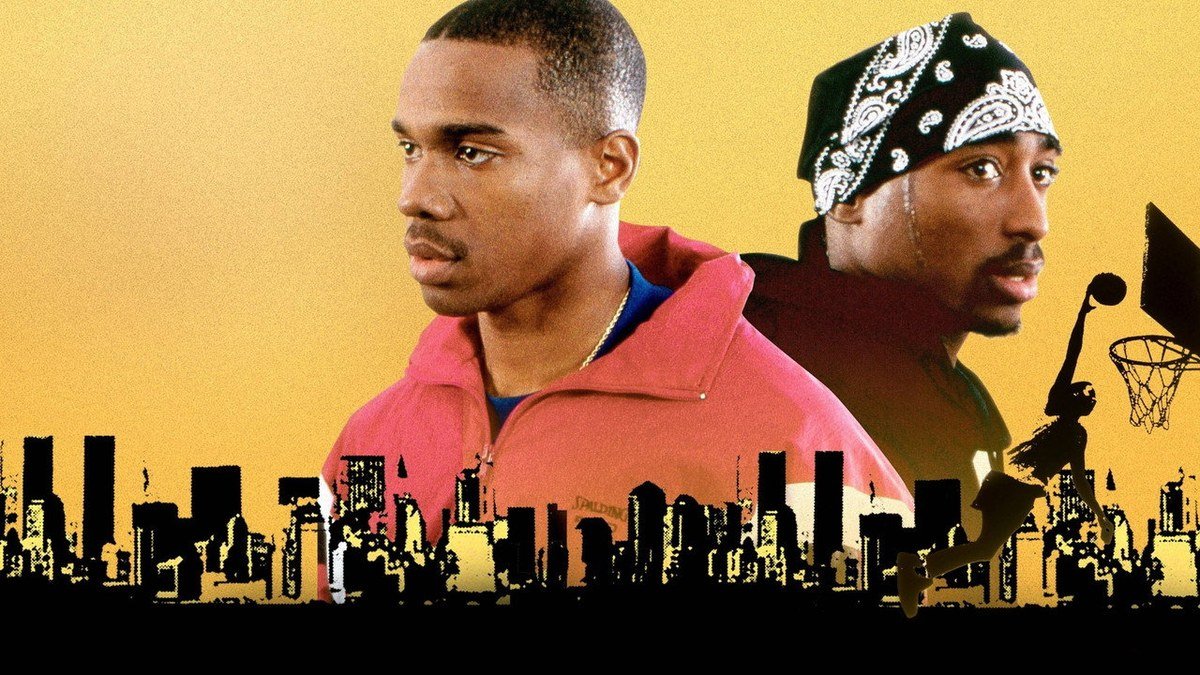
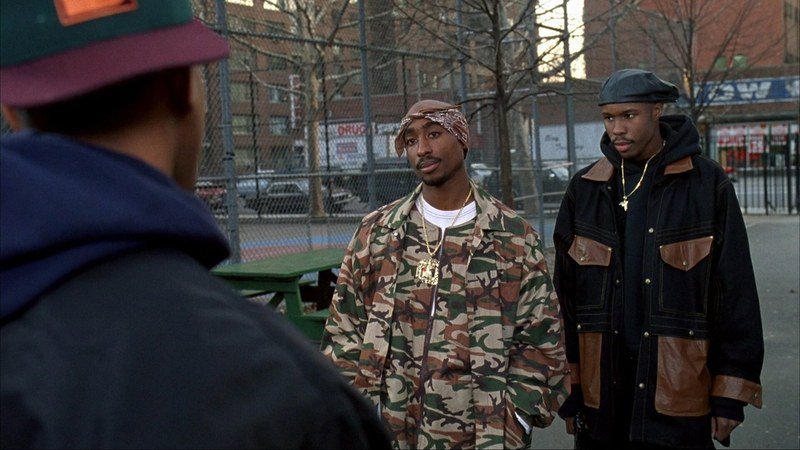
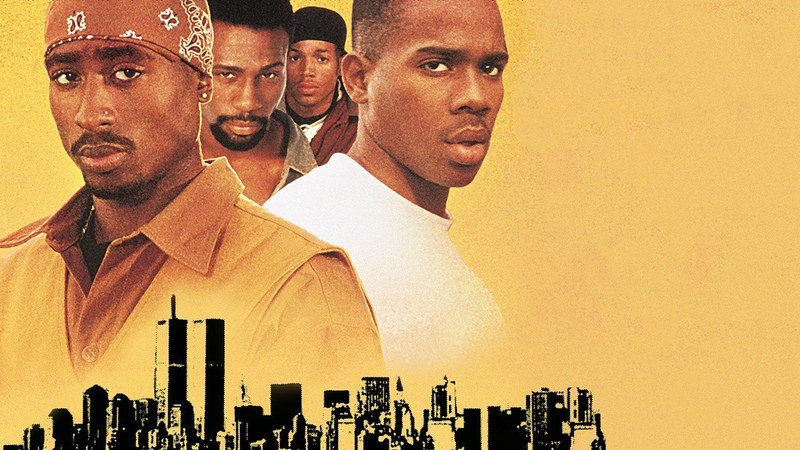
Duane Martin plays Kyle Lee Watson, a talented Harlem high school point guard being courted by Georgetown University, who gets pulled between two very different older men: Birdie (Tupac Shakur), a local drug dealer who wants to sponsor Kyle’s street tournament team for his own status and profit, and Shep (Leon), a former high school basketball legend turned night-shift security guard, haunted by guilt over the death of his childhood best friend during a game years earlier. Kyle has to choose between fast money and real mentorship before a citywide tournament forces the two older men’s worlds to collide.
Tupac Shakur was 23 playing a role everyone thought was too easy for him
The age math on Above the Rim is stranger than it looks on screen. Duane Martin was 27 playing a high school senior, and Tupac was 23 playing Birdie, a man supposedly running a neighborhood drug operation and bankrolling a basketball team of teenagers — a role that, on paper, should have needed someone older and colder. Tupac made it work anyway. Critics who tore into the film’s plot still singled him out; Roger Ebert’s own publication called him “the most dynamic young actor” in the cast, and that praise held up even among reviewers who hated everything else about the movie.[1]
The Retro Almanac
A monthly roundup of "on this day" highlights from that month, decades back — plus first dibs on new retro merch drops. No spam, just the good stuff.
Shakur’s behavior on set matched the character more than the production probably wanted. Co-star Marlon Wayans later recalled that Tupac smoked constantly between takes — “I’d catch the biggest contact,” he joked — and director Jeff Pollack has described Shakur showing up to a shoot day demanding the doors be physically removed from a Range Rover because he thought it looked more authentic for Birdie’s street cred. It’s the kind of commitment that reads as either serious craft or total chaos depending on who’s telling the story, and with Tupac, it was usually both at once.[2]
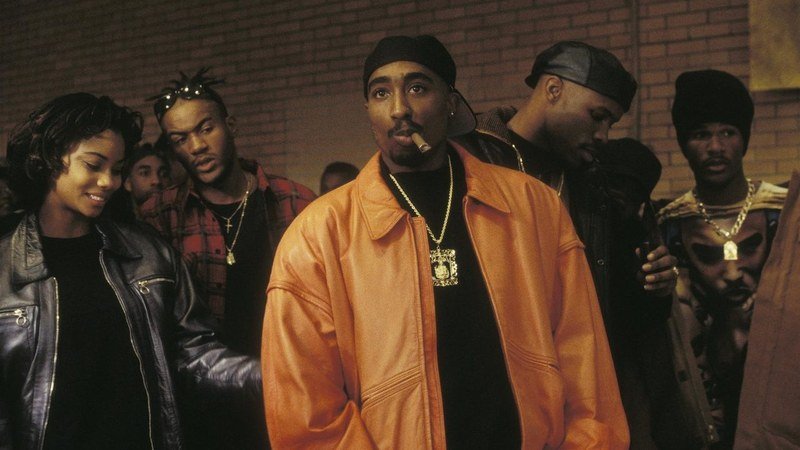
Tupac as Birdie — the role critics singled out even in otherwise harsh reviews.
Shakur’s real legal troubles shut down production more than once
Filming Above the Rim overlapped with one of the most chaotic stretches of Tupac’s life. He was facing multiple active legal cases during the shoot — including an assault charge tied to a confrontation with the Hughes Brothers (who had fired him from Menace II Society the year before) and a separate case alleging he shot at off-duty police officers in Atlanta. Those court dates weren’t hypothetical scheduling risks; production had to rework the shooting calendar around Shakur’s actual courtroom appearances, a logistics problem no one budgets for on a $3.5 million New Line Cinema shoot.[2]
Despite the disruption, Tupac reportedly barely slept during production, splitting his nights between the Above the Rim set and recording sessions for what would become Me Against the World. The same off-camera intensity that made him exhausting to produce around is the reason his on-camera stillness as Birdie still reads as real menace three decades later.
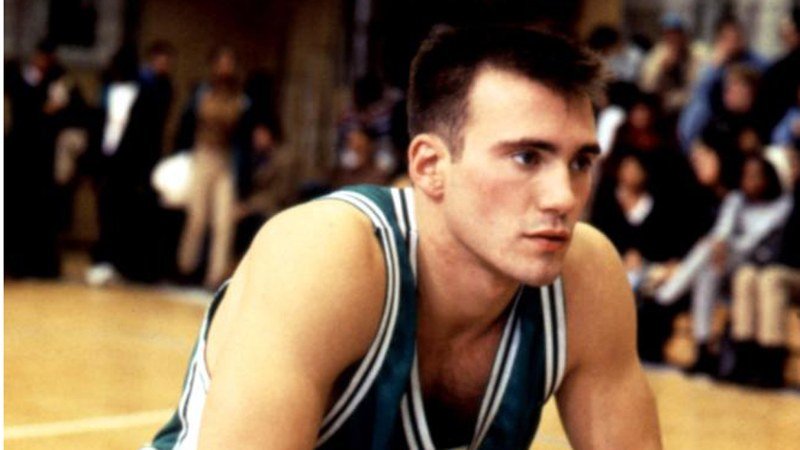
Duane Martin was a real college basketball player before he was Kyle
The movie’s basketball sequences hold up better than most 90s hoop dramas for one simple reason: Duane Martin could actually play. Before acting, Martin was a guard on NYU’s Division III squad in the late 1980s, earning a first-team All-Association selection and the Howard Cann Award as the program’s MVP in the 1988-89 season. That background is why Kyle’s on-court footwork looks like basketball instead of actors faking it for camera angles — a problem that sank plenty of competing sports dramas that same year.
The role almost went to someone else entirely. New Line’s original pick for Kyle was Allen Payne, who had just come off New Jack City and CB4. Martin won the part instead, and the real-game instincts he brought to it became one of the few things even the film’s harshest critics didn’t complain about.[1]

The opening rooftop scene set up the guilt that drives the whole movie
Above the Rim opens with Shep and his best friend Nutso playing one-on-one on a rooftop court — a sequence that ends with Nutso falling to his death and Shep carrying the blame for the rest of the film. It’s the kind of swing-for-the-fences dramatic device that critics loved to mock (a 2014 Grantland retrospective called out the opening as the clearest example of the movie’s disregard for basketball or physical realism), but structurally it’s what gives Leon’s performance as Shep its weight. Every scene where Shep refuses to coach, refuses to mentor, refuses to let himself care about Kyle traces back to that rooftop.[3]
The soundtrack outsold and outlasted the movie by a wide margin
Here’s the part of Above the Rim‘s history that actually matters to music, not just movies. The soundtrack dropped March 22, 1994 — one day before the film hit theaters — on Death Row Records and Interscope, under Suge Knight’s direct supervision. It wasn’t just a tie-in; it was a strategic flex. Death Row had built its reputation on Dr. Dre’s and Snoop Dogg’s solo albums, and the label needed to prove it could go platinum without either of them carrying the record.[4]
It worked better than anyone could have planned. The lead single, “Regulate” by Warren G and Nate Dogg, became one of the biggest hits of 1994 — a laid-back, sung-and-rapped duet built on a Michael McDonald sample that peaked at No. 2 on the Billboard Hot 100. The twist: Warren G wasn’t even signed to Death Row. Suge Knight simply claimed the track for the compilation because it was too good to let walk. The full album followed, hitting No. 2 on the Billboard 200 and spending ten non-consecutive weeks at No. 1 on the Top R&B/Hip-Hop Albums chart before going double platinum.[4]
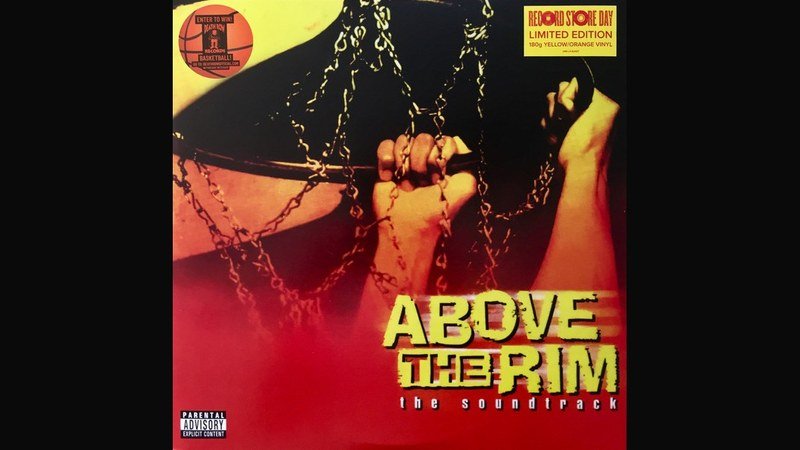
The Death Row soundtrack outsold the film it was made for several times over.
Music historians still treat the Above the Rim soundtrack as one of the most faithful documents of what Death Row Records stood for in the spring of 1994 — right before the label’s implosion a few years later took half of West Coast rap down with it. The movie that was supposed to promote the album became a footnote to it.
Above the Rim arrived in the middle of a 1994 basketball-movie boom
1994 was a strange year to release a basketball movie, because three very different ones landed within months of each other: Blue Chips, the recruiting-corruption drama with Nick Nolte and Shaquille O’Neal; Hoop Dreams, the documentary that became a critical landmark; and Above the Rim, the one with the street-tournament stakes and the Death Row soundtrack. Georgetown’s presence in the script wasn’t incidental either — Coach John Thompson’s program carried enormous cultural weight at the time, with Allen Iverson’s arrival on campus just a year away, and recruiting dialogue around Kyle leans directly into that Georgetown mystique.
Critics weren’t kind to the finished film. Reviews called it formulaic and leaned on clichés the genre had already worn out by the early 90s, and it holds a 50% score on Rotten Tomatoes based on more recent retrospective counts. But a 50% critical score and a cult-classic legacy aren’t the same thing, and Above the Rim is a rare case where the audience simply outvoted the critics over thirty years.
What happened to the cast after Above the Rim?
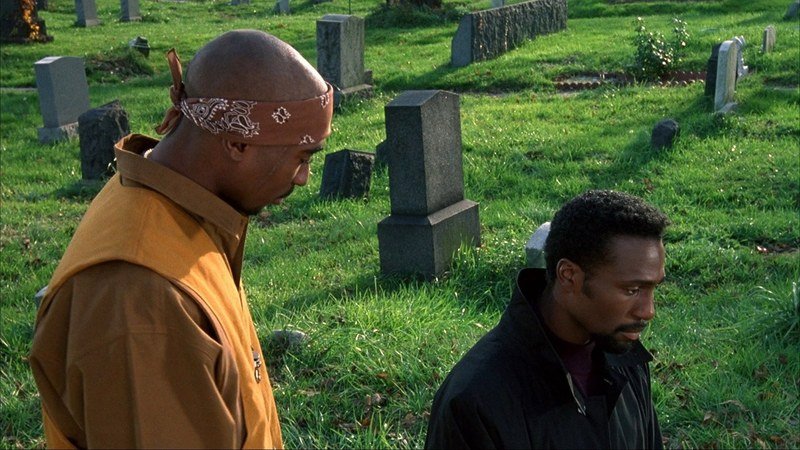
Tupac Shakur was murdered in September 1996, two and a half years after the film’s release, which retroactively turned every one of his film performances — Juice, Poetic Justice, Above the Rim — into something closer to a historical document than a movie credit. Duane Martin went on to a long run on the sitcom All of Us and a steady career in film and TV. Leon became a familiar face in Black cinema through the 90s and 2000s, including a lead turn in the Tupac biopic landscape decades later. Marlon Wayans parlayed his comedic timing into the Scary Movie franchise and a long run as one of the Wayans family’s most bankable names.
FAQ
Is Above the Rim based on a true story?
No. Above the Rim is a fictional screenplay, though its street-tournament setting and the Georgetown recruiting subplot were drawn from real New York City basketball culture in the early 90s, including real street tournaments like the Rucker and Kingdome leagues that inspired the tournament sequences.
Why is the Above the Rim soundtrack more famous than the movie?
Because Death Row Records used it to prove the label could produce a platinum hit without Dr. Dre or Snoop Dogg fronting it. “Regulate” by Warren G and Nate Dogg became a No. 2 Billboard hit on its own, and the full album went double platinum — commercial numbers the film itself never came close to matching.
Was that really Tupac’s basketball ability in the film?
Tupac’s character, Birdie, doesn’t play in the film — he’s the team’s sponsor and hype man on the sidelines, not a player. The real basketball talent on screen came from Duane Martin, a former NYU Division III guard, and Leon, who played college ball at Loyola Marymount.
For more on how Tupac’s short film career intersected with hip-hop’s golden age, check out our breakdowns of Juice (1992) and NWA’s Straight Outta Compton, or see how the same basketball-and-brotherhood formula played out a year earlier in New Jack City.
Sources
- Andscape — “A look back at ‘Above the Rim’ on its 25th anniversary” — box office figures, cast basketball credentials, and critical reception.
- Picasso Baby — “10 Rare Facts of the Film Above the Rim” — production details on Tupac’s legal troubles and on-set behavior.
- Grantland — “An ‘Above the Rim’ Roundtable” — critical retrospective on the film’s plot and realism.
- TupacWorld — “Above the Rim (1994): Birdie, Basketball and the Death Row Soundtrack” — Death Row Records soundtrack strategy and chart performance.
- Wikipedia — Above the Rim — general production and release background.
The Retro Almanac
A monthly roundup of "on this day" highlights from that month, decades back — plus first dibs on new retro merch drops. No spam, just the good stuff.