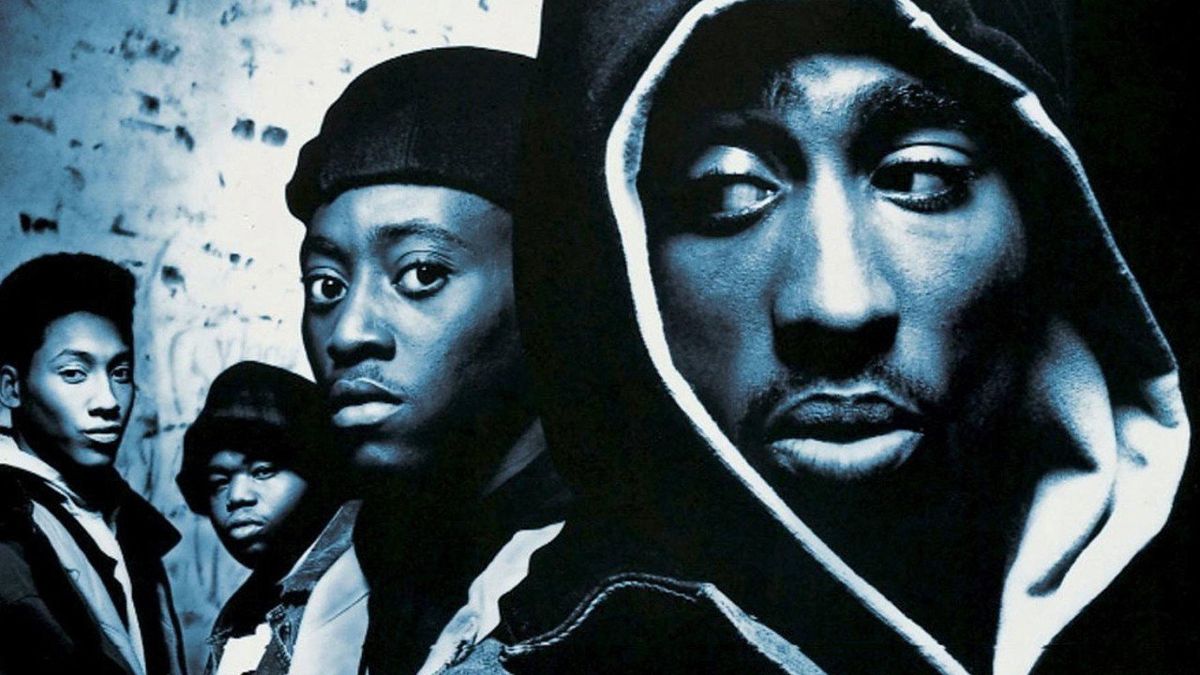
Juice Movie: 9 Reasons Tupac’s 1992 Classic Still Hits
Tupac Shakur had never acted a day in his life when he walked into the audition for Juice. He was only there to keep his friend company. Director Ernest Dickerson asked him to read anyway, watched him work, and later said the thing Tupac had that nobody else in the room got was “the pain.” That accidental audition gave us one of the most quietly terrifying performances of the decade — and a movie that, more than thirty years on, still gets quoted on basketball courts and barbershop chairs across the country.
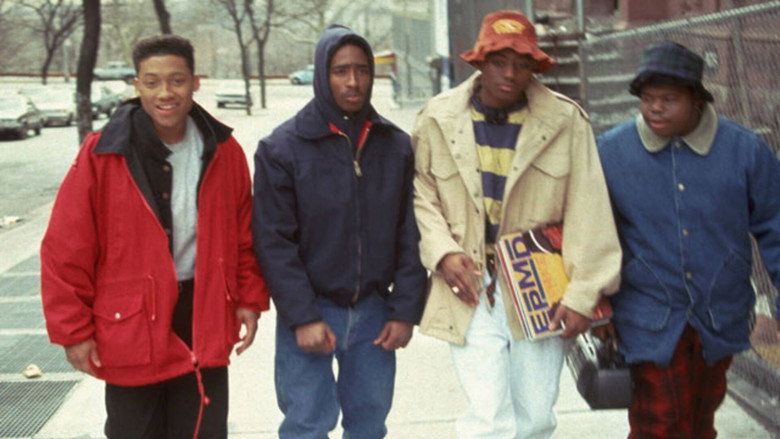
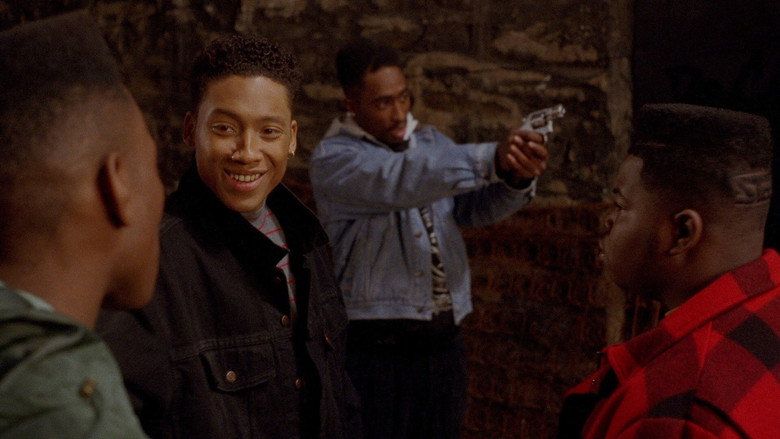
Q, Bishop, Raheem, and Steel — the four leads stalking their Harlem block.
The Retro Almanac
A monthly roundup of "on this day" highlights from that month, decades back — plus first dibs on new retro merch drops. No spam, just the good stuff.
What is the Juice movie about?
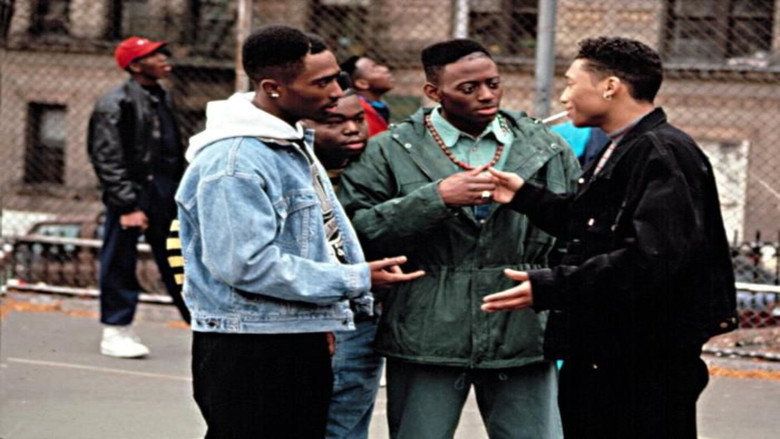
The Juice movie follows four friends coming up in Harlem in the early 90s: Quincy “Q” Powell (Omar Epps), Roland Bishop (Tupac Shakur), Raheem Porter (Khalil Kain), and Eric “Steel” Thurman (Jermaine Hopkins). They cut school, dodge a rival Puerto Rican crew, run from the cops, and dream past their block — Q wants to win a DJ competition, the others mostly want respect. “Juice” is street slang for exactly that: power, respect, the ability to walk down the street and have people step aside.
Everything tips when Bishop, rattled after a friend is gunned down, decides the crew needs to rob a neighborhood bodega. He brings a gun. He uses it. And once Bishop tastes what that kind of power feels like, he can’t put it down — turning on his own friends to keep it.
Who is in the Juice cast?
For a film this lean, the Juice cast is stacked with future stars — most of them complete unknowns at the time. It was the first acting role for Epps, Kain, and Shakur, and you’d never guess it from the chemistry on screen.
- Omar Epps as Q — the conscience of the group, an aspiring DJ. Epps actually learned to spin before filming, so the turntable scenes are the real thing.
- Tupac Shakur as Bishop — the charismatic, increasingly unhinged ringleader.
- Khalil Kain as Raheem — the oldest, a young father trying to keep the crew grounded.
- Jermaine Hopkins as Steel — the heavyset, good-natured tagalong who gets in over his head.
- Samuel L. Jackson and Queen Latifah in early supporting roles, two years before Jackson’s Pulp Fiction breakout.

Samuel L. Jackson and Queen Latifah turn up in early supporting roles.
How did Tupac get cast as Bishop?
Tupac was a rapper, not an actor. He tagged along to the audition with Treach from Naughty by Nature, and Dickerson — on a hunch — asked him to read. The choice paid off immediately. “The thing that he got that nobody else got was the pain,” Dickerson remembered years later. Bishop isn’t a cartoon villain; he’s a kid who’s been told his whole life that he doesn’t matter, and who finds the one thing that finally makes people look at him.
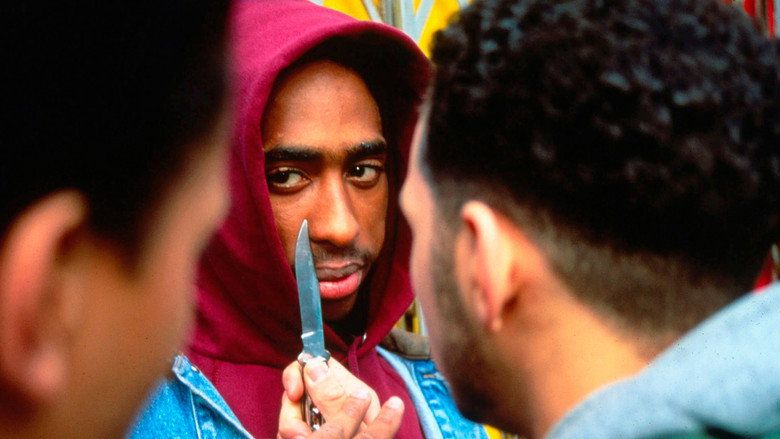
That’s the uncomfortable truth most copycats missed: Bishop is sympathetic right up until the moment he isn’t. Tupac plays the turn so gradually you almost don’t catch when the charming friend becomes the thing you’re scared of.
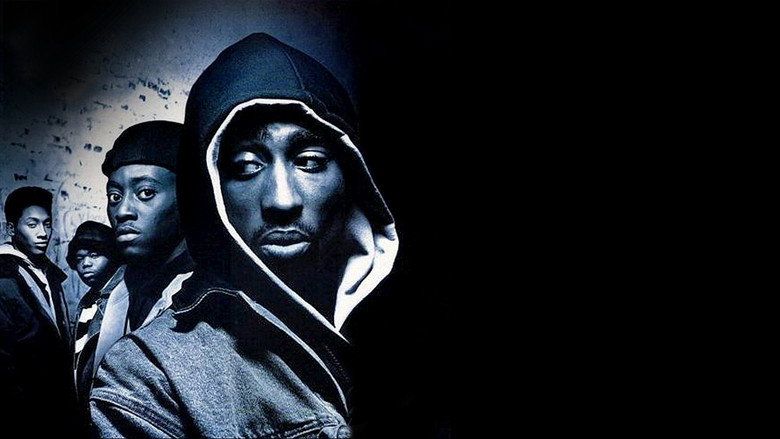

The cast freestyled half the movie
Here’s the detail that explains why the dialogue feels so unforced. According to Omar Epps, the bulk of the script was reworked on the spot. Dickerson handed Epps and Tupac the freedom to rewrite their lines as they went, and the two of them essentially freestyled their way through scenes the way you’d trade bars in a cypher. When the crew jokes, threatens, and needles each other on screen, a lot of that rhythm is two young performers improvising in real time.
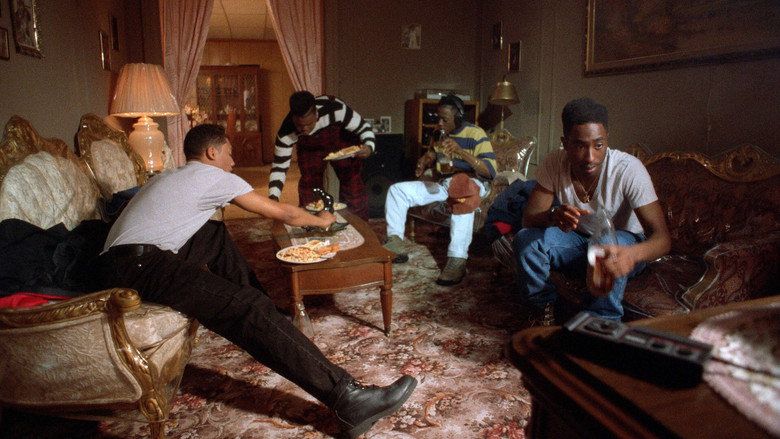
That looseness has a cost and a payoff. The plot mechanics can feel thin in spots, but the hangout scenes — four guys with nowhere to be and everything to prove — are some of the most natural in the genre.
How was the Juice movie made?
Juice was Ernest Dickerson’s directorial debut. Before this he was Spike Lee’s cinematographer, shooting Do the Right Thing and Mo’ Better Blues, and he brought that eye to a film made for just $5 million. Shooting ran through March and April of 1991 on real Harlem streets — the location work is half the reason the movie feels so lived-in.
One of the film’s most lasting moments wasn’t even in the script. Between takes, Tupac read the newspapers, and one morning he came across a story about a young mother who’d thrown her newborn down a trash chute. He talked about it all day, then grabbed a notebook and started writing. Those scribbles became “Brenda’s Got a Baby,” one of his signature songs. The Juice set didn’t just launch his acting — it shaped his music too.
What does the ending mean?
Once Bishop gets the gun, the bottom falls out fast. He kills Raheem in a stairwell, then sets out to pin the crew’s crimes on Q, hunting his own friends one by one. The film ends on a rooftop, Q and Bishop wrestling at the edge. Bishop goes over. Q catches him by the hand — and in a single beat, Bishop’s weight pulls him loose and he falls.
As the crowd gathers below, one bystander tells Q, “You got the juice now, man.” Q steps back and shakes his head. The whole movie has been about chasing that word, and the second he finally has it, he wants no part of it. It’s a bleak, clear-eyed ending that refuses to make the violence look like victory — and it lands harder than almost anything its imitators tried. (A long-buried alternate ending, where Bishop chooses to jump, surfaced years later and is worth tracking down if you’re a fan.)
The Juice soundtrack was its own event
Released right before the film on New Year’s Eve 1991, the Juice soundtrack hit #17 on the Billboard 200, climbed to #3 on the R&B/Hip-Hop chart, and went Gold — anchored by Eric B. & Rakim’s “Juice (Know the Ledge)” and stacked with Big Daddy Kane, EPMD, Naughty by Nature, and Salt-N-Pepa. For a lot of listeners the album was the entry point and the movie came second — a reminder of how tightly hip hop and film were braided together at the dawn of the 90s. If you came up in this era, the artwork and that explicit-lyrics sticker were everywhere.
Critics noticed too. The film holds an 81% score on Rotten Tomatoes, and Roger Ebert gave it three stars out of four, calling it “one of those stories with the quality of a nightmare.” That’s rare praise for a debut director working with a cast of first-time actors on a shoestring budget.

Where does Juice fit among the hood films?
Juice arrived in January 1992, six months after John Singleton’s Boyz n the Hood and a year before the Hughes Brothers’ Menace II Society. Where Boyz leaned into family and fathers, Juice was tighter and more paranoid — a thriller wearing a coming-of-age story’s clothes. It shares DNA with the whole early-90s wave of street cinema that grew up alongside acts like N.W.A, where the music and the movies were telling the same stories from different stages.
The honest take: Juice has the loosest plot of the big three, but the most magnetic villain. Bishop is the reason people still bring it up, and Tupac knew it — he’d go on to bigger roles in Poetic Justice and Above the Rim, but this is where the screen presence was born.
Why the Juice movie still hits
Whole generations who weren’t alive in 1992 know the word “juice” because of this film. The rapper Juice Wrld took his stage name straight from it. The “you got the juice now” line still circulates as a meme and a compliment. And the central question — what people will do to be respected when respect is the only currency they’re handed — hasn’t aged a day.
If you’ve never seen it, watch it for Tupac and stay for the ending. If you saw it as a teenager, it plays completely differently now that you can see how young everyone is, and how clearly the movie understood where Bishop’s hunger came from. Streaming availability rotates, so check Paramount+ and the usual rental services. Then go back and revisit Menace II Society for the double feature.
Sources
- Juice (1992 film) — Wikipedia — production details, cast, box office, and soundtrack chart positions.
- ‘Juice’ at 30: Director Ernest Dickerson remembers Tupac — Yahoo Entertainment — Dickerson on the audition and “the pain.”
- Omar Epps and Tupac freestyled lines in Juice — REVOLT — the improvised dialogue.
- Juice movie review — RogerEbert.com — contemporary critical reception.
Browse retro and vintage-inspired apparel at the RetroRadical shop →
Shop on Amazon
Retro Collectibles on Amazon →
As an Amazon Associate we earn from qualifying purchases.
Shop on eBay
Retro Collectibles on eBay →
We may earn a commission when you shop through our eBay links.
The Retro Almanac
A monthly roundup of "on this day" highlights from that month, decades back — plus first dibs on new retro merch drops. No spam, just the good stuff.