NWA Straight Outta Compton: 9 Wild Facts About the 1988 Debut
NWA’s Straight Outta Compton sold three million copies without MTV, without radio, and with the FBI breathing down its neck. The Compton rap group dropped their debut on January 25, 1989, recorded at Audio Achievements in Torrance on a budget of $12,000. Eazy-E, Dr. Dre, Ice Cube, MC Ren and DJ Yella didn’t ask for permission and the result rewired American music for the next decade.
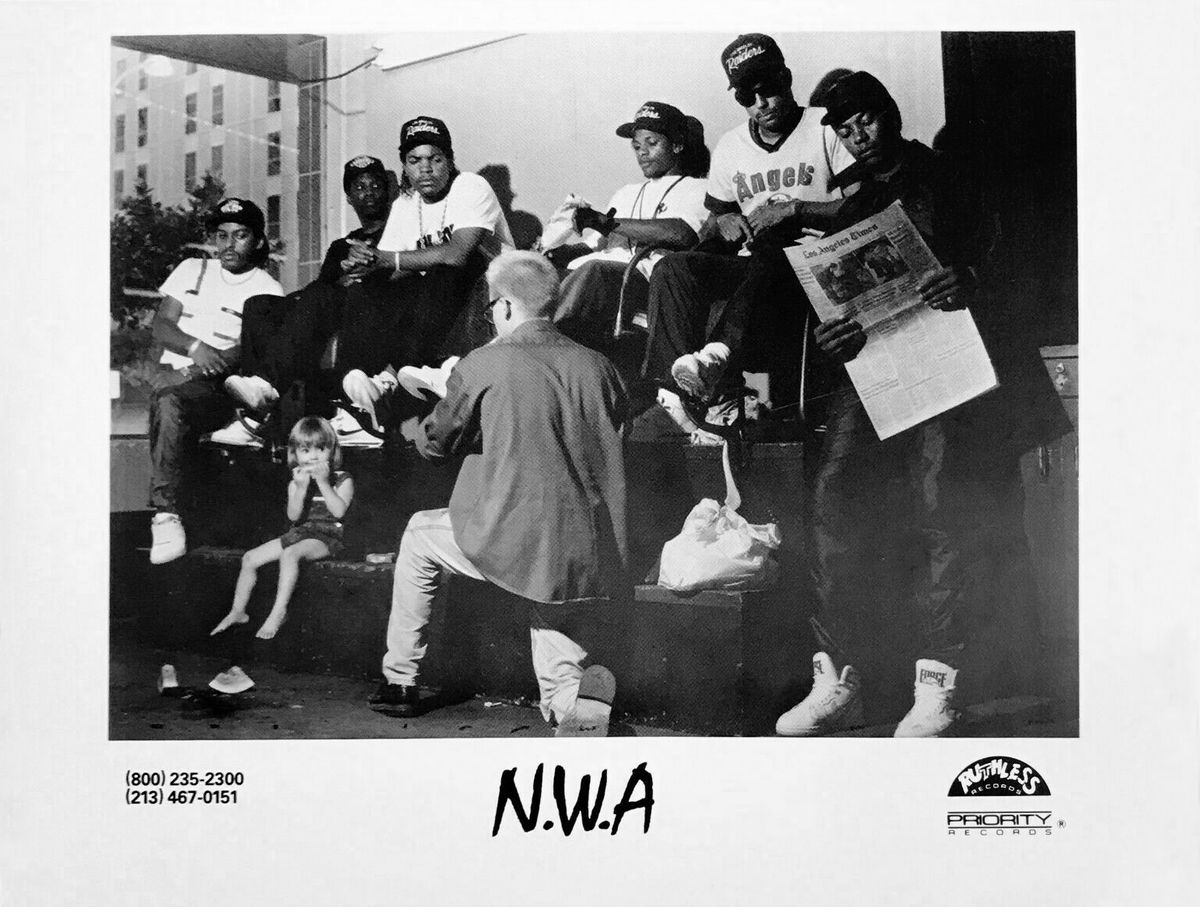
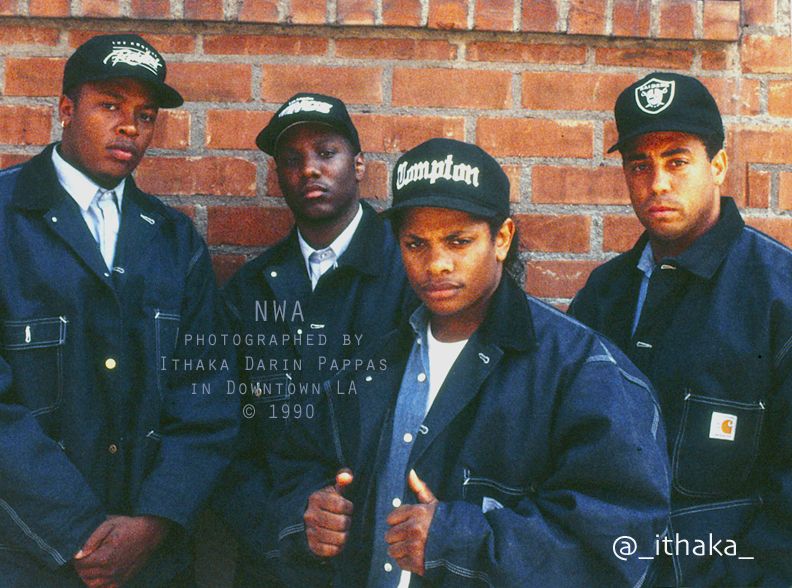
The Ruthless Records / Priority press photo that traveled with every promo copy of the album.
The Retro Almanac
A monthly roundup of "on this day" highlights from that month, decades back — plus first dibs on new retro merch drops. No spam, just the good stuff.
How NWA and Straight Outta Compton Started in 1987
Eric Wright was a 24-year-old high-school dropout selling drugs in Compton when he decided to put his money into a record label instead of moving more product. He named it Ruthless Records, partnered with a former music executive named Jerry Heller, and started looking for talent. Andre Young — already producing at home for the World Class Wreckin’ Cru — and a teenage O’Shea Jackson rounded out the founding lineup. By the time the group went into Audio Achievements in summer 1988, MC Ren and DJ Yella had joined, and Arabian Prince was on his way out.
The math was simple and absurd. Five guys from a city that nobody in the music industry took seriously, working with a producer who’d only made bubblegum electro records, recording in a strip-mall studio in Torrance. Twelve grand. No major label distribution worth mentioning, no radio play, no MTV rotation. They made a record that ended up in the Library of Congress.
What Straight Outta Compton Sounded Like
Dr. Dre’s production on the album sounds nothing like the Dre people know from The Chronic. There’s no G-funk yet. The drums are stiffer, the samples are dirtier, the bass hits like a kick to the chest. Tracks like “Gangsta Gangsta” and the title cut run on James Brown breaks and Funkadelic loops chopped raw — no smoothing, no apology. DJ Yella’s scratches cut across everything. It’s the sound of a producer who hadn’t yet figured out what he was good at, so he just hit everything hard.
The lyrics were the part that broke people. Ice Cube wrote most of the harshest material — including “Fuck tha Police,” which came directly from an incident outside the studio when cops made the group lie face-down on the sidewalk and demanded ID without explanation. Cube went home and wrote a fictional courtroom scene where the LAPD goes on trial. Nothing like that had ever charted in the United States.
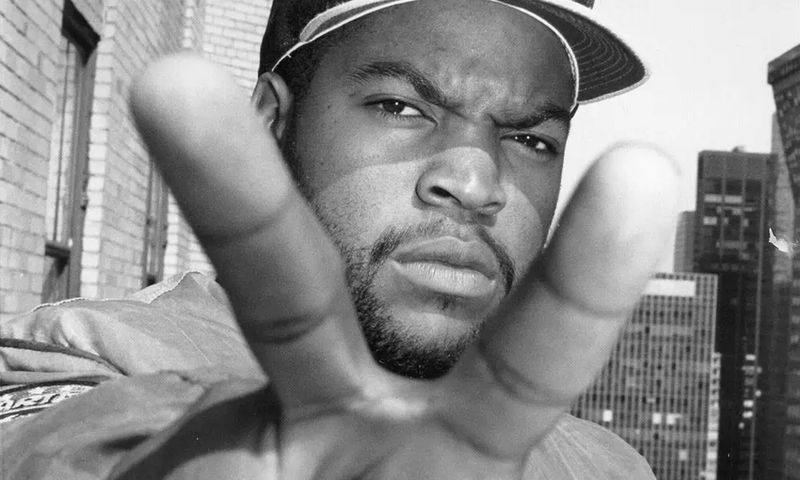
The FBI Letter That Made the Album Bigger
On August 1, 1989, Milt Ahlerich — assistant director of the FBI’s Office of Public Affairs — sent a letter to Priority Records on official Bureau letterhead. He said “Fuck tha Police” encouraged violence against law enforcement and that he wanted Priority to know the FBI took notice. It was the first time in history the FBI had written a label about a single song.
The letter was supposed to be a quiet warning. Priority leaked it to the press. Within weeks the album was on its way to platinum, and police departments around the country started canceling NWA shows or refusing to provide security. The group played to crowds in Detroit, Cincinnati and Joliet where cops watched from the side of the stage waiting for the song to start. In Detroit, plainclothes officers rushed the stage when the band played it anyway.
The truth is, every attempt to suppress the record fed it oxygen. MTV banning the “Straight Outta Compton” video meant Yo! MTV Raps couldn’t play it — but every kid taping the show knew exactly why, and the album sold faster. Tipper Gore’s PMRC had already created the Parental Advisory sticker by then, and NWA wore it like a badge.
Eazy-E’s Role as the Money and the Frontman
Wright is the member who gets shortest-changed in pop memory. People remember Cube as the lyricist and Dre as the producer, and they tend to file Eazy as the rapper with the high voice. What he actually was: the founder. Without Eazy-E’s money there’s no Ruthless. Without Ruthless there’s no NWA. Without NWA, Dr. Dre never builds Death Row and Ice Cube never becomes the first West Coast solo rapper to go platinum.
Eazy bankrolled studio time, paid for press kits, and personally handled the deal with Bryan Turner at Priority Records that put the album in stores. He wasn’t a polished MC — Ice Cube and MC Ren wrote most of his lyrics — but he had a delivery nobody else on the album had, a sing-song menace that landed somewhere between a threat and a joke. On “Boyz-n-the-Hood” and “Eazy-Duz-It” he sounds like he’s having more fun than anybody.
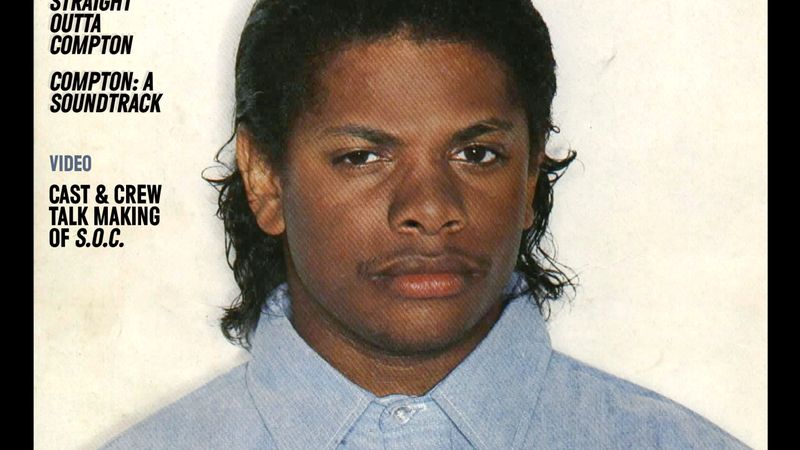
Why Ice Cube Wrote So Much of the Album
O’Shea Jackson was 18 when most of Straight Outta Compton was tracked. He’d been writing rhymes since middle school and was already the best pure lyricist in the group. Cube wrote “Straight Outta Compton,” most of “Fuck tha Police,” big chunks of “Gangsta Gangsta,” and parts of Eazy’s solo cuts. The album is essentially Cube’s writing portfolio with the rest of the group performing.
That’s why his exit, less than a year after the album dropped, hit so hard. Jerry Heller had given Cube a contract to sign and Cube didn’t trust it. He went to a lawyer who showed him he was underpaid by every standard in the industry. Heller’s offer of $75,000 to stay didn’t move him. Cube left for New York, recorded AmeriKKKa’s Most Wanted with Public Enemy’s Bomb Squad, and never spoke to Eazy-E again before Eazy died of AIDS in 1995.
Dr. Dre’s First Real Production Showcase
Before Straight Outta Compton, Andre Young was producing for Eve’s Plum, the J.J. Fad single “Supersonic,” and assorted Ruthless side projects. He hadn’t done a full-length statement of his own. On NWA’s debut he built every track from raw breakbeats, layered horn stabs and pitch-shifted vocal samples until the songs felt physical. The drums on “Express Yourself” are louder than the vocals.
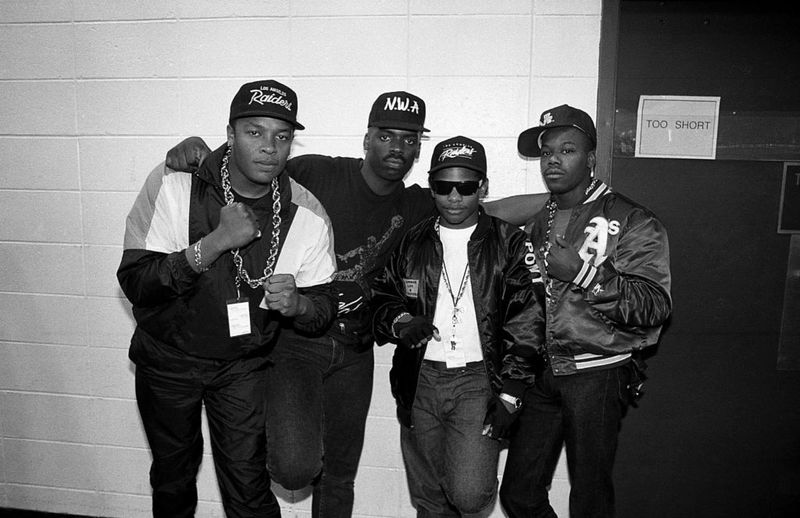
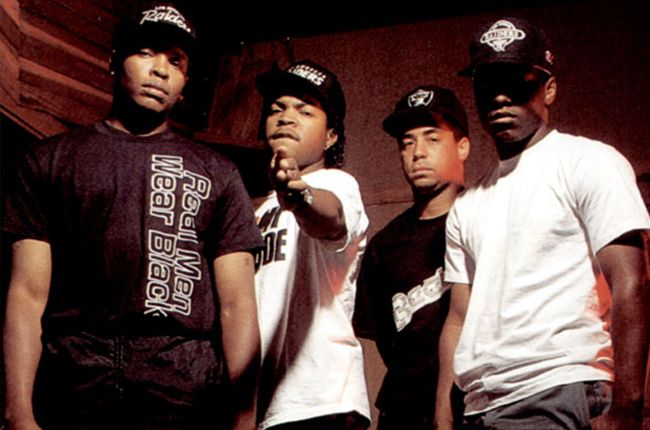
Dr. Dre, Eazy-E and the rest of the group backstage during the 1989 Straight Outta Compton tour.
Dre would later say in interviews that the album sounds dated to him now — that he was learning how to mix on the fly. That’s part of the charm. By the time he made The Chronic three years later he’d figured out how to make rap sound widescreen. On Compton, it’s narrow and aggressive on purpose.
MC Ren, DJ Yella and the Members Who Got Less Credit
Lorenzo Patterson — MC Ren — joined as a teenager. His verses on “If It Ain’t Ruff” and “Quiet on tha Set” are some of the hardest on the record, and he became the group’s MVP after Cube left. Ren wrote the bulk of Niggaz4Life in 1991 and carried the late-period NWA on his back.
Antoine Carraby — DJ Yella — was the only NWA member who got along with Eazy through to the end. He co-produced most of the album with Dre, cut the scratches you hear on every track, and stayed on Ruthless after the group dissolved. After Eazy died, Yella mostly stepped away from music. He was the glue and almost nobody knows it.
How Straight Outta Compton Charted and Sold
The album peaked at #37 on the Billboard 200 in 1989 — modest by today’s standards, but enormous for a record getting zero radio support. By July 1989 it was platinum. By 1992 it was double platinum. By 2015 it hit triple platinum on the back of the biopic, and the same year it re-entered the Billboard 200 at #6. The Library of Congress added it to the National Recording Registry in 2017, the rap equivalent of getting bronzed.
What’s more telling is where it sold. NWA moved units in suburbs from Long Island to Salt Lake City, not just inner cities. White teenage record buyers were the secret economy that turned gangsta rap into an industry, and Compton was their entry point. Bryan Turner at Priority once said the album sold better in the Midwest than in California.
Why the Straight Outta Compton Music Video Got Banned
MTV’s reason for refusing the “Straight Outta Compton” video was that it “glorified violence.” The video showed the group in handcuffs and a SWAT-style raid sequence, which the network said it wouldn’t air. Yo! MTV Raps, hosted by Fab 5 Freddy, was forced to either skip the video or play it during low-rotation hours.
The irony is that the video MTV did play heavily that summer was Madonna’s “Express Yourself” — directed by David Fincher, full of military imagery — without anyone batting an eye. NWA’s “Express Yourself,” released later as a single, made the network’s discomfort look like exactly what it was.
The Group’s Influence on Everything That Came After
Without NWA there’s no Death Row, no Snoop Dogg, no 2001, no Eminem (Dre signed him), no Kendrick Lamar (Compton’s whole lineage runs through this album). The blueprint for an independent label run by artists who own their masters comes straight from Ruthless. Tupac met Dre through this network. Even East Coast rappers like the Notorious B.I.G. cited NWA as the reason gangsta rap could chart.
The Rock and Roll Hall of Fame inducted NWA in 2016. The cluster of films and books that followed — F. Gary Gray’s biopic, Heller’s memoir, Ren’s interviews, Dre’s Compton album — turned the record into a creation myth. None of that gets made if Cube doesn’t write “Fuck tha Police,” and Cube doesn’t write it if those cops don’t roust the group outside the studio in 1988.
Where to Hear Straight Outta Compton Today
The original 1988 mix is on every streaming service, but the version most casual fans hear is the 2002 remaster — louder, brighter, and missing some of the rough edges. Vinyl reissues from 2014 and 2019 used the original masters. If you want the album that scared Tipper Gore, pick up the vinyl. If you want the album that hits clean through a phone speaker, the 2002 remaster does the job.
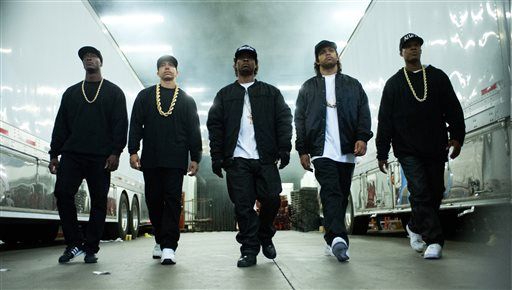
The 2015 biopic cast — Jason Mitchell as Eazy-E, Corey Hawkins as Dr. Dre, O’Shea Jackson Jr. as his father Ice Cube.
The 2015 biopic, also titled Straight Outta Compton, made $201 million on a $50 million budget and got the group reintroduced to a generation that wasn’t alive when the album dropped. Pair the film with the record and the FBI letter and you have one of the most complete pop culture documents the late 80s produced. If you want more from this era, our piece on Public Enemy’s run as the East Coast counterweight is the next stop, and the Boyz n the Hood retrospective covers the films that grew out of the same Compton/South Central scene. The Menace II Society writeup picks up where Boyz left off.

Sources
- Rolling Stone: 12 Things You Didn’t Know About Straight Outta Compton — production budget, FBI letter context, Cube’s exit details
- Uproxx: NWA’s History With The FBI — Milt Ahlerich August 1, 1989 letter to Priority Records
- National Coalition Against Censorship: Straight Outta Compton’s Censorship Lesson — MTV ban, PMRC context
- Britannica: NWA — formation timeline, member roles, Ruthless Records origin
- Hip-Hop Nostalgia: NWA Letter From Dept. of Justice — full text of the FBI letter
Browse retro and vintage-inspired apparel at the RetroRadical shop →
The Retro Almanac
A monthly roundup of "on this day" highlights from that month, decades back — plus first dibs on new retro merch drops. No spam, just the good stuff.