On This Day: October 16, 1987 — Mike Tyson Destroys Tyrell Biggs to Settle an Old Score
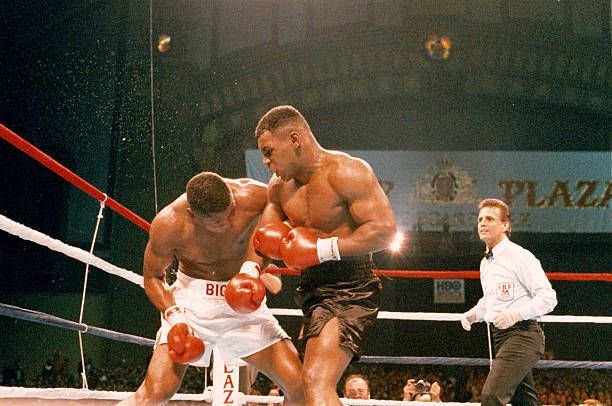
Tyrell Biggs walked into the ring a perfect 15-0, an Olympic champion with a six-inch reach advantage and a plan to box Mike Tyson’s ears off. He walked out with a split lip, a gashed eyebrow, and a career that never recovered. The fight only lasted seven rounds, but the real story started three years earlier, in an Olympic box-off that Tyson never forgave Biggs for winning.
Why Tyson vs Biggs Was Never Just Another Title Defense
By the fall of 1987, Mike Tyson had already done what no heavyweight had managed in nearly a decade: he held all three major belts — WBA, WBC, and IBF — after beating Tony Tucker two months earlier. He was 31-0 with 27 knockouts, 21 years old, and widely considered the most destructive force the division had seen since Sonny Liston. Biggs was supposed to be the first real test of that undisputed reign.
The Retro Almanac
A monthly roundup of "on this day" highlights from that month, decades back — plus first dibs on new retro merch drops. No spam, just the good stuff.
On paper, Biggs had the tools to make it competitive. He stood 6-foot-5 to Tyson’s 5-foot-10, carried real amateur pedigree, and had never lost as a professional. Promoters sold the fight as a classic boxer-puncher clash — the Olympic stylist against the brawler. Biggs leaned into that story hard in the build-up, telling reporters Tyson had “never fought anyone like me” and that his speed and reach would neutralize Tyson’s power completely. It made for a good poster: a seven-inch height edge, a gold medal in the trophy case, and a champion who, at least on paper, had never had to deal with a heavyweight built quite like him.

The Olympic Grudge Behind the Fight
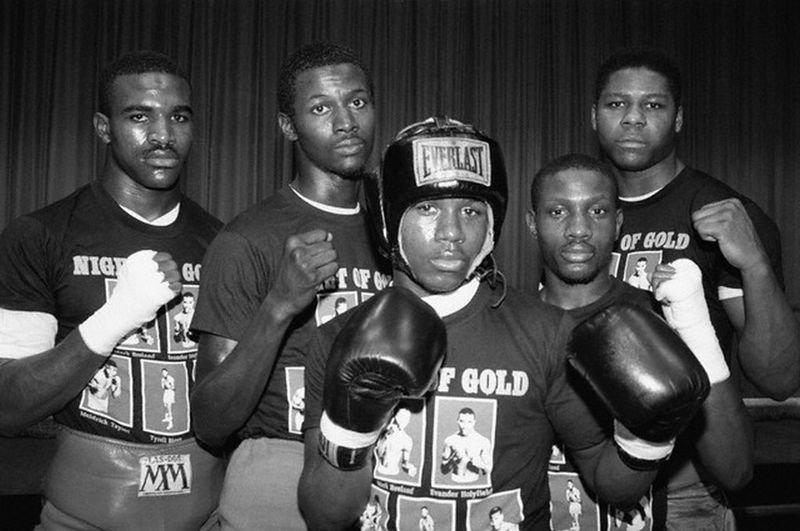
The bad blood went back to 1984, when both men were chasing a spot on the U.S. Olympic boxing team. Biggs made the squad and went on to win gold in Los Angeles as a super heavyweight. Tyson, only 18 at the time, was knocked out of the trials by Henry Tillman — twice — and never got his Olympic moment. Biggs didn’t let him forget it, reportedly telling people around the gym that Tyson had been easy work in sparring.
Tyson carried that insult for three years. When Biggs kept running his mouth before the October 1987 fight, Tyson decided the fight wasn’t just about a belt anymore. He told reporters afterward exactly what his plan had been: “He talked so much, he didn’t show any class or respect. I wanted to make him pay with his health.” It’s one of the more chilling admissions in heavyweight history — a champion openly describing premeditated cruelty, not just a knockout.
How the Fight Actually Played Out
Biggs started the way he’d promised. Round one saw him stick his jab, circle, and use that long reach to keep Tyson on the outside — for about three minutes, the “boxer beats brawler” script looked plausible. It didn’t survive round two. A short left hook split Biggs’s lip open, and from that point the fight tilted entirely in Tyson’s favor.
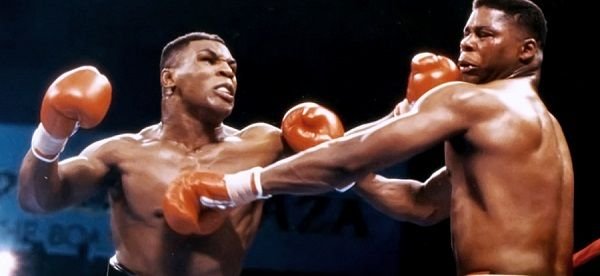
By round three, Biggs had already abandoned the movement-and-jab strategy. Tyson walked him down, cutting off the ring and landing short, violent combinations to the body and head. A hard right hand opened a cut around Biggs’s left eye in the middle rounds. Biggs never stopped trying — he even landed a few clean shots of his own, enough to draw blood and keep the crowd engaged — but he was absorbing far more than he was giving back.
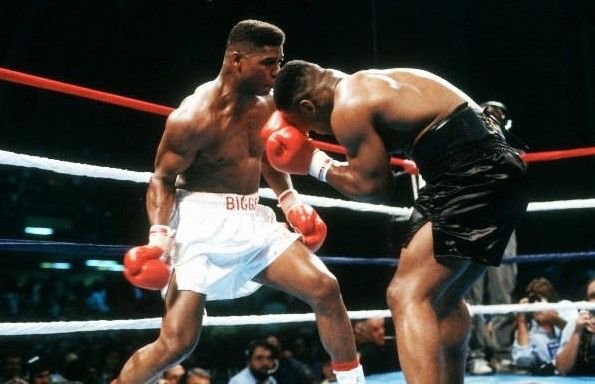
The finish came with about 30 seconds left in round seven. Tyson landed a left hook that put Biggs on the canvas for the first time in his career. Biggs beat the count, got back to his feet at nine, and Tyson was on him immediately — a second left hook dropped him again before he could even reset his stance. Referee Tony Orlando had seen enough and waved it off, handing Tyson a seventh-round TKO and his first successful defense as the undisputed champion.
It was also a historical footnote beyond the result: this was the last heavyweight title fight ever scheduled for 15 rounds. Every major title bout after it moved to the now-standard 12-round format, partly in response to growing concern about fighter safety in a sport Tyson himself was busy proving could be won in minutes, not hours.

What the Fight Cost Tyrell Biggs
Biggs stayed defiant in the immediate aftermath, telling reporters, “Today Mike was the better fighter, but I don’t feel he will beat me five times out of five.” The record afterward didn’t back that up. Biggs was knocked out in his next two fights, a stretch that effectively ended any claim he still belonged in title contention. He clawed back with four straight wins, but when he finally got in with the next generation of great heavyweights — Riddick Bowe and Lennox Lewis — he lost to both by technical knockout.
There was a layer to Biggs’s story that made the loss sting even more in hindsight. He had recently come back from a serious cocaine and alcohol addiction before this fight, a battle that was public knowledge at the time and one he’d fight on and off for years afterward. An Olympic gold medalist who’d already beaten real demons outside the ring walked into Atlantic City as a feel-good underdog story and left it as a cautionary tale about what Tyson in his prime could do to anyone standing across the ring, Olympic pedigree or not.
Where Biggs Ended Up
Biggs hung up his gloves for good in 1998 with a record that never came close to matching his amateur hype. What happened next is the part most retrospectives on this fight skip. He went home to West Philadelphia and started working the mitts at Mitchell Allen Boxing Gym, tucked in the basement of the Sheperd Recreation Center, training neighborhood kids who had no idea the guy correcting their jab had once been the undisputed heavyweight champion’s first title defense. By the early 2010s he’d been sober for more than two decades, crediting the discipline of the sport itself for keeping him straight long after the spotlight moved on.
His story got enough traction in Philadelphia that a documentary crew, Manayunk-based Lunchbox Communications, started filming “Whatever Happened to Tyrell Biggs?” around 2013, tracking the gap between Olympic gold medalist and anonymous gym trainer. Co-director Dafna Yachin put it bluntly at the time: “It’s not your typical, everybody walks away with money and it all works out, but it’s life.” That’s the real epilogue to October 16, 1987 — not a tragic ending, just an ordinary one, which in professional boxing is its own kind of rare.
Tyson’s Reign After Biggs
For Tyson, beating Biggs was just the warm-up for the biggest stretch of his career. He steamrolled Larry Holmes four months later, then Tony Tubbs, before finally getting the fight the entire division had been waiting for: Michael Spinks, the lineal champion and the one man with a credible claim to being better than Tyson. That fight, in June 1988, lasted 91 seconds. It remains one of the most devastating knockouts in heavyweight history and the moment Tyson’s prime peaked — a stretch of destruction that started, in large part, with the message he sent Tyrell Biggs on October 16, 1987.
You can watch the actual HBO broadcast of the fight below — Biggs’s early jab-and-move work in round one, the body work that broke him down by round three, and the two seventh-round knockdowns that ended it.
What makes this fight worth revisiting almost 40 years later isn’t the technical breakdown — it’s how openly Tyson explained his own cruelty afterward. Most champions talk about respecting an opponent. Tyson told the world, on camera, that he’d turned a title defense into a grudge match and dragged it out on purpose. That honesty, as much as the knockdowns themselves, is why Tyson vs Biggs still gets talked about every October 16.
If you want more on what Tyson’s prime years looked like up close, read our breakdowns of his 1995 comeback fight and the infamous Tyson Bite Fight. And for the Olympic backstory that fueled this whole rivalry, check out our look at the 1984 Los Angeles Olympics, the Games where Biggs won the gold medal that started it all.
Love the retro era? Browse our shop for vintage finds, retro clothing, and 80s/90s nostalgia gear.
Sources
- Mike Tyson vs. Tyrell Biggs — Wikipedia — Fight details, records, and historical context including the 15-round format note.
- On This Day: Mike Tyson Demolished Tyrell Biggs in One-Sided Mauling — Boxing News — Tyson’s post-fight quotes and the Olympic grudge backstory.
- Oct. 16, 1987: Tyson vs Biggs — The Fight City — Round-by-round account and photos from the Clash for the Crown.
- First-Ever Super-Heavyweight Champion Tyrell Biggs to Be Featured in Upcoming Documentary — WHYY — Biggs’s post-boxing life training young fighters in Philadelphia.
The Retro Almanac
A monthly roundup of "on this day" highlights from that month, decades back — plus first dibs on new retro merch drops. No spam, just the good stuff.