Zima Drink: The Wild 90s Fad Everyone Mocked
Coors spent $50 million marketing Zima in its first year alone, enough to get roughly half of American drinkers to try at least one bottle. For a company that had spent a century selling beer, betting that much money on a clear, lemon-lime malt drink with a made-up Russian name was a genuine gamble. For about eighteen months, it paid off. Then it became one of the most mocked products of the decade, and almost nobody under 40 can tell you exactly why.
The 1993 Launch That Started the “Clear Craze”
Coors Brewing Company rolled Zima out nationally in 1993, filtering its own lower-grade lager through charcoal to strip out the color and the beer flavor, then adding citrus flavoring and extra carbonation. What came out the other end looked like sparkling water, ran about 4.7–5.4% ABV depending on the market, and drank nothing like beer. A Coors executive told the Miami New Times the name came from zima, the Russian word for winter, chosen to suggest snow-cold refreshment rather than anything brewed.
The timing wasn’t an accident. Zima launched alongside Crystal Pepsi and Tab Clear, part of a short-lived early-90s belief that clear automatically meant pure, healthy, and better than whatever murky product you’d been drinking before. Miller, Pabst, and Stroh’s all rushed out their own clear beers to chase the same idea. Zima outlasted every one of them, at least for a while — it hit 1.2 million barrels sold at its 1994 peak, a real number for a brand-new category.
The Retro Almanac
A monthly roundup of "on this day" highlights from that month, decades back — plus first dibs on new retro merch drops. No spam, just the good stuff.
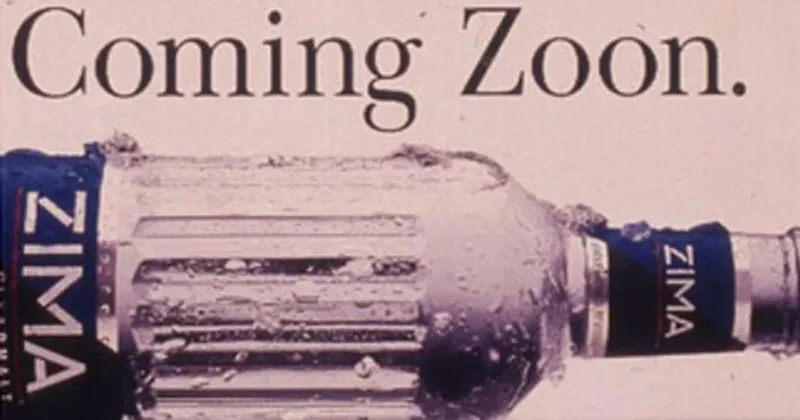
Coors teased the 1993 launch with “Coming Zoon” print ads months before Zima hit shelves.
Zomething Different: Inside the Ad Campaign That Confused Everyone
Zima’s tagline was “Zomething different,” and the early commercials leaned all the way into it. Actor Roger Kabler, playing the so-called Zima Guy, swapped every “s” sound in his dialogue for a “z” — “Zo, you’re all zet for a barbecue” — while wearing an oversized white suit against a plain backdrop. It was weird enough to get attention during the teaser phase, when nobody knew what Zima actually was.
The problem showed up once the mystery wore off. A gimmick that works for a three-week teaser campaign gets old fast once the product is sitting in every convenience store cooler in the country, and Coors never really replaced it with a campaign built around what Zima actually tasted like. People bought it once out of curiosity. Getting them to buy it twice turned out to be a different problem entirely.

A mid-90s Zima TV spot, pitching the drink as “a few degrees cooler” than beer.
How David Letterman Turned Zima Into a Punchline
David Letterman didn’t invent the backlash, but he made it permanent. He worked Zima into his nightly Top Ten lists for months, repeatedly calling it a “girly-man” drink — a label that stuck precisely because Zima had never decided who it was actually for. Coors had originally pitched it to young women as a wine cooler alternative, and once a national late-night host turned that into a running joke, the brand never fully shook the reputation, even among people who’d never seen a single commercial.
The taste didn’t help the comeback case. A 2002 Slate tasting panel described it running the gamut from “spoilt Sprite to decay,” and decades later it’s still common to see it compared to “lime-flavored scotch tape.” Zima wasn’t bad in the way a genuinely broken product is bad — it was bad in the way a joke keeps being funny long after the thing itself stopped mattering.
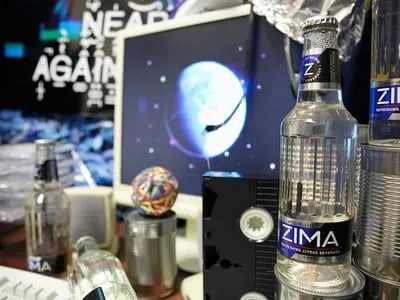
Zima never fully left pop culture — it just became a punchline with a cult following.
Zima Gold: The Four-Month Flop Nobody Remembers
By 1995, Coors knew Zima’s audience skewed female and its reputation skewed mockable, so it tried to fix both problems at once with Zima Gold — an amber, higher-alcohol variant built to read as more masculine. The commercial showed a sepia-toned pickup basketball game, all dunking and high-fiving, under the tagline “zomething bold.” Print ads ran with the line “Kiss Your Expectations Bye.”
It didn’t work. Zima Gold disappeared from shelves within about four months, which tells you how badly a brand can misjudge its own fanbase when it panics. The people still buying Zima weren’t looking for a tougher version of it — they were buying the original because it was cheap, cold, and didn’t taste like beer, full stop. Chasing a male drinker who’d already decided Zima wasn’t for him just split the marketing budget without winning anyone new.
Why Zima Actually Disappeared in 2008
Zima didn’t vanish overnight. Sales slid through the back half of the 90s and kept sliding through the 2000s as the novelty wore off and the jokes outlived the product’s cultural relevance. Coors formally discontinued Zima in the United States in October 2008, citing declining sales and a flavored-malt-beverage market that had moved on to Smirnoff Ice, Mike’s Hard Lemonade, and the first wave of what would eventually become the hard seltzer category Zima had arguably invented fifteen years early.
The 2017 Comeback Nobody Saw Coming
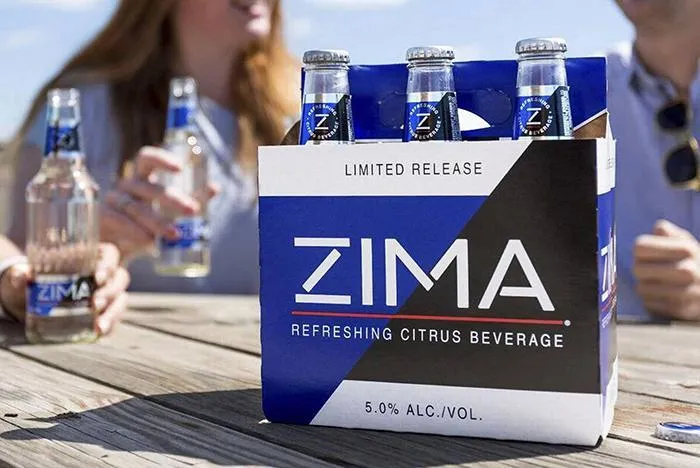
Nine years after pulling it from shelves, MillerCoors brought Zima back for a single limited run over July 4 weekend 2017, riding a wave of 90s nostalgia that was suddenly everywhere. The company tracked down people who’d worked on the original formula in the 90s to recreate the exact look, taste, and fluted bottle. Demand caught everyone off guard — Zima landed on Nielsen’s list of the ten fastest-growing malt beverage brands for six straight weeks, and two-thirds of the entire release sold out within a month.
MillerCoors brought it back again in 2018 with 40% more inventory than the year before. Both runs sold through fast enough that it’s hard to argue the backlash ever killed the product — it just outlived its original marketing.
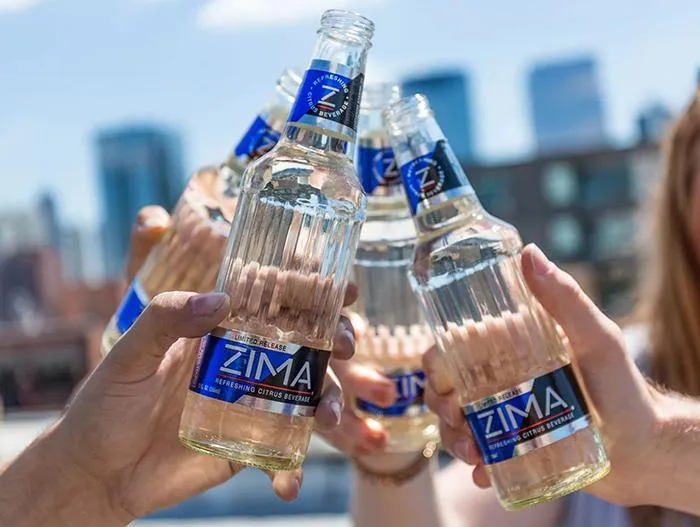
The 2017 limited release sold through two-thirds of its inventory in under a month.
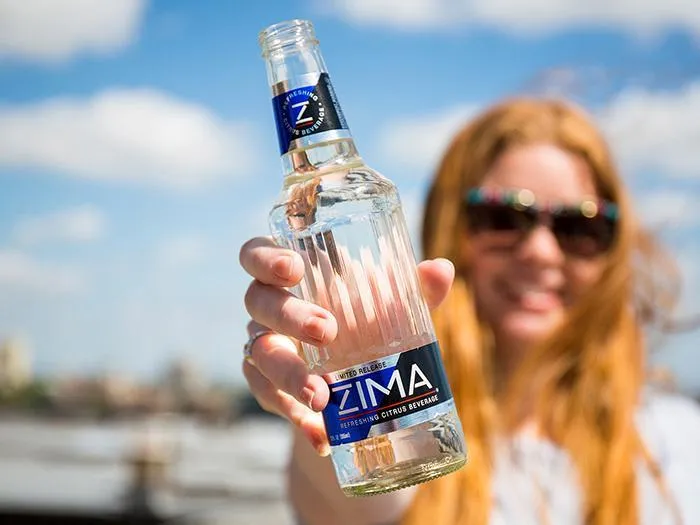
The Country Where Zima Never Left
While America was busy turning Zima into a punchline, Japan quietly made it a staple. Zima launched there in 1996 and became something closer to a normal convenience-store drink than a novelty — consumed by men and women across age groups, often alongside meals, without any of the “girly-man” baggage it carried back home. It stayed on shelves there for 25 years before COVID-19 nearly killed it: bar and restaurant sales dropped almost 90% during the pandemic, and Molson Coors discontinued the Japanese version on December 31, 2021. In 2023, a new distribution deal with Hakutsuru Sake Brewing brought it back to Japanese stores.
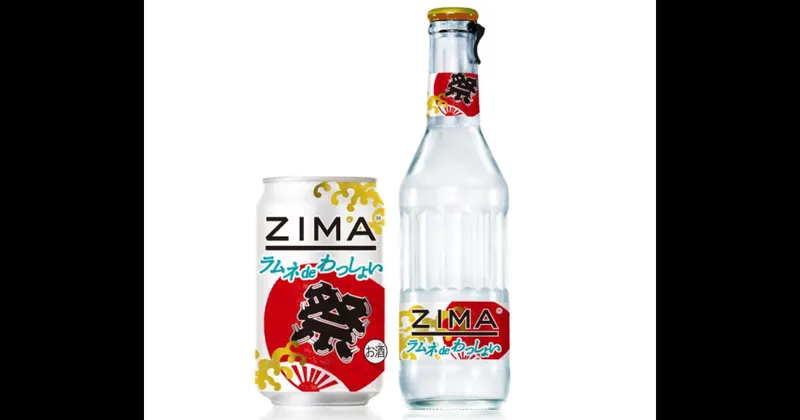
The Japanese release outlasted the American original by over a decade.
Is Zima Still Around in 2026?
Technically, yes — just not the way it used to be. There’s no standing national U.S. release anymore; availability comes down to specialty liquor stores and online retailers like Drizly carrying leftover stock or occasional small-batch runs, rather than a six-pack sitting in every grocery cooler. Nobody at Molson Coors has announced a third limited comeback since 2018, though neither 2017 nor 2018 were planned more than a few months ahead of launch, so another run showing up with little warning wouldn’t be a huge surprise. In Japan, it’s a different story entirely, still stocked in convenience store fridges and bars the way it has been on and off since 1996, just under a different ownership structure than the brand Coors originally built.
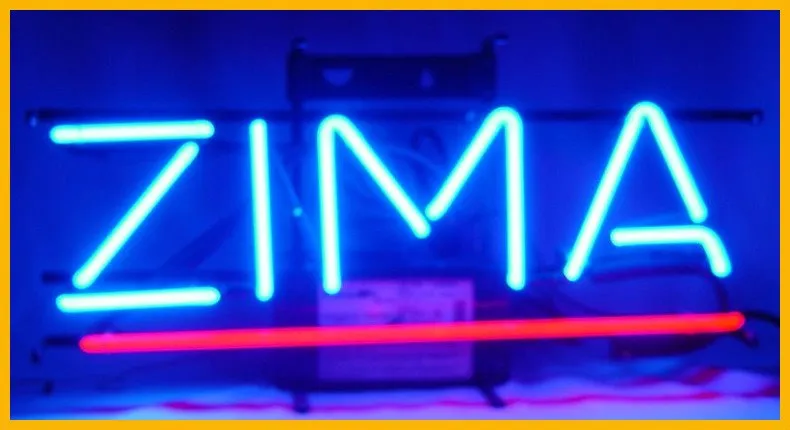
Original Zima bar signage still turns up in collector circles and the occasional dive bar.
Frequently Asked Questions
Why was Zima discontinued?
Coors discontinued Zima in the U.S. in October 2008 after years of declining sales, as drinkers shifted to newer flavored malt beverages like Smirnoff Ice and Mike’s Hard Lemonade.
Is Zima still made today?
Yes, in limited form. MillerCoors ran small U.S. comeback releases in 2017 and 2018, and Zima remains available in Japan through a 2023 distribution deal with Hakutsuru Sake Brewing.
What does Zima taste like?
It’s a lightly carbonated, citrus-flavored malt beverage — closer to a spiked lemon-lime soda than beer. Reviewers in the 90s and 2000s were rarely kind about it, but it’s not far off from what a modern hard seltzer tastes like.
Zima’s 2017 revival actually outsold Crystal Pepsi’s own 2016 comeback, which flopped a second time — proof that reviving a 90s punchline only works if the joke was ever affectionate to begin with. It belongs on any real list of 90s nostalgia alongside fellow backlash survivors like Hypercolor shirts — products people mocked relentlessly in the moment, then missed the second they were gone. If you missed the original run, a bottle still turns up occasionally at specialty liquor stores online, and it tastes almost exactly the way you remember it.
Sources
- Zima (drink) — Wikipedia — launch details, sales figures, marketing spend, and the Japan market timeline.
- Why People Stopped Drinking Zima — Mashed — David Letterman mockery, Zima Gold ad details, and consumer taste reactions.
- Back to the Future: Zima, a 90s Favorite, Is Returning — Grocery Dive — the 2017 MillerCoors comeback and sales performance.
The Retro Almanac
A monthly roundup of "on this day" highlights from that month, decades back — plus first dibs on new retro merch drops. No spam, just the good stuff.