Appetite for Destruction: The Inside Story of Rock’s Best-Selling Debut Album
Some albums don’t just arrive — they detonate. When Guns N’ Roses dropped Appetite for Destruction on July 21, 1987, nobody in the music industry knew what they were dealing with. Radio programmers passed. MTV refused. Geffen Records briefly considered abandoning the whole project. What happened next is one of the greatest slow-burn success stories in rock history: the album clawed its way to No. 1 on the Billboard 200 more than a year after release, sold 18 million copies in the United States alone, and became the best-selling debut album in American history. Worldwide sales have surpassed 30 million copies. More than three decades later, it still sounds like something that could get you thrown out of a dinner party — and that’s exactly the point.
The Sunset Strip Was a Jungle
To understand Appetite for Destruction, you have to understand where Guns N’ Roses came from. In the mid-1980s, the Sunset Strip in Hollywood was the center of the hard rock universe. Bands like Mötley Crüe, Poison, and Ratt had turned the club circuit into a nightly costume party of teased hair, spandex, and radio-ready anthems about girls and good times. It was fun, it was profitable, and it was growing soft around the edges.
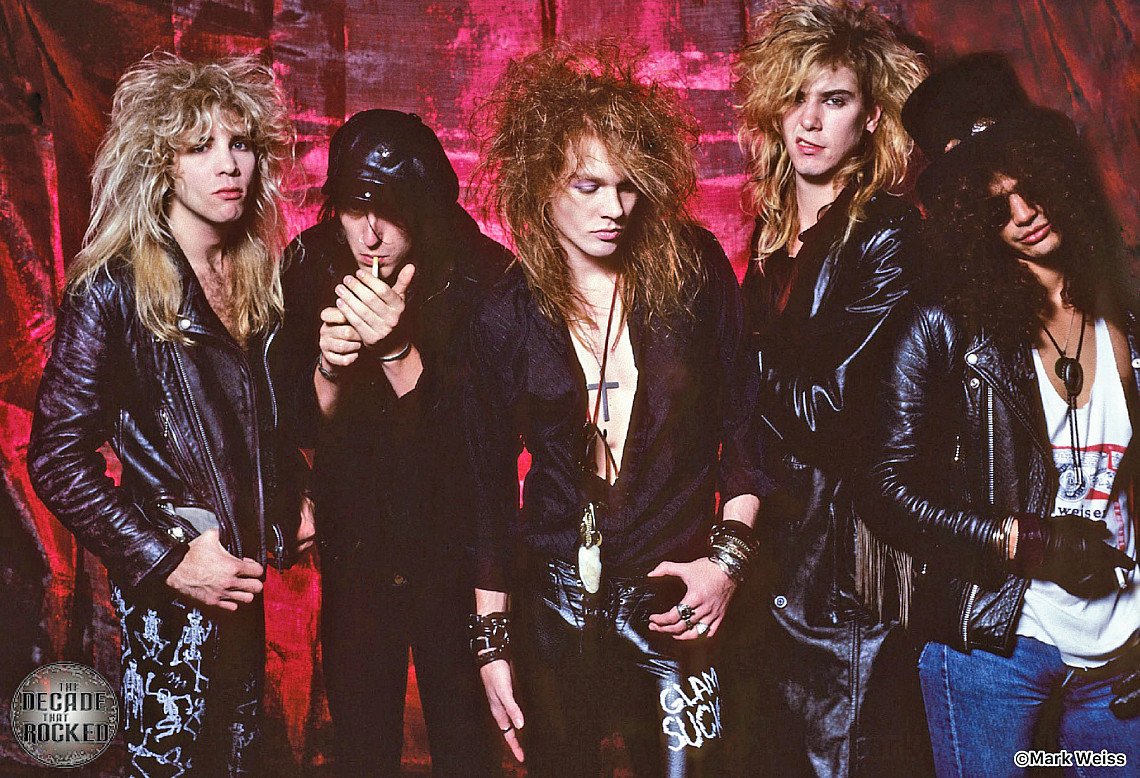
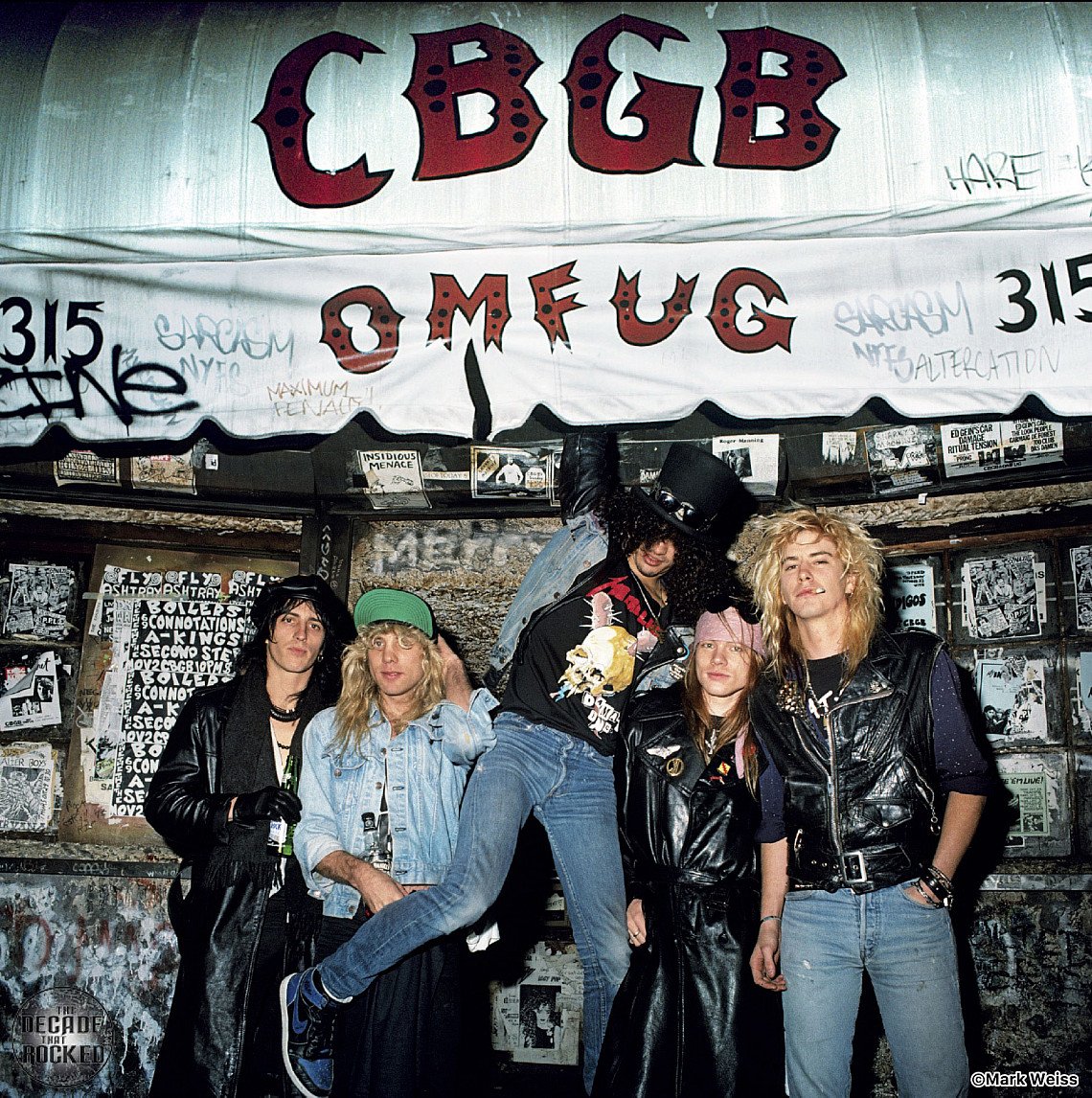
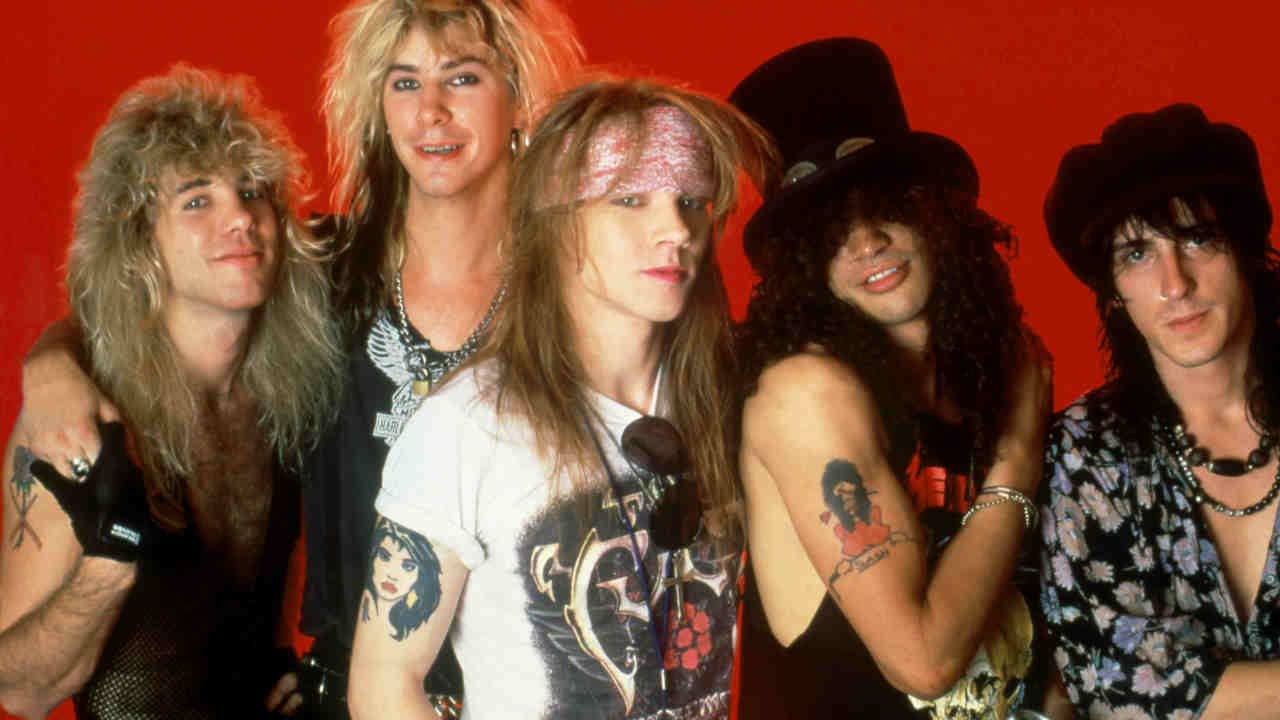
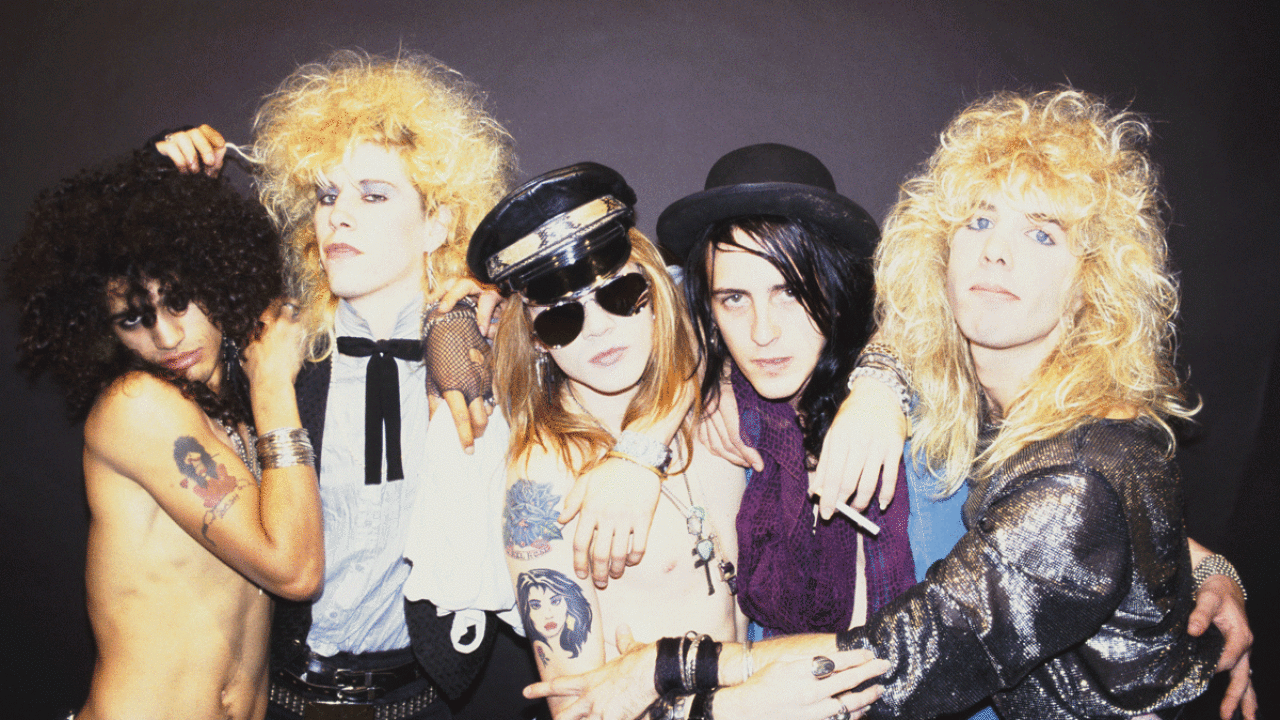
Guns N’ Roses formed in 1985 when vocalist Axl Rose and guitarist Izzy Stradlin merged their band Hollywood Rose with guitarist Slash, bassist Duff McKagan, and drummer Steven Adler. They were immediately, visibly different. Where their Strip peers were polished and calculated, GN’R were genuinely unhinged. They weren’t performing danger — they were living it. The band was so broke in their early years that members were sleeping in storage units and on park benches. Axl Rose had hitchhiked from Indiana with next to nothing. Duff McKagan arrived from Seattle on a one-way bus ticket with $40 in his pocket. This wasn’t rock mythology being constructed for press releases; it was the actual material conditions that would go directly into the music.
The Retro Almanac
A monthly roundup of "on this day" highlights from that month, decades back — plus first dibs on new retro merch drops. No spam, just the good stuff.
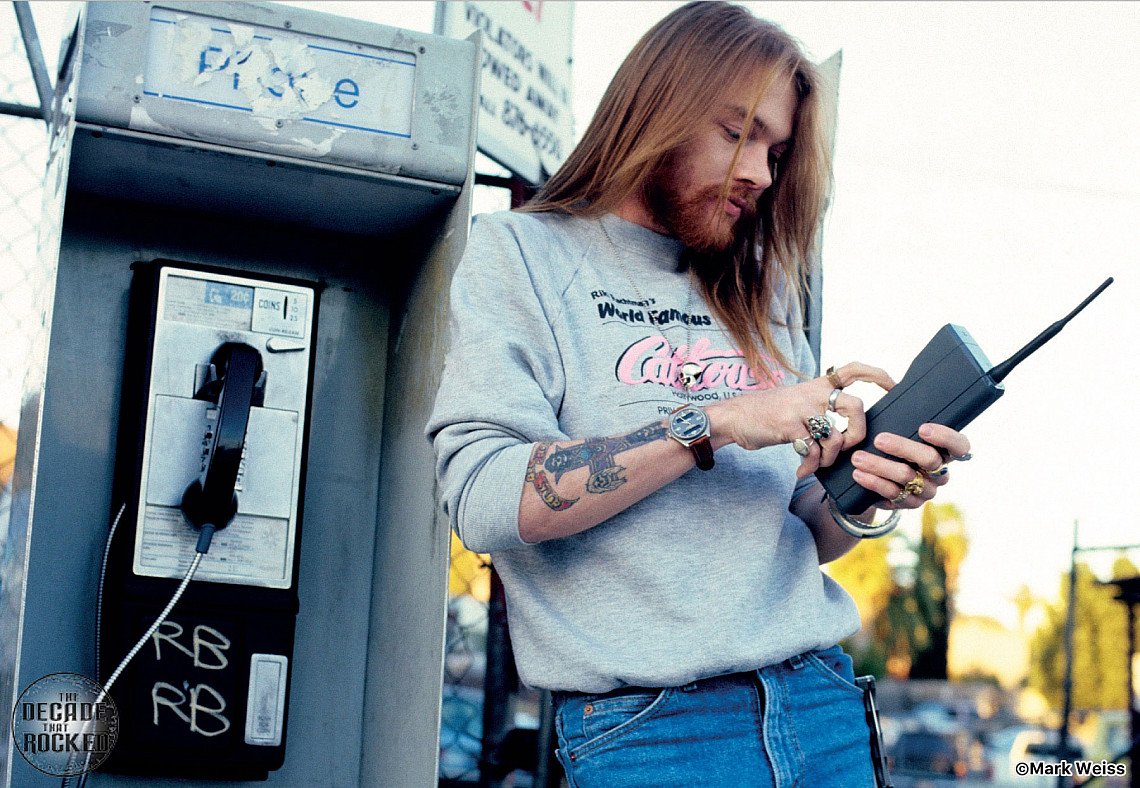
The band’s approach to music reflected their circumstances. Slash was obsessed with the blues — with Jimmy Page, with Keith Richards, with the Aerosmith records that had shaped his teenage years. Axl brought something harder to pin down: a voice that could move from a vicious snarl to a plaintive wail within the same line, and lyrics that read like dispatches from a city that was eating people alive. When they played live on the Strip, audiences could feel that something was off — that these guys weren’t acting.
From the Strip to the Studio: Recording Appetite
Geffen Records signed Guns N’ Roses in March 1986. Getting the album made, however, was a long and chaotic process. The band initially recorded demos with producer Manny Charlton of Nazareth at Sound City Studios in June 1986, cutting 25 tracks in a single day. Those sessions were raw and energetic — Charlton reportedly set the band up as if they were playing a live gig — but Geffen ultimately chose a different direction.
Finding the right producer proved difficult. Tom Werman, who had worked with Mötley Crüe, walked out of a rehearsal when the band played “Mr. Brownstone” at full volume. Paul Stanley of Kiss was rejected after suggesting changes to “Welcome to the Jungle.” Spencer Proffer of Quiet Riot sent an assistant to an initial meeting instead of showing up himself. The band took the hint.
The breakthrough came when they connected with Mike Clink, a relatively unknown producer who had worked as an engineer for Journey and Foreigner. Clink understood immediately that the task was not to polish GN’R but to capture them — to put what they did in a room together onto tape without sanitizing it. Recording of the actual album took place from January 18 to June 23, 1987, across four Los Angeles studios: Rumbo Recorders in Canoga Park, Take One Studio in Burbank, The Record Plant in Los Angeles, and Can Am Studio in Tarzana. Mixing was completed at Mediasound Studios in New York City, with mastering at Sterling Sound in Manhattan.
The total budget was approximately $365,000 — described by manager Alan Niven as “an outrageous amount to spend on a debut.” What Clink delivered for that money was something that sounded like a wrecking ball: powerful, slightly dangerous, and impossible to ignore once it had your attention.
Slash spent considerable time with Clink working out his guitar sound. He eventually settled on a Gibson Les Paul copy equipped with Seymour Duncan Alnico II Pro pickups run through a Marshall amplifier. The combination produced the warm, aggressive tone that defines the record — a sound that owed more to late-1960s British rock than to anything happening on the Sunset Strip in 1987.
The Album Cover That Got Banned
Before a single note was heard, Appetite for Destruction was already controversial. The original album artwork was a painting by underground artist Robert Williams titled Appetite for Destruction — the same image that gave the album its name. The painting depicted a robotic rapist about to be punished by a metal avenger. The band considered it a symbolic social statement about industrial society, but music retailers saw something else entirely and refused to stock it.
Geffen Records was forced to replace the artwork with an image of a Celtic cross surrounded by skulls representing each of the five band members. The original Robert Williams painting was relegated to the inner sleeve. This compromise satisfied enough retailers to get the album onto shelves — but the controversy had already seeded the band’s outlaw reputation. Even before anyone had bought the record, people knew that Guns N’ Roses was the kind of band that got into fights with the music industry.
Why MTV Wouldn’t Touch Them
MTV in 1987 was the most powerful promotional machine in rock music. Getting a video into rotation could transform an unknown band into a household name within weeks. Getting blacklisted from MTV could strangle an album in its crib.
Guns N’ Roses got blacklisted. MTV initially refused to air the “Welcome to the Jungle” video. The reasons were multiple: the content was too raw, the band was too unknown, and the channel’s programming was aimed at a cleaner aesthetic than GN’R represented. For the first three months after release, the album sold only around 200,000 copies — respectable for an indie band, deeply disappointing for a major label debut on a $365,000 budget. Geffen briefly considered cutting their losses.
The turnaround came through persistence and a single strategic move. Geffen’s Al Coury eventually convinced MTV to air the “Welcome to the Jungle” video just once a night for three nights. That was all it took. The response was immediate. Requests poured in, and “Welcome to the Jungle” became the most requested video on the network. The dam broke, and everything that had been slowly building behind it came flooding through.
Song by Song: The Key Tracks
Welcome to the Jungle
The album opens with one of the most recognizable guitar riffs in rock history — a winding, predatory descent that sounds exactly like a city about to swallow you. Axl Rose wrote the lyrics after arriving in New York from Indiana in 1980, drawing on an actual encounter that left him shaken by how brutal urban life could be. The song is a warning delivered as an invitation, with a vocal performance that escalates from a hissing whisper to full-throated aggression. Producer Clink later said he extracted “so much power and intensity” from this track that it made the perfect opening statement for the record.
Sweet Child O’ Mine
The song that made Guns N’ Roses a mainstream phenomenon started as a joke. Slash was warming up during a rehearsal at their Griffith Park home in Los Angeles, running through what he called a “circus melody” — a technical exercise he wasn’t even thinking about seriously. He described the moment: “I was playing the intro riff and they were playing chords behind it. And next thing you know, it was turning into something.”
Axl Rose had already written the lyrics as a poem for his then-girlfriend Erin Everly, daughter of Don Everly of the Everly Brothers. The song was unlike anything else in GN’R’s catalog — tender, nostalgic, laced with genuine emotional vulnerability. Rose later said he was inspired by classic Lynyrd Skynyrd records, trying to capture “that downhome, heartfelt feeling.” The song hit No. 1 on the Billboard Hot 100 in September 1988 — more than a year after the album’s release. Geffen’s Tom Zutaut, the A&R executive who signed the band, had pushed hard for it as a single, recognizing it immediately as a hit waiting to happen.
Paradise City
“Take me down to the paradise city / Where the grass is green and the girls are pretty” — it’s one of the great opening couplets in rock history, partly because it’s so openly, cheerfully dumb, and partly because what follows it is a slow build of mounting intensity that ends in one of the greatest finales any hard rock song has ever produced. The track shifts between a gentle verse and a stomping chorus before the final section accelerates into a controlled demolition. The music video, filmed partly at the 1988 Monsters of Rock festival in Donington and partly at Giants Stadium in New Jersey, captures 107,000 people going completely insane.
Nightrain
The origin story of “Nightrain” is perfect Guns N’ Roses mythology: the band was so broke they could only afford Night Train, a fortified wine that retailed for about $1.50 a bottle. They drank it because it was the cheapest way to get drunk, wrote a song about it, and turned it into an anthem. The track is loose and swaggering, built around a Slash riff that sounds like it was written in a parking lot at 2 AM — which, given the band’s circumstances, it very possibly was. It became one of the album’s most beloved deep cuts, a celebration of making the best of having nothing.
Mr. Brownstone
The most unflinching track on the record, “Mr. Brownstone” is a direct account of the band’s relationship with heroin. The name refers to a Los Angeles drug dealer, and the lyrics don’t glamorize addiction — they document it with a kind of resigned matter-of-factness that is more disturbing than any anti-drug message could be. The groove is almost funk-inflected, which makes the subject matter feel even more surreal. It was the song that had driven away Tom Werman during that infamous rehearsal. In retrospect, his departure was a gift.
Out ta Get Me
Axl Rose grew up in Lafayette, Indiana, and his early years were defined by run-ins with local law enforcement. “Out ta Get Me” channels that paranoia and resentment directly, and it benefits from having been written from genuine experience rather than manufactured attitude. By the time GN’R were recording it, Rose had actual reasons to feel that institutions were working against him. The song captures that feeling with a visceral directness that few of their peers could match.
Rocket Queen
The album closes with its most musically ambitious track. “Rocket Queen” shifts between a grinding, menacing first half and a more melodic, almost tender second section. The song was assembled from an unfinished piece from Slash’s earlier band Road Crew, and it shows GN’R’s range in a way that surprised even listeners who had made it through the previous eleven tracks. The transition between the two halves is one of the most audacious moments on any debut album.
The Slow Burn to Number One
The timeline of Appetite for Destruction‘s commercial success is unlike almost anything else in rock history. Released in July 1987, the album entered the Billboard 200 at No. 182 and moved upward incrementally for month after month. By early 1988, it was still climbing. By summer of 1988, it was approaching the top ten. On August 6, 1988 — thirteen months after release — it finally hit No. 1.
The album remained on the Billboard 200 for 147 total weeks — nearly three years. It spent four non-consecutive weeks at No. 1. “Sweet Child O’ Mine” became the band’s first and only No. 1 single on the Hot 100. “Welcome to the Jungle” had already become ubiquitous by that point, appearing in commercials, films, and sports arenas. “Paradise City” reached No. 5. The album generated five charting singles in total from a single twelve-track record — an extraordinary return rate.
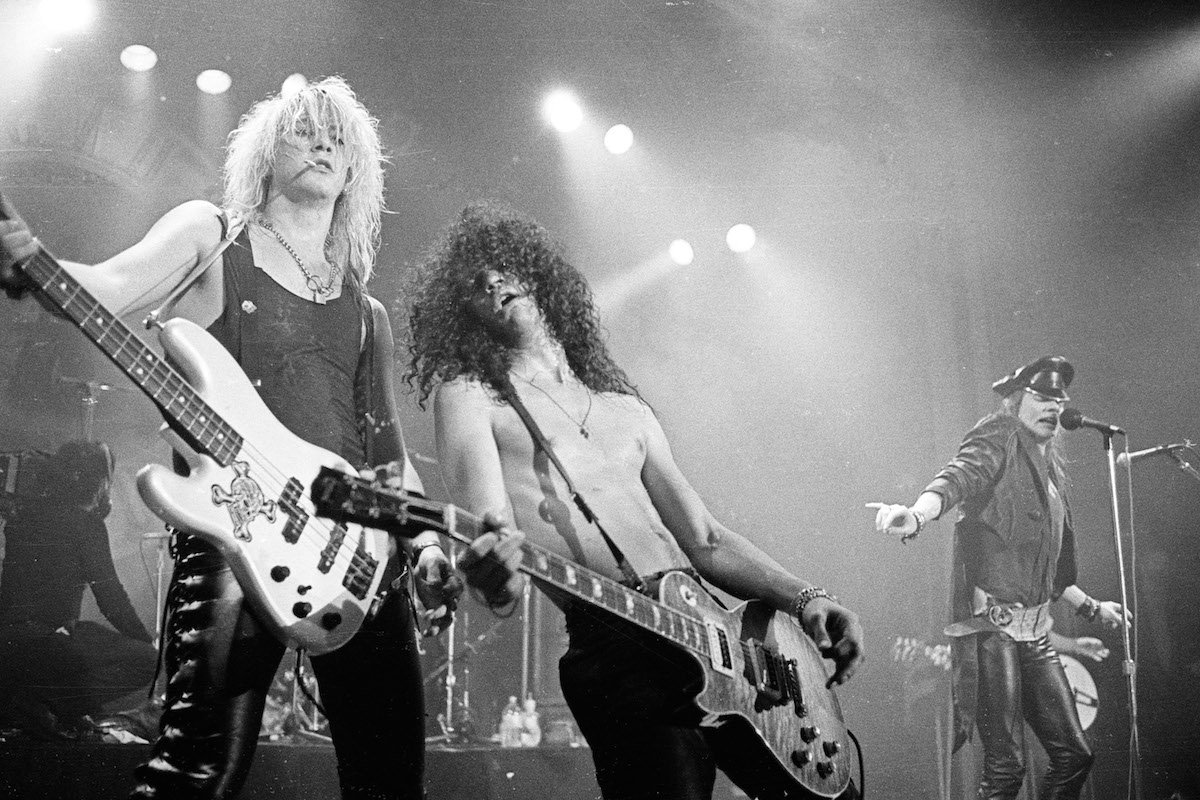
What drove this sustained growth was word of mouth amplified by two things: the MTV turnaround and touring. GN’R were a live band in the most essential sense — they could destroy a room. They toured relentlessly through 1987 and 1988, opening for Mötley Crüe, Alice Cooper, and Aerosmith, converting audiences one venue at a time. By the time “Sweet Child O’ Mine” hit No. 1, there were very few people in America who hadn’t heard them.
Real Danger vs. Glam Metal Theater
To understand why Appetite for Destruction hit so hard in 1987, you need to understand what it was arriving in contrast to. The dominant strain of rock on the Sunset Strip was what critics called glam metal or hair metal: bands in elaborate costumes singing about partying and girls, producing music that was technically proficient but emotionally weightless. It was entertainment, and it was good at being entertainment.
Guns N’ Roses arrived with something different: actual stakes. The stories in their songs weren’t fictional narratives — they were direct transcriptions of lived experience. When Axl sang about drugs, he was singing about drugs that had already damaged people around him. When Slash played those bluesy, bent-note runs, he was drawing on a different tradition entirely — not the polished arena rock of the period but the rougher, more dangerous sound of bands from a decade earlier. The band incorporated metal’s forceful playing, punk rock’s rebellious themes, glam metal’s aesthetic, and bluesy guitar riffs into something that didn’t fit any single category.
Critics at the time described it as injecting “a much-needed dose of ’70s-style rebellion into the frothy pop metal of the ’80s” — combining “the swagger of late ’60s Stones and vintage Aerosmith with the menace of punk and a trash-glam aesthetic.” More importantly, audiences felt the difference. GN’R’s live shows had an unpredictability that made them genuinely exciting — the sense that something could go wrong at any moment, and sometimes did.
The album’s tracklist reflected this duality. The band informally divided the record into two sides: “G” (for guns) on side one, covering the hard-edged city-life material — drugs, street violence, paranoia; and “R” (for roses) on side two, with more personal, emotional content. “Sweet Child O’ Mine” would have been almost unimaginable on a Poison or Warrant record. The combination of those two modes — aggression and vulnerability — was what made Appetite for Destruction feel complete in a way that most hard rock albums did not.
The Legacy: Best-Selling Debut in U.S. History
The numbers are not in dispute. Appetite for Destruction is certified 18× platinum in the United States — 18 million copies shipped, making it the best-selling debut album in American history. Worldwide, sales exceed 30 million copies, placing it among the best-selling albums ever recorded in the United States by any act, debut or otherwise. Rolling Stone ranked it No. 62 on its list of the 500 greatest albums of all time.
The album’s influence on subsequent hard rock and metal is incalculable. Bands from Nirvana to Alice in Chains to Stone Temple Pilots cited it as a defining influence. It demonstrated that raw, unpolished aggression could coexist with genuine songwriting craft — that you didn’t have to choose between danger and melody. Every subsequent rock band that tried to balance those elements was working in the shadow of what GN’R had done in those four Los Angeles studios in early 1987.
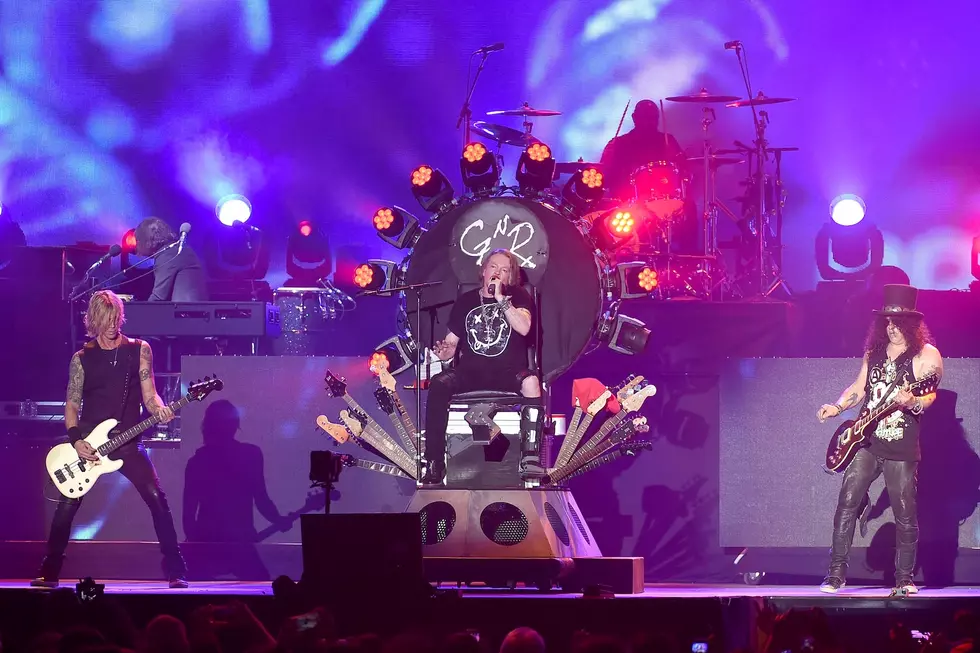
Guns N’ Roses were inducted into the Rock and Roll Hall of Fame on April 14, 2012 — though the ceremony itself was a strange footnote in the band’s history, since Axl Rose declined to attend. The full classic lineup didn’t actually reunite on stage until four years later, when Rose, Slash, and Duff McKagan launched the Not in This Lifetime… Tour in 2016, playing together for the first time since 1993 and eventually grossing over $500 million.
The “Locked N’ Loaded” box set released in 2018 to mark the album’s 30th anniversary included 73 tracks — outtakes, demos, live recordings, and rarities — and the demand was enormous. The bonus material confirmed what the original twelve tracks had suggested: this was a band operating at a level of creative intensity that rarely sustains itself, and they had the good fortune to capture it on tape at exactly the right moment.
Appetite for Destruction is not a nostalgia object. It is a record that still sounds alive because the people who made it were fully, recklessly alive when they made it — broke, hungry, talented, and furious. Nearly four decades later, that hasn’t changed.
Frequently Asked Questions
Why is Appetite for Destruction called the best-selling debut album in US history?
Appetite for Destruction is certified 18× platinum (18 million copies shipped) in the United States by the RIAA, making it the best-selling debut album ever released in America. No other debut album by any artist has matched that certification level in the US market. Globally, sales exceed 30 million copies.
What is the “appetite for destruction” meaning behind the album title?
The title comes from a painting by underground artist Robert Williams that was originally used as the album cover. The painting depicted a robotic figure in a scene of violence and chaos. The band interpreted it as a symbolic statement about industrial society and its destructive tendencies — themes that aligned with the raw, confrontational energy of the music itself.
Why did MTV refuse to play Guns N’ Roses initially?
MTV initially declined to air the “Welcome to the Jungle” video, considering the content too raw for its programming. After three months of slow sales and persistent lobbying by Geffen Records’ Al Coury, MTV agreed to air the video once a night for three nights. The response was overwhelming — it became the most requested video on the network and broke the album wide open commercially.
What is the story behind “Sweet Child O’ Mine”?
Slash created the opening guitar riff as a technical exercise — a “circus melody” he was playing while warming up. Axl Rose had separately written a poem for his then-girlfriend Erin Everly (daughter of Don Everly). The two elements were combined during rehearsals, and Geffen A&R executive Tom Zutaut immediately recognized its potential as a single. The song reached No. 1 on the Billboard Hot 100 in September 1988, over a year after the album’s release.
Where did the name “Nightrain” come from?
“Nightrain” takes its name from Night Train, a cheap fortified wine that the band drank during their broke early years because it was one of the most affordable ways to get alcohol. At roughly $1.50 a bottle, it was within reach even when the band was sleeping in storage units and living on almost nothing. The song transforms that poverty into an anthem, celebrating the defiant spirit of making do with whatever is available.
How long did it take Appetite for Destruction to reach No. 1?
Appetite for Destruction was released on July 21, 1987, and reached No. 1 on the Billboard 200 on August 6, 1988 — over thirteen months after its initial release. The album spent four non-consecutive weeks at No. 1 and remained on the chart for 147 total weeks. This slow-burn trajectory is one of the most unusual in rock chart history and demonstrates how word of mouth and live touring can sustain an album’s growth long after conventional promotional windows have closed.
The Retro Almanac
A monthly roundup of "on this day" highlights from that month, decades back — plus first dibs on new retro merch drops. No spam, just the good stuff.