The Grunge Blueprint: How Seattle Built a Movement Out of Distortion, Flannel, and Discontent
In September 1991, a video aired on MTV of three guys in a high school gym, surrounded by tattooed cheerleaders and a flannel-clad mosh pit. By Christmas, “Smells Like Teen Spirit” had bumped Michael Jackson off the top of the Billboard charts, the term “grunge” had escaped Seattle, and an entire generation found itself with a soundtrack, a wardrobe, and an attitude problem. The whole thing felt like an accident. It wasn’t.
The history of grunge music isn’t a story about three chords and a bad attitude. It’s a story about a city, a scene, a label, and a handful of bands who accidentally built something the whole world wanted. Understanding how it happened means looking at three layers stacked on top of each other — the music, the clothes, and the worldview — because none of them work without the other two. Pull out the flannel and you’re left with three guys and a feedback loop. Pull out the cynicism and you’re left with a costume party. The whole thing was a system. And like most systems, it had blueprints long before it had an audience.
Before the Boom: A Scene Built Without a Spotlight
Long before Nirvana was on the cover of every magazine in America, Seattle was a working musician’s town with one peculiar advantage: it was too far from the music industry to be noticed. New York and Los Angeles A&R reps weren’t flying into Sea-Tac to scout bands in 1986. That meant local groups could spend years getting weird without anyone trying to package them.
The Retro Almanac
A monthly roundup of "on this day" highlights from that month, decades back — plus first dibs on new retro merch drops. No spam, just the good stuff.
KCMU, the University of Washington’s college station, played the local stuff alongside British post-punk imports. The Crocodile Cafe, the Vogue, and the OK Hotel gave bands stages with crowds. And in 1986, two college radio kids named Bruce Pavitt and Jonathan Poneman launched Sub Pop Records out of an apartment, releasing a compilation cassette called Sub Pop 100 that included Sonic Youth, Skinny Puppy, and a crew of then-unknown locals. The label’s whole pitch — “World Domination” stamped on every release as a joke that turned out not to be — set the tone for what came next.
Mudhoney and TAD were the first Sub Pop bands to generate serious underground buzz, touring Europe in 1989 to crowds that had never seen anything like their live sets. British music press — NME, Melody Maker, Kerrang! — were covering Seattle acts two years before American mainstream outlets noticed. The scene was real and self-sustaining before it had a name. “Grunge” as a descriptor shows up in a 1981 letter from Mark Arm describing his own band’s sound as “pure grunge” — a decade before the word went global.
The Sound Machine: Drop-D, Distortion, and the Quiet-Loud Formula
Before grunge had a name, it had a tuning. Bands discovered that dropping the lowest guitar string from E to D gave power chords a beefy, almost sinister weight — and you could do it fast, with minimal technical skill. Neil Young, who Kurt Cobain would later call “the godfather of grunge,” had been using fuzz pedals and sloppy riffing for twenty years. The Seattle bands took that aesthetic and paired it with a structural idea borrowed from the Pixies: verse played quiet and clean, chorus detonated with maximum distortion. The song attacks you twice — once when the hook arrives, and again when you realize you didn’t see it coming.
Recording budgets were non-existent. Jack Endino, who engineered most of the early Sub Pop catalog, worked at Reciprocal Recording Studio in Seattle for forty dollars an hour. Nirvana’s first demo session in January 1988 cost around $152.44. The lo-fi sound wasn’t a stylistic choice — it was a financial constraint that accidentally became an aesthetic. Clean, expensive production would have sounded dishonest against lyrics about boredom, alienation, and class frustration. The cheap tape hiss was part of the package.
Tempo mattered too. Grunge wasn’t metal, despite the shared distortion. Metal was about speed, precision, and technical virtuosity. Grunge was deliberate, mid-tempo, sometimes almost lurching. The aggression was emotional rather than technical. Kurt Cobain couldn’t shred. Layne Staley’s guitar parts were minimal. That was the point — the songs were driven by feeling, not chops, which made them accessible in a way that hair metal never managed to be.
The Four Pillars: The Bands That Wrote the Blueprint
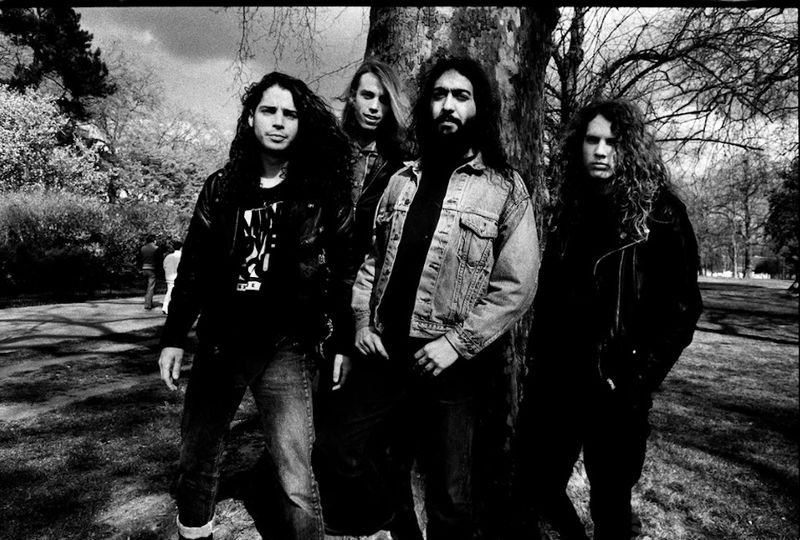
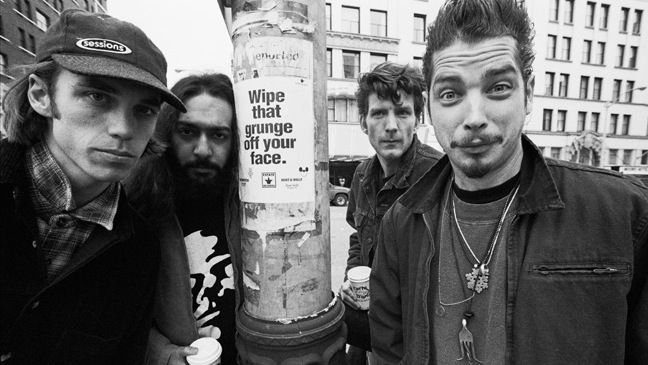
Four bands defined grunge — not because they were the only ones, but because they each brought something the others didn’t. Taken together, they covered the full spectrum of what the sound could do.
Soundgarden formed in 1984 and was the first Seattle act signed to a major label, landing at A&M Records in 1989. Frontman Chris Cornell had a four-octave vocal range he deployed the way other people use a power saw — loud, precise, capable of doing real damage. Their 1991 album Badmotorfinger is the most technically sophisticated grunge record: odd time signatures, dark tunings, songs that shouldn’t work and somehow do. Cornell once explained the band’s approach as “playing heavy metal through a punk rock filter” — which is a better description of grunge in general than most critics ever managed.
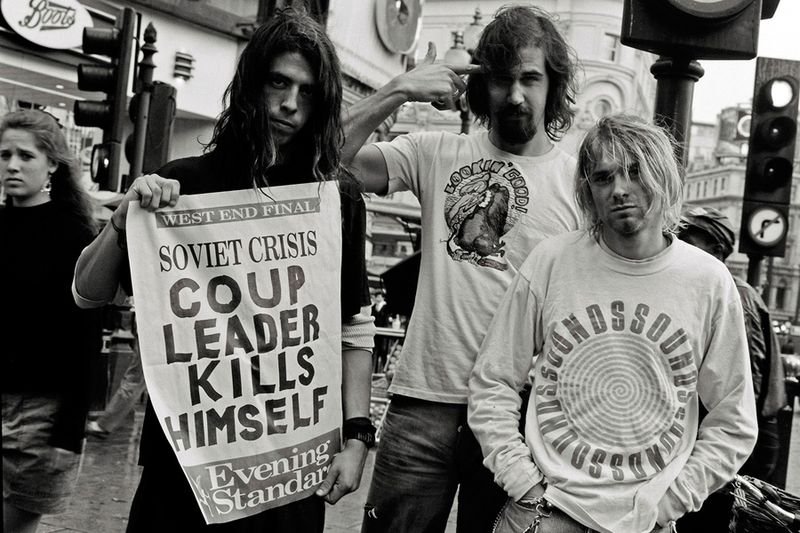
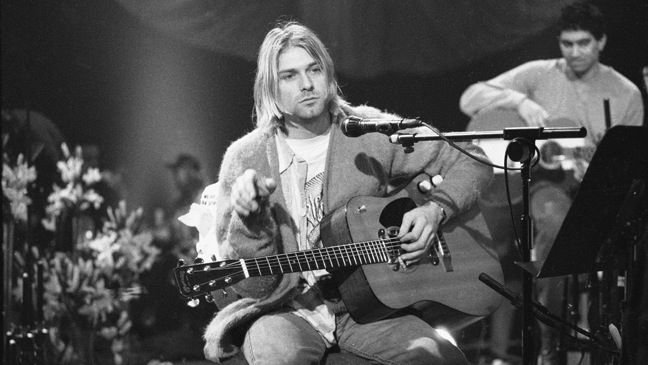
Nirvana were the ones who blew the door open. Kurt Cobain and Krist Novoselic had been kicking around Olympia and Aberdeen for years before Dave Grohl joined as drummer in 1990 and locked in the final piece. Nevermind (September 24, 1991) went from modest expectation to cultural wildfire in weeks. DGC Records had shipped 50,000 copies anticipating a cult hit. It sold 30 million. The label’s initial expectation was so conservative that when the album went platinum in its first month, nobody at the label was sure what had just happened.
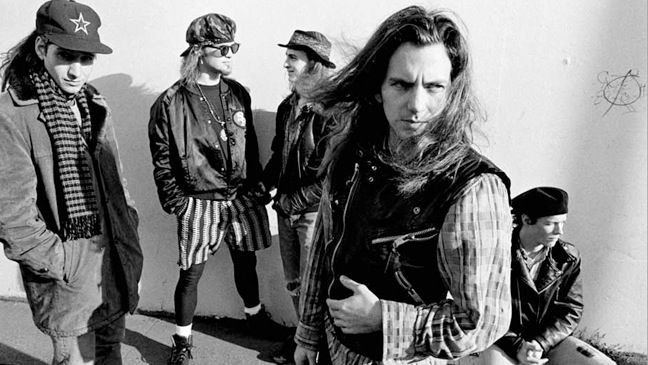
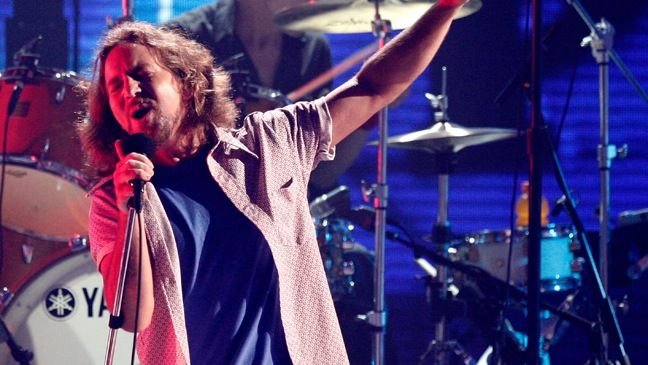
Pearl Jam came at grunge from a different angle — less punk, more classic rock — which made them easier for mainstream radio to absorb and vastly more commercially durable. Eddie Vedder wrote “Alive” on a cassette tape he mailed to Seattle after answering a band audition in 1990. By 1992, Ten was selling 100,000 copies a week. They are, by a large margin, the best-selling grunge act — and one of the very few whose catalog still commands full arena tours today.
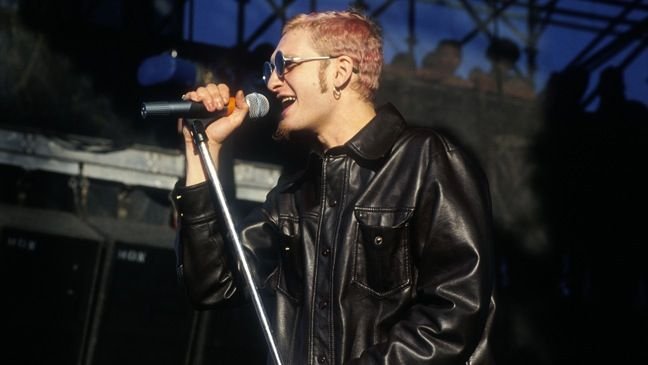
Alice in Chains were the darkest of the four. Layne Staley’s vocal harmonies with guitarist Jerry Cantrell created a dissonant, double-tracked sound unlike anything else on the radio. Dirt (1992), an album explicitly about addiction, is still considered one of the most harrowing records ever released by a mainstream act. Staley’s death from a drug overdose in 2002 closed the door on what many considered the most genuinely disturbing corner of the entire movement.
The Uniform: Flannel, Doc Martens, and Intentional Ugliness
By 1992, fashion editors in New York and Paris were calling grunge the next big trend, paying thousands for flannel shirts they could have found at a Seattle Salvation Army for three dollars. The bands thought it was hilarious. The fashion industry missed the entire point.
Grunge fashion wasn’t a look — it was a rejection of looking. The flannel shirts were worn because they were cheap and warm in a Seattle winter. The ripped jeans came from actual wear, not a factory. Doc Martens were practical footwear, not a statement. Thrift stores were the source not because vintage was trendy, but because nobody had any money and new clothes felt pretentious. Chris Cornell once estimated he spent about twelve dollars on everything he wore in most early press photos. That detail tells you everything about where the aesthetic came from.
The style also functioned as a class signal — an explicit refusal of the glossy, aerobicized look that dominated 80s pop and rock. While Bon Jovi and Guns N’ Roses were doing the whole tight-jeans-and-teased-hair thing, Nirvana showed up in grandpa cardigans and faded print T-shirts. It was working-class dressing, whether or not anyone called it that at the time. The look resonated partly because it was honest about economics in a way that music had rarely been.
Marc Jacobs’ 1993 “grunge collection” for Perry Ellis cost him his job. Critics called it an embarrassment. It’s now considered one of the most influential fashion moments of the decade. The original grunge musicians never cared either way — most of them were already buying their wardrobes at Goodwill, and the price difference between a designer flannel and a thrift-store one confirmed exactly what they’d been saying about the fashion industry all along.
September 1991: When the Blueprint Went Mainstream
On September 10, 1991, Nirvana released Nevermind. Within weeks, “Smells Like Teen Spirit” was getting heavy rotation on MTV — a channel that had spent the previous decade pushing precisely the kind of polished rock that grunge was designed to destroy. By January 1992, Nevermind knocked Michael Jackson’s Dangerous off the number one spot. The major labels sent A&R scouts to Seattle the same week.
The crossover happened fast enough to disorient everyone involved. Cobain had expected to sell records to the same indie crowd that bought Pixies albums. Instead, he was suddenly famous in a way that felt closer to Beatlemania than anything he’d signed up for. He listed “corporate rock whores” as one of Nirvana’s musical influences in the Nevermind press kit — a joke that aged in complicated ways as the album went multi-platinum and his face started appearing on posters in shopping malls.
Pearl Jam, meanwhile, had been building momentum separately. Ten dropped in August 1991 and gained speed through word of mouth and MTV rotation, breaking through fully in 1992. By the time grunge was officially declared a genre by the mainstream press, Pearl Jam had already sold millions of records. They were the rare act who seemed genuinely comfortable with success — a trait that made them deeply suspect in certain corners of the Seattle scene.
Nirvana — “Smells Like Teen Spirit” live at the Paramount, Seattle (Halloween 1991)
The Fall: When the Movement Ate Its Own
By 1993, the machine was breaking down. The original acts were dealing with mass attention in ways they weren’t prepared for. Cobain’s health was deteriorating publicly. Layne Staley’s addiction was worsening in ways the band couldn’t hide. The second wave of “grunge” acts signed after the Seattle explosion — most from entirely different cities, attempting to replicate a sound they’d heard on the radio — were making everything feel cheap. By the time Silverchair and Bush were topping the charts with their approximations of the sound, the original architects had largely moved on or fallen apart.
Kurt Cobain died on April 5, 1994. He was 27. The MTV bulletin that interrupted programming to announce his death got higher ratings than any news event that week. Within a year, the media narrative had flipped: grunge was over, “post-grunge” had begun, and the labels were moving on to Britpop and then rap-rock. The speed of the eulogy said as much about the music industry as it did about the music.
Alice in Chains effectively went quiet after Staley’s addiction made touring impossible. Soundgarden dissolved in 1997 — a band at its commercial peak, splitting because they were burned out. Pearl Jam survived by doing the opposite of what the industry expected: pulling back from MTV, fighting Ticketmaster, and building a fanbase that cared more about the music than the marketing. Sub Pop is still in business, still in Seattle.
Why the Blueprint Still Works
The most honest thing about grunge was that it sounded like it cost nothing to make — because in the beginning, it cost nothing to make. Jack Endino’s forty-dollar-an-hour rate, the Crocodile Cafe’s three-dollar cover charge, the Sub Pop apartment office: all of it produced something that shifted the axis of rock music for a decade. That remains its appeal. You can pick up a used guitar, drop the lowest string, run it through a distortion pedal, and sound roughly like a band that outsold Michael Jackson in 1992. The barrier was never technical. It was attitudinal.
What Seattle built between 1986 and 1991 was also a proof of concept: a scene three thousand miles from the industry’s center could develop on its own terms and eventually come to define a decade. Every subsequent city-based music scene — Atlanta hip-hop, Scandinavian black metal, the DC hardcore revival — owes something to the template Sub Pop accidentally proved. You don’t need New York or Los Angeles. You need a cheap studio, a local label willing to take risks, and enough bands willing to play the same venue until the sound gets interesting.
The flannel aesthetic gets rediscovered every few years. The early 2000s post-punk revival borrowed from it. So did the 2010s indie rock scene. So does most of what gets called “alternative” now. The style is optional. The distortion pedal, it turns out, is mandatory.
Grunge’s real legacy isn’t the sound — it’s the permission. Permission to be technically imperfect and still mean it. Permission to be angry without explaining why. Permission to dress like you don’t care who’s watching, because the music is the thing. Sub Pop stamped “World Domination” on their first releases as a joke. It took Seattle about five years to make it come true.
Sources
- About Sub Pop Records — official history of the Seattle label that launched the grunge movement in 1986.
- Sub Pop Turns 30: How the Unconventional Record Company Put Seattle on the Map — Seattle Business Magazine retrospective on Sub Pop’s founding and growth.
- Nirvana debuts “Smells Like Teen Spirit” at Seattle’s OK Hotel, April 17, 1991 — HistoryLink.org documentation of the first live performance.
- On This Day in 1991, Nirvana Played “Smells Like Teen Spirit” for the First Time — American Songwriter, context on the cultural impact of the debut.
- 1991: The Year That Grunge Broke — Louder Sound, detailed retrospective on the key events of grunge’s mainstream breakthrough.
The Retro Almanac
A monthly roundup of "on this day" highlights from that month, decades back — plus first dibs on new retro merch drops. No spam, just the good stuff.