On This Day: July 18, 1986 — Aliens Storms Into Theaters
Forty years on, the smartest thing anyone said about Aliens, the 1986 sci-fi classic, came from James Cameron himself in a story he loves to tell. Pitching the sequel to 20th Century Fox executives, he walked to a whiteboard, wrote the title of the 1979 original — ALIEN — added an S, then drew two vertical lines through it to make a dollar sign. That was the pitch. On July 18, 1986, the joke stopped being a joke and started being a phenomenon.

Why July 18, 1986 Mattered for Sci-Fi Movies
The summer of 1986 belonged to Top Gun and Ferris Bueller, but the movie that reset what a science-fiction sequel could be arrived in the third week of July. Ridley Scott’s Alien had been a haunted-house film in space — one creature, one crew, picked off in the dark. Cameron looked at that and asked a different question: what happens when the Marines show up and it still isn’t enough? The answer ran 137 minutes in theaters and left audiences wrung out. The New York Times critics warned it was “painfully, unremittingly intense,” which turned out to be the best advertising the film could have asked for.
The Retro Almanac
A monthly roundup of "on this day" highlights from that month, decades back — plus first dibs on new retro merch drops. No spam, just the good stuff.
Cameron was coming straight off The Terminator, a low-budget hit that proved he could stage carnage with a clock ticking. Fox handed him roughly $18.5 million and the keys to their most valuable horror property. He didn’t remake Alien. He built a war movie inside its bones.
From Haunted House to War Movie
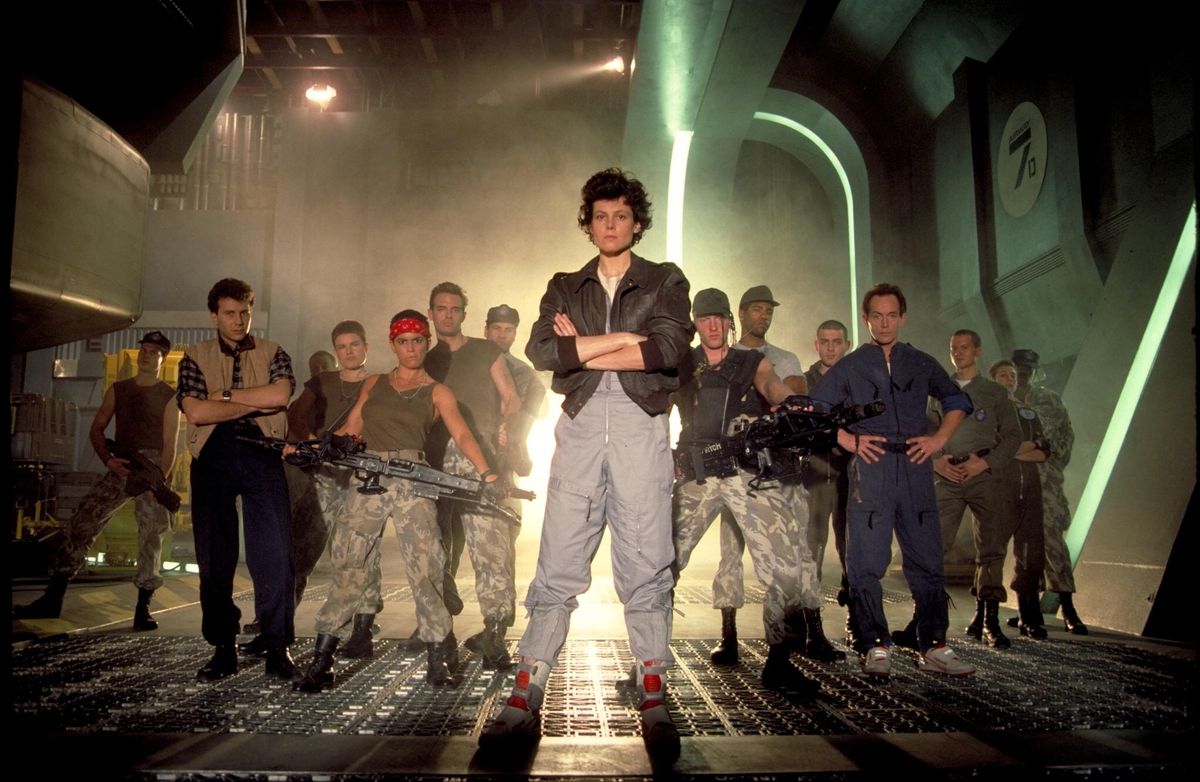
The genius of Aliens is that it refuses to repeat the first film’s trick. Where Scott gave you one perfect predator, Cameron gave you a nest of them and a squad of cocky Colonial Marines who assume superior firepower will settle things fast. It doesn’t. Their dropship gets destroyed, their ammunition runs low, and the confidence drains out of the movie scene by scene until the survivors are barricading doors with welding torches.
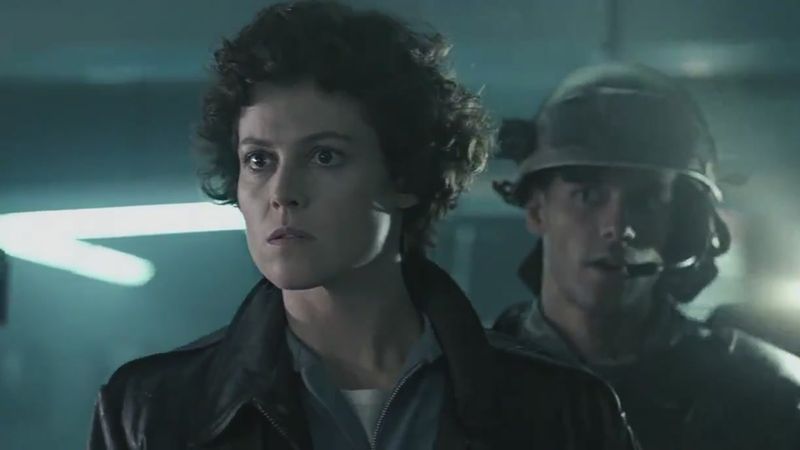
That structure — overwhelming force meeting something it can’t beat — became a blueprint. You can trace its DNA through Predator, Starship Troopers, and a generation of video games. It’s no accident the actors playing the Marines were handed Robert Heinlein’s Starship Troopers as homework and put through two weeks of military training so they’d move and bicker like a real unit. Cameron shot most of their scenes late in the schedule, after 14 weeks together, betting the camaraderie would read as genuine. It does.
Ripley Becomes an Action Heroine
Sigourney Weaver had been paid $35,000 for the original Alien. For the sequel she got $1 million, and she earned every dollar of the raise by refusing to phone it in. Weaver wasn’t sure she wanted to come back at all, and told Cameron she needed convincing the sequel wasn’t just a cash grab. His script did the convincing: it gave Ripley a dead daughter, a surrogate one in the orphaned colonist Newt, and a reason to walk back into the fire on her own terms.
The result was something Hollywood barely knew how to categorize. When the Academy nominated Weaver for Best Actress, it was a genuine shock — the Academy paid almost no attention to science fiction, and action leads simply weren’t invited to that party. She didn’t win, but the nomination cracked a door open. Every armored, competent, terrified-but-functional heroine who followed owes her a little something.
“Game Over, Man” — Bill Paxton Steals the Movie
Every great war movie needs the guy who panics so the audience doesn’t have to, and Aliens had Bill Paxton as Private Hudson. His meltdown after the dropship goes down — “That’s it, man. Game over, man! Game over!” — became one of the most quoted lines of the decade. Paxton built an entire backstory for Hudson, deciding the character had “come up on simulators and video games” and cracked under the first taste of the real thing.
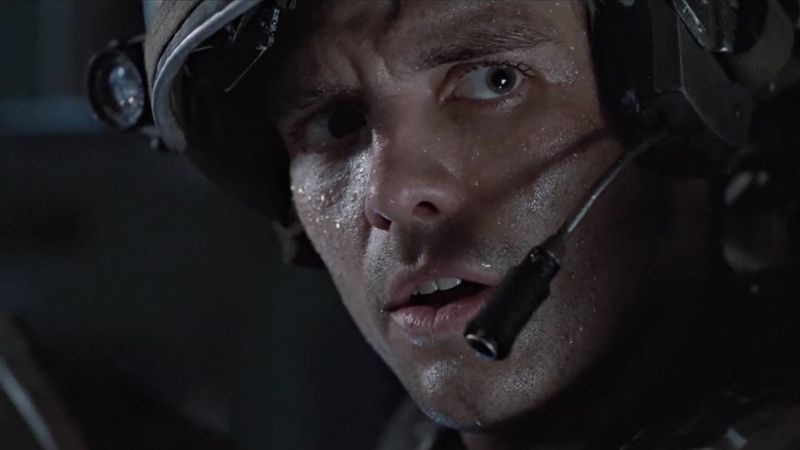
Here’s a stat that says everything about Hudson’s role in the film: the word that starts with F is spoken 25 times in Aliens, and 18 of those belong to Paxton. He also says “man” 44 times. Hudson is comic relief and doom-sayer at once, and he’s the reason the terror lands — when the loudmouth stops joking, you know it’s bad.
Practical Effects That Still Hold Up
There isn’t a pixel of computer-generated imagery in Aliens, and that’s exactly why it hasn’t aged into camp. The Alien Queen — arguably the greatest creature effect of the 1980s — was a towering puppet operated by two people inside plus an array of cables and cranes. Stan Winston’s team built it, and the visual effects unit walked off with an Oscar for the work, alongside a second Academy Award for Best Sound Effects Editing.

Then there’s the power loader — the yellow exoskeleton Ripley climbs into for the film’s final showdown. It took three months to build. To make it move, a stuntman was concealed inside behind Weaver, controlling the mechanism while she reacted to his movements; the whole rig was slung from cranes that carried the weight. Modern VFX artists who break the scene down are still floored that it was done entirely in-camera. If you grew up watching this on VHS, “Get away from her, you bitch!” is probably burned into your memory alongside the image of that machine.

The Box Office and the Legacy
On its $18.5 million budget, Aliens pulled in $85.1 million domestically and somewhere north of $130 million worldwide, making it the seventh-highest-grossing film of 1986 in North America. It scored an “A” from CinemaScore audiences and turned a one-off horror hit into a franchise Fox would ride for decades.

More than the money, though, Aliens settled an argument that still flares up in every comment section: can a sequel be as good as the original? Plenty of critics and fans put Cameron’s film neck-and-neck with Scott’s, and a fair number rank it higher. It’s the same debate people have about The Empire Strikes Back or The Godfather Part II, and Aliens belongs in that conversation. For a movie that started life as a dollar sign on a whiteboard, that’s a hell of a legacy.
The Trouble Behind the Camera
None of this came easy. Aliens was shot at Pinewood Studios in England between September 1985 and January 1986, and the set was a battlefield in its own right. Cameron, a hard-charging American in his early thirties, clashed repeatedly with a veteran British crew unused to his pace and his refusal to break for the traditional afternoon tea. Reports from the shoot describe a first cinematographer being let go and a general standoff over how the film would be made. Cameron’s producing partner and then-wife Gale Anne Hurd spent much of the production running interference so the movie could actually get finished.
The music nearly didn’t make it either. Composer James Horner was handed a schedule so compressed he had roughly three weeks to score the film instead of the six he’d been promised, and much of it was written and recorded against a moving target as the edit kept changing. Horner was furious about the crunch — and still delivered a score that earned an Oscar nomination and gave the Marines’ doomed advance its pounding, military heartbeat. Chaos on set, gold on screen. It’s the oldest story in Hollywood, and Aliens is one of its better examples.
Watching Aliens 1986 Again in 2026
If you haven’t revisited Aliens since the days of rewinding a rental tape, the Special Edition Cameron assembled in 1991 is the version to seek out — it restores the Newt subplot and the sentry-gun sequence that the theatrical cut trimmed. Watch it on the biggest screen you can find, with the sound up, and pay attention to how little the film explains and how much it trusts you to keep up. That confidence is the retro secret sauce. Studios in the 1980s were still willing to make a blockbuster that assumed the audience was smart, tense, and ready to be scared. For more Gen X touchstones from the same era, dig into our takes on how Die Hard rewired the action movie in 1988, the enduring appeal of MacGyver and his paperclip heroics, and the little gray brick that ate our summers, the Nintendo Game Boy.
Love the retro era? Browse our shop for vintage finds, retro clothing, and 80s/90s nostalgia gear.
Sources
- Aliens (film) — Wikipedia — release date, budget, box office, Academy Award wins and nominations, production details.
- 25 Interesting Facts About Aliens (1986) — All The Right Movies — power loader construction, cast training, on-set trivia.
- Fact File No.1 — Aliens (1986), Film ’89 — behind-the-scenes notes and production background.
The Retro Almanac
A monthly roundup of "on this day" highlights from that month, decades back — plus first dibs on new retro merch drops. No spam, just the good stuff.