Beat Street: How a Harry Belafonte Movie Introduced Hip-Hop to the World
In June 1984, a hip-hop movie hit theaters that wasn’t trying to be slick, wasn’t trying to be Hollywood, and definitely wasn’t filmed on a studio backlot. Beat Street dropped its cameras straight into the South Bronx and let DJing, breaking, and graffiti writing play themselves. It bombed next to its flashier rival that same year, but four decades later it’s the one hip-hop historians actually point to as the real document. Here’s how a calypso legend, a subway train, and a crew of teenagers from the Bronx ended up exporting hip-hop to the entire planet.
A Calypso Legend Bankrolled a Hip-Hop Movie
The man behind Beat Street wasn’t a rapper, a DJ, or anyone from the Bronx scene at all — it was Harry Belafonte, the “Day-O” singer and civil rights icon, who optioned journalist Steven Hager’s magazine story “The Perfect Beat” and decided to produce a feature film around it. Belafonte and co-producer David V. Picker brought the project to Orion Pictures, and Belafonte didn’t stop at the movie. He also produced both soundtrack albums, making Beat Street one of the first films in history to spin off two separate official soundtrack records.
The Director Had Already Spent a Decade Inside Black TV
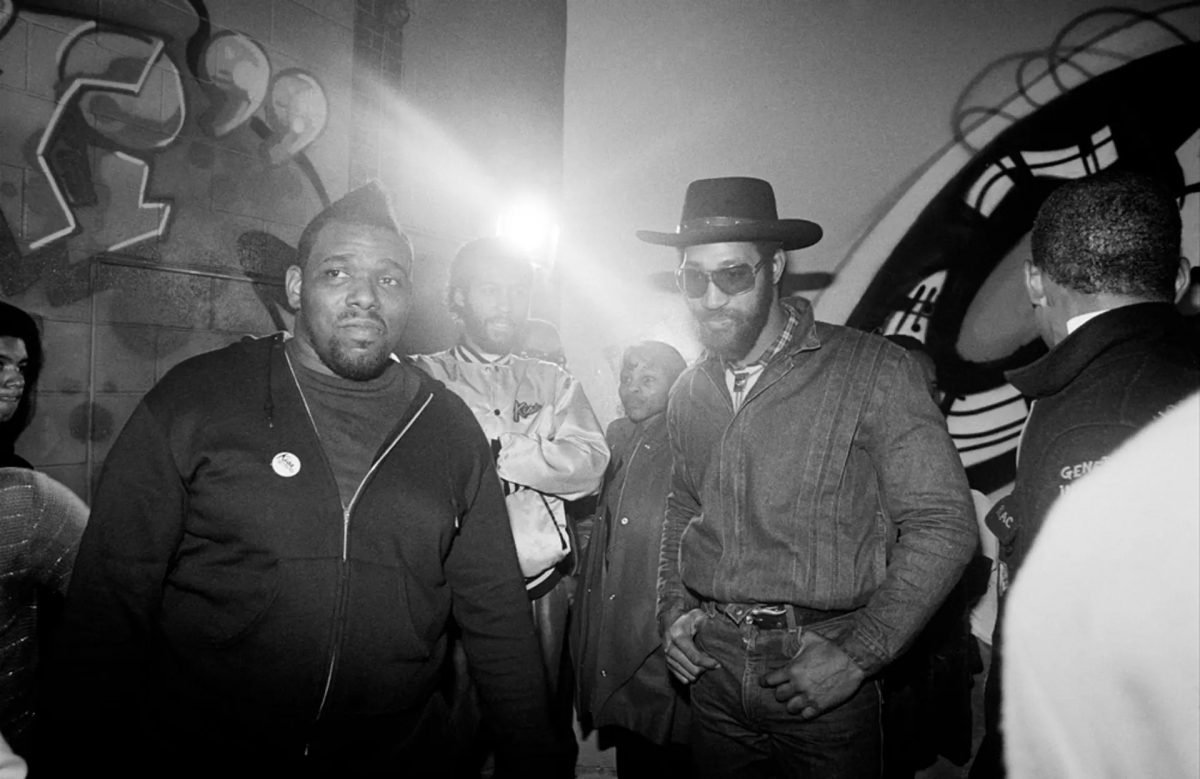
Stan Lathan wasn’t a hip-hop guy by trade — he was a TV director who’d spent the 1970s and early 80s behind the camera on Sanford and Son, Hill Street Blues, Miami Vice, Remington Steele, and Cagney & Lacey. That mix of sitcom timing and gritty cop-drama realism is exactly what Beat Street needed: a director who could handle a cast of mostly non-actors and still make the Bronx feel lived-in instead of staged. Five years after Beat Street, Lathan would go on to co-create Def Comedy Jam with Russell Simmons, bottling raw, unfiltered Black comedy for HBO the same way he’d bottled raw, unfiltered hip-hop for Orion.
The Retro Almanac
A monthly roundup of "on this day" highlights from that month, decades back — plus first dibs on new retro merch drops. No spam, just the good stuff.
It Was Built on Real Street Culture, Not a Writers’ Room
Lathan and his writers leaned hard on two 1983 documents that had already captured hip-hop’s raw early years: Wild Style and Style Wars. The film’s antagonist, a rival graffiti writer named Spit, was modeled directly on CAP, the real New York graffiti bomber who stirred up controversy in Style Wars for painting over other writers’ pieces. The plot follows two brothers — Kenny, an aspiring DJ, and Lee, a breakdancer — and their friend Ramon, a graffiti artist caught between his art and his family. It’s a fictional story, but it was cast from and shot inside a real scene that was still forming itself in real time.
The Auditions Were Held at the Roxy — and They Were Real
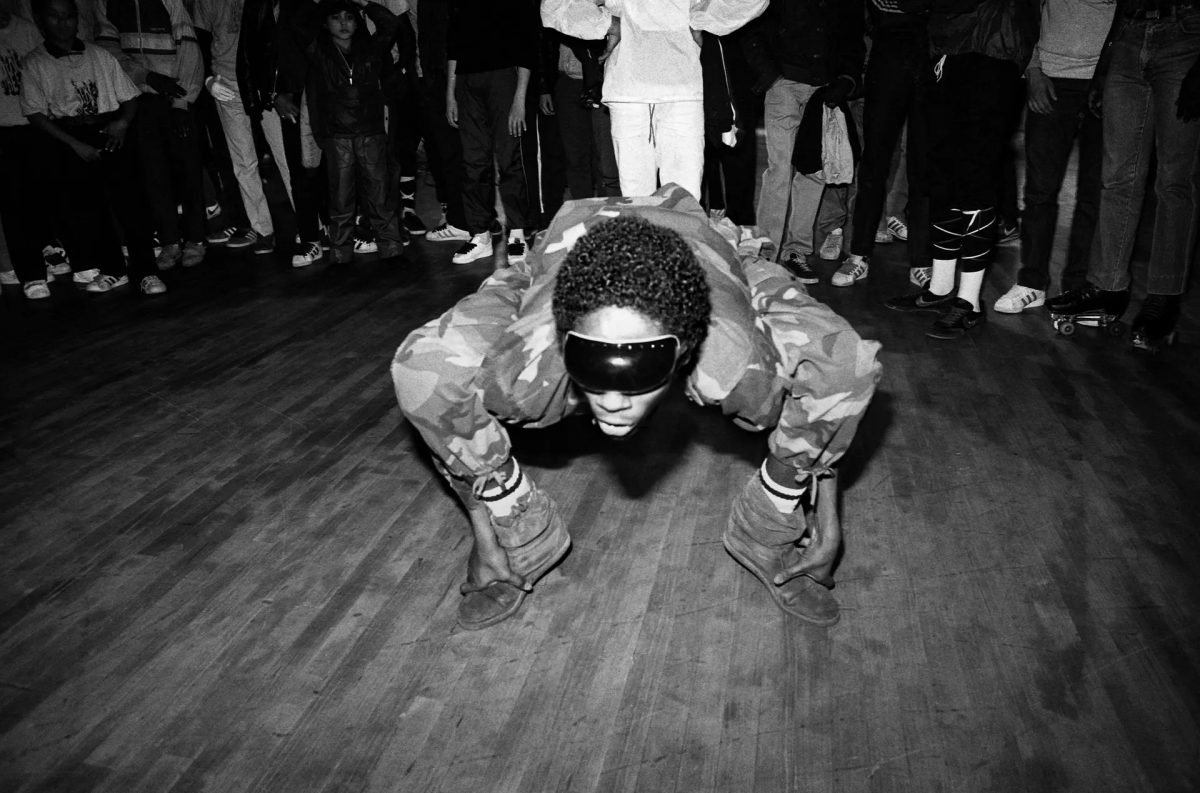
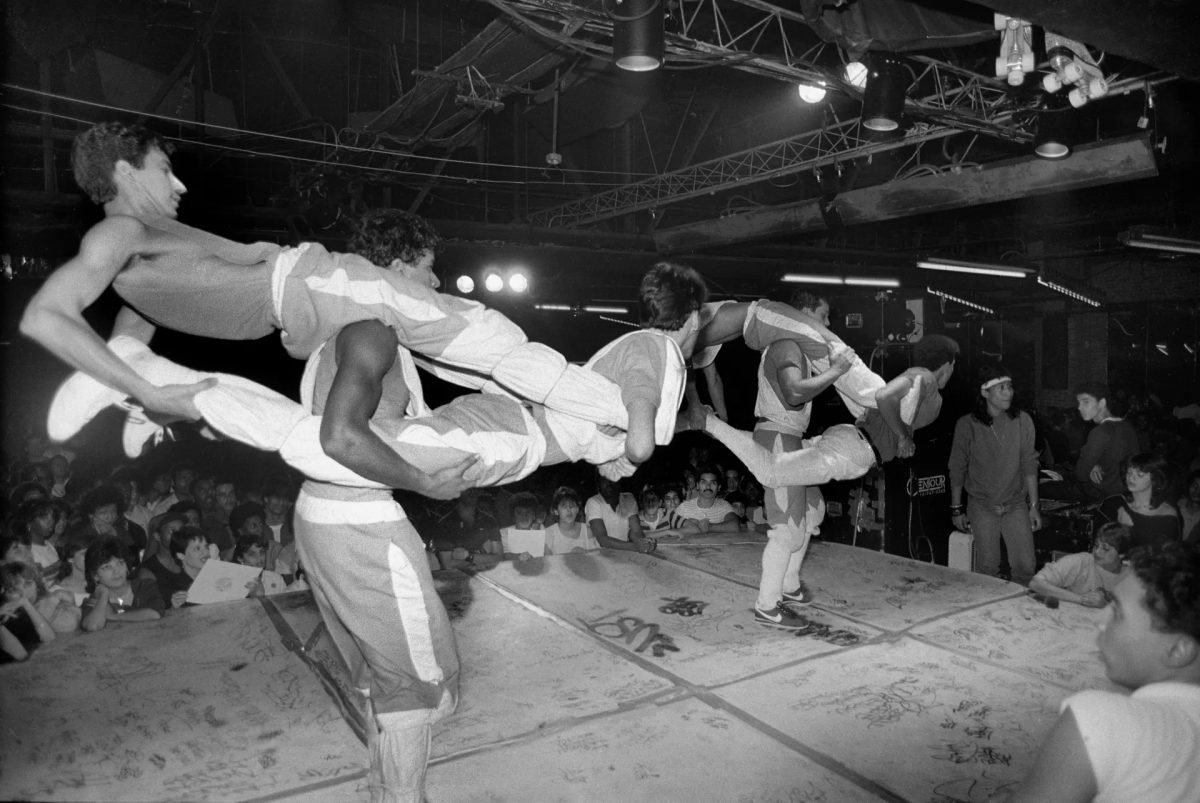
Instead of a casting office, Beat Street held open auditions at the Roxy, the Chelsea nightclub that had become ground zero for New York’s early-80s breaking scene. Photographer Sophie Bramly, who spent 1982 to 1984 documenting Bronx hip-hop culture for her book Yo! The Early Days of Hip Hop, was there shooting dancers warming up and showing off for a shot at being in the film. Those Roxy audition photos are some of the only surviving images of hip-hop’s pioneers performing for a movie that, at the time, nobody knew would become a cultural landmark.

Filmed on Location, Subway Trains Included
There was no backlot version of the South Bronx that could substitute for the real thing, so Beat Street shot across the Bronx, Manhattan, Brooklyn, and Queens, including scenes filmed inside actual subway stations — Hoyt-Schermerhorn, 57th Street-Sixth Avenue, and Fresh Pond Road among them. The City College of New York’s Aaron Davis Hall stood in for the film’s big finale venue. It’s the reason the movie still looks and feels authentic decades later: the trains, the platforms, and the graffiti on-screen were the real New York, not a recreation of it.

The Film’s Biggest Stars Weren’t Actors
The credited cast — Rae Dawn Chong, Guy Davis, Jon Chardiet, Robert Taylor — carried the story, but the real draw was the hip-hop pioneers who showed up to perform as themselves: Afrika Bambaataa and the Soul Sonic Force, Grandmaster Melle Mel and the Furious Five, Doug E. Fresh, the Treacherous Three, and DJ Kool Herc, the man usually credited with inventing hip-hop at a 1973 Bronx house party. Having Bambaataa and Herc on screen in the same film wasn’t just a cameo — it was two of hip-hop’s actual founding fathers vouching for the culture on a national movie screen for the first time.

The Soundtrack Outlasted the Movie
Critic Vincent Canby’s famous dig that Beat Street worked best “as a trailer for the soundtrack album” turned out to be an accidental compliment. Produced by Belafonte alongside freestyle pioneer Arthur Baker, the two-volume soundtrack on Atlantic Records became a reference point for hip-hop production for years. Melle Mel’s “Beat Street Breakdown,” co-written with Reggie Griffin and Sylvia Robinson, became the song most people outside New York heard hip-hop through for the first time — it introduced the genre as a legitimate art form, not a novelty record.
It Flopped at Home, Then Set Europe on Fire
On a $9.5 million budget, Beat Street made $16.6 million domestically and landed a mixed 57% on Rotten Tomatoes — respectable, not a blockbuster, and a quieter run than its rival Breakin’ that same summer. But its real impact showed up overseas. When Beat Street hit theaters in West Germany, East Germany, and France, it introduced breaking, DJing, and graffiti to kids who had zero other access to hip-hop culture. Breaking crews sprang up across European cities almost overnight, and the film is still cited by European hip-hop historians as the single biggest reason the culture took root there decades before the internet could have done the job.
A Tragic Ending That Still Lands
The film’s emotional gut-punch is Ramon’s death — electrocuted while painting a subway car, a fictional ending that nodded to the very real danger graffiti writers faced tagging trains in active rail yards. It gave a movie that spent most of its runtime celebrating block parties and dance battles a sobering final note: this culture was joyful, but the streets it came from were not a playground.
Why It Still Matters
Unlike Breakin’, which was shot in Los Angeles with a glossier, more commercial take on the culture, Beat Street was made in the actual birthplace of hip-hop by people who were documenting it as it happened. That’s why the National Hip Hop Museum backed a 40th-anniversary documentary on the film, and why it keeps getting cited anytime someone traces hip-hop’s jump from Bronx block parties to a global export. It wasn’t the flashiest hip-hop movie of 1984. It was the one that told the truth.
FAQ
Is Beat Street based on a true story?
Not directly — the characters are fictional — but it was adapted from journalist Steven Hager’s reporting on the real South Bronx hip-hop scene, and it cast real pioneers like Afrika Bambaataa, DJ Kool Herc, and the Furious Five playing themselves.
Who produced Beat Street?
Harry Belafonte and David V. Picker produced the film for Orion Pictures. Belafonte also produced both volumes of the soundtrack.
Where was Beat Street filmed?
On location across the Bronx, Manhattan, Brooklyn, and Queens, including real New York City subway stations and the Roxy nightclub in Chelsea.
How does Beat Street compare to Breakin’?
Breakin’ came out the same year with a more commercial, Los Angeles-set take on breakdancing. Beat Street was shot in the South Bronx, hip-hop’s actual birthplace, with real pioneers in the cast — which is why historians generally treat it as the more culturally significant of the two.
Watch the original trailer below:
Related Reading
- How Kool Herc Invented Hip-Hop in 1973
- Public Enemy: Fight the Power and the FBI Letter
- Boombox: 9 Wild Facts About the 80s Ghetto Blaster
- Miami Vice: 9 Reasons the 1984 Show Defined 80s Cool
Sources: Wikipedia, Flashbak / Sophie Bramly photo archive.
The Retro Almanac
A monthly roundup of "on this day" highlights from that month, decades back — plus first dibs on new retro merch drops. No spam, just the good stuff.