
Bondi Blue iMac: 7 Bold Choices in Apple’s 1998 Reveal
The Bondi Blue iMac went from prototype to standing ovation on May 6, 1998, when Steve Jobs pulled a sheet off a glowing translucent computer at the Flint Center in Cupertino and quietly told the world Apple was back. The first iMac was the machine that saved Apple from bankruptcy, killed the floppy disk, made USB the default for everyone, and convinced an entire industry that a computer could be a piece of furniture instead of a beige box. Twenty-eight years later, the moment still hits like a missing chapter from a movie about how the 90s ended and the modern internet age began.
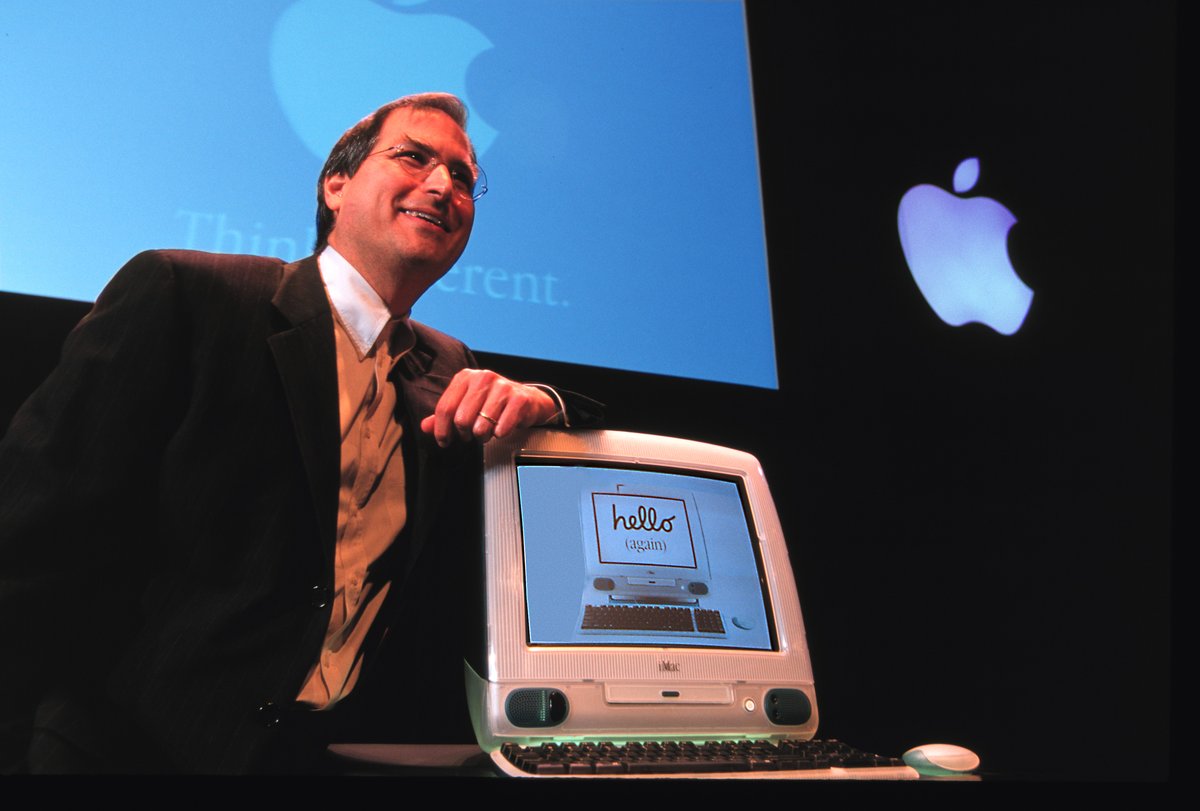
Steve Jobs holds the original Bondi Blue iMac G3 at the May 6, 1998 unveiling at the Flint Center, Cupertino — Apple press photo.
The Retro Almanac
A monthly roundup of "on this day" highlights from that month, decades back — plus first dibs on new retro merch drops. No spam, just the good stuff.
Why the Bondi Blue iMac Mattered on May 6, 1998
Apple in early 1998 was a punchline. The company had lost roughly a billion dollars the previous fiscal year, the product line was a maze of overlapping Performas and Power Macs, and Michael Dell had publicly suggested Apple should shut down and return what was left to shareholders. Steve Jobs had been back at the company for less than a year as interim CEO. He had cancelled the Newton, killed the Mac clones, and spent months trimming the product matrix down to four boxes on a whiteboard: consumer desktop, consumer portable, pro desktop, pro portable. The consumer desktop square was empty. The Bondi Blue iMac was Jobs filling it in front of a live audience.



Browse retro and vintage-inspired apparel at the RetroRadical shop →
The Retro Almanac
A monthly roundup of "on this day" highlights from that month, decades back — plus first dibs on new retro merch drops. No spam, just the good stuff.