Inside the Golden Age: How Hip-Hop Conquered America in the 1990s
There is a moment in early 1994 when hip-hop became something different. Not just a genre but a parallel universe with its own rules, its own celebrities, its own fashion, its own language. Nas dropped Illmatic. Biggie released Ready to Die. Snoop’s Doggystyle was still in heavy rotation from the previous fall. The Chronic had already reset the game in 1992. And somewhere in Staten Island, nine men from public housing were putting together something that would redefine what a hip-hop collective could be.
This was the Golden Age of hip-hop — roughly 1990 to 1999 — and it remains the most creatively dense, culturally seismic decade any genre of popular music has ever produced. Not because the music was simply good. Because it changed everything around it: fashion, language, television, film, advertising. By the end of the decade, hip-hop wasn’t competing with pop music. It had absorbed it.

The Sound Built From Other Sounds
The production of Golden Age hip-hop was defined by one thing: the art of the sample. Producers like DJ Premier, Pete Rock, Large Professor, and Dr. Dre were not writing music in the traditional sense. They were archaeologists, digging through crates of old vinyl — James Brown, Parliament-Funkadelic, jazz records, soul 45s — pulling out loops and breaks and rearranging them into something new. A drum break from 1969 becomes the backbone of a 1993 anthem. A bass line from a forgotten funk record turns up underneath a lyric about the corner.
The Retro Almanac
A monthly roundup of "on this day" highlights from that month, decades back — plus first dibs on new retro merch drops. No spam, just the good stuff.
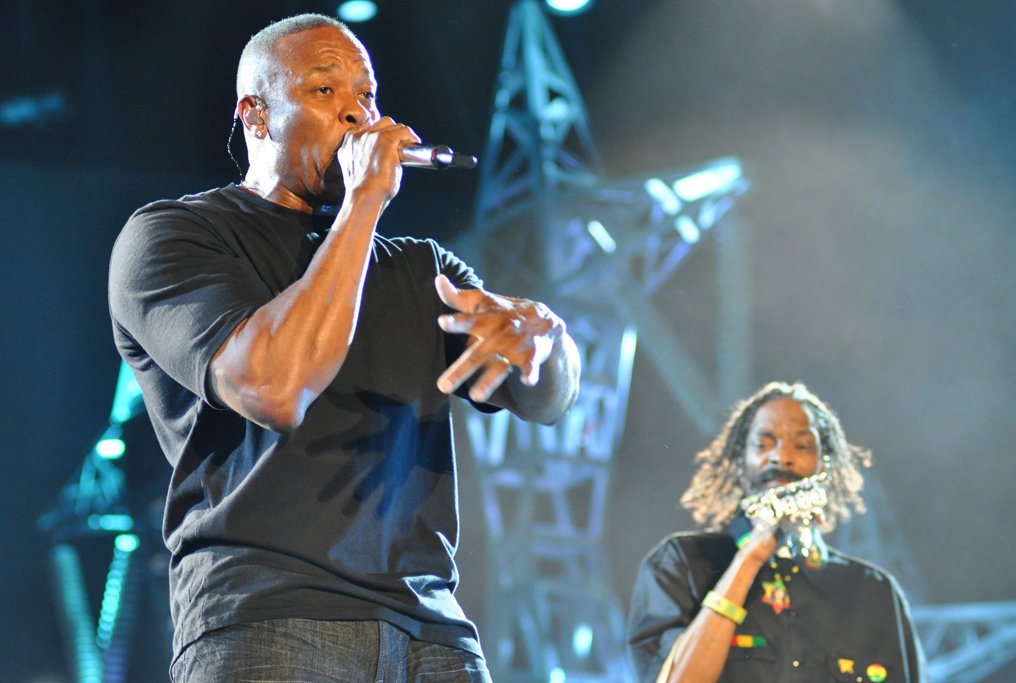
This wasn’t laziness. It was genius-level musical curation. The ability to hear a two-second snippet of a drum pattern and understand how it would sit under a particular verse is a compositional skill, even if no conservatory taught it. DJ Premier’s work on Nas’s Illmatic or Gang Starr’s Hard to Earn is as deliberately crafted as any jazz arrangement. Dr. Dre’s G-Funk productions — soaked in synthesizer whines, rolling bass lines, and slowed tempos — created a California counterpoint to New York’s harder, more staccato sound.
But the Golden Age wasn’t just about two coasts. By the mid-90s, Atlanta had walked in the door. Outkast’s Southernplayalisticadillacmuzik arrived in 1994 — the same year as Illmatic and Ready to Die — offering a third sonic world built on funk, live instrumentation, and an accent nobody in the industry had heard on a rap record before. Andre 3000 and Big Boi were not competing with New York or Los Angeles. They were building something entirely their own.
The MCs Who Wrote the Canon
If the production was the foundation, the lyricists were the architecture. The Golden Age produced an unprecedented concentration of technically gifted, philosophically serious rappers. Rakim had already established the template in the late 80s — internal rhyme schemes, cool delivery, abstract imagery — and the next generation ran with it in ways nobody predicted.
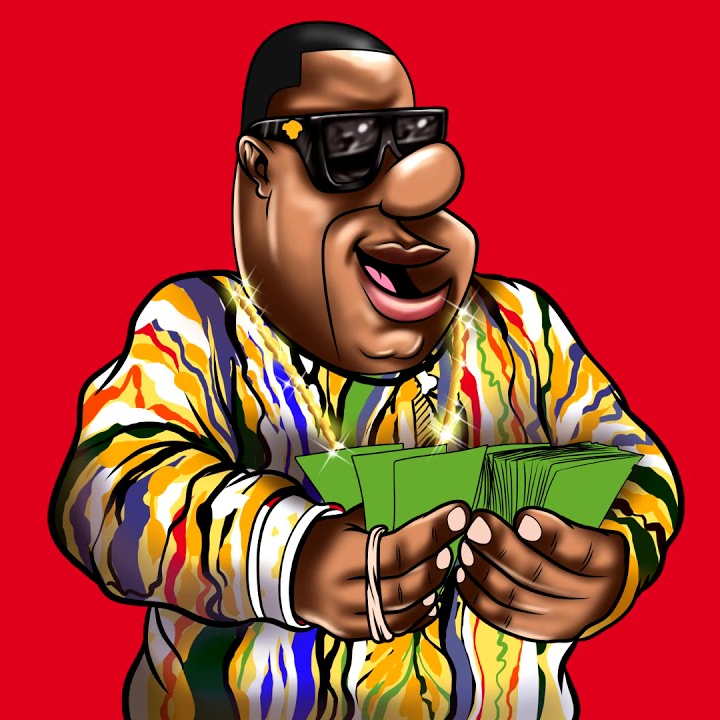
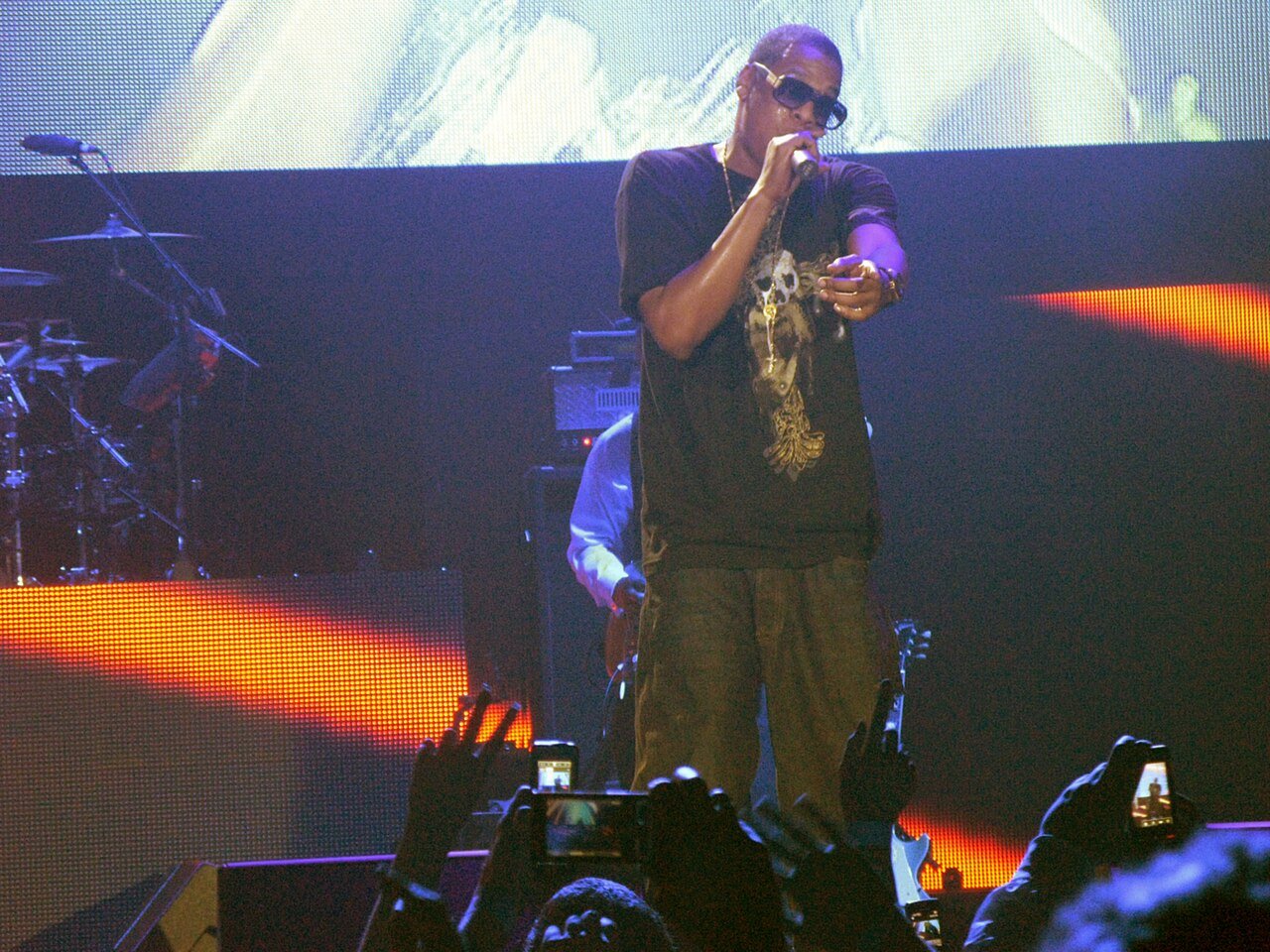
Nas wrote “NY State of Mind” at 19. The verse opens like a dispatch from a world that doesn’t admit cameras — dense with internal rhymes and images so specific they read like memory rather than fiction. Biggie, on Ready to Die, told the story of street life with novelistic clarity and a black humor that made the darkest subject matter somehow listenable. Jay-Z, on Reasonable Doubt in 1996, rapped about the drug trade like a business school case study — precise, almost clinical, deeply human underneath.
Female MCs made their mark in this era too. Queen Latifah had been rhyming since the late 80s, but the Golden Age produced Lil’ Kim, Foxy Brown, and Missy Elliott — three completely different artists whose presence expanded what the genre could say and who it could speak to. Missy’s production partnership with Timbaland pointed toward a future the rest of hip-hop wouldn’t fully catch up to for years.
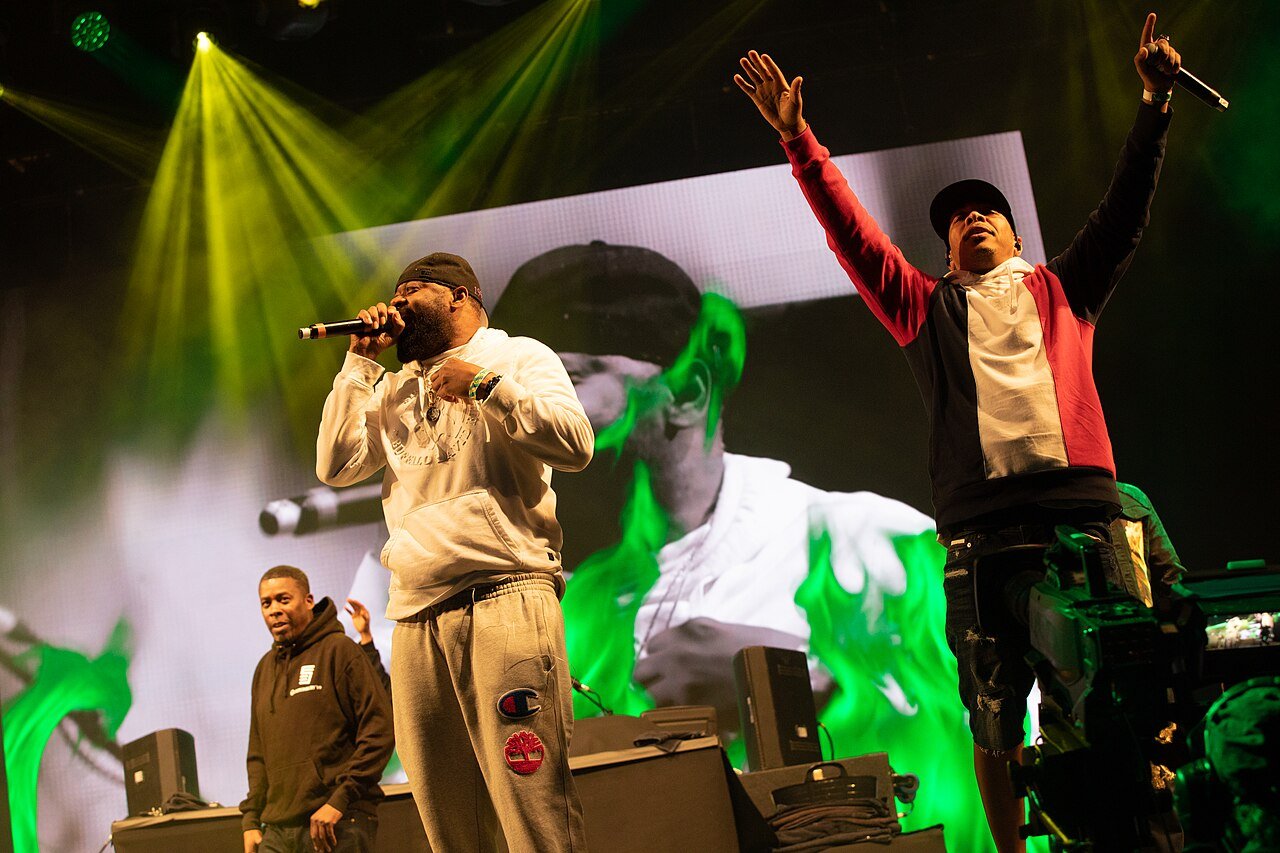
And then there was the Wu-Tang Clan. Nine MCs with distinct voices and personalities, united by RZA’s deliberately lo-fi, sample-heavy production, referencing kung fu films and chess and Five-Percent Nation theology in the same verse. Wu-Tang was impenetrable from the outside and utterly logical from within. Their collective identity — nine solo careers feeding back into one brand — was a business model hip-hop had never seen before and hasn’t replicated since.
How a Subculture Became the Culture
In 1990, if you wanted to know who was hot in hip-hop, you read The Source. The magazine launched in 1988 out of a Harvard dorm room and became the gospel for a generation of listeners, with its 5-mic rating system carrying a cultural weight that Rolling Stone could never touch within the community. The album reviews, the cover stories, the fiercely New York-centric editorial voice — The Source was hip-hop’s newspaper of record at a time when hip-hop didn’t have one.
Then Vibe launched in 1993, backed by Quincy Jones, with slicker production and a broader tent. MTV, after years of cold-shouldering rap, couldn’t hold the line any longer. By 1993 and 1994, hip-hop videos were driving the channel’s viewership numbers. The Chronic‘s “Nuthin’ But a G Thang” was not a video you could ignore. Biggie’s “Big Poppa” became a mainstream hit whether Top 40 radio wanted it or not — and eventually, they did.
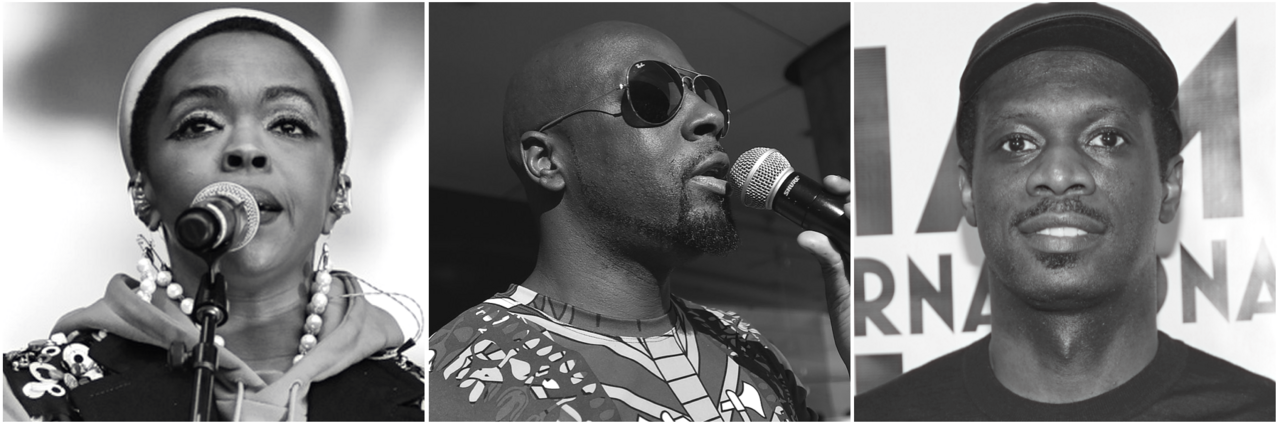
By 1996, the Fugees had turned “Killing Me Softly” into a transatlantic number one, proving hip-hop could reach listeners who had never touched a street rap record. Lauryn Hill appeared on the cover of Time. Hip-hop had crossed over — but unlike previous crossovers, it had done so on its own terms, without diluting itself to fit the format.
Fashion, Language, and the Billboard Takeover
The cultural reach of Golden Age hip-hop went far beyond music. FUBU launched in 1992, selling hip-hop fashion to hip-hop’s own community — a deliberate act of cultural ownership at a time when most clothing brands either ignored Black consumers or tokenized them. Timberland boots, originally workwear, became the official footwear of New York rap. Tommy Hilfiger and Polo Ralph Lauren found themselves in rap videos without exactly choosing to be there.
Language mutated at speed. Words and phrases born in hip-hop were showing up in advertising copy, sportscaster commentary, and network television dialogue within years of their creation. There was no social media to explain the velocity of that transmission — just kids who listened, watched, and passed it along. By the mid-90s, corporate America was trying to hire people who could translate hip-hop for mainstream audiences. The demand for translators is always proof that the culture has arrived.
By 1998, the Billboard Hot 100 had been colonized. DMX had two number-one albums in a single calendar year. Lauryn Hill’s The Miseducation of Lauryn Hill swept the Grammys, winning five awards including Album of the Year. Jay-Z, Puff Daddy, and Will Smith were competing for chart positions with *NSYNC and Mariah Carey — and frequently winning. Hip-hop wasn’t a subgenre anymore. It was the center of American popular music.
The Deaths That Cracked the Foundation
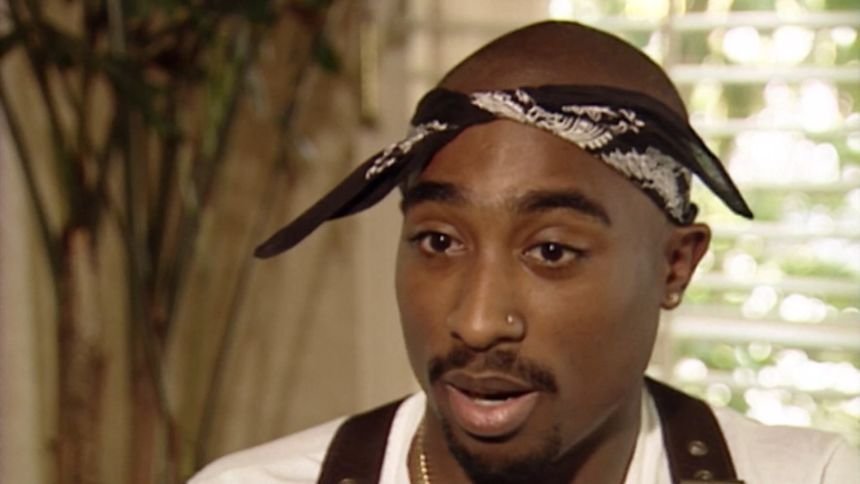
The Golden Age carried a shadow. The murders of Tupac Shakur in September 1996 and the Notorious B.I.G. in March 1997 — both unsolved, both tied to the East Coast/West Coast tensions the industry had spent years feeding — broke something open. Not just the loss of two generational talents, but the loss of a mood. The sense of invincibility that had surrounded hip-hop at its creative peak cracked under the weight of two coffins in less than a year.
What followed wasn’t bad music. Jay-Z kept building his catalog. Outkast produced Aquemini in 1998 and pointed somewhere new. Eminem’s 1999 debut announced a direction nobody had anticipated. But the era of fierce, widely-shared artistic ambition — the sense that every major label release was a statement, a philosophical document, an argument about what hip-hop could be — began to thin out. The commercial machine had caught up, and it was faster than the art.
What the Golden Age Left Behind
No decade of popular music has been mined as relentlessly for samples, references, and inspiration as Golden Age hip-hop. Current producers still chop the same James Brown records. Rappers still cite Nas and Biggie as the standard against which they measure themselves. The vocabulary of the era — in rhyme schemes, in production philosophy, in the concept of the posse cut — is still operative thirty years later.
The albums have held up in a way that surprises even those who lived through them. Illmatic sounds as immediate as it did in 1994. Ready to Die has aged without a wrinkle. The Chronic remains a completely coherent sonic world you can enter and stay in. Enter the Wu-Tang sounds like it was recorded in a parallel dimension that runs slightly colder and darker than ours.
What made the Golden Age wasn’t simply talent — every era has talent. It was concentration and competition. A dense cluster of exceptional artists, all pushing each other, all releasing in the same narrow window, all convinced that the album was the unit of meaning and that what they were doing mattered beyond the charts. That kind of convergence doesn’t happen by accident. And in hip-hop, it hasn’t quite happened again.
Sources
Golden Age Hip Hop — Wikipedia
The Retro Almanac
A monthly roundup of "on this day" highlights from that month, decades back — plus first dibs on new retro merch drops. No spam, just the good stuff.