On This Day: September 27, 1998 — Mark McGwire Hits His 70th Home Run
McGwire had already broken Roger Maris’s 37-year-old home run record nineteen days earlier, and by the time he stepped into the batter’s box on the last Sunday of the 1998 season, 61 barely registered as a number worth mentioning anymore. He needed something bigger to close the show. He got two of them in the same afternoon, and did it in his final two at-bats of the year.
A Record That Kept Moving
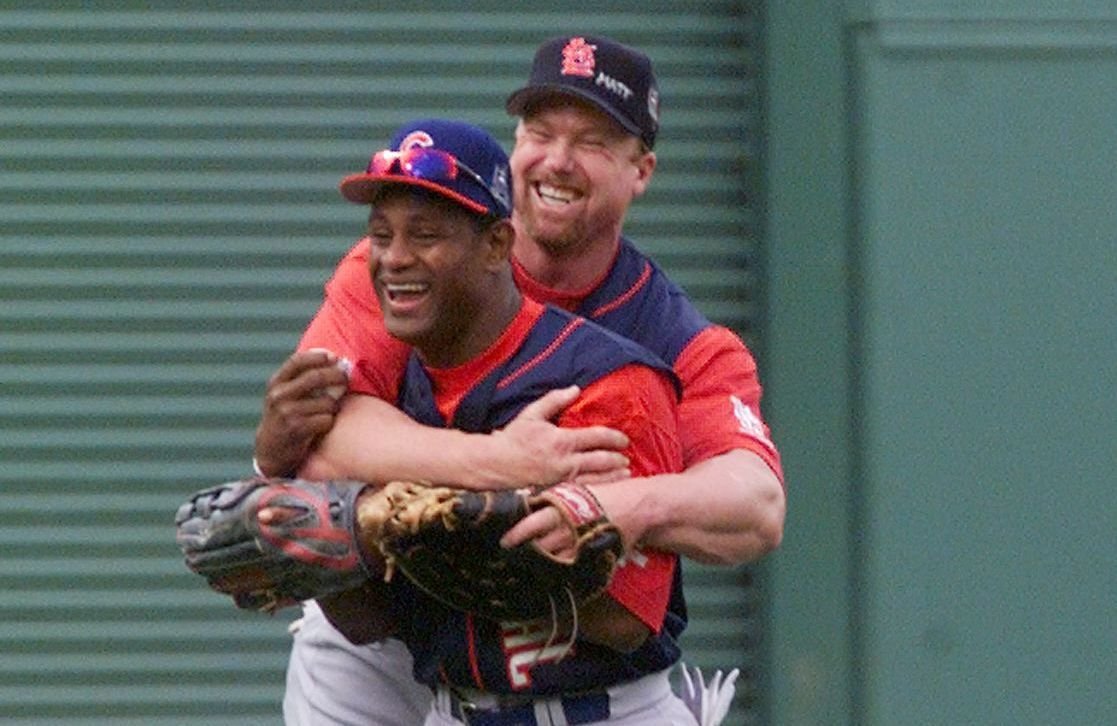
McGwire cleared Maris’s mark on September 8 with a line drive off Cubs starter Steve Trachsel that barely got over the left-field fence — an 88 mph fastball turned into the shortest home run of his career and the biggest moment of it. Roger Maris’s children stood in the box seats and watched their father’s name come off the record book. Sammy Sosa, playing right field for Chicago that night, jogged in from his position to hug McGwire at home plate, a scene that ran on every news broadcast in the country the next morning.
That should have been the end of the suspense. It wasn’t. Sosa kept hitting, McGwire kept hitting, and the two of them spent the rest of September trading the National League lead back and forth like it was a pennant race instead of an individual chase. By the time the Cardinals opened their final series of the year against Montreal, Sosa had pulled even at 65. McGwire answered with a homer of his own to hold the edge, then added another off Expos reliever Rod Henderson on September 26. He walked into the last game of the regular season sitting on 68, one shy of the number nobody in baseball history had ever reached.
The Retro Almanac
A monthly roundup of "on this day" highlights from that month, decades back — plus first dibs on new retro merch drops. No spam, just the good stuff.
Two Swings, One Afternoon
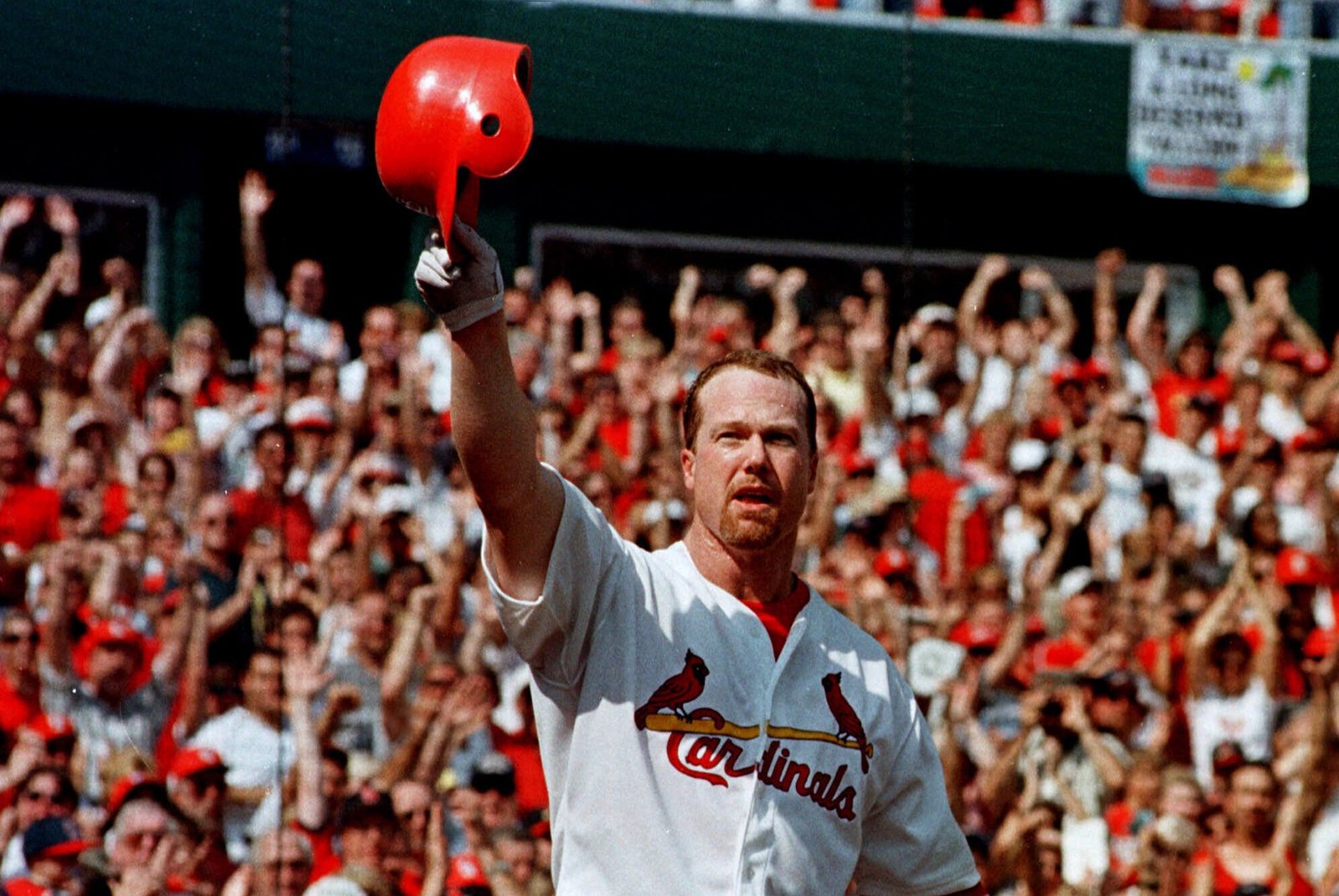
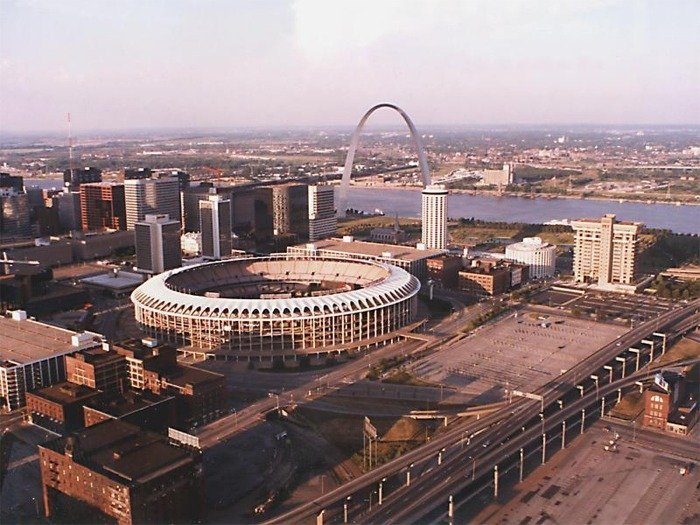
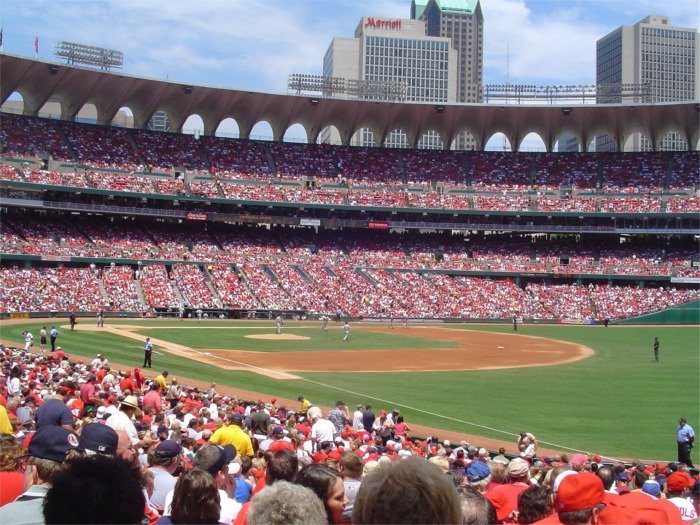
September 27 was a Sunday matinee that meant nothing in the standings — St. Louis had been out of the playoff race for weeks — and meant everything else. A season-high crowd of 46,110 packed Busch Stadium anyway, most of them wearing red, all of them there for one player’s at-bats and largely indifferent to the rest of the box score. McGwire didn’t make them wait long. In the third inning he turned on a pitch from Expos starter Mike Thurman and drove it out for home run number 69, tying his own single-game pace from earlier in the month and setting up exactly the kind of afternoon the crowd had shown up for.
Number 70 took until the seventh. The Cardinals and Expos were knotted at 3-3, two runners on, two outs, when 23-year-old rookie Carl Pavano — making just his ninth big-league start — threw McGwire a first-pitch fastball. McGwire didn’t miss it. The ball landed 370 feet away in the left-field seats, plating three runs and pushing the Cardinals to what would become a 6-3 win. It also gave McGwire a new National League record for home runs hit in a single ballpark in one season — 38 of his 70 came at Busch Stadium alone.
The Rivalry That Wasn’t Really a Rivalry
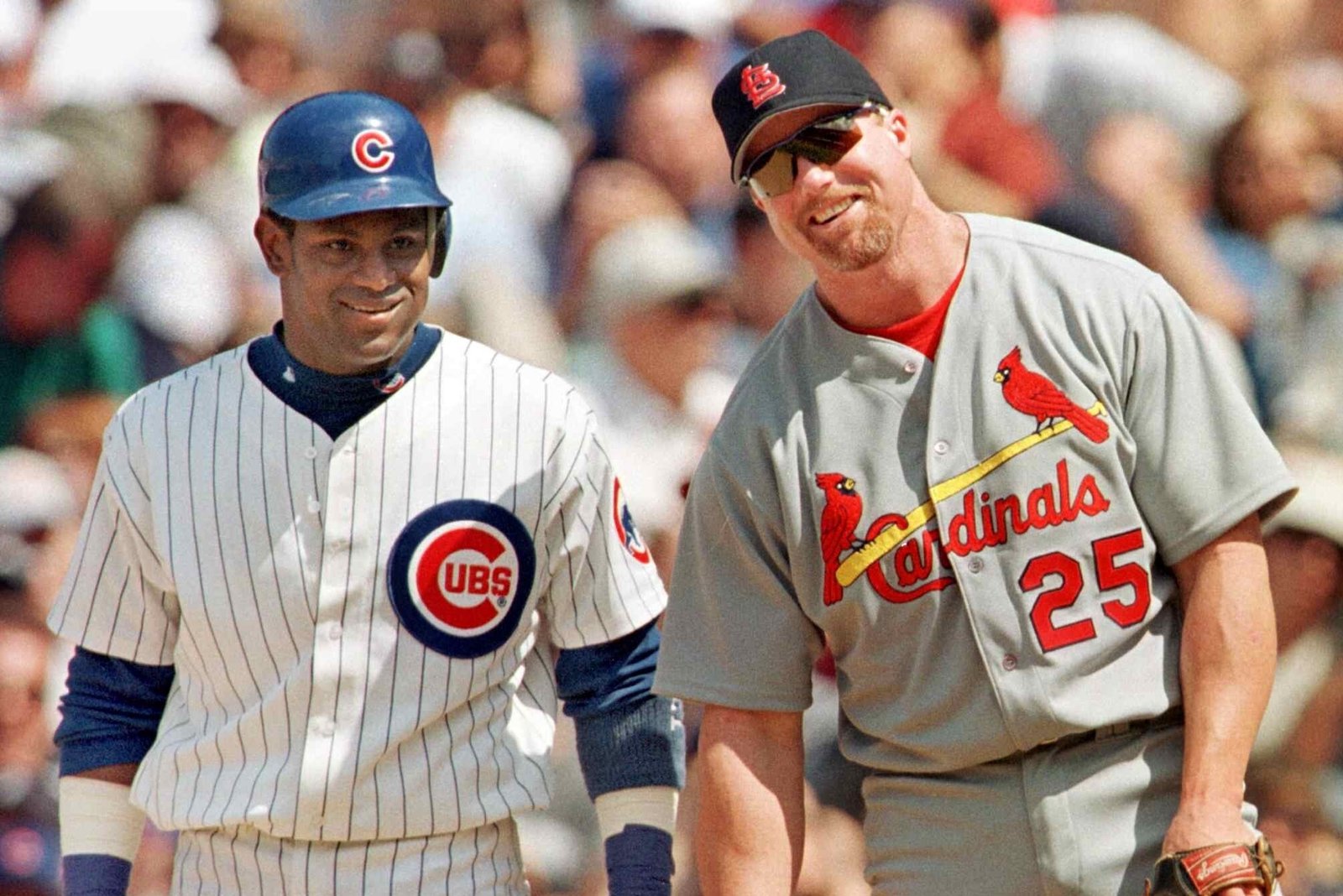
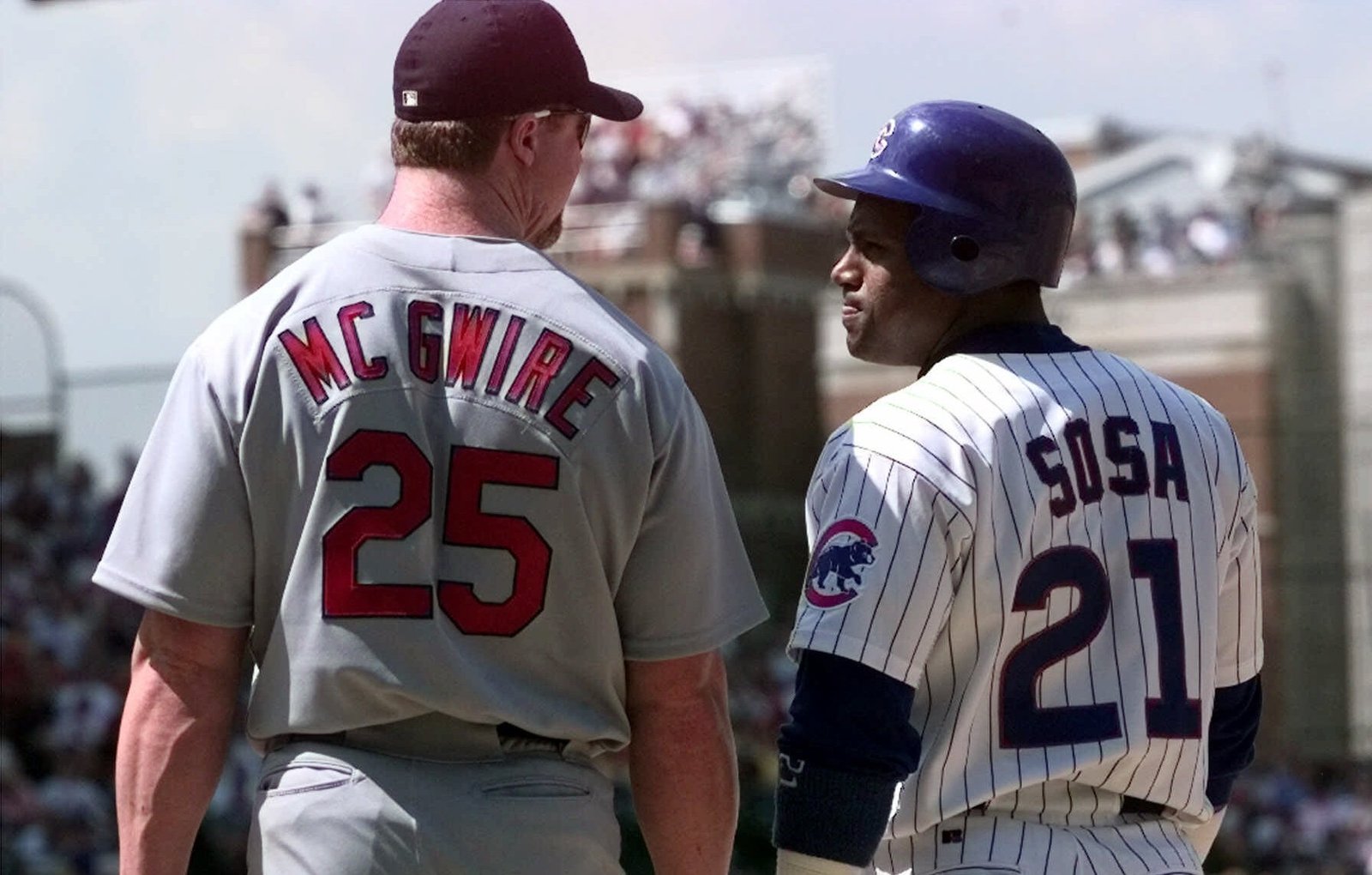
What made 1998 land the way it did wasn’t just the arithmetic. It was that McGwire and Sosa spent five months trying to out-homer each other and never once acted like they minded losing. Sosa showed up in St. Louis for the final weekend of the season specifically to be there when it ended, and the two posed for photos together on the field like old friends waiting out a rain delay, not rivals with a record on the line. That’s the detail that’s aged best about the whole summer — two men chasing the same immortality, and neither one treating the other as an obstacle to it.
What 70 Was Worth
The ball itself became its own small piece of 1998 folklore. A Busch Stadium groundskeeper named Philip Ozersky caught it in the left-field stands, and by January 1999 toy mogul Todd McFarlane had paid $3.005 million for it at auction — a record price for a piece of sports memorabilia at the time, and proof of how much the country had bought into the moment. McGwire finished the year with a .299 average, 147 RBIs, and a home run every 7.27 at-bats, still the best home-run rate of any qualified hitter in a full season.
The number lasted three years. Barry Bonds hit 73 in 2001, and the records both men set would later be shadowed by the steroid-era questions that followed the entire chase. None of that erases what Busch Stadium sounded like on September 27, 1998, when a sold-out crowd stood for a meaningless game in a lost season because they knew they were watching something that wouldn’t happen again in their lifetimes. They were right — nobody has hit 70 home runs in a season since without the same asterisk trailing behind it, and no single-season chase since has captured a whole country’s attention quite the same way.
For more baseball history from that era, see our coverage of Jose Canseco joining the 40-40 club and the year baseball canceled the World Series.
Love the retro era? Browse our shop for vintage finds, retro clothing, and 80s/90s nostalgia gear.
Sources
- St. Louis Post-Dispatch Archives — McGwire Hits 70 and Is Saluted as ‘the New American Sports Hero’ — Contemporary account of the season finale
- CBS News — McGwire Hits No. 69, 70 in Finale — Game recap and quotes
- This Day In Baseball — September 27, 1998 Season Finale — Box score and pitching details
- SABR — September 8, 1998: McGwire Wins the Race to 62 — Full account of the record-breaking home run
- Wikipedia — 1998 Major League Baseball Home Run Record Chase — Season-long timeline and final totals
The Retro Almanac
A monthly roundup of "on this day" highlights from that month, decades back — plus first dibs on new retro merch drops. No spam, just the good stuff.